SALON

How starving the beast makes us fat

Credit and debit cards inspire impulsive shopping -- just as irresponsible tax cuts increase the size of government

Topics: Credit Cards, Taxes, How the World Works,

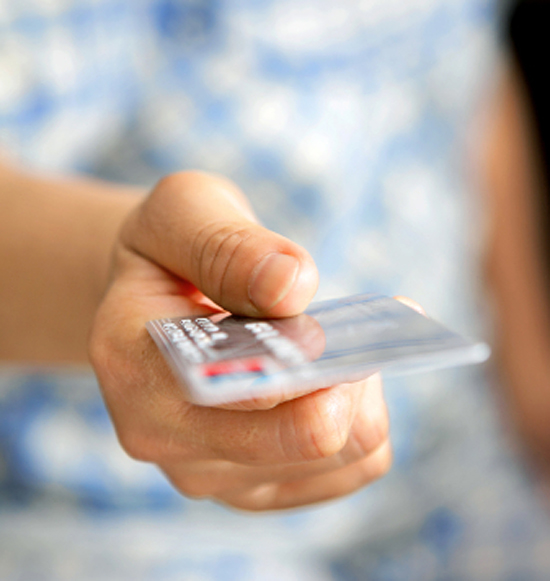
How starving the beast makes us fat(Credit: Leung Cho Pan)

No pain; weight gain! As the American love affair with credit and debit cards has burgeoned over the last few decades so have our waistlines! And guess what — the correlation may not be a coincidence.

I confess, I originally followed a link from Credit Slips’ Katie Porter to the forthcoming Journal of Consumer Reports paper “How Credit Card Payments Increase Unhealthy Food Purchases: Visceral Regulation of Vices” because it reminded me of the so-far totally false “starve-the-beast” theory, which pretends that cutting taxes will lead inevitably to smaller government. But I ended up falling in love with the paper on its own merits, aside from any possible relevance to tax cut shenanigans. After all, if there is one thing that I am a true expert on, it is the sad reality that “the depletability of cognitive resources” often leads to a failure to fend off our “visceral responses to vice products.” Or, more colloquially, when we don’t think things through, we tend to splurge on that extra order of fries.

In their paper, researchers Manoj Thomas (an assistant professor of marketing at Cornell), Kalpesh Kaushik Desai (an associate professor of marketing at State University of New York, Binghamton) and Satheeshkumar Seenivasan (a doctoral candidate at State University of New York, Buffalo) make a pretty authoritative case that grocery shoppers who pay with credit or debit cards tend to purchase larger quantities of unhealthy food. Basically, when you pay with cash, the theory goes, you tend to weigh your purchases more carefully. Credit and debit cards, on the other hand, seem to encourage impulsive behavior. Or, as the authors put it, “the abstract and emotionally inert nature of card payments … reduce the pain of payment.” Whereas, cash hurts , and “visceral responses such as feelings of pain can extinguish consumptive desires. With the extinction of desire, vice products no longer seem so appealing.

(I think the Buddha taught something along those lines, though I’m not sure he backed it up with peer-reviewed data. Read between the lines, and not only will you shed some pounds, but you could also avoid some disastrous relationships.)

The argument jibes very nicely with the explanation for why, historically, tax cuts that are not matched by spending cuts actually result in increased government spending — for the citizenry as a whole, the pain of payment for products received has been eliminated. When we receive government services without paying their full cost, we consume more such services. If every spending initiative had to be matched by a tax hike or cut elsewhere in the budget, we would end up behaving much more frugally. But starving the beast just makes us more profligate.

Andrew Leonard

Andrew Leonard is a staff writer at Salon. On Twitter, @koxinga21.

Next Article

Featured Slide Shows

Gripping photos: The people of the Turkey protests (slideshow)

close X
  • Share on Twitter
  • Share on Facebook
  • Thumbnails
  • Fullscreen
  • 1 of 11
  • The protests take on a festive element as police forces move out of the park and square. Wearing a gas mask, this young man dances to traditional Turkish music in front of Taksim Square’s Ataturk Monument.

  • In Gezi Park since March 31st, this protester, originally caught off-guard by the Government’s teargas and water cannons, went out and bought a Russian army mask from WWII, preparing for what was to come.

  • This rambunctious boy seems to be enjoying the chaos. After taking this picture he threw a stone at the already destroyed building in the background.

  • Forming a line, the police face off directly with protesters in Taksim Square. After a while, they retreated and there was a general cheer – a back-and-forth dance that has been common since the beginning of this protest.

  • An elderly woman in Gezi Park reads the news. The tent community occupying the park was violently destroyed on June 16th.

  • Many different groups had set up booths to promote their cause in Taksim Square and Gezi Park. Standing in front of one, this man waves his flag while posing with conviction.

  • Many home-remedies are used to minimize the effects of tear gas. This woman has put a milky solution on her face, removing her mask after the tear gas dissipated. Before sunrise, the police came again for another round of teargasing.

  • People capitalize on the uprising -- selling flags, beer, gas masks, sky lanterns and spray paint to name just a few of the popular items.

  • On Monday morning, June 11, the police execute a strong offensive. Many plain-clothed police officers, like the ones seen here, clash with protesters in the side streets away from the main stand-off in Taksim.

  • The authorities seem to be most aggressive in the night, pushing protesters away from the square and park. After being teargassed this young woman catches her breath with other protesters on Siraselviler Street.

  • Recent Slide Shows

  • Share on Twitter
  • Share on Facebook
  • Thumbnails
  • Fullscreen
  • 1 of 11

Comments

13 Comments

Comment Preview

Your name will appear as username ( settings | log out )

You may use these HTML tags and attributes: <a href=""> <b> <em> <strong> <i> <blockquote>