
LGBT

Explaining American schools’ gay bullying epidemic

A rash of suicides has focused the country's attention on the problem -- but an expert tells the real story

  • more
    • All Share Services

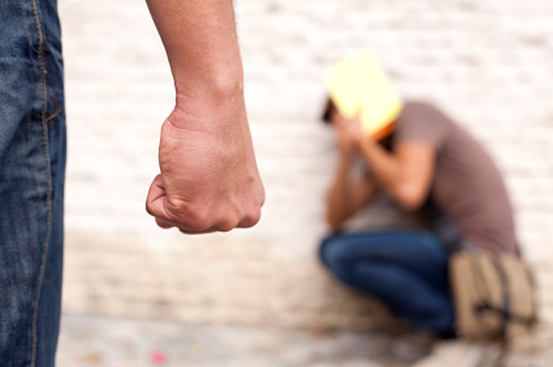
Explaining American schools' gay bullying epidemic (Credit: Photographer: Helder Almeida)

When 18-year-old Rutgers student Tyler Clementi jumped off the George Washington Bridge on Sept. 22, he meant to kill himself — he probably didn’t mean to spark a national uproar. But Clementi’s death, along with a series of ensuing gay teen suicides, has prompted an intense conversation over the problem of anti-gay bullying. Dan Savage’s “It Gets Better Project,” a video project aimed at gay teens, has solicited heartbreaking  contributions from everyone from President Obama to Tim Gunn (who admitted his own early suicide attempt) to the employees of Google.

But gay suicide is hardly a new problem — and, by most accounts, homophobia is on the decline in American culture. So why are we suddenly so concerned? As Stuart Biegel, a professor at the UCLA School of Law, explains in his new book, “The Right to be Out,” anti-gay prejudice remains a pervasive problem in American schools. Despite tremendous legal strides  over the past two decades, gay students are still punished more severely than their straight counterparts, their pleas for help are often ignored, and, most surprisingly, many LGBT teachers still feel enormous pressure to remain in the closet for fear of reprisal from parents.

Salon spoke to Biegel over the phone about the current state of gay bullying laws, what parents can do if their kids are attacked and the flaws of the “It Gets Better” campaign.

In the last few months there’s been a tremendous amount of media attention paid to gay bullying. How important do you think it’s been?

I think it’s very significant. For a long time, these issues haven’t been discussed openly. When people would mention words like gay and lesbian in airports and restaurants they would lower their voices. We’re only recently seen what may be a turning of the tide. Now there’s less lowering of voices and more comfort in addressing these issues openly in schools and at the dinner table.

But gay suicide isn’t anything new — so why have these recent deaths attracted so much more attention than the ones that have come before?

Suicide has been an issue in LGBT communities for a long time, and LGBT youth have been found to have a suicide rate three to four times higher than their straight counterparts. But I think what’s happening now, with this particular rash of suicides is that you have families who have been open about what happened. This goes back a few years, to the mother of Carl Walker-Hoover. There used to be so much shame associated with these suicides. Now my sense is the families are more comfortable opening up about them and the media is more comfortable reporting about them in great detail.

But surely, the culture as a whole has also become far less homophobic than before.

It is on the wane, and you see a lot of data supporting that. But there has been something of a backlash in some places, in light of the sea change in legal recognition of same-sex relationships over the past decade. When Howard Dean signed the first civil union legislation in Vermont in 2000, people couldn’t believe it. Ten years later we have civil unions in eight or nine states and legal marriage in nine or 10 countries and five states, including Canada, D.C., Mexico City. This amount of change is unsettling for a lot of people, and the schools are a place where a lot of these values issues are heavily contested. In a number of schools, at this point, we see a situation that might actually be worse than 10 years ago.

How widespread is anti-gay bullying in schools at this point?

It can vary tremendously, not only from district to district, but from school to school with any district. I was the federal court monitor for the San Francisco schools for almost a decade — from 1997 to 2005 — and we found in San Francisco, a city that’s very gay-friendly, schools that had some really difficult situations with regards to homophobia and peer mistreatment.

What determines whether a school is gay friendly or non-gay friendly?

A lot of it has to do with the school culture as it’s evolved over time and a lot of it has to do with whether a school is known to be a sports school. While sports can be incredibly beneficial, in many cases school athletic departments have the largest percentage of homophobia of any department in the school, if you can characterize it that. The leadership of the school as a whole can play a key role: whether the school focuses at all on school climate, on issues of respect and not tolerating the word gay as a pejorative term. But it’s not static, and there’s a tremendous amount that individual educators can do here.

I’m 26, and my coming out narrative wasn’t terribly traumatic — I don’t think I’ve ever really felt bullied for being gay. I think that’s the case for a growing number of young gay people — and I think it can be fairly easy for us to forget that not everybody had it so easy.

From time to time, I get frustrated reading articles in places like the New York Times that seem to suggest it’s over, that kids are doing fine now. You don’t see that after this recent spate of suicides, but for several years before that you had some of the most noteworthy commentators in the country concluding that gay is no big thing anymore, we need to move on. I look at my law students, and my law school is a very gay-friendly place, and it has the Williams Institute, which is the national think tank on sexual orientation and gender identity issues, and you have a lot of openly gay and lesbian students who had coming out experiences such as the one you described for yourself.

But there are others who aren’t even out to their parents, and they’re in their mid-twenties — they’re openly gay or lesbian on campus and yet for many reasons they’re not out to their family. And this is 2010. There’s tremendous variation from place to place, from community to community, from ethnicity to ethnicity. It’s a stereotype to say it’s tougher on the rural communities and in the South and parts of the Midwest — but it is often tougher in these parts than it is on either coast or in urban areas.

Why are school environments so loaded with significance for LGBT kids?

You have to go to school every day and you’re often surrounded by people you may not choose to be around. We are an increasingly pluralistic society, especially in the major urban areas of the country, so that diversity is reflected on many levels and in different sets of values that students bring to the table.

How much legal recourse do parents actually have if their kids are bullied in school, and teachers won’t do anything about it?

More legal recourse than ever. Basic negligence laws regarding threats and harassment exist everywhere. The Nabozny case in Wisconsin was the first time that an LGBT student won a case against the school district for discrimination. The mistreatment was horrific — and once that breakthrough happened and the federal courts recognized that the equal protection clause of the 14th Amendment does apply to the mistreatment of gays and lesbians, LGBT kids started winning these cases all the time, in all parts of the country. Some states have prohibited discrimination on the basis of sexual orientation, and a growing number have also started to prohibit discrimination explicitly on the basis of gender identity and, finally, states such as California have explicit education code provisions addressing the areas of LGBT safety. The law is on the side of the mistreated youth everywhere in the country.

But, as you point out in the book, gay, lesbian and transgendered teachers are actually more legally vulnerable than the students.

There’s been so much focus on LGBT youth and rightly so, but not as much focus on educators. In many parts of the country, sizable numbers of parents and particularly size able numbers of folks in conservative religious communities are not comfortable with the idea of a gay or lesbian or transgendered person teaching their kids. Even though in the public sector educators do have the right to be out, there is great pressure on them to remain closeted and keep their identities to themselves. Instead of seeing LGBT educators as a valuable resource who can help LGBT youth, too many school districts are trying to keep them under wraps, so to speak.

That seems ludicrously anachronistic.

No question. As an openly gay man myself who was a public school teacher, and very closeted at the time, I know those pressures. And I agree that they’re increasingly anachronistic, but it’s a tricky transition period we’re in right now.

In recent months, there’s been a lot of coverage of Dan Savage’s “It Gets Better” campaign. Talking to friends, I think it’s fair to say there’s a lot of disagreement about whether or not it’s the right message to kids. It’s obviously good to know that when you’re grown up you won’t be faced with the same amount of prejudice you are now, but it also seems to suggest that you should just passively wait for things to improve, and a lot of the videos just seem self-congratulatory.

I was just meeting with one of the co-chairs of our law school’s LGBT student association the other day, and he mentioned exactly the same thing. I understand the debate. I think it’s good that people are taking seriously the notion that we need to do more in this area, but I also think it’s important o recognize that if we’re passive and let time pass by, things don’t necessarily always get better.

At the very least, I think “It Gets Better” has caused a conversation that I don’t think would have occurred otherwise — and that’s good.

I agree. And the Prop. 8 trial and the high profile nature of that campaign and its aftermath also has had a very positive impact. So many conversations are happening at the proverbial dinner table that were not happening before Prop. 8 — young people talking with the older members of their family about these issues for the first time, and straight young people as well. I’m convinced, and it’s a key part of my book, that increasing openness is only going to help make things better.

Obama recorded his own “It Gets Better” video — but his record so far on LGBT issues hasn’t been what a lot of people have hoped it would be. What are your feelings on that?

Obama is in a very difficult situation. I don’t have any intimate or expert knowledge on Obama’s presidency, but it does seem to me that if you look at the history of the United States, Obama is the most gay friendly president we’ve ever had. Having said that, there’s no question that he’s been able to fulfill only a small number of the promises he made to LGBT people during his campaign. But there is the potential for a lot more to be accomplished, especially if he gets another term, and Sotomayor and Kagan are going to be very supportive of LGBT related cases that have come up on the Supreme Court. I guess I’m the perennial optimist.

Thomas Rogers

Thomas Rogers is Salon's Arts Editor.

In the Middle: Episode 1 – Happily Ever After

Henriette and Kevin have been married for 27 years. Kevin recently moved down the street because he says he's gay

  • more
    • All Share Services

Victory, unprecedented

How the gay movement's successes surpassed feminism and civil rights -- and became a model for a new era

  • more
    • All Share Services

Victory, unprecedented (Credit: iStockphoto/lisafx)
This article is an excerpt from "Victory: The Triumphant Gay Revolution," available June 5 from Harper.

At the height of the real estate boom in the 2000s, Robert M. “Robby” Browne, 2007 Corcoran Real Estate National Sales Person of the Year, put on his woman’s bathing suit and silver heels and walked out onto the Club Exit stage. A thousand screaming, cheering, photo-snapping real estate brokers roared their approval. The openly gay Browne, six feet tall and nearly two hundred pounds, danced a sweetly amateurish version of the Village People’s gay anthem, “YMCA,” as ten half naked male Broadway dancers backed him up.

“Is there any question of who the star is?” Browne asks proudly, watching the video today. For most real estate brokers, a third year as Corcoran’s top producer would have been stardom enough, but when Corcoran CEO Pam Liebman began planning the 2007 event, Browne thought he wouldn’t bother to attend. He’d had enough top-earner, $100-million-club years. He was turning sixty, and he was thinking about his life as a whole. Finally he said he would show up, but only if he could accept the award in drag. Browne’s beloved gay older brother, Roscoe Willett Browne, died of AIDS in 1985. He’d never forget the day when President George H. W. Bush said that dying of AIDS wasn’t as important as losing your job. “George H. W. Bush did not acknowledge the sacrifice of my brother and our love. My brother. He’s in his eighties and he still has his brothers and I don’t have any brothers,” says Browne. “And my brother was a Yalie and he was in Vietnam; Bush, how could he be more your person?” We exist, says Browne, looking at the video of his awards ceremony. “This show says we exist.”

Exist? You can’t pick up a paper without seeing evidence that gay people exist and are compelling American society to acknowledge them. The federal government protects them from homophobic violence and twenty-one states have laws against discrimination; 141 cities across the country constitute enclaves of equal treatment. A federal nondiscrimination bill gains more support in Congress with each passing year. Poll numbers show Americans overwhelmingly support protection for gays and lesbians against hate crimes and equality in health benefits, housing, and jobs. In July 2010, a federal judge struck down the federal law, the Defense of Marriage Act, that excluded gays from the federal benefits for which married people were eligible and that allowed the states to refuse to recognize the marriages if they pleased. In August, another federal judge invalidated the amendment to the California constitution, added by Proposition 8, that limited marriage to a man and a woman. September had hardly dawned when a third federal judge found the policy requiring gay soldiers to hide their sexual orientation, don’t ask/don’t tell, unconstitutional as well. The United States Congress repealed the law prohibiting out gays and lesbians from serving in the armed forces. Right after the Fourth of July in 2011, the federal courts in California ordered the United States military to stop screwing around getting ready and just cease enforcing it at once.

Gay playwright Edward Albee’s play about the unbounded nature of love objects, “The Goat, or Who Is Sylvia?,” won the Tony Award for best play in 2002; the heroic biopic about San Francisco gay activist Harvey Milk, “Milk,” won two Oscars in 2009. So many people in show business have come out as gay that some gay media are now pooh-poohing their confessions as cheap shots meant to bolster their flagging careers.

Two of the most famous heterosexual lawyers in America, David Boies and Ted Olson, brought the suit against the California marriage ban in 2009. Win or lose, Boies and Olson’s case has already achieved the crucial social goal of making same-sex marriage a legitimate claim. On the eve of the closing argument in the case in 2010, a New York Times editorial called same-sex marriage “A Basic Civil Right.” In 2011 the poll numbers in favor of same-sex marriage crossed 50 percent. Regardless of intermittent setbacks, gay people like Robby Browne have succeeded in forcing society to acknowledge that they exist—as humans with a right to life and as American citizens with a claim to equality under the United States Constitution. Most of all, they have staked their claim to be treated, without lying or hiding, as moral persons, whose lives, loves, and ambitions have value and cannot be discounted.

The year 2009 saw the fortieth anniversary of the uprising in a New York gay bar called Stonewall. In 1969, “homosexuals,” people who wanted to have sex with members of their own sex, were considered sinful by the church, their sexual practices were criminal in forty-nine states, the psychiatrists said they were crazy, and the State Department held that they were subversive. Forty-two years later, almost to the day, Andrew Cuomo, the governor of the state of New York, signed the law that enabled them to marry in New York. The Empire State Building was lit up in the rainbow colors of the symbolic gay flag.

How did this tiny minority of despised and marginalized people do it? They did it in America, what we philosophers call a “liberal (small L) state.” America’s roots go back to the beginning of modern Western political thought in the seventeenth century, when the philosopher Thomas Hobbes speculated that people create their governments; states are not handed down from God to Adam to the king. During the century and a half after Hobbes wrote, the English and their American colonists launched a variety of social movements—the English Revolution and the American Revolution among them—that pushed and pulled on the deal between people and government until they produced the basic outline of the modern western state, the liberal state. The liberal state makes three promises to its citizens. First, security: the state will protect its citizens from one another and not hurt them worse than the people it is protecting them from. Second, liberty: citizens have certain rights as human beings that even the state cannot interfere with. And finally, self-governance: for those aspects of life the state can control, citizens must decide for themselves on equal terms what they want the state to do. It’s a good deal. No wonder so many people want in.

By the late twentieth century, Americans had already undertaken two great social movements for inclusion in the liberal state, the racial civil rights movement and the feminist movement. Since people aren’t all that easy to organize, theorists have often speculated about how they did it. Their conclusions are that movements arise only when people come to see that their problems are political, not natural or personal, what theorists call “oppositional consciousness.” This “aha!” moment in the civil rights movement dates back at least to W. E. B. Du Bois in 1903, when he observed that “the problem of the Twentieth Century is the problem of the color-line.” In addition, movements need access to resources, as when the NAACP started getting hold of real money and the movement gained astute leaders, such as Martin Luther King Jr.

Students of the racial civil rights movement made the assumption that before people engage in new movements they do a rational cost-benefit analysis, weighing the benefits of political action against the cost. When people created social movements against all odds and acted against their own individual self-interest on behalf of the group, theorists had to rethink what really drives people to take action. As the racial civil rights movement gave way to other movements—the feminist, and, finally, the gay-liberation movement—sociologists produced more theories to explain the new movements; indeed, the later thinking is often called “new social-movement” theory. In the newer thinking, theorists speculated that people draw their sense of who they are from the groups or social networks they are already in. From those starting places, they conceive a positive vision of themselves and then a desire to change the way the larger society perceives them all. New social-movement theorists came to the realization that sometimes group identity is so strong that people act on behalf of the group whether it benefits them individually or not.

Classical or new, each of the movements before the gay movement was seeking citizenship in the liberal state. Women and racial minorities did not necessarily ask the dominant society to love them or approve of them. They sought to be secure against violence, to be tolerated as they exercised their human liberty, and to have equal access to political and economic life. Each movement got traction in these crucial areas. But both of them fell short of achieving all the elements of a full human life for most of the people they represented: they got little or no economic assistance or cultural validation, and, when the inevitable backlash came, they stalled or lost ground. It would take a newer new movement to make the next moves: it would take the gay revolution.

The gay revolution achieved more because it faced different challenges. The path to liberal equality almost always involves mimicking as much as possible the behaviors and beliefs of the straight white men in power. The racial civil rights and feminist movements both made substantial detours into defending difference—black separatism and difference feminism. They failed to establish that their divergent cultures were as worthy as the dominant one and all they did was to split their movements. At the end of the day, both these modern movements got most of their traction from maximizing their similarity to dominant political and social hierarchies.

By definition, people involved in the gay revolution could not replicate the majority behavior. Their very political identity was behavior that distinguished them from the majority, including, but not limited to, their sex lives. The liberal state has a basic concept of a person entitled to be a citizen. When gay activists began their efforts, the churches considered them sinful, all but one state criminalized their sex acts, the doctors thought they were crazy, and politicians saw them as traitors to the nation. Sinners were kept away from sacred rites like marriage; criminals were imprisoned; crazy people were put in asylums; and people of doubtful loyalty were fired from their government jobs. Sinful, criminal, crazy, and subversive, the gays who made the gay revolution had the vastly harder task of convincing society to recognize they were even suitable candidates for citizenship despite their difference. Although liberalism pretends to be morally neutral, homosexual sexual behavior pressed that liberal commitment to the limit. In so doing, instead of bringing their marginal group into conformity with the mainstream norms, they challenged the accepted versions of sin, crime, sanity, and loyalty and changed America for everyone.

The movement succeeded, uniquely and in large part because, at the critical moments, its leaders made a moral claim. “Gay,” as movement pioneer Franklin Kameny put it on the iconic button of the gay revolution in 1968, “Is Good.” Even though it’s different. No one told it better than activist Arthur Evans: “It was more than just being gay and having gay sex. We discovered who we were and we built authentic lives around who we were and we supported each other doing that and in the process came to very important questions about the meaning of life, ethics, the vision of the common good and we debated these issues and we lived them.”

Morally ambitious and clearly identified as different, the gay movement came from further behind than either the civil rights or the feminist movements had done. It took on the liberal state and achieved formal equality, as did the other two movements. During the AIDS epidemic, it took on not just oppression, but neglect. And then it took on the traditional institutions of heterosexual morality—marriage and the military—and is rapidly conquering those arenas as well.

Fueled by its moral ambition, the gay movement is the model of a new era. It is ironic, yet fitting, that the only counterpart to the morally driven gay revolution is its contemporary and fiercest opponent, the morally driven religious right. Indeed, it is the moral certainty of the gay revolution that explains why, unlike the racial and feminist movements, it has been able to stand up to that powerful counterforce and, slowly but surely, prevail.

The theories all suggest that a whole lot of things have to go really right for people to act collectively against legitimate political authority. Lacking the religious and historical jet fuel of racial civil rights and the demographic advantage of feminism, the gay revolution started out from much the weakest position of any of the modern movements. Brilliantly led, endlessly resourceful, and stunningly creative, it came the furthest. When we ask how a cross-dressing homosexual activist got to be the poster boy of the most successful real estate brokerage firm in New York, we are also asking how people cooperate to get anything done, much less take on their whole society and wrench it onto a different path altogether. The gay Victory is not just a story, although that would be enough. It’s an epic.

From the book “Victory: The Triumphant Gay Revolution.” Copyright © 2012 by Linda Hirshman. Reprinted courtesy of Harper, an imprint of HarperCollins Publishers.

Continue Reading Close

Linda Hirshman is the author of “Victory: The Triumphant Gay Revolution,” forthcoming in June 2012. Follow her on Twitter @LindaHirshman1

Disneyland: Japan’s gay pioneers

A recent ceremony at Tokyo Disneyland highlights how far the country still needs to go for gay rights

  • more
    • All Share Services

Disneyland: Japan's gay pioneers (Credit: Cindy Hughes via Shutterstock)

TOKYO, Japan — In one respect, the decision by Tokyo Disneyland to allow a gay couple to hold their “wedding” at the theme park is a sign of progress in a country that has, until recently, largely ignored the issue of same-sex unions.

Global PostBut some campaigners have argued that leaving it to Mickey Mouse to give his blessing to Koyuki Higashi and her partner, Hiroko Masuhara — in a strictly symbolic ceremony — is also a mark of how far Japan has to go before it affords the same rights to the lesbian, gay, bisexual and transgender (LGBT) community as it does to heterosexual couples.

Tokyo Disneyland condoned this and all future same-sex ceremonies after receiving an inquiry from Higashi. Cue a confused response from a subsidiary, Oriental Land Company, which licenses the name and characters from Disney in the United States.

Higashi, 27, and her partner could “marry” at the park, they were told, but only if they dressed “like a man and a woman.” Park officials were worried that other visitors might be offended by the sight of two women in wedding dresses or morning suits.

The park relented on the dress code after a storm of protest on Twitter and other social media networks — it had all been a misunderstanding by an individual employee, it said — but the couple will not be allowed to exchange vows in the park’s chapel due to “Christian teachings.”

Those restrictions go to the heart of the flimsy protection offered to the rights of LGBT people in Japan, say campaigners. Homosexuality is not illegal, but same-sex marriages are not legally recognized.

“There needs to be more pressure for legal unions between gay people in Japan,” said Taiga Ishikawa, one of only a handful of openly gay politicians in the country. “This is only a guess, but I’d say there are more people now who are in long-term relationships and want that to be recognized in the form of a civil partnership.”

The 37-year-old, who won a seat on the Toshima Ward assembly in Tokyo last year, is campaigning to introduce an ordinance in the area to offer some form of marital recognition and to increase the number of administrative rights and services afforded to same-sex couples. But he admits that it’s “some way off.”

If Disneyland was being held up as an agent of progress, one of Japan’s most popular celebrities popped up to demonstrate that, in some quarters, ignorance reigns.

Commenting on TV on President Barack Obama’s recent declaration of support for gay marriages in the US, the film director and comedian Takeshi Kitano told a fellow guest: “Obama supports gay marriage. You would support marriage between humanoid and animals eventually, then,” before questioning the ability of gay couples to raise children.

Kitano has since tried to explain his outburst: “I was only talking about people who love their pets so much that they may think of marrying them,” AFP reported him as saying. “There is no way I look at gay people in the same way as I do animals, let alone implying sexual relations with animals.”

His were not the first comments with homophobic overtones to be made by a high-profile public figure in Japan. In late 2010, Shintaro Ishihara, the outspoken governor of Tokyo, suggested gay people were “deficient” after watching same-sex couples take part in a parade in San Francisco. “We have even got homosexuals casually appearing on television,” he said. “Japan has become far too untamed.”

Yuji Kitamaru, a journalist who writes about LGBT issues, said he was “very disappointed” by Kitano’s remarks, particularly as he has spoken up for minorities, including transgender people, in the past. “I felt it was a big betrayal not only to us and the audience, but also to himself. Public figures like Kitano can easily indulge in that kind of bigotry because Japanese people in general haven’t considered the difference between public discourse and private gossip.”

Yet Kitamaru, who has written on LGBT issues in Japan for two decades, believes social media has quickly become the forum for a more open discussion about sexuality, citing Twitter’s role in the Disneyland decision and a meeting held in Ni-chome, a gay neighborhood of Tokyo, to thank Obama for his support.

Higashi and her partner, meanwhile, have visited Disneyland to break their good news to Mickey Mouse. They have yet to set a date for the wedding, and there are reports that their inquiries were intended only to test the theme park’s commitment to equality.

Ishikawa welcomed Disneyland’s decision, which apparently came after officials in Tokyo contacted the company’s US headquarters. “I wrote 10 years ago that I looked forward to the day when gay and lesbian couples could hold hands and go to Tokyo Disneyland, so I’m very happy,” he said. “But we’re still not at the point where a man or woman can tell people, especially co-workers, that they have a same-sex partner.”

Continue Reading Close

It’s time for Dharun Ravi to apologize

Tyler Clementi's roommate gets a month of jail time in the Rutgers intimidation case. Will he ever say "sorry"?

  • more
    • All Share Services

It's time for Dharun Ravi to apologizeDharun Ravi (Credit: AP/John Munson)

Tyler Clementi’s mother calls his actions “evil and malicious.” His father says they were “the cold-hearted violations” of his son, who committed suicide in September 2010. And a young man known only as “M.B.” said in a written statement that he “caused me a great deal of pain.” So, does Dharun Ravi’s punishment — 30 days jail time, 300 hours of community service, three years’ probation, and $11,900 total in fines — fit the crimes of which he’s been found guilty?

In March, Ravi was convicted of charges of bias and intimidation stemming from the death of Clementi, his Rutgers roommate, whom he had secretly filmed, in Ravi’s words, “making out with a dude.” It was a story that reverberated around the world, and helped invigorate the anti-bullying movement. As Judge Glenn Berman handed down the sentence Monday afternoon, calling Ravi’s actions “offensive and unconscionable,” he said that he would not recommend deportation. But the judge did pointedly tell Ravi, “I haven’t heard you apologize once” for his callous behavior. And he said he made “no comment” regarding any further civil actions the Clementis might take.

Though Berman said he believed the sentence “disenchanted both sides,” it’s one that shows respect for the law as it stands in New Jersey. It also offers what Berman calls the “hopeful” possibility that Ravi — and others who have so cavalierly shamed and exploited people — might learn something about the quality of mercy. Maybe all those hours of service can teach Ravi something he, as an 18-year-old college freshman, was so devastatingly lacking.

In her remarks to the court Monday, Clementi’s mother tearfully said that a piece of her died when her child killed himself. And M.B., the anonymous young man whom Ravi secretly recorded with Clementi in September 2010, said in a statement to the court that while he bore Ravi no malice, he “just wanted him to acknowledge that he had done wrong and take responsibility for his conduct.” That atonement isn’t something a judge can impose. And it’s a statement Ravi has yet to make.

Continue Reading Close
Mary Elizabeth Williams

Mary Elizabeth Williams is a staff writer for Salon and the author of "Gimme Shelter: My Three Years Searching for the American Dream." Follow her on Twitter: @embeedub.

HGTV: Winning the war for gay marriage

For nearly 20 years, one network has redefined domestic bliss -- and taught Americans to love their neighbors

  • more
    • All Share Services

HGTV: Winning the war for gay marriage (Credit: Karina Kononenko via Shutterstock)

There are two ways to bring about positive, long-term social change: the fast one and the slow one. In the first version, statues are toppled, walls are torn down, laws are dramatically enacted. There is, forever, a clear before and after. It’s days like July 24, 2011, when New York state approved same-sex marriage. Or May 9, 2012, when Barack Obama became the first president to announce his support for the issue — an occasion that prompted incoming Human Rights Campaign president Chad Griffin to remark, “You will not forget where you were when you saw the president deliver those remarks.”

Then there’s the subtler version. The kind where you look around one day and suddenly realize that gay people have been building families and creating homes together this whole time. They’re your neighbors. They’re your fellow parents on the PTA. And they are totally the couple building an amazing new deck this weekend. For 18 years now, HGTV has been a steadfast force for exactly that kind of tolerance, simply by advancing the radical notion that homosexuals are out there in the world obtaining mortgages and painting their interiors just like straight people.

It’s not that LGBT-friendly content doesn’t exist elsewhere on television. I mean, Christ, have you ever seen Bravo? We could start with Andy Cohen and not even get around to “Project Runway” for days. There are entire gay-oriented networks, like Logo. But what distinguishes HGTV is both its durability and its ordinariness.

HGTV doesn’t trade in drama or high camp; it doesn’t offer “Wig Parties and Threesomes” stereotypes. Sure, one might suggest that the network’s high population of flamboyant gay designers panders to a different kind of typecasting. But the presence of hosts like David Bromstad and the married, father of two Vern Yip seems more like a logical, ordinary reflection of the makeup of the field. It’s also likely why there are so many gay contestants on its competitions as well. Just look at last year’s “Design Star” combatants, which included the lesbian former Dallas Cowboys cheerleader (and mother of four) Leslie Ezelle, and “average gay dad” Tyler Wisler.

More significant than its regular on-air talent pool, however, is the network’s consistent depiction of America’s gay and lesbian population as normal, carpooling, Home Depot-shopping folks whose agenda includes upgrading the kitchen backsplash. Far from the cavalcade of dysfunction on networks like TLC, the network regularly presents typical families of different ages and ethnicities — some of whom happen to be same-sex — on shows like “Property Virgins” and “House Hunters,” where the most shocking element of an odyssey is likely to be the property’s price tag.

That a network built around design would position itself as gay-friendly might seem like a no-brainer. But it’s also a network that  still has an overwhelmingly female core audience that isn’t necessarily going to identify with male same-sex couples. But by depicting a variety of couples and families, the Scripps-owned empire is broadening its base and appealing to a wider demographic. It’s also reflecting the reality of contemporary America.  As “Property Virgins” casting director Michael Barrick said when he put out the call for Atlanta-area LGBT parents last month, “I do prefer to see as diverse a population featured on television as possible. People like to watch a show that they can relate with, be it black, white, Asian, interracial, gay and straight. If they don’t see that representation, they are more likely to change the channel – and that is something as a casting director, that I just don’t want to see.”

There are still plenty of people out there stuck with antiquated ideals. Some of them are even running for president. But the fact that the American family doesn’t always resemble an Eisenhower-era sitcom is something more and more of us accept. It’s been a long time coming and it’s still a work in progress, but our American image of home and family is, in the words of the president, evolving. It evolves when a law is changed or a leader speaks out. And it evolves when two guys buy a house together on basic cable, and then another two, and another two, and the two ladies. Suddenly it’s not weird or unique or groundbreaking at all. It’s improvement. One home at a time.

Continue Reading Close
Mary Elizabeth Williams

Mary Elizabeth Williams is a staff writer for Salon and the author of "Gimme Shelter: My Three Years Searching for the American Dream." Follow her on Twitter: @embeedub.

Page 1 of 129 in LGBT