
Why do serial killers target sex workers?

The question is raised after four female bodies are found on a Long Island beach

Topics: Sex Work, Broadsheet, Prostitution, Love and Sex,

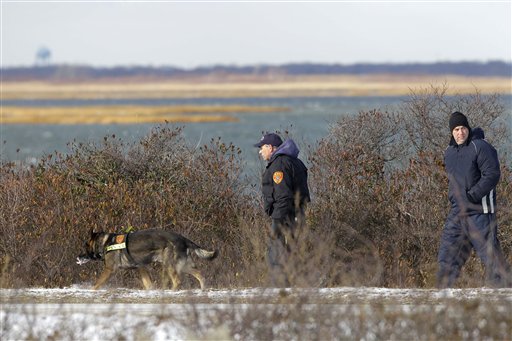
Why do serial killers target sex workers?Authorities search in the brush by the side of the road at Cedar Beach, near Babylon, N.Y., Tuesday, Dec. 14, 2010. Police looking for a missing prostitute on Long Island's Fire Island have discovered three bodies and a set of skeletal remains near Oak Beach since Saturday. Investigators are considering the possibility that a serial killer may have dumped four bodies along the same quarter-mile stretch of beachside road, a police chief said Tuesday. (AP Photo/Seth Wenig)(Credit: AP)

As New York confronts the possibility that there’s a serial killer on the loose, many have taken note that this case looks a lot like what we see in the movies: The victims are all women, and at least one is suspected to be a sex worker. When it comes to serial murder, it turns out fiction really does reflect reality. A report was released last month finding that 70 percent of known victims of serial killers are women (consider that only 22 percent of homicide victims in general are female); and it turns out sex workers are 18 times more likely than “normal” women to be murdered. Why might this be? Well, in the words of the Green River Killer, who targeted prostitutes:

I picked prostitutes as victims because they were easy to pick up without being noticed. I knew they would not be reported missing right away and might never be reported missing. I picked prostitutes because I thought I could kill as many of them as I wanted without getting caught.

Since they’re doing illegal work, sex workers have to be secretive and discreet. They often work in isolated and industrial areas. They get in cars with strangers. There are rarely detailed records of transactions. Many are drug addicts and estranged from their families, so they are less likely to be reported missing. Anyone who knows anything about a girl’s whereabouts is likely involved in the trade themselves, so they aren’t super eager to speak with police. What’s more, as we saw with the Robert Pickton case in Vancouver, police sometimes discount tips from working girls (all the more reason to not risk talking to them in the first place).

You Might Also Like

It just so happens that Friday is International Day to End Violence Against Sex Workers, which was created in memory of the victims of Gary Ridgeway, a.k.a the Green River Killer. Similar to the Pickton case, local sex workers knew Ridgeway’s identity, but, as prostitute-turned-performance artist Annie Sprinkle puts it, they “were afraid to come forward for fear of getting arrested, or the police didn’t believe those that did come forward, or the police didn’t seem to care.”

Tracy Clark-Flory
Tracy Clark-Flory is a staff writer at Salon. Follow @tracyclarkflory on Twitter and Facebook.

More Related Stories

Featured Slide Shows

  • Share on Twitter
  • Share on Facebook
  • 1 of 12
  • Close
  • Fullscreen
  • Thumbnails

    Script to Screen

    Named for the 15th-century Dutch artist known for vivid depictions of life in Hell, Detective Hieronymus “Harry” Bosch goes head to head with LA’s worst criminals. Actor Titus Welliver was handpicked by author and executive producer Michael Connelly to take Bosch from the pages to the screen.

    Script to Screen

    Michael Connelly personally selected every LA location featured in the Bosch opening sequence. After 20 years with this character, Connelly wanted to be sure the show reflected the authenticity that longtime fans have appreciated over the years.

    Script to Screen

    Actor Titus Welliver is the real deal. Having once considered becoming an NYC police officer, he was immediately drawn to this role. Much like Connelly’s own commitment to the character, Welliver is very passionate about remaining true to the source material.

    Script to Screen

    In the series, Harry Bosch lent his expertise as a cop to Hollywood for the blockbuster movie The Black Echo, based on his own life story. The poster for the film hangs proudly in his living room, high above the Hollywood Hills.

    Script to Screen

    Inspired by Michael Connelly’s books City of Bones, Echo Park, and The Concrete Blonde, the first season of Bosch introduced Amazon audiences to complex character Harry Bosch. Season 2, which features storylines from Trunk Music, The Drop and The Last Coyote premieres March 11th on Amazon Prime Video.

    Script to Screen

    As an LA crime reporter early in his career, Michael Connelly worked side by side with the LAPD. With three LA homicide detectives on staff as consultants, Bosch lives up to its promise of authenticity.

    Script to Screen

    Harry Bosch lives in the hills just above the Cahuenga Pass, the perfect spot to look out over the city he protects. Michael Connelly found this very spot in 1989, where he often returns to contemplate the city and find inspiration. Connelly also had his own home above Hollywood many years ago – in the High Tower apartments, where noir character Philip Marlowe lived in Robert Altman’s The Long Goodbye.

    Script to Screen

    To ensure they would be able to realistically capture a cop’s perspective, the Bosch cast participated in special training with the LAPD, where they were faced with hard choices in real-life scenarios.

    Script to Screen

    Michael Connelly’s inspiration for the gritty realness of Harry Bosch was often found during real testimonies while sitting in court as a reporter for the LA Times, including this defining exchange from Season 1, “How many people have you killed?” “I don’t know.”

    Script to Screen

    Michael Connelly, an avid fan himself, wrote in a broadcast of an LA Dodgers game for the opening scenes of Season 1.

    Script to Screen

    Stream Season 2 of the Amazon Original Series Bosch with Prime.

  • Recent Slide Shows

Comments

0 Comments

Comment Preview

Your name will appear as username ( settings | log out )

You may use these HTML tags and attributes: <a href=""> <b> <em> <strong> <i> <blockquote>