
Computers

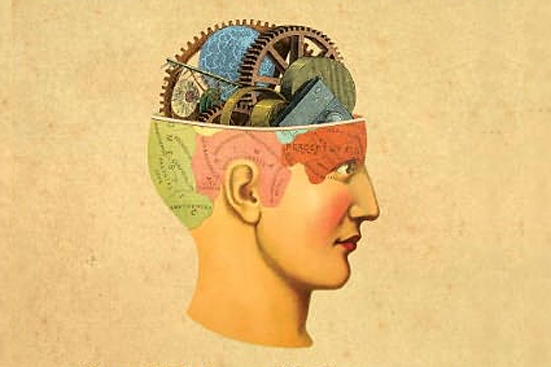
“The Most Human Human”: Can computers truly think?

What one man learned about his humanity by competing with artificial intelligence

  • more
    • All Share Services

This week’s recommendation must be delivered with a caveat: Brian Christian’s “The Most Human Human: What Talking With Computers Teaches Us About What It Means to Be Alive,” is billed as an account of the author’s participation in a Turing Test, but it’s best enjoyed if you don’t expect to read much about the test itself. A Turing Test — named for Alan Turing, the 20th-century mathematician who proposed it — asks a judge to converse with two unseen entities, a computer and a human being, then attempt to determine which is which. Turing estimated that by 2000 there would exist a computer sophisticated enough to pass itself off as a person in the course of a five-minute conversation. At that point, Turing contended, “one will be able to speak of machines thinking without expecting to be contradicted.”

Christian played the piquant role of “confederate” in the 2009 Loebner Prize competition, an annual Turing Test sponsored by an eccentric entrepreneur. His job was to seem more human than the computer software entered by the primary contestants, who are programmers. The prize money goes to the author of the most human-seeming chatbot, but there’s also a citation for the confederate rated “most human” by the judges. “Most Human Human” was the title that Christian, a science writer and poet, coveted for himself.

With this premise, the reader does expect a reasonably detailed account of the competition and some substantial excerpts from the instant-message-style dialogues that make up the contest’s rounds. Every year at least one of the bots manages to deceive at least one of the judges, and who wouldn’t want to see exactly how they accomplish it? The machines have yet to win more than 30 percent of the votes, however, and even a brief glimpse at the transcripts makes the reasons for their defeat apparent.

For the most part, it’s hard to believe that anyone would mistake one these inanely gabbing bots for an actual person. With all due respect to Watson, it’s extremely difficult for computers to participate in conversations that aren’t restricted to a standardized format (i.e., a game of “Jeopardy”). They have more information than we do, but they don’t improvise well. A few have been expertly engineered to mimic a coherent conversation as long as the human partner can be manipulated into staying on topic (in one notable example, kvetching about the Clinton administration), but if the human insists on changing the subject, the exchange quickly degenerates into non sequiturs.

You get the impression that the 2009 Loebner competition wasn’t especially exciting. (Christian describes it as a “rout” for the machines.) Fortunately, there are plenty of related matters for the author to get worked up about, and any reader willing to surf his restless but often exhilarating chains of thought will find “The Most Human Human” rewarding. Christian turns the somewhat anticlimactic 2009 Loebner tournament into an occasion to riff on our changing definitions of intelligence, humanity and thought itself.

The computer is a tool of sorts, Christian points out, but of an unprecedented kind. Our other tools were created to do certain jobs — vacuums to clean rugs, axes to chop wood into manageable pieces, etc. By contrast, we made computers first, then invented things to do with them afterwards. In that respect, he suggests, they resemble people more than artifacts, especially if you view human agency from an existentialist perspective (cue the digression on existentialism; Christian is big on digressions). People have no built-in purpose: it’s something we have to figure out as we go along.

The computer has also radically altered our species’ efforts to define itself in opposition to the not-human. For most of history, philosophers have ruminated on what differentiates us from animals. Some, like Descartes, identified the essence of humanity in the capacity for higher reason and abstract thought. But computers have cleaned our clocks in the realms of logic, mathematics and information storage and retrieval, all disciplines once considered the hallmarks of a uniquely human mind. Cue another of Christian’s digressions on chess-playing computers, devices that eventually succeeded at beating the best humans in a game that aficionados once celebrated as a form of art.

In fact, “The Most Human Human” consists largely of digressions from its ostensible subject (the Turing Test), a strategy that Christian surely revels in because it represents exactly the kind of thought that the methodical workings of artificial intelligence can’t achieve. Context, oblique cultural allusions, metaphors and so on are par for the course in human-to-human conversation, but entirely beyond the machines. At best, the most successful digital manipulators of human speech (the chatbot Cleverbot and translation programs like the one used by Google) use their massive data storage and retrieval capacities to crunch huge databases of utterances originally made by actual humans. That doesn’t mean they understand what those utterances mean.

The strength of “The Most Human Human” doesn’t necessarily reside in its pertinence or its cogency — reading it, I often I found myself wondering, “And you’re telling me this … why?” I do suspect that in his celebration of the associative nature of human thought, Christian undervalues the aesthetics of linear argument. The result belongs to what I think of as the Devonthink school of contemporary nonfiction writing. Devonthink is a database application for Macs that organizes masses of research documents, as well as randomly interesting digital snippets collected from all over the place. It also features an AI element that suggests links between the various documents. This software famously inspired the author Steven Johnson to consider the parallels between how waste products are handled by biological bodies and cities during the writing of his book “The Invention of Air.”

The associations prompted by this sort of grab-bag interdisciplinarianism have a TED-talk coolness that sometimes descends to the merely facile. That’s a particular danger when the author has an only superficial or even downright incorrect understanding of a subject, as is the case when Christian refers to how TV sitcoms are produced or complains that “standard” English can hardly be called standard since it differs from “modally spoken English.”

But the advantage of a book like “The Most Human Human” is that even when it’s wrong, it does make you think. Reading it, I constantly found my mind pinging off of whatever Christian was discussing and into flights of exploratory speculation about the amount of information encoded in the seemingly routine exchanges of small talk or the reasons why it’s much harder to tell a false story in reverse chronological order. It’s an unusual book whose primary gift lies in distracting you from itself. I’d like to see the computers come up with something like that.

Further reading

The Loebner Prize homepage

A couple of Web-based chatbots have won the Loebner Prize, including Cleverbot and Suzette

Steven Johnson describes how he uses Devonthink in writing his books

Laura Miller

Laura Miller is a senior writer for Salon. She is the author of "The Magician's Book: A Skeptic's Adventures in Narnia" and has a Web site, magiciansbook.com.

Dennis Ritchie: The geek Prometheus

The co-creator of Unix and the C programming language created the tools that built our modern digital world

  • more
    • All Share Services

Dennis Ritchie: The geek Prometheus Dennis Ritchie(Credit: Vincent van Haaff)

Dennis Ritchie created no gadgets to entrance the lustful desire of hundreds of millions of well-heeled consumers, built no companies that bestride the corporate world like Colossus, and made no billions from his revolutionary contributions to the world of computer science. I would venture to guess that less than one-hundredth of 1 percent of the number of people who took shocked notice of the passing of Steve Jobs would even recognize his name. Time magazine will not rip apart its next issue to put the news of his death earlier this week, at age 70, on the cover.

But the co-creator (with Ken Thompson) of the Unix operating system and author of the C programming language deserves more than just a moment of silence from programmers everywhere. The modern digital world is built out of the tools that he created, and their descendents. A lifetime employee of Bell Labs and its various corporate spawn, Ritchie was a geek Prometheus. His gift of fire was code that worked on all kinds of different machines and made possible the interconnection of, well, everything. Unix and C are embedded in the deep structure of the Internet and the entire networked computer domain. The world owes Ritchie an awful lot.

“Everything we’ve got,” wrote Paul Adams at Popular Science, “Internet servers, telephone backbones, the microprocessor in the keyboard I’m using to type this — emanates from Ritchie’s work.”

Moments ago, I pulled out a copy of Peter H. Salus’ “A Quarter Century of Unix” and scanned it to see if it would jog any memories of revealing anecdotes about Ritchie. My attention was caught by a picture dated 1986. Bearded, his hair thinning at top, Ritchie is sporting horn-rimmed glasses and a fantastic, jovial grin. He’s also wearing a T-shirt bearing the image of a vaguely Princess Leia lookalike peering out from under the classic symbol for “no” — a circle with a slash through it.

From the picture alone, it’s impossible to parse the T-shirt’s code. Maybe there’s a snappy one-liner beneath the image or on the back of Ritchie’s shirt that explains all. But I didn’t need it. The entire presentation simply screamed out Deep Geek — proclaiming gleeful membership in a Chinese-food-eating hacker tribe that delights in awful puns and ironic juxtaposition, that sees the world a little bit off-kilter from the rest of us iPhone-twiddling drones, from all the billions of  inhabitants of the networked world that people like him made possible. I don’t know what the shirt means, but on Dennis Ritchie’s 55-year-old chest, it looks iconic. Let’s put it this way, if the characters in the sit-com “Big Bang Theory” had to bid against each other on eBay to buy that shirt, the price would be in the hundreds of thousands of dollars within minutes. And why not — geeks like Ritchie built the Internet!

And they did it, not because they wanted money, or even necessarily to foist something “insanely great” on the general public. They did it because that’s what they were interested in, because it in some way improved their own lives and they wanted to share the results.

There’s a great quote from Ritchie at the end of “A Quarter-Century of Unix” that captures the essence of his contribution perfectly:

Some people have the impression that the original Unix work was a bootleg project, a “skunk works.” This is not so. Research workers are supposed to discover or invent new things… We always had management encouragement… Our intent was to create a pleasant computing environment for ourselves and our hope was that others liked it.

The greatest danger to good computer science research today may be excessive relevance… Another danger is that commercial pressure of one sort or another will divert the attention of the best thinkers from real innovation to exploitation of the current fad, from prospecting to mining a known lode.

If we can keep alive enough openness to new ideas, enough freedom of communication, enough patience to allow the novel to prosper, it will remain possible for a future Ken Thompson to find a little-used CRAY/1 computer and fashion a system as creative, and as influential, as Unix.

What a wonderful credo! Death to excessive relevance! Geekier words were never spoken!

Continue Reading Close
Andrew Leonard

Andrew Leonard is a staff writer at Salon. On Twitter, @koxinga21.

When mourning goes viral

The 2.5 million tweets after Steve Jobs' death prove just how profoundly social media have transformed mourning

  • more
    • All Share Services

When mourning goes viralA man uses his iPhone to photograph image of Steve Jobs (Credit: AP/Sakchai Lalit)

Soon after news of Steve Jobs’ death emerged Wednesday, millions of hashtags, posts and YouTube videos erupted on Facebook and Twitter to memorialize his life and express sadness for the loss of a technology visionary. Twitter alone was overrun with 2.5 million tweets about Jobs in the 12 hours after he died. As someone who revolutionized the digital world, it seems eminently appropriate that mourners took their grieving online — especially since social media has, in many ways, helped reinvent the way we approach death in modern society.

First, it gives people who have something to say an unprecedented audience that’s both instantaneous and quintessentially democratic. The eulogy is no longer the preserve of the great and the good. Online, anyone can be a broadcaster, a commentator or a curator of news and information.

Social media has also awakened the newshound in many of us. We want to be the first to comment, and when it comes to death, we no longer have to sit back passively and wait for the obit in the next morning’s newspaper. Moreover, we can be part of a popularity contest, as blogs listing the “10 most quoted tweets about Steve Jobs” demonstrate.

Using death as a competition to produce the fastest tweet or the post with the most hits might seem a little self-serving and, frankly, insensitive. But there’s more to this than just a race to be first. Collective mourning is important in any society. It unites us and gives us permission to contemplate personal loss — to pull those deep reserves of grief out from their hiding places. Social media assists this process. More of us can engage when, rather than having to walk to a remembrance site (or an Apple store) with a yellow ribbon or drive to a roadside shrine with flowers, we can sit at home and tap out our feelings.

When it comes to grieving, social media gives us instant, global connectivity as well as a rich palette for expression. Online, text, photographs, audio and video mean we can easily share memories and broadcast public reflection. Essentially, technology is turbo-charging the process of collective mourning.

However, social media also returns to us things we’ve lost — a few rules, for a start. Today’s secular society gives little guidance on how to deal with grief. In the absence of traditional mourning rituals, we struggle in the face of death. What should we say? What should we do? In societies where ritual remains strong, no one needs to ask how to express loss or honor the dead. Specified times and places for grieving are part of carefully defined of cultural conventions. The rules allow for emotion but set boundaries for mourners, preventing unfettered anguish from being let loose.

If rituals provide ways of containing our grief, online formats do something similar. They give us room for creativity but they also set limitations (in the case of Twitter, that’s 140 characters). Whether it’s Facebook’s wall, an online newsfeed or a tweet, online formats establish the kinds of frameworks that help us hold it together when we feel we’re falling apart.

Technology also gives us back convening power. For death has never — at least until recently — been a solitary affair. You still see it in the Jewish tradition of sitting Shiva, with friends and neighbours visiting the bereaved during the seven-day mourning period. In New Guinea, the moment someone from the Mafulu tribe of dies, all the men start shouting loudly — or at least they did in 1910, when ethnologist Robert Wood Williamson, recorded details of their death rites. This was partly to scare off evil spirits, but as the chain of shouts moved from village to village, residents from surrounding valleys poured into the home of the deceased as word spread that the community had just lost one of its members.

Obviously, this isn’t so easy today. Friends and family are dispersed more widely than ever. In this globalized world, we need to find ways of shouting about our dead and places in which to gather to express empathy and support. And if we can’t do that physically, we can do it online. As humans, we’re hardwired to form communities and to unite at our most significant moments. So while in volume, speed and global reach, what we saw on Wednesday in the wake of Steve Jobs’ death was new, in some ways it was nothing more than a high-tech version of a practice that’s been going on for centuries — the practice of getting together to say goodbye.

Sarah Murray is author of “Making an Exit: From the Magnificent to the Macabre — How We Dignify the Dead” (St Martin’s Press, October 11, 2011); www.makinganexit.net, @makinganexit, makinganexit.tumblr.com

Continue Reading Close

Diebold voting machines can be hacked by remote control

Exclusive: A laboratory shows how an e-voting machine used by a third of all voters can be easily manipulated

  • more
    • All Share Services

Diebold voting machines can be hacked by remote control(Credit: iStockphoto/dcdp)

It could be one of the most disturbing e-voting machine hacks to date.

Voting machines used by as many as a quarter of American voters heading to the polls in 2012 can be hacked with just $10.50 in parts and an 8th grade science education, according to computer science and security experts at the Vulnerability Assessment Team at Argonne National Laboratory in Illinois. The experts say the newly developed hack could change voting results while leaving absolutely no trace of the manipulation behind.

“We believe these man-in-the-middle attacks are potentially possible on a wide variety of electronic voting machines,” said Roger Johnston, leader of the assessment team “We think we can do similar things on pretty much every electronic voting machine.”

The Argonne Lab, run by the Department of Energy, has the mission of conducting scientific research to meet national needs. The Diebold Accuvote voting system used in the study was loaned to the lab’s scientists by VelvetRevolution.us, of which the Brad Blog is a co-founder. Velvet Revolution received the machine from a former Diebold contractor

Previous lab demonstrations of e-voting system hacks, such as Princeton’s demonstration of a viral cyber attack on a Diebold touch-screen system — as I wrote for Salon back in 2006 — relied on cyber attacks to change the results of elections. Such attacks, according to the team at Argonne, require more coding skills and knowledge of the voting system software than is needed for the attack on the Diebold system.

Indeed, the Argonne team’s attack required no modification, reprogramming, or even knowledge, of the voting machine’s proprietary source code. It was carried out by inserting a piece of inexpensive “alien electronics” into the machine.

The Argonne team’s demonstration of the attack on a Diebold Accuvote machine is seen in a short new video shared exclusively with the Brad Blog [posted below]. The team successfully demonstrated a similar attack on a touch-screen system made by Sequoia Voting Systems in 2009.

The new findings of the Vulnerability Assessment Team echo long-ignored concerns about e-voting vulnerabilities issued by other computer scientists and security experts, the U.S. Computer Emergency Readiness Team (an arm of the Department of Homeland Security), and even a long-ignored presentation by a CIA official given to the U.S. Election Assistance Commission.

“This is a national security issue,” says Johnston. “It should really be handled by the Department of Homeland Security.”

The use of touch-screen Direct Recording Electronic (DRE) voting systems of the type Argonne demonstrated to be vulnerable to manipulation has declined in recent years due to security concerns, and the high cost of programming and maintenance. Nonetheless, the same type of DRE systems, or ones very similar, will once again be used by a significant part of the electorate on Election Day in 2012. According to Sean Flaherty, a policy analyst for VerifiedVoting.org, a nonpartisan e-voting watchdog group, “About one-third of registered voters live where the only way to vote on Election Day is to use a DRE.”

Almost all voters in states like Georgia, Maryland, Utah and Nevada, and the majority of voters in New Jersey, Pennsylvania, Indiana and Texas, will vote on DREs on Election Day in 2012, says Flaherty. Voters in major municipalities such as Houston, Atlanta, Chicago and Pittsburgh will also line up in next year’s election to use DREs of the type hacked by the Argonne National Lab.

Voting machine companies and election officials have long sought to protect source code and the memory cards that store ballot programming and election results for each machine as a way to guard against potential outside manipulation of election results. But critics like California Secretary of State Debra Bowen have pointed out that attempts at “security by obscurity” largely ignore the most immediate threat, which comes from election insiders who have regular access to the e-voting systems, as well as those who may gain physical access to machines that were not designed with security safeguards in mind.

“This is a fundamentally very powerful attack and we believe that voting officials should become aware of this and stop focusing strictly on cyber [attacks],” says Vulnerability Assessment Team member John Warner. “There’s a very large physical protection component of the voting machine that needs to be addressed.”

The team’s video demonstrates how inserting the inexpensive electronic device into the voting machine can offer a “bad guy” virtually complete control over the machine. A cheap remote control unit can enable access to the voting machine from up to half a mile away.

“The cost of the attack that you’re going to see was $10.50 in retail quantities,” explains Warner in the video. “If you want to use the RF [radio frequency] remote control to stop and start the attacks, that’s another $15. So the total cost would be $26.”

The video shows three different types of attack, each demonstrating how the  intrusion developed by the team allows them to take complete control of the Diebold touch-screen voting machine. They were able to demonstrate a similar attack on a DRE system made by Sequoia Voting Systems as well.

In what Warner describes as “probably the most relevant attack for vote tampering,” the intruder would allow the voter to make his or her selections. But when the voter actually attempts to push the Vote Now button, which records the voter’s final selections to the system’s memory card, he says, “we will simply intercept that attempt … change a few of the votes,” and  the changed votes would then be registered in the machine.

“In order to do this,” Warner explains, “we blank the screen temporarily so that the voter doesn’t see that there’s some revoting going on prior to the final registration of the votes.”

This type of attack is particularly troubling because the manipulation would occur after the voter has approved as “correct” the on-screen summaries of his or her intended selections. Team leader Johnson says that while such an attack could be mounted on Election Day, there would be “a high probability of being detected.” But he explained that the machines could also be tampered with during so-called voting machine “sleepovers” when e-voting systems are kept by poll workers at their houses, often days and weeks prior to the election or at other times when the systems are  unguarded.

“The more realistic way to insert these alien electronics is to do it while the voting machines are waiting in the polling place a week or two prior to the election,” Johnston said. “Often the polling places are in elementary schools or a church basement or some place that doesn’t really have a great deal of security. Or the voting machines can be tampered while they’re in transit to the polling place. Or while they’re in storage in the warehouse between elections,” says Johnston. He notes that the Argonne team had no owner’s manual or circuit diagrams for either the Diebold or Sequoia voting systems they were able to access in these attacks.

The  team members are critical of election security procedures, which rarely, if ever, include physical inspection of the machines, especially their internal electronics. Even if such inspections were carried out, however, the Argonne scientists say the type of attack they’ve developed leaves behind no physical or programming evidence, if properly executed.

“The really nice thing about this attack, the man-in-the-middle, is that there’s no soldering or destruction of the circuit board of any kind,” Warner says. “You can remove this attack and leave no forensic evidence that we’ve been there.”

Gaining access to the inside of the Diebold touch-screen is as simple as picking the rudimentary lock, or using a standard hotel minibar key, as all of the machines use the same easily copied key, available at most office supply stores.

“I think our main message is, let’s not get overly transfixed on the cyber,” team leader Johnston says. Since he believes they “can do similar things on pretty much every electronic voting machine,” he recommends a number of improvements for future e-voting systems.

“The machines themselves need to be designed better, with the idea that people may be trying to get into them,” he says. ” If you’re just thinking about the fact that someone can try to get in, you can design the seals better, for example.”

“Don’t do things like use a standard blank key for every machine,” he warns. “Spend an extra four bucks and get a better lock. You don’t have to have state of the art security, but you can do some things where it takes at least a little bit of skill to get in.”

————

The video demonstration and explanation of the Diebold “Man-in-the-Middle” attack, as developed by Argonne National Lab’s Vulnerability Assessment Team, follows below. Their related attack on a Sequoia voting system can be viewed here.

* * *


Continue Reading Close

Investigative journalist and broadcaster Brad Friedman is the creator and publisher of The BRAD Blog. He has contributed to Mother Jones, The Guardian, Truthout, Huffington Post, The Trial Lawyer magazine and Editor & Publisher.

Today’s must-see viral videos

Watch: The mystery of the Hampton Jitney (in song form), robots baking cookies, and Katy Perry's "Friday"

  • more
    • All Share Services

Today's must-see viral videosDavid Hasselhoff for the NOH8 Campaign, protesting the ban on gay marriage

1. “Rise of the Planet of the Apes” vs. regular apes:

Someone made a mashup of this weekend’s CGI blockbuster and footage of actual gorillas in the wild.

  Now I can sleep peacefully, knowing a giant monkey will never try to commandeer my helicopter. Or at least, not yet.

2. Humanoid robot learns to love bake:

Is this really the best idea that the greatest scientific minds of our century could come up with when they were dreaming up an android?  “Forget that Isaac Asimov stuff, I want my robot to make me delicious cookies!”

Good job, science.

3. The wonders of the Hampton Jitney:

Musician/comedian Nina Katchadourian sings about a life deprived of the magical machine that takes New Yorkers up to their summer homes

She sounds so much like Joni Mitchell that the alternate title of this song could be “They paved paradise so we’d get up to Montauk.”

4. A celebrity plea to the president regarding gay marriage:

President Obama, will you say ‘I Do’?” features Larry King, David Hasselhoff, Mini-Me (Verne Troyer) and more, as part of the NOH8 campaign.

I thought the protest against California’s repeal of gay marriage was a silent project?

5. Katy Perry brings out special star for duet:

Aw, I feel like Katy is Rebecca Black’s protective older sister; taking the “Friday” singer under her wing and protecting her against the haters.  Here are the two of them singing Black’s much-loathed single during Perry’s concert in L.A. last week.

Continue Reading Close

Drew Grant is a staff writer for Salon. Follow her on Twitter at @videodrew.

Once bitten: Charlie Sheen’s death rumor still a computer virus

Don't click that link! How a rumor of the actor's demise turned out to be a malware scam ... again

  • more
    • All Share Services

Once bitten: Charlie Sheen's death rumor still a computer virusCharlie Sheen: Dangerous to your computer's health.

Charlie Sheen: the gift that keeps on giving. Sadly, herpes is no longer the only virus you can catch from the former “Two and a Half Men” actor: Now even reading about him can lead to an infection. You won’t need penicillin, but this nasty computer bug uses your Facebook account to perpetuate itself and potentially install malware onto your hard drive. And this isn’t even the first time this scam has worked or a Charlie Sheen death hoax has gone around.

How did this happen? Early today, stories began popping up on Twitter and other social-networking sites hinting at the actor’s demise, with links promising “breaking news” on the event. To be fair, considering where we left the warlock, it wouldn’t be unreasonable to wonder whether his winning luck had run out.

Fortunately for Sheen, he’s not dead. He’s just been taking a really long nap, according to a recent tweet from the actor’s account.

Unfortunately, clicking that link from your friend’s Twitter or Facebook page leads you to a site that looks exactly like YouTube. According to Mashable — who wrote an article about this in March, when the virus was first discovered — clicking on any part of this clone page causes the link to post on your own Facebook page, perpetuating the worm. And it doesn’t end there:

Then, the user is asked to complete a survey before viewing the video, which adds a lead-gen layer to the click-jacking scheme. Finally, some folks are reporting being infected with malware after visiting the site, as well.

Mashable gives some good advice on how to protect yourself against these kinds of social-media bugs, but for those already infected, it’s cold comfort. On the plus side, Charlie Sheen can rest easy tonight, knowing that the latest terrible event with his name attached to it doesn’t involve his live show.

Continue Reading Close

Drew Grant is a staff writer for Salon. Follow her on Twitter at @videodrew.

Page 1 of 9 in Computers