
Should we release crack prisoners early?
Attorney General Eric Holder is backing a proposal that would retroactively reduce drug sentences
By Leslie FentonTopics: Drugs, Eric Holder, War Room, Politics News
For the last few decades, activists have been warning that the severe U.S. drug sentencing policies instituted in the ’80s and ’90s have disastrous human consequences, particularly for minority communities. Starting with the Anti-Drug Abuse Act of 1986, the trend in federal U.S. sentencing policy was up, up and away: It established mandatory minimum sentences for all levels of drug offenses and, specifically, a 100-1 sentencing disparity between powder cocaine and crack cocaine offenses. This disparity is especially significant because 85 percent of federal prisoners sentenced for crack cocaine are black. The result has devastated African American communities across the United States. In the country that incarcerates the largest percentage of its population of any nation in the world, a majority of those prisoners — 60 percent — are racial minorities. Of the federal prisoners sentenced to prison terms for drugs, a whopping 75 percent are racial minorities. Some scholars have gone as far as to call the mass incarceration of African-American adults “the new Jim Crow.”
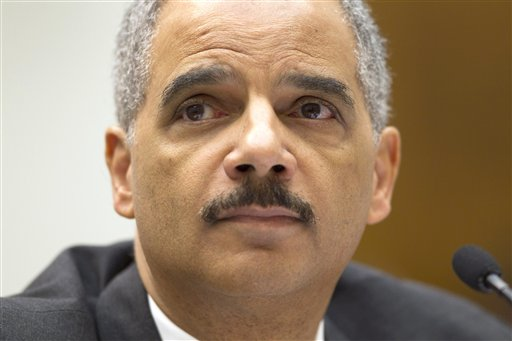
Advocates have railed against these unjustifiable inequities to no avail until Congress took one small step forward last year by passing the Fair Sentencing Act, which was signed into law by President Obama. The FSA reduced the disparity between crack cocaine and powder cocaine sentencing guidelines to 18-1, but it did not apply retroactively to prisoners already sentenced under the old 100-1 disparity. Now, U.S. Attorney General Eric Holder has backed the beginnings of a plan to further fix the broken sentencing system. In a new sentencing reduction scheme before the House of Representatives, federal prisoners already sentenced for crack cocaine offenses could be awarded an average sentence reduction of three years. If adopted, this plan would go the rest of the way to ease the baffling sentencing disparity between crack and powder cocaine. Over 12,000 prisoners could be effected by this change. In support of the reductions, Holder said, “There is simply no just or logical reason why their punishments should be dramatically more severe than those of other cocaine offenders.”
This change in policy would be a start, but it isn’t enough. First, sentencing guidelines are just that — guidelines. Unlike mandatory minimum sentencing, another broken drug policy that has been subject to searing scrutiny in recent years, judges are not required to abide by guidelines. They merely serve as suggestions for certain possible sentences within a range of minimums and maximums. While some judges may be anxious to mete out shorter sentences, many others may take no heed of the change in guidelines. Furthermore, there is simply no logical reason why people whose sole offense is the use of illegal substances should be subject to prison terms at all. The U.S. prison system is not a drug rehabilitation facility, and offers little to no treatment or effective counseling for re-entry in society. The reliance on strict incarceration to fix drug addiction merely creates an underclass of lifelong inmates, a revolving door between the streets and the prisons. If Congress is serious about correcting the harms of drug abuse, the money and the focus should be on creating programs that actually help addicts heal by addressing the reasons many of them turn to drugs in the first place: lack of education, lack of work, lack of available and affordable mental health treatment.
One of the oft-used arguments for the continued prohibition of crack and other similar substances is that their sale and use robs communities of otherwise productive members of society: Fathers and mothers, sons and daughters are lost to the effects of addiction. Particularly in impoverished communities, the correct response to the real problems of drug abuse cannot be to further rob them of their fathers, mothers, sons and daughters by making them prisoners of the criminal justice system instead of a substance. Mass incarceration for drug offenses is a classic, tragic example of the cure being worse that the disease. To truly address the problem of substance abuse, Congress must make sweeping, long-term changes to U.S. drug policy without relying on the shameful out-of-sight, out-of-mind approach of mass incarceration of American citizens.
Leslie Fenton is a 2005 graduate of the NYU School of Law. She is licensed in Louisiana and Illinois and currently runs her own family law practice in Chicago.
Related Stories
-
The anti-gay Tennessee bill no one is talking about
While the media obsesses over the “Don’t Say Gay” bill, the state enacted a different bigoted ordinanceLeslie Fenton May 26, 2011 -
Hate crime laws aren’t the answer
Until the government grants the LGBT community equality, society will continue to quietly condone such crimesLeslie Fenton October 11, 2010
Leslie Fenton is a 2005 graduate of the NYU School of Law. She is licensed in LA and IL and currently runs her own family law practice in Chicago. Follow her on Twitter @lawlesslawyer. More Leslie Fenton.
Related Stories
More Related Stories
-
"Original Coca-Cola had a very small amount of cocaine"
-
Corporations accused of wrongdoing win battle to keep identities secret
-
Weak, incompetent Democrats blow another one
-
Lois Lerner, IRS disaster
-
Cyber attacks could cause the next world war
-
Donald Rumsfeld worried that marriage equality will lead to polygamy
-
Biden cracks Obama teleprompter joke
-
IRS official takes the Fifth: "I have not done anything wrong"
-
Experts: Fox News spying scandal a game-changer
-
Lessons from Lincoln leave gay immigrants behind
-
Los Angeles elects first Jewish mayor
-
Peter King: There's "hypocrisy" over aid by Oklahoma senators
-
Anthony Weiner announces run for NYC mayor
-
How policy nihilists in the Senate doomed LGBT immigrants
-
On freedom of speech, Obama-Nixon comparisons are apt
-
Senate panel approves immigration overhaul
-
Slave descendants seek equal rights from Cherokee Nation
-
Peace Corps to allow gay couples to volunteer together
-
Is abortion about to doom Republicans again?
-
Anti-voter-fraud Tea Party group sues the IRS
-
The Bachmann-inspired romance novel
Featured Slide Shows
The week in 10 pics
close X- Share on Twitter
- Share on Facebook
- Thumbnails
- Fullscreen
- 1 of 11
- Previous
- Next
-
Lisa Montgomery embraces her nephew Thursday after a tornado tore apart her home in Cleburne, Texas. The twister killed six people and destroyed entire swaths of the North Texas town.
Credit: AP/LM Otero -
Jack McMahon, the defense attorney for abortion doctor Kermit Gosnell, speaks outside the Criminal Justice Center in Philadelphia Tuesday. His client was convicted of killing three babies in his clinic, and will serve multiple life sentences.
Credit: AP/Matt Rourke -
A photo taken Monday captures Vice President Joe Biden's response to a Milwaukee second-grader's innovative proposal to end America's epidemic of gun violence. This guy!
Credit: AP/Jenny Aicher -
Sen. Rand Paul, R-Ky., flanked by a grouper-eyed Michele Bachmann, addresses the IRS' admission that it targeted Tea Party groups in advance of the 2012 election. In an op-ed for CNN Thursday, the Kentucky senator slammed the president for his faux outrage.
Credit: AP/Molly Riley -
Ousted IRS chief Steven Miller is sworn in on Capitol Hill Friday. Miller testified before the House Ways and Means Committee on the extra scrutiny the agency gave conservative groups applying for tax-exempt status.
Credit: AP/J. Scott Applewhite -
Attorney General Eric Holder pauses as he testifies on Capitol Hill before the House Judiciary Committee Wednesday. Holder is under fire, among other things, for the Justice Department's gathering of phone records at the Associated Press.
Credit: AP/Carolyn Kaster -
O.J. Simpson sits during an evidentiary hearing at Clark County District Court in Las Vegas, Nev., Thursday. Simpson, who is currently serving a nine-to-33-year sentence in state prison for armed robbery and kidnapping, is using a writ of habeas corpus to seek a new trial.
Credit: AP/Las Vegas Review-Journal/Jeff Scheid -
Major Tom to ground control: On Sunday astronaut Chris Hadfield recorded the first music video from space, a cover of David Bowie's "Space Oddity."
Credit: AP/NASA/Chris Hadfield -
When it rains it pours. President Barack Obama speaks during a news conference Thursday with Turkish Prime Minister Recep Tayyip Erdogan, inexplicably inspiring an #umbrellagate Twitter meme.
Credit: AP/Jacquelyn Martin -
A smoke plume rises high above a road block at the intersection of County A and Ross Road east of Solon Springs, Wis., Tuesday. No injuries were reported, but the the wildfire caused evacuations across northwestern Wisconsin.
Credit: AP/The Duluth News-Tribune/Clint Austin -
Recent Slide Shows
- Share on Twitter
- Share on Facebook
- Thumbnails
- Fullscreen
- 1 of 11
- Previous
- Next
Related Videos
Most Read
-
Oklahoma senator: Tornado aid "totally different" from Sandy aid
Jillian Rayfield
-
Horrifying new trend: Posting rapes to Facebook
Mary Elizabeth Williams
-
Facebook's hate speech problem
Mary Elizabeth Williams
-
Revenge, ego and the corruption of Wikipedia
Andrew Leonard
-
Brad Pitt keeps breaking his silence on how boring marriage to Jennifer Aniston was
Daniel D'Addario
-
Inhofe and Coburn: Red state hypocrites
Joan Walsh
-
GOP attorney general candidate tried to force women to report miscarriages to police
Katie Mcdonough
-
Beltway scandal machine breaks, knows nothing about America
Joan Walsh
-
Tornado survivor to Wolf Blitzer: Sorry, I'm an atheist. I don't have to thank the Lord
Mary Elizabeth Williams
-
Zach Galifianakis to take formerly homeless woman to "Hangover 3" premiere
Prachi Gupta
Popular on Reddit
links from salon.com

42 points43 points44 points | 6 comments

39 points40 points41 points | 11 comments


Koch Brother To Host A Fundraiser For Ken Cuccinelli
IRS Official Refuses To Testify During House Oversight Hearing
Comments
18 Comments