

Way out on the edge of Forward Operating Base Hammer, where I lived for much of my year in Iraq as a Provincial Reconstruction Team leader for the U.S. Department of State, there were several small hills, lumps of raised dirt on the otherwise frying-pan-flat desert. These were “tells,” ancient garbage dumps and fallen buildings.
Thousands of years ago, people in the region used sun-dried bricks to build homes and walls. Those bricks had a lifespan of about 20 years before they began to crumble, at which point locals just built anew atop the old foundation. Do that for a while, and soon enough your buildings are sitting on a small hill.
At night, the tell area was very dark, as we avoided artificial light in order not to give passing insurgents easy targets. In that darkness, you could imagine the earliest inhabitants of what was now our base looking at the night sky and be reminded that we were not the first to move into Iraq from afar. It was also a promise across time that someday someone would undoubtedly sit atop our own ruins and wonder whatever happened to the Americans.
From that ancient debris field, recall the almost forgotten run-up to the American invasion, the now-ridiculous threats about Saddam Hussein’s weapons of mass destruction, Secretary of State Colin Powell lying away his own and America’s prestige at the U.N., those “Mission-Accomplished” days when the Marines tore down Saddam’s statue and conquered Baghdad, the darker times as civil society imploded and Iraq devolved into civil war, the endless rounds of purple fingers for stage-managed elections that meant little, the Surge and the ugly stalemate that followed, fading to gray as President George W. Bush negotiated a complete withdrawal of U.S. forces from Iraq by the end of 2011 and the seeming end of his dreams of a Pax Americana in the Greater Middle East.
Now, with less than seven months left until that withdrawal moment, Washington debates whether to honor the agreement, or — if only we can get the Iraqi government to ask us to stay — to leave a decent-sized contingent of soldiers occupying some of the massive bases the Pentagon built hoping for permanent occupancy.
To the extent that any attention is paid to Iraq here in Snooki’s America, the debate over whether eight years of war entitles the U.S. military to some kind of Iraqi squatter’s rights is the story that will undoubtedly get most of the press in the coming months.
How This Won’t End
Even if the troops do finally leave, the question is: Will that actually bring the U.S. occupation of Iraq to a close? During the invasion of 2003, a younger David Petraeus famously asked a reporter: “Tell me how this ends.”
Dave, it may not actually end. After all, as of October 1, 2011, full responsibility for the U.S. presence in Iraq will officially be transferred from the military to the Department of State. In other words, as Washington imagines it, the occupation won’t really end at all, even if the landlords are switched.
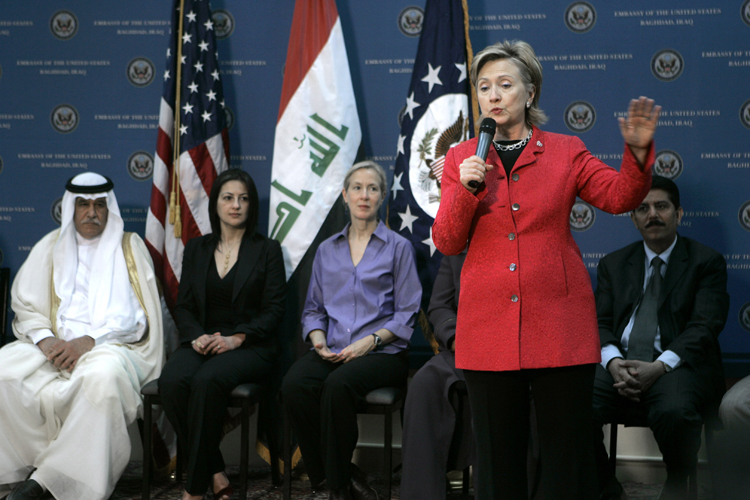
And the State Department hasn’t exactly been thinking small when it comes to its future “footprint” on Iraqi soil. The U.S. mission in Baghdad remains the world’s largest embassy, built on a tract of land about the size of the Vatican and visible from space. It cost just $736 million to build — or was it $1 billion, depending on how you count the post-construction upgrades and fixes?
In its post-“withdrawal” plans, the State Department expects to have 17,000 personnel in Iraq at some 15 sites. If those plans go as expected, 5,500 of them will be mercenaries, hired to shoot-to-kill Iraqis as needed, to maintain security. Of the remaining 11,500, most will be in support roles of one sort or another, with only a couple of hundred in traditional diplomatic jobs. This is not unusual in wartime situations. The military, for example, typically fields about seven support soldiers for every “shooter.” In other words, the occupation run by a heavily militarized State Department will simply continue in a new, truncated form — unless Congress refuses to pay for it.
It would better serve America’s interests to have an embassy sized to the message we now need to send to the Middle East, and it shouldn’t be one of boastful conquest.
A Place to Call Home
After initially setting up shop in a selection of Saddam Hussein’s Disneyesque palaces (in one of the dumbest PR moves of all time), plans were made to build an embassy worthy of the over-the-top optimism and bravado that characterized the invasion itself. Though officially photos of the inside of the Embassy compound are not allowed for “security” reasons, a quick Google search under “U.S. Embassy Baghdad” turns up plenty, including some of the early architectural renderings of the future gargantuan compound. (Historical minifact: back in 2007, TomDispatch first broke the story that the architect’s version of the embassy’s secret interior was displayed all pink and naked online.)
The blind optimism of that moment was best embodied in the international school building stuck in one corner of the embassy compound. Though a fierce civil-war-cum-insurgency was then raging in Iraq, the idea was that, soon enough, diplomatic families would be assigned to Baghdad, just as they were to Paris or Seoul, and naturally the kids would need a school. It may seem silly now, but few doubted it then.
Apartments were built, each with a full set of the usual American appliances, including dishwashers, in expectation that those families would be shopping for food at a near-future Sadr City Safeway and that diplo-tots Timmy and Sally would need their dinners after a long day at school. Wide walkways, shaded by trees and dotted with stone benches — ultimately never implemented — were part of the overall design for success, and in memory now serve as comic rim-shots for our past hubris.
In la-la land they may have been, but even the embassy planners couldn’t help but leave some room for the creeping realities of an Iraq in chaos. The compound would purify its own water, generate its own power, and process its own sewage, ensuring that it could outlast any siege and, at the same time, getting the U.S. off the hook for repairing such basic services in Baghdad proper.
High walls went up rimmed with razor wire, and an ever-more complex set of gates and security checkpoints kept creeping into the design. Eventually, the architects just gave up, built a cafeteria, filled the school building with work cubicles, and installed inches-thick bulletproof glass on every window. The embassy’s housing for 4,000 is, at present, packed, while the electrical generators run at capacity 24/7. They need to be upgraded and new units added very soon simply to keep the lights on.
And now, the embassy staff in Baghdad is about to double. One plan to accommodate extra personnel involves hot-bunking — sharing beds on day-and-night shifts as happens on submarines.
The embassy will also soon need a hospital on its grounds, if the U.S. Army truly departs and takes its facilities with it. Iraqi medical care is considered too substandard and Iraqi hospitals too dangerous for use by white folks.
You and Whose Army?
A fortress needs guards, and an occupier needs shock troops. The State Department’s army will be divided into two parts: those who guard fixed facilities like the embassy and those who protect diplomats as they scurry about trying to corral the mad Iraqis running the country.
For static security, a company named SOC will guard the embassy facilities for up to $973 million over five years. That deflowered old warhorse Blackwater (now Xe), under yet another dummy corporate name, will also get a piece of action, and of the money pie.
SOC will undoubtedly follow the current security company’s lead and employ almost exclusively Ugandans and Peruvians transported to Iraq for that purpose. For the same reasons Mexicans cut American lawns and Hondurans clean American hotel rooms, embassy guards come from poverty-stricken countries and get paid accordingly — about $600 a month. Their U.S. supervisors, on the other hand, pull down $20,000 of your tax dollars monthly. Many of the Ugandan and Peruvian guards got their jobs through nasty intermediaries (“pimps,” “slavers”), who take back most of their meager salaries to repay “recruitment costs,” leaving many guards as little more than indentured servants.
Long-time merc group Triple Canopy will provide protection outside the embassy fortress, reputedly for $1.5 billion over a five-year span. The overall goal is for State to have its own private army in Iraq: those 5,500 hired guns, almost two full brigades worth of them. The Army guards Fort Knox with fewer soldiers; my Forward Operating Base made due with less then 400 troops and I slept comfortably.
The past mayhem caused by contracted security is well known, with massacres in public squares, drunken murders in the Green Zone, and the like. Think of the mercs as what the Army might be like without its NCOs and officers: a frat house with guns.
Most of them are Americans, though with a few exotic Brits and shady South Africans thrown in. They love 5.11 clothing and favor fingerless leather gloves. Think biker gang or Insane Clown Posse fan boys.
Popular is a clean-shaven head, no moustache but a spiky goatee teased straight out. You know the look from late-night convenience store beer runs. They walk around like Yosemite Sam, arms out as if their very biceps prevented them from standing straight. They’re bullies of course, flirting inappropriately with women and posturing around men. Count on them to wear the most expensive Oakley sunglasses and the most unnecessary gear (gold man-bracelets, tactical hair gel). Think: Jersey Shore rejects.
Aggressive tattoos on all exposed skin seem a prerequisite for membership in Club Merc, especially wavy inked patterns around the biceps and on the neck. They all let on that they were once SEALS, Green Berets, SAS, or Legion of Doom members, but of course they “can’t talk about it.” They’re not likely to disclose last names and tend to go by nicknames like Bulldog, Spider, Red Bull, Wolverine, or Smitty.
If arrogance was contagious they’d all be sneezing. All Aryan, all dudely, and now all that stands between those thousands of State Department personnel and Iraq. Oh yes: the seersuckered and bow-tied diplomats are supposed to supervise the mercs and keep them on the right diplomatic path, kind of like expecting the chess club to run herd on the football team.
Air America
With the U.S Army departing in whole or in part by year’s end, most of the array of Army air assets State used will need to be replaced. A recently released State Department Office of the Inspector General’s (OIG) “Report on Department of State Planning for the Transition to a Civilian-led Mission in Iraq Performance Evaluation” explains that our diplomats will, in the future, have their own little Air America in Iraq, a fleet of 46 aircraft, including:
* 20 medium lift S-61 helicopters (essentially Black Hawks, possibly armed)
* 18 light lift UH-1N helicopters (new models of ‘Nam era Hueys, possibly armed)
* Three light observation MD-530 helicopters (Little Birds, armed, for quick response strike teams… er, um, observation duties)
* Five Dash 8 fixed-wing aircraft (50-passenger capacity to move personnel into the “theater” from Jordan)
The OIG report also notes that State will need to construct landing zones, maintenance hangars, operation buildings, and air traffic control towers, along with an independent aviation logistics system for maintenance and fueling. And yes, the diplomats are supposed to supervise this, too, the goal being to prevent an Iraqi from being gunned down from an attack helo with diplomatic license plates. What could go wrong?
How Much?
At this point, has cost started to cross your mind? Well, some 74 percent of embassy Baghdad’s operating costs will be going to “security.” State requested $2.7 billion from Congress for its Iraq operations in FY 2011, but got only $2.3 billion from a budget-minded Capitol Hill. Facing the possibility of being all alone in a dangerous universe in FY 2012, the Department has requested $6.3 billion for Iraq. Congress has yet to decide what to do. To put these figures in perspective, the State Department total operating budget for this year is only about $14 billion (the cost of running the place, absent the foreign aid money), so $6.3 billion for one more year in Iraq is a genuine chunk of change.
How Does It End?
Which only leaves the question of why.
Pick your forum — TomDispatch readers at a kegger, Fox news pundits following the Palin bus, high school students preparing to take SATs, unemployed factory workers in a food-stamp line — and ask if any group of Americans (not living in official Washington) would conclude that Iraq was our most important foreign policy priority, and so deserving of our largest embassy with the largest staff and largest budget on the planet.
Does Iraq threaten U.S. security? Does it control a resource we demand? (Yes, it’s got lots of oil underground, but produces remarkably little of the stuff.) Is Iraq enmeshed in some international coalition we need to butter up? Any evil dictators or WMDs around? Does Iraq hold trillions in U.S. debt? Anything? Anyone? Bueller?
Eight disastrous years after we invaded, it is sad but altogether true that Iraq does not matter much in the end. It is a terrible thing that we poured 4,459 American lives and trillions of dollars into the war, and without irony oversaw the deaths of at least a hundred thousand, and probably hundreds of thousands, of Iraqis in the name of freedom. Yet we are left with only one argument for transferring our occupation duties from the Department of Defense to the Department of State: something vague about our “investment in blood and treasure.”
Think of this as the Vegas model of foreign policy: keep the suckers at the table throwing good money after bad. Leaving aside the idea that “blood and treasure” sounds like a line from “Pirates of the Caribbean,” one must ask: What accomplishment are we protecting?
The war’s initial aim was to stop those weapons of mass destruction from being used against us. There were none, so check that off the list. Then it was to get rid of Saddam. He was hanged in 2006, so cross off that one. A little late in the game we became preoccupied with ensuring an Iraq that was “free.” And we’ve had a bunch of elections and there is a government of sorts in place to prove it, so that one’s gotta go, too.
What follows won’t be “investment,” just more waste. The occupation of Iraq, centered around that engorged embassy, is now the equivalent of a self-licking ice cream cone, useful only to itself.
Changing the occupying force from an exhausted U.S. Army that labored away for years at a low-grade version of diplomacy (drinking endless cups of Iraqi tea) to a newly militarized Department of State will not free us from the cul-de-sac we find ourselves in. While nothing will erase the stain of the invasion, were we to really leave when we promised to leave, the U.S. might have a passing shot at launching a new narrative in a Middle East already on edge over the Arab Spring.
Embassies are, at the end of the day, symbols. Sustaining our massive one in Iraq, with its ever-lengthening logistics and security train, simply emphasizes our failure there and our stubborn inability to admit that we were wrong. When a country becomes too dangerous for diplomacy, like Libya, we temporarily close our embassy. When a country becomes dangerous, but U.S. interests are still at stake, as in Yemen, we withdraw all but essential personnel. Similarly, in Baghdad, what’s needed is a modest-sized embassy staffed not by thousands but by scores — that is, only the limited number of people necessary to make the point that it is no longer an extension of a failed occupation.
Nothing can change the past in the Middle East, but withdrawing the troops on schedule and downsizing our embassy radically to emphasize that we are no longer in the business of claiming more space for the American empire might very well help change the future.
Peter Van Buren spent a year in Iraq as a State Department Foreign Service Officer serving as Team Leader for two Provincial Reconstruction Teams (PRTs). Now in Washington, he writes about Iraq and the Middle East at his blog, We Meant Well. His book, “We Meant Well: How I Helped Lose the Battle for the Hearts and Minds of the Iraqi People” will be published this September and can be preordered by clicking here.
[Source Note: The full text of the OIG Report on the transition from military to State Department control of the Iraq mission can be read as a .pdf file by clicking here. The OIG site is chock full of interesting documents under its “Reports and Publications” tab, including many items previously surfaced via FOIA requests. Though not cited in this article, another excellent source of primary documents about the US mission in Iraq can be found at the website of the Special Inspector General for Iraq Reconstruction.]
[Note: The views expressed here are solely those of the author in his private capacity and do not in any way represent the views of the Department of State, the Department of Defense, or any other entity of the U.S. Government. The Department of State has not approved, endorsed, or authorized this post.]
