

I’ll be absent from these pages for the next four weeks while I hole up in a cabin far from both the Internet and reliable cell phone reception. Whenever I tell people about my plans, they ask me which books I’ll be taking with me.
Too many books would make this something of a busman’s holiday for a reviewer, but I’ve packed a big stack all the same. Vacations, with their seclusion, quiet and idleness, invite long bouts of reading. Or, rather, they do when they don’t involve visiting a big city, staying with chatty relatives or herding kids. All too often, the books treasured up for the summer are still unread on Labor Day.
So why not plan a vacation devoted exclusively to reading? Twice annually, Bill Gates schedules a week-long “reading retreat” during which he does nothing but pore over the books and papers he’s set aside during the year. He’s not alone: The idea seems particularly popular in the UK, where you can sign up at London’s School of Life to receive a customized book list (they have “bibliotherapists” on staff to compile one based on a telephone consultation) and lodging in one of several modern country houses. The website promises “the perfect combination of great books and great architecture.”
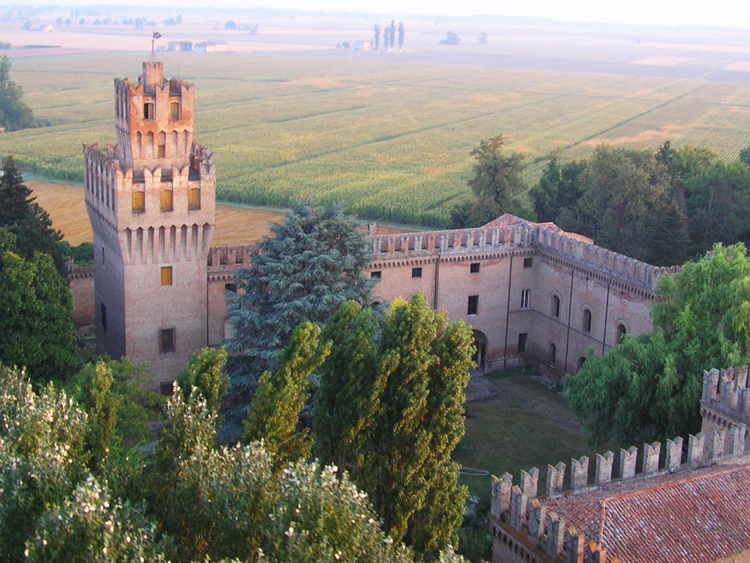
Those who prefer a more social experience can enroll in book-club-style retreats in which an assortment of guests all read the same book during the day and discuss it over the evening meal. Deb Snow, an English teacher currently running a guest house in rural Bulgaria, hosts a reading week with a pre-set list of books and meals provided. Reading Retreats in Rural Italy has a grander setting — the 14th-century Castello di Galeazza in Emilia-Romagna — but the terms are more informal and spartan. Clark Lawrence, who has been running these retreats for 15 years, explains, “Staying here is very similar to staying at a friend’s house. People have to share the two bathrooms. We cook meals and eat together.”
The exceedingly independent — if not downright antisocial — might follow the example of Natalia, who writes a travel blog called No Beaten Path. A harried mom seeking a reading getaway that involved “as little interacting with other people as possible, no housework, no cooking,” she recently rented a “simple” room at Glasshampton Monastery in Worcester, England, run by the Society of Saint Francis. Even the meals there are held in silence.
All these retreats have the advantage of being inexpensive once you get there — why shell out for luxurious surroundings when you hope to spend most of your time transported to another world by a book? If money were no object, I suppose shacking up in a fancy hotel with excellent room service would also do, but I’ve always found hanging around a hotel room all day to be obscurely depressing, no matter how posh the establishment.
The ideal reading retreat to my mind would involve four or five friends renting a big country house for a long weekend (at least three full days). They ought to be people who know each other well enough that they won’t be tempted to spend all their time either getting acquainted or catching up. Everyone agrees that the rooms with the comfiest chairs are strict quiet zones. Everyone takes turns cooking meals. And everyone reads whatever they want, because trying to get four people to agree on a single book on top of all the above conditions is asking too much of the gods.
Lastly, I wouldn’t schedule my reading retreat for the summer. It’s too easy to be lured away by outdoor activities. (To be honest, if I were on a reading retreat at the Castello di Galeazzo, I doubt I’d be able to resist the siren song of nearby Bologna.) Not only are rentals cheaper in the off season, but the fall — with its drizzly afternoons, blowing leaves and crackly evening fires — is far more congenial to the readerly impulse.
As for what I’ll be reading on my summer vacation, first on the list is “The Magician King,” by Lev Grossman, the sequel to his 2009 novel “The Magicians;” I can’t review it because he’s a friend, but I’ve been looking forward to it for months. I plan to listen to an audiobook of “The Eustace Diamonds” by Anthony Trollope (narrated by the great Simon Vance) on the drive up. The rest of my stack is advance readers’ copies of fall titles — specifically, new fiction by Haruki Murakami, Alan Hollinghurst, Helen DeWitt, Jeffrey Eugenides, Helen Oyeyemi, Colson Whitehead and Neal Stephenson, plus several promising-looking debuts. So if I don’t succumb to the charms of sun and sea, I should have plenty of books to recommend to Salon’s readers when I return.
Further reading
The School of Life’s Reading Retreats with Living Architecture in England
Reading Week at the Retreat Svaboda in Gorna, Bulgaria
Reading Retreats in Rural Italy at the Castello di Galeazzo in Emilia-Romagna
Natalia’s account of her reading retreat at the Glasshampton Monastery in Worcester in the No Beaten Path blog
