
Debt ceiling

Republicans listening to Erick Erickson, of course

The best way to understand Republicans' stubborn refusal to compromise at all on the debt ceiling

  • more
    • All Share Services

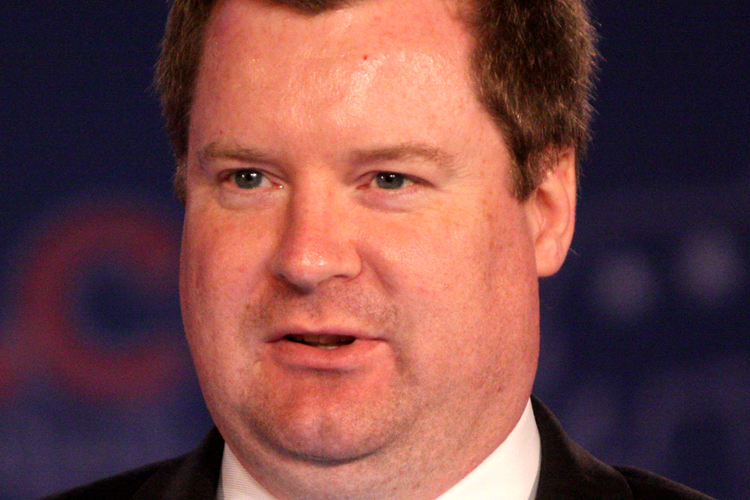
Republicans listening to Erick Erickson, of courseErick Erickson

Oh, wonderful. Dave Weigel says House Republicans are passing around a brilliant Erick Erickson post arguing that they should blow up the entire U.S. economy because Obama will get the blame.

The thesis:

Should the United States lose its bond rating, it will be called the “Obama Depression”. Congress does not get pinned with this stuff.

Hah. Ha ha ha. Just like the “Clinton government shutdown” that was not at all blamed on Newt Gingrich. No one ever blames Congress for stuff! Americans love Congress far, far too much to blame them for things.

Of course Erick Erickson’s analysis of the debt ceiling situation is simplistic, incorrect, and stupid. Erick Erickson wrote it. He’s a clown. When he’s not making incredibly stupid Hitler analogies or threatening to scare census workers with shotguns or calling on citizens to beat lawmakers to a “bloody pulp” over dishwasher detergent regulations, Erick Erickson is generally weeping salty tears of imagined victimhood over people calling him on the dumb shit he constantly says and writes.

And he’s incredibly influential among Republican activists and, apparently, Republican members of Congress. I am not surprised by this, at all. I bet your average GOP legislator reads RedState and listens to Rush and watches Fox, just like your average politically minded conservative citizen.

Here’s Barney Frank’s media diet: The New York Times, National Journal, the Capitol Hill papers, and The Economist if he finds the time. He doesn’t care for blogs.

This is one of the reasons why politics is basically impossible. Can you imagine if the Democrats only ever read Kos and watched Ed Schultz? That would make a lot of bloggers happy, sure, but most elected Democrats are actively repulsed by liberal commentators. They read “objective” newspapers and listen to NPR, while Republicans mainline the same noxious, misleading propaganda as their base. (I mean, Mitch McConnell probably reads grown-up newspapers, but Republicans have not seemed very interested in Mitch McConnell’s debt ceiling plan.)

Anyway, keep reading Erick Erickson, Republicans! Sure, you’ll ruin the entire country, but he will also lead the Republican party right into a hilarious and devastating political meltdown. Since we’re all probably screwed anyway we may as well enjoy ourselves.

Alex Pareene

Alex Pareene writes about politics for Salon and is the author of "The Rude Guide to Mitt." Email him at apareene@salon.com and follow him on Twitter @pareene

Don’t even think about cutting the deficit

Until unemployment is back down to 5 percent, budget reduction shouldn't be part of the conversation

  • more
    • All Share Services

Don't even think about cutting the deficitJob seekers attend the Minneapolis Career Fair held Wednesday, Nov. 2, 2011, in Bloomington, Minn. (Credit: AP/Jim Mone)
This originally appeared on Robert Reich's blog.

On planet Washington, where reducing the federal budget deficit continues to be more important than creating jobs, everyone is talking about “triggers” that automatically go into effect if certain other things don’t happen.

Yet no one is talking about the most obvious trigger of all — no budget cuts until the official level of unemployment falls to 5 percent, its level before the Great Recession.

The biggest trigger on the minds of Washington insiders is $1.2 trillion across-the-board cuts that will automatically occur if Congress’s supercommittee doesn’t come up with at least $1.2 trillion of cuts on its own that Congress agrees to by December 23.

That automatic trigger seems likelier by the day because at this point the odds of an agreement are roughly zero.

Here’s the truly insane thing: The triggered cuts start in 2013, a little over a year from now.

Yet no one in their right mind believes unemployment will be lower than 8 percent by then.

The cuts will come on top of the expiration of extended unemployment benefits, the end of a payroll tax cut, and continuing reductions in state and local budgets — all when American consumers (whose spending is 70 percent of the economy) will still be reeling from declining jobs and wages and plunging home prices. Even if Europe’s debt crisis doesn’t by then threaten a global financial meltdown, this rush toward austerity couldn’t come at a worse time.

In other words, what will really be triggered is a deeper recession and higher unemployment.

Democrats on the supercommittee are acting as if they haven’t met an unemployed person. They’re proposing $2.3 trillion in deficit reductions — half from spending cuts (including $350 billion from Medicare), half from tax increases. To make the tax increases palatable to Republicans, Democrats want to give Congress a chance to find the new revenues by overhauling the tax code. If that effort fails, automatic tax increases would be triggered. The top tax rate won’t rise (another bow to Republicans) but top earners’ itemized deductions will be limited.

Oh, and by the way, under the Democrats’ proposal, spending cuts and tax increases, triggered or not, would start in 2013.

The President (remember him?) is still hawking his $450 billion jobs bill, but he’s having a hard time being heard above the deficit-reduction din — in large part because he himself is simultaneously calling for deficit reduction, and most people outside Washington can’t make sense of how we do both.

The public is confused because they don’t get it’s a matter of sequencing. We need to do more spending now in order to bring back jobs and growth, then do less spending in the future — after the economy is once again generating jobs and growth.

That’s why it make more sense for Democrats to propose a deficit reduction plan that goes into effect only when jobs are back. The trigger should be the rate of unemployment — and a 5 percent rate would signal we’re back on track.

True, the unemployment rate is an imperfect measure of how bad things are (it doesn’t include everyone who’s working part-time but needs a full-time job, and those too discouraged to look for work), but at least it’s a useful way of comparing how much worse or better we are than we’ve been. And it can’t be fiddled with (the Bureau of Labor Statistics guards the calculation like gold in Fort Knox).

Deficit hawks in both parties fear if we put off the spending cuts we’ll never do them. But if we cut now, the ratio of deficit to the total economy just gets worse — because the economy stagnates and the swelling ranks of unemployed don’t pay taxes.

So the best of all worlds is to have a big jobs plan now, and also commit to automatic cuts triggered when unemployment falls to 5 percent.

The hawks should find this acceptable. Reasonable Republicans (if any are left) will, too. Democrats, if they still care about jobs, should lead the way.

Continue Reading Close

Robert Reich, one of the nation’s leading experts on work and the economy, is Chancellor’s Professor of Public Policy at the Goldman School of Public Policy at the University of California at Berkeley. He has served in three national administrations, most recently as secretary of labor under President Bill Clinton. Time Magazine has named him one of the ten most effective cabinet secretaries of the last century. He has written 13 books, including his latest best-seller, “Aftershock: The Next Economy and America’s Future;” “The Work of Nations,” which has been translated into 22 languages; and his newest, an e-book, “Beyond Outrage.” His syndicated columns, television appearances, and public radio commentaries reach millions of people each week. He is also a founding editor of the American Prospect magazine, and Chairman of the citizen’s group Common Cause. His widely-read blog can be found at www.robertreich.org.

“Occupy Wall Street,” today’s Whiskey Rebellion

The protest has its roots in the 1700s, when people stood up to the elites of their day: the Founding Fathers

  • more
    • All Share Services

A demonstrator from the Occupy Wall Street campaign stands with a dollar taped over his mouth as he stands in Zucotti Park near the financial district of New York September 30, 2011. (Credit: Lucas Jackson / Reuters)
This originally appeared on William Hogeland's blog.

Given some of my key subjects, I can’t help but be interested in the “occupy” movement that, at the moment, has hundreds of protesters more or less living in Zuccotti Park near the New York Stock Exchange in lower Manhattan for the past three weeks, and is apparently sparking similar protests in other cities. Until some 700 people were arrested over the weekend, you couldn’t find out much about this action via “mainstream media,” and much of the left media, such as it is, has been critical in some cases, and outright dismissive in others, regarding the movement’s evident formlessness and absence of specific goals.

That absence was pretty much undeniable. Still, in Salon, Glenn Greenwald has shrewdly criticized liberal-Democrat scorn for Occupy Wall Street. On the other hand, Mother Jones criticizes the movement on bases other than those that Greenwald attacks….

But I write about the deep, founding roots of rowdy, American populist protest and insurrection, often visionary and even utopian, yet informed and practical too, specifically over money, credit, and the purpose and nature of public and private finance. And despite my pop-narrative books on the subject, and despite my articles here, and in such place as Newdeal20.org (articles picked up by AlterNet, Huffington, Salon, Naked Capitalism and others), key indicators of my relative impact (like royalty statements!) give me a sneaking suspicion that most people still don’t connect the American founding period with a rugged drive on the part of ordinary people for equal access to the tools of economic development and against the hegemony of the high-finance, inside-government elites who signed the Declaration and framed the Constitution and made us a nation.

Sometimes people even ascribe democratic ideas to the famous upscale American Revolutionaries, who to a man actually hated democracy and popular finance. Thomas Paine, the exception, was ultimately rebuked and scorned by all of the others.

The difficulty in dealing with our founding battle for democratic economics arises in part because the movement was not against England but against the very American banking and trading elites who dominated the resistance to England. That complicates our founding myth, possibly unpleasantly. Also, it was a generally losing battle. With ratification of the Constitution, Hamiltonian finance triumphed, and people looking to Jefferson and Madison for finance and economic alternatives to Hamilton are barking up the wrong tree, since what those men knew, or even really cared, about finance could be written on a dime. (Anyway, in pushing for creating a  nation, Madison supported Hamiltonian finance down the line. Their differences came later.) When Occupy Wall Street protesters say “It’s We the People!”  they’re actually referring to a preamble, intending no hint of economic democracy, to a document that was framed specifically to push down democratic finance and concentrate American wealth for national purposes. Not very edifying, but there it is.

The Tea Party, meanwhile, has taken up founding economic issues from a right-wing point of view, associating itself with the upper-middle-class Boston patriots (often mistaken for populist democrats) who led a movement against overrreaching British trade acts in the 1760′s and were important to the impulse toward American independence. I’ve written fairly extensively about where and how I think the Tea Party goes wrong on the history of the founding period. But at least they’re framing their objections to current policy, and framing the historical roots of their ideas, not mainly in cultural but in economic terms.

Like it or not, though, it is Occupy Wall Street that has the most in common, ideologically, not with those Boston merchants and their supporters but with the less well-known, less comfortably acknowledged people who, throughout the founding period, cogently proposed and vigorously agitated for an entirely different approach to finance and monetary policy than that carried forward by the famous founders. Amid horrible depressions and foreclosure crises, from the 1750′s through the 1790′s, ordinary people closed debt courts, rescued debt prisoners, waylaid process servers, boycotted foreclosure actions, etc. (More on that here and here.) They were legally barred from voting and holding office, since they didn’t have enough property, so they used their power of intimidation to pressure their legislatures for debt relief and popular monetary policies. Their few leaders in legit politics included the visionary preacher Herman Husband, the weaver William Findley, and the farmer Robert Whitehill.

They had high hopes for American independence. In the 1770′s, their “out-of-doors” collaboration with the famous elites was critical to enabling the Declaration of Independence — even though none of their names appears there (well, Benjamin Rush’s does, but by then he’d become unradicalized). Their democratic, egalitarian hopes dashed, in the 1780′s, in western Massachusetts, they marched on the state’s armory in Springfield to reverse regressive finance policies that had again plunged ordinary people into debt peonage and foreclosure while bailing out rich creditors (elites called that populist action, reductively, Shays’s Rebellion). In the 1790′s, with the Constitution in force, and Hamilton’s economics the law of a powerful new nation (partly in direct reaction to the Shays action), populists took over the militia and debt-court system throughout western Pennsylvania and western counties of neighboring states, flew their own flag, and tried to secede from the United States and form an economically egalitarian country. Hamilton dubbed that action, again in a successful effort to reduce it, the Whiskey Rebellion, and he and President Washington responded, naturally enough, by occupying western Pennsylvania with federal troops.

It is my possibly vain hope that reading up on such historical matters might inspire efforts like Occupy Wall Street to greater cogency and a deeper, more solid foundation in longstanding (if embattled and problematic) American values than they now seem to possess. You don’t have to look as late as the 19th-century Populists and the 1930′s labor movement, for example, to find an American left deeply immersed in both economic issues and an ambitious vision of a better country. Those things were present at the creation.

Occupy Wall Street probably doesn’t, when you shake it down, want to secede from the union like the whiskey rebels — happily enough. But those rebels didn’t start out by wanting to secede, either; they’d fought in the awful front lines of the Revolution in hopes that those sacrifices might lead to something for them and their families; it didn’t. Occupy Wall Street does seem to want to secede, somehow, from the hopeless-feeling regurgitation, through the two political parties, of elite finance theories and policies that never seem sincerely dedicated to any fundamental improvement of opportunity for what they call, not wrongly, “the 99 percent.”

The problem for Occupy Wall Street is that their founding-period political ancestors, who were indeed good at “occupying,” almost always accompanied their efforts with, for one thing, published resolutions registering specific demands and objections (not “this situation sucks” — which of course it does —  but “replace a regressive tax with a progressive one,” “give us access to the franchise,”  ”issue paper money,” “take away Robert Morris’s bank charter,” etc.). On Twitter I’ve tried to collect some specific goals from Occupy people. Generally those who respond seem interested not in anarchist dismantling of government or sweeping stuff like ending capitalism but, say, real regulation. Which is cool if only because my early American democratic-finance activists called themselves “regulators”!

But a lot of efforts to state a goal for the protest itself devolve in sloganeering about the economic situation and self-admiring paeans to the virtues of protesting. Wouldn’t galvanizing this stuff require… leadership? Our founding democratic-finance activists weren’t such communitarians that they refused to have leaders and set achievable goals. They were used to being rank-and-file — even though as miltiamen, they elected their leaders.

And they knew where they’d succeeded and failed. This thing in Zuccotti Park is open-ended. It has no declared closing date. How can it ever declare victory, get the hell out, build its organization, and come back to fight another day?

Continue Reading Close

William Hogeland is the author of the narrative histories "Declaration" and "The Whiskey Rebellion" and a collection of essays, "Inventing American History." His blog is Hysteriography.

Today’s subprime American politics

The Dow drops but demand for treasury bills stays strong after S&P downgrade. Washington's answer: more austerity

  • more
    • All Share Services

Today's subprime American politicsPresident Barack Obama speaks in the State Dining Room of the White House in Washington, Monday, Aug. 8, 2011. (AP Photo/Carolyn Kaster)(Credit: AP)

Does anything prove the craziness of Standard and Poor’s downgrading U.S. debt than the fact that while the stock market dropped 6.66 % Monday, demand for treasury bills did not? “Investors still run to Treasurys,” read the Wall Street Journal headline today.  Still, the downgrade underscores the fact that we have a subprime political class today. The demand for treasurys doesn’t represent any kind of good news for the economy; it just shows the cluelessness of those who believe the deficit is the nation’s biggest problem, when in fact the problem is the lack of jobs.

As he always does, Paul Krugman described “the stupid narrative” best in a short blog post, “The Downgrade Doom Loop.” It may go like this, he warns:

1. US debt is downgraded, sparking demands for more ill-advised fiscal austerity

2. Fears that this austerity will depress the economy send stocks down

3. Politicians and pundits declare that worries about US solvency are the culprit, even though interest rates have actually plunged

4. This leads to calls for even more ill-advised austerity, which sends us back to #2

It’s wrong to use the stock market as a stand-in for a good or bad economy, but today’s sell-off is disturbing. The Dow dropped a comparable distance on Sept. 17, 2001, meaning the Tea Party’s debt-ceiling hostage-taking hurt the stock market almost as badly as a terrorist attack. No, I’m not equating the two things, I’m just noticing. And if you want to complain that I’ve once again used the term “hostage-taking,” please take it up with Senate Minority Leader Mitch McConnell, who bragged about it. Tea Party presidential candidate Michele Bachmann, who voted against the debt-ceiling deal that gave her House Speaker John Boehner 98 percent of what he wanted, called the downgrade “a deeply troubling indicator of our country’s decline under President Obama.” — even though S&P specifically called out Republicans for their unwillingness to raise taxes. The integrity-free Mitt Romney, who went AWOL during the debt-ceiling debate and then opposed the compromise, likewise blamed Obama for “a massive loss of confidence that resulted in an embarrassing downgrade.” 

But Obama isn’t above criticism here either. I think sometimes progressives, myself included, act like he can wave a magic wand and change political reality – get 60 votes for his policy in the Senate, or make the Tea Party go away. He can’t. But in his first remarks on the S&P downgrade Monday, he said something revealing and disturbing: “We knew from the outset that a prolonged debate over the debt ceiling — a debate where the threat of default was used as a bargaining chip — could do enormous damage to our economy and the world’s.”

In fact Obama himself tried to use GOP insanity about the debt ceiling to craft a “grand bargain” to cut entitlements and raise “revenues.” So he bears some responsibility for the “prolonged debate over the debt ceiling” and participating in making it “a bargaining chip.” Had he come out and said he wouldn’t let the GOP hold the economy hostage, invoked Ronald Reagan and Bill Clinton, and scheduled the “grand bargain” debate for some other occasion, they might have held him and the economy hostage anyway, but at least he wouldn’t have appeared willing to pay them ransom. Obama also said “there’s not much further we can cut” from the defense budget, which is absolutely not true. But since the “trigger” that the debt-ceiling deal used to try to force a deficit compromise includes steep defense cuts, the president just telegraphed he won’t allow that trigger to be pulled.

Obama tried to reassure the nation that no matter what S&P says, “we’ve always been and always will be a AAA country.” That’s actually not true. We’re a AAA nation when we come together to solve our problems and take steps to reduce economic inequality and spread prosperity, as we did in the New Deal and post World War II decades. We need to do it again. Flattering Americans’ sense of their own greatness isn’t enough.


Continue Reading Close
Joan Walsh

Joan Walsh is Salon's editor at large.

Should liberals have buyers’ remorse over Obama?

Bill Maher asks if Hillary Clinton would have been more progressive. We have no idea

  • more
    • All Share Services

Should liberals have buyers' remorse over Obama?U.S. Secretary of State Hillary Rodham Clinton, right, shares a light moment with Indonesian Foreign Minister Marty Natalegawa at the Joint Commission Meeting Indonesia-U.S. in Nusa Dua, Bali, Indonesia, Sunday, July 24, 2011. (AP Photo/Dita Alangkara)(Credit: AP)

I dodged one of my least favorite questions on “Real Time With Bill Maher” Friday night: Would Hillary Clinton have been a better choice for liberals than Barack Obama in 2008? Neil deGrasse Tyson got me off the hook by quickly answering “yes”; you can watch the segment below.

I ducked the question because I honestly have no idea — and I have no desire to refight the bruising battles of the 2008 Democratic primary. I’m firmly on record questioning the notion that Obama was the clear progressive, compared to Clinton. There was absolutely no evidence that was true. One advantage to Clinton, I thought, was that she knew the extent to which the right wing would go to sabotage a Democratic president. On the other hand, I had sympathy with people who dreaded a sequel to the ugly Clinton Wars, and thought a different Democrat might have a better chance to avert a rerun of ’90s-style partisan warfare. I didn’t agree, but I thought that was a fair and reasonable hope.

One great thing about Obama’s primary victory is now we know that’s not true. This is the modern Republican Party. It turns out they were the ones who adopted Malcolm X’s slogan, “By any means necessary.” As disgusted as I am with S&P’s decision to downgrade U.S. debt, the ratings agency took the unusual step of calling out the GOP in its press release, predicting future fiscal peril “because the majority of Republicans in Congress continue to resist any measure that would raise revenues.” Sen. John Kerry was right to call it the “Tea Party downgrade” on “Meet the Press” Sunday. They have now made clear they’ll wreck the economy as long as they can wreck Obama’s presidency. And we have no way to know that Clinton’s history with right-wing saboteurs would have enabled her to fight more effectively.

We also have no way to know whether a president who came into office determined to fight the GOP rather than reconcile would have had better success. Drew Westen argues it would have, in a New York Times essay that went viral Sunday. Like a lot of progressives, Westen faults Obama for his lack of “narrative,” particularly his inability or unwillingness to describe the role Wall Street and the Bush administration played in cratering the economy. Today, one party believes compromise is a mortal sin, and the other party is led by someone who thinks it’s a virtue. It’s not Obama’s fault that the Tea Party took over the GOP, but you can argue he’s emboldened them by his concessions. Now you have Senate Minority Leader Mitch McConnell chortling that Tea Party extremists in his party “thought the default issue was a hostage you might take a chance at shooting,” which taught the leadership that “it’s a hostage that’s worth ransoming.” Obama can expect the GOP to search for new hostages through 2012.

On CNN’s “Reliable Sources” Sunday, conservative Dennis Prager complained about liberals accusing Republicans of economic terrorism and hostage-taking. I argued that since McConnell himself bragged about forcing the president into “ransoming” the debt-ceiling “hostage,” there should be no controversy over Democrats using the same term. It’s exactly what they did. You can see that after the “Real Time” clip below.

Here’s “Real Time,” complete with a flattering freeze frame of me next to conservative filmmaker and Sarah Palin fan Steve Bannon, who made “The Undefeated”:

Here’s “Reliable Sources”:

Continue Reading Close
Joan Walsh

Joan Walsh is Salon's editor at large.

S&P to the U.S: Your credit is no good

Why the Tea Party-friendly Republicans of the U.S. House own this epic humiliation

  • more
    • All Share Services

S&P to the U.S: Your credit is no good

On Friday night, after a swirl of rumors and conflicting news reports that will be grist for the Washington pundit mill for years to come, Standard & Poor’s downgraded the credit rating of the United States. It’s a big deal, if only for the fact that the U.S., the biggest economy in the world and the sole superpower on the planet, has maintained a pristine credit rating since 1941, longer than any other nation.

There are great paradoxes inherent in this move. During these troubled times, United States Treasury bonds are still currently considered one of safest places to put your money in the world. And that may continue — the black humor traded by financial journalists is already flying. As CNBC’s John Carney tweeted, “Can’t wait for headline: Treasuries Rally As Investors Flee to Safety Following Downgrade.”

The practical impact of this downgrade may not immediately change anything — U.S. Treasuries will still be desirable in an uncertain world.

It’s also worth noting that two of the other big three rating agencies did not downgrade the U.S.’s credit rating when they made their own calls in recent days. The question of what exactly  a downgrade by 1/3 of the Big Three means will be a hot topic as Monday morning’s market opening approaches.

There was some high controversy on Friday night as the day wound down. First, ABC News’ Jake Tapper reported that a government official had told ABC that the White House was prepared for, and expecting, a downgrade. An hour or so later, numerous media outlets reported that S&P had warned the White House that a downgrade was coming, but the Treasury had pointed out a major math error in S&P’s calculations, and S&P had pulled back! But fast on the heels of that news came the actual downgrade.

It’s going to be fun to figure out what just happened. And we can also question, with great vigor, whether one of the credit rating agencies that played such a huge role in facilitating the financial crisis by blithely giving rank, putrid toxic waste mortgage-backed securities the highest possible rating deserves to have any power at all in reckoning the credit-worthiness of U.S finances. But let’s put aside those controversies and look at a couple of paragraphs from S&P’s release:

More broadly, the downgrade reflects our view that the effectiveness, stability, and predictability of American policymaking and political institutions have weakened at a time of ongoing fiscal and economic challenges to a degree more than we envisioned when we assigned a negative outlook to the rating on April 18, 2011.

Since then, we have changed our view of the difficulties in bridging the gulf between the political parties over fiscal policy, which makes us pessimistic about the capacity of Congress and the Administration to be able to leverage their agreement this week into a broader fiscal consolidation plan that stabilizes the government’s debt dynamics any time soon.

I can’t disagree with that assessment, and I don’t think anyone else who has paid close attention to how Congress and the administration have worked together the last few months — or years — could disagree. Who is to blame? Well, we all our have opinions. Republicans will call this Obama’s downgrade, and Democrats will call it the Tea Party’s shame. Y’all can argue about it to your heart’s content while I go on vacation.

But here’s what I think. If Obama had gotten his grand bargain — if the Republicans had agreed to some revenue increases in return for some entitlement cuts — our credit would still be good. Yes, the bargain itself, from a liberal perspective, would have been a pretty bad deal, but it would have avoided this embarrassment. I don’t know what the trickle-down effects of this downgrade will be, but if interest rates rise as a result, that could have wide-ranging effects on every aspect of our economy. Mortgage rates will rise, loans will be harder to get, the cost of borrowing for the United States government will go up.

House Republicans refused to compromise. House Republicans refused a grand bargain that liberals viewed as a massive step backwards for progressives. House Republicans own this credit downgrade.

Continue Reading Close
Andrew Leonard

Andrew Leonard is a staff writer at Salon. On Twitter, @koxinga21.

Page 1 of 24 in Debt ceiling