
A brief history of controversial presidential vacations

Barack Obama's not the first one to be criticized for taking some time off from running the country

Topics: American History, War Room, Barack Obama, George W. Bush, John F. Kennedy,

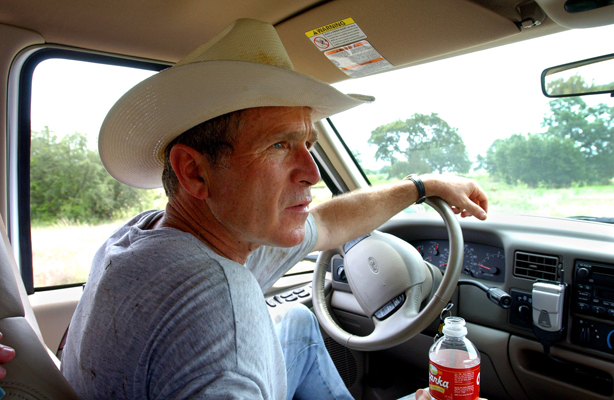
A brief history of controversial presidential vacationsGeorge W. Bush on vacation at his ranch in 2002.

Barack Obama is catching a lot of flak for planning a summer vacation. The president will spend 11 days in Martha’s Vineyard, and critics say that’s a bad idea when markets are skittish and millions of Americans are out of work or struggling to get by. Of course, Republicans criticizing Obama are just mirroring what Democrats said about President George W. Bush, who, at this point in his presidency, had taken 180 “days off” to Obama’s 61.

Partisan wrangling over presidential vacation time is as old as the Republic itself. The Salon.com War Room Historical Fun Fact Team did some research, and found out what sort of grief past presidents got when they wanted to recharge their batteries:

  • 1793 George Washington invents the tradition of the “presidential vacation” when a yellow fever epidemic in Philadelphia leads him to spend November in Germantown. Despite Washington’s immense personal popularity, Aaron Burr is rumored to have made a joke involving the color yellow and Washington’s false teeth.
  • 1830: Andrew Jackson invites all free men to accompany him on “The People’s Vacation.” Tens of thousands of rowdy citizens converge on Niagara Falls, bringing with them copious quantities of highly alcoholic rum punch. Fistfights and brawls soon break out, culminating in the burning and looting of the city of Niagara Falls on the Canadian side. The incident nearly leads to a war with Britain. “Jackson’s so-called Vacation has made a National Lampoon of the presidency,” says one partisan newspaper.
  • 1865 After four grueling years of bloody war and tremendous personal tragedy, President Lincoln decides to take one lousy night off and go to the theater to see a show.
  • 1905-1909: Teddy Roosevelt spends entire second term on safari in “the dark continent.” Responds to criticisms from Democrats by claiming he’s expanding America’s vital Strategic Ivory Reserve. Embarrassingly, vacation leads Roosevelt to forget to run for reelection in 1908.
  • 1923 Upon learning that President Calvin Coolidge had been out of Washington on vacation in Marion, Ohio, for a week, Dorothy Parker’s less clever sister is reported to have remarked, “How could they tell?”
  • 1936 President Franklin D. Roosevelt takes a much-needed therapeutic trip to Warm Springs, Ga., where he had founded the Roosevelt Warm Springs Institute for Rehabilitation. Father Coughlin calls him a tool of the international Jewish Banker Communist conspiracy, though it is unclear whether or not this was related to the vacation.
  • 1961 The Kennedys popularize taking vacations without hats when they’re seen not wearing hats in Hyannis Port. Southern “Dixiecrats” in Congress take to the floor to denounce not wearing hats as a violation of States’ Rights, specifically Georgia’s law calling for Negroes seen in public hatless to be fined or imprisoned.
  • 2001 George W. Bush takes August off. A group of particularly critical political opponents responds by murdering thousands of Americans.
Continue Reading Close
Alex Pareene

Alex Pareene writes about politics for Salon and is the author of "The Rude Guide to Mitt." Email him at apareene@salon.com and follow him on Twitter @pareene

Next Article

Featured Slide Shows

What To Read Awards: Top 10 Books of 2012 slide show

close X
  • Share on Twitter
  • Share on Facebook
  • Thumbnails
  • Fullscreen
  • 1 of 10
  • 10. "The Guardians" by Sarah Manguso: "Though Sarah Manguso’s 'The Guardians' is specifically about losing a dear friend to suicide, she pries open her intelligent heart to describe our strange, sad modern lives. I think about the small resonating moments of Manguso’s narrative every day." -- M. Rebekah Otto, The Rumpus

  • 9. "Beautiful Ruins" by Jess Walter: "'Beautiful Ruins' leads my list because it's set on the coast of Italy in 1962 and Richard Burton makes an entirely convincing cameo appearance. What more could you want?" -- Maureen Corrigan, NPR's "Fresh Air"

  • 8. "Arcadia" by Lauren Groff: "'Arcadia' captures our painful nostalgia for an idyllic past we never really had." -- Ron Charles, Washington Post

  • 7. "Gone Girl" by Gillian Flynn: "When a young wife disappears on the morning of her fifth wedding anniversary, her husband becomes the automatic suspect in this compulsively readable thriller, which is as rich with sardonic humor and social satire as it is unexpected plot twists." -- Marjorie Kehe, Christian Science Monitor

  • 6. "How Should a Person Be" by Sheila Heti: "There was a reason this book was so talked about, and it’s because Heti has tapped into something great." -- Jason Diamond, Vol. 1 Brooklyn

  • 4. TIE "NW" by Zadie Smith and "Far From the Tree" by Andrew Solomon: "Zadie Smith’s 'NW' is going to enter the canon for the sheer audacity of the book’s project." -- Roxane Gay, New York Times "'Far From the Tree' by Andrew Solomon is, to my mind, a life-changing book, one that's capable of overturning long-standing ideas of identity, family and love." -- Laura Miller, Salon

  • 3. "Billy Lynn's Long Halftime Walk" by Ben Fountain: "'Billy Lynn's Long Halftime Walk' says a lot about where we are today," says Marjorie Kehe of the Christian Science Monitor. "Pretty much the whole point of that novel," adds Time's Lev Grossman.

  • 2. "Bring Up the Bodies" by Hilary Mantel: "Even more accomplished than the preceding novel in this sequence, 'Wolf Hall,' Mantel's new installment in the fictionalized life of Thomas Cromwell -- master secretary and chief fixer to Henry VIII -- is a high-wire act, a feat of novelistic derring-do." -- Laura Miller, Salon

  • 1. "Behind the Beautiful Forevers" by Katherine Boo: "Like the most remarkable literary nonfiction, it reads with the bite of a novel and opens up a corner of the world that most of us know absolutely nothing about. It stuck with me all year." -- Eric Banks, president of the National Book Critics Circle

  • Recent Slide Shows

  • Share on Twitter
  • Share on Facebook
  • Thumbnails
  • Fullscreen
  • 1 of 10

More Related Stories

Comments

80 Comments

Comment Preview

Your name will appear as username ( profile | log out )

You may use these HTML tags and attributes: <a href=""> <b> <em> <strong> <i> <blockquote>