

“The only art here is the art of confusion.” That’s one of many corrosive lines from “Chaos Cinema: The Decline and Fall of Action Filmmaking,” a two-part video essay about the shaky camera and super-fast cutting that dominate so many modern action films and TV shows.
Written and edited by a young German film student named Matthias Stork, the piece gathers together a lot of the complaints that I’ve heard and read about contemporary action films into a sort of manifesto. The piece debuted earlier this week at Press Play, a video essay-driven blog that I founded. Stork created it as way to explain how action film style has changed from the more stately type seen in such films as “Bullitt,” ”Raiders of the Lost Ark” and “Die Hard” into something much faster, more frenetic and — Stork believes — sloppier and stupider.
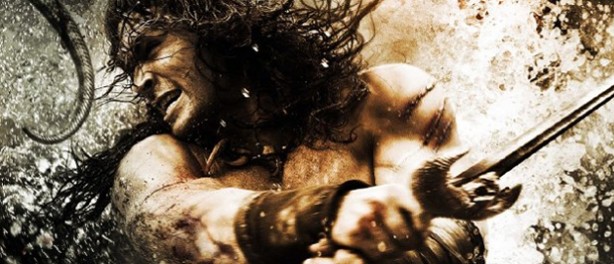
This is an issue dear to my heart. Film Salon readers might recall that earlier this year I wrote a piece griping about “Battle Los Angeles,” an alien invasion epic that used a shaky camera and fast cutting so promiscuously (to capture routine dialogue scenes as well as shootouts) that I found it nauseating and amateurish. You can also see it used in the recent, very chaotic “Conan the Barbarian” remake, which makes John Milius’ 1982 original seem positively stately in comparision. The style has been around just long enough to be considered a bona fide mode, or a school, of filmmaking, one that could be seen in everything from “Black Hawk Down” and TV’s “24” to “Inception” and “Taken.” And it does have its high-profile defenders, including Ignatiy Vishnevetsky, the cohost of the new “Roger Ebert Presents At The Movies,” who has written a number of pieces defending Chaos Cinema’s leading practitioners, including Michael Bay (the “Bad Boys” and “Transformers” movies) and Tony Scott (“Domino,” ”Unstoppable”). (Scott, Vishnevetsky wrote, “is uninterested in the distinctions created by edits, uninterested in the images individually. He is only interested in the movie as a surface, bubbling, boiling, sometimes dead calm, sometimes a hurricane.”)
Stork contacted me a couple of weeks ago asking if I’d be interested in running a video essay on the subject, and I said yes. I was simpatico with what seemed to be his premise. But I was unprepared for the ferocity of his attack on this sort of film. I’ve always exempted a number of chaos cinema works from my own rants, notably the “Bourne” trilogy and Fox’s “24,” where I think the style complemented the story’s sense of paranoia and relentless momentum. But with a few notable exceptions, Stork’s video essay pretty much condemns the style wholesale.
The piece has sparked heated debate among film buffs, with some applauding Stork for summarizing and condemning trends they’ve been complaining about for years, and others chiding the filmmaker for ignoring solid recent examples of more traditional action filmmaking (including “Captain America” and “Rise of the Planet of the Apes”) and otherwise writing off a style that can be valid, not to mention artful and necessary, if deployed in the right way. (One film blogger in my Twitter stream called Stork’s attitude, “neoclassical get-off-my-lawnism.”)
What do you think?
Chaos Cinema Part 1 from Matthias Stork on Vimeo.
Chaos Cinema Part 2 from Matthias Stork on Vimeo.
