
Consumerism
I survived Target’s Missoni disaster
When the retailer launched its new line, all hell broke loose at stores across the nation. I know -- I was there
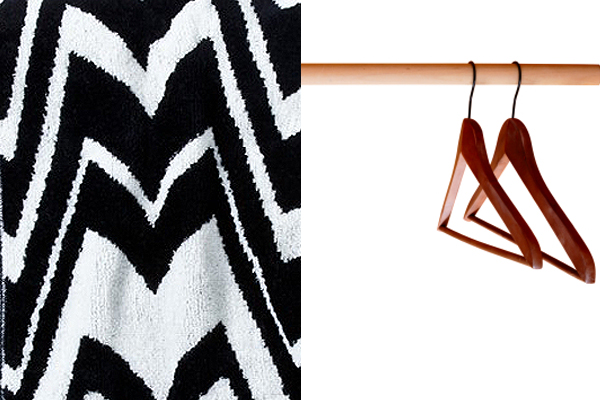
Like approximately 356 of my Facebook friends, I spent Tuesday morning driving from Target to Target looking for Missoni. Missoni! Missoni! Are you sick of hearing the word yet? In the last day, various media outlets have been going mad about Target’s Missoni disaster. When the megastore chain announced it would be selling the beloved brand’s clothes, fans went crazy — a little too crazy. Buyers crashed the Target website, and there were reports of stampedes, and assorted other frenzies. And I should know, because I witnessed Missoni Madness firsthand.
I’m not even a particular fan of the Missoni aesthetic, but Target has been running the groovy spy-woman commercial for it so incessantly that I’d become practically hypnotized into thinking I really needed some new bath towels and a sweater (autumn is almost here!). I’d be helping the economy, after all — God Bless America, blah blah blah. Also: Target sells those movie-theater-boxes of candy and I was completely out of Lemonheads.
I spent Monday night looking at the Missoni-for-Target look book and had settled on the items I wanted. No, needed. And I had what I considered an inspired battle plan for Nashville’s various Target locations sketched out on a Post-it note: hit the more “Country” Target first for the menswear (figuring farmers in bargello knit cardigans was probably an unusual combination) and then, if necessary, hit the “Soccer Mom” Target for the bath towels (figuring moms would be busy in school drop-off lanes offloading the Cassidys and Calebs of America). I wasn’t even going to bother with the “Fancy Urban” Target (the one with the Starbucks inside); every skinny jeans’ed hipster girl within a 15-mile radius of the place would be in line there for a melamine bowl and a tote bag.
So I set my alarm for 7 a.m. and by 8 o’clock on the nose, I was the sole car in the parking lot of Country Target. Could it be that my plan was unfolding perfectly? Would I just waltz in, get exactly two black-and-white Famiglia Wavy bath towels, two black-and-white Famiglia Wavy hand towels, and one black-and-white men’s cardigan? Alas, no. Country Target had apparently missed the memo about the upcoming flame-stitch feeding frenzy and not all of the stuff was out yet. A few bowls here and there, a scarf. No towels. No menswear. Worrisome.
Soccer Mom Target was just 15 minutes away if I caught all the lights, so off I went like the starving Joads headed for the promised land. Speaking of starving, ohhh, look, a Chick-fil-A. I should probably grab a little sustenance. In the drive-through lane, I started getting frenzied texts from a friend who had braved the Fancy Urban Target. “ALL SHELVES EMPTY,” her text said. “CRAZY WOMEN WITH CARTS FULL” and “ALL I WANT IS AN EFFING RUG.” Panic started to set in. Would I be too late in arriving at Soccer Mom Target? More important, was my chicken biscuit ever going to get here?
I arrived in the Soccer Mom Target parking lot at 8:25, dismayed to see it chock-full of cars, each one of them empty … just waiting to be stuffed with my black-and-white Famiglia towels. I raced into the store and there on an end cap were exactly two of the bath towels I had been dreaming of. I grabbed them. How much were they? $10? $20? $1,000? I had no idea. It didn’t matter. A quick race through the aisles also revealed the men’s cardigan I was after. Into the cart it went. But there were no hand towels; someone had beat me to them by mere minutes. Stupid Chick-fil-A and your delicious chicken biscuit siren song! A third Target was about to get visited. Nothing was going to come between me and my hand towels.
I still wasn’t willing to risk Fancy Urban Target and the increasingly deranged emails from my friend (“ALL GONE, ALL GONE. ALL HOPE IS LOST”) had me thinking that would be a useless trek anyway, so I decided the third (and FINAL) stop would be at what used to be called Flood Target (because it, uh, flooded) but it’s really just Hillbilly Target. And let me tell you: This Hillbilly Target was a madhouse. There was no Missoni left on the shelves or racks except a few baby outfits, which even I had to draw the line at. I’d never get myself in that onesie, no matter how hard I tried. My quest had ended. I had failed.
But I had one last-ditch strategy: I approached the lady whose cart was the fullest and very, very urgently asked her if she would be willing — maybe, please? — to sacrifice two of the several black and white Famiglia Wavy hand towels that I could see right there on top of her cart full of stuff. She looked at me as if I had requested a kidney, but she also had a certain look on her face … as if she recognized the desperate haunted eyes of a fellow retail voyageur. And she handed me the two pieces of terry cloth, laughed and pushed her cart down the now Missoni-free aisle. I almost fell to my knees in tears.
Later, sitting on my living room sofa surrounded by a kaleidoscope of black-and-white Missoni zigzaggery, I felt a little bit like I had eaten 15 cupcakes and hallucinated the whole thing. But I hadn’t. It was all right there … and mine, all mine.
Too bad I have to go back this afternoon. It seems I forgot the Lemonheads.
Is it ethical to drive stick?
More drivers are buying manual transmissions -- a boon for auto sentimentalists but bad news for the environment
(Credit: cristapper via Shutterstock) Ever since I first watched my dad drive his chocolate brown Datsun 280 ZX back in the early 1980s, I’ve been inculcated to believe that driving — true driving — can only be performed with a stick shift. From that childhood experience, I came to see the manual transmission as a birthright passed down from my grandfather, to my father, and eventually to me via a series of tense, stall-filled lessons when I turned 16. In my case, after ripping apart the transmission one too many times, my dad went barking drill sergeant on me, eventually teaching me that a stick requires a special kind of focus, and that I needed to ease up more slowly on the clutch in order to get into first gear on those damn inclines. Through the experience, I learned to consider my stick-shifting skill a special talent with transcendent value.
Continue Reading Close
David Sirota is a best-selling author of the new book "Back to Our Future: How the 1980s Explain the World We Live In Now." He hosts the morning show on AM760 in Colorado. E-mail him at ds@davidsirota.com, follow him on Twitter @davidsirota or visit his website at www.davidsirota.com. More David Sirota.
Can beer save America?
The redemption of the economy may start with the type of brew you keep in your fridge
(Credit: iStockphoto/Stratol) The grand unifying theory of the American consumer has been that we are, first and foremost, low price fetishists. There’s ample evidence supporting this view: From Wal-Mart’s prominence to the fast food industry’s ongoing success, vast swaths of the economy are indeed built on the premise that buyers will prioritize discounts and quantity over premium prices and quality.
But ever so quietly, we are starting to see the rise and success of a competing vision, one that turns the old assumption on its head. In the technology arena, for instance, Apple is successfully challenging the PC world with a business model that convinces consumers to pay higher prices in exchange for better reliability, durability, efficiency and customer service. Likewise in the transportation world, more and more consumers are willing to pay higher prices upfront for hybrid and electric vehicles in exchange for the promise of lower long-term energy costs. This has encouraged companies like Philips to introduce more expensive light bulbs, in hopes that consumers will pay more for illumination that promises to use less electricity and last 20 years.
Continue Reading Close
David Sirota is a best-selling author of the new book "Back to Our Future: How the 1980s Explain the World We Live In Now." He hosts the morning show on AM760 in Colorado. E-mail him at ds@davidsirota.com, follow him on Twitter @davidsirota or visit his website at www.davidsirota.com. More David Sirota.
Are all mega-chains the same?
Why an ethical consumer can trust Trader Joe's over Target
(Credit: AP/Damian Dovarganes) Two bursts of recent headlines here in Colorado had me feeling more than a wee bit conflicted. First came the news that the much-celebrated Trader Joe’s is coming to our state. Then came word that the Denver City Council had been threatened into ponying up $5 million in public funds to bring yet another Target to the Front Range.
Continue Reading Close
David Sirota is a best-selling author of the new book "Back to Our Future: How the 1980s Explain the World We Live In Now." He hosts the morning show on AM760 in Colorado. E-mail him at ds@davidsirota.com, follow him on Twitter @davidsirota or visit his website at www.davidsirota.com. More David Sirota.
Lego tries to get less sexist
The toy maker's female-centric "Lego Friends" send a bad message for girls. But now there's hope for change VIDEO
When I was a kid, you know what we called Legos for girls? Legos. When my own young daughters were small, you know what they called them? Legos. They came in blue and red and green and yellow. But lately Legos, like damn near every other object in the toy aisle, have felt the need to assert their gender.
It started when the company began aggressively marketing to boys back in 2005, offering up what BusinessWeek recently described as “spaceships and laser cannons … martial arts and supernatural powers,” a world in which “80 percent of the characters are boys.” But the extreme genderfication of Legos put the company in a self-imposed bind. How to respond to the demands of consumers who want a more daughter-friendly Lego? There was only one thing to do next – make some girly Legos!
Continue Reading Close
Mary Elizabeth Williams is a staff writer for Salon and the author of "Gimme Shelter: My Three Years Searching for the American Dream." Follow her on Twitter: @embeedub. More Mary Elizabeth Williams.
Ellen stands up to One Million Moms
A conservative group calls for her removal from a JC Penney campaign, but the host responds with humor and heart VIDEO
Ellen DeGeneres The conservative Christian group One Million Moms is angry. Angry like just-missed-an-awesome-sale angry. Sure, the down-home-sounding offshoot of the reliably right-wing American Family Association exists in a perpetual state of twisted knickers. It’s whipped itself into a frenzy of indignation at the not-quite-exclusionary-enough tactics of Macy’s, Levi’s, Jenny Craig and Oreos in just the past few months. But its outrage at JC Penney, the jeans supplier to at least 800,000 of those million moms, is especially intense of late.
Continue Reading Close
Mary Elizabeth Williams is a staff writer for Salon and the author of "Gimme Shelter: My Three Years Searching for the American Dream." Follow her on Twitter: @embeedub. More Mary Elizabeth Williams.
Page 1 of 14 in Consumerism