
Music
Why Bob Dylan won’t win the Nobel Prize
The odds are a changin', but that's a cheap publicity stunt, not reality. Here's why Dylan doesn't stand a chance
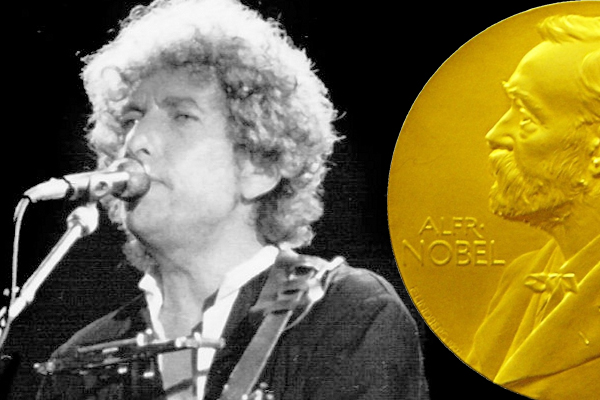
Bob Dylan in 1984 (Credit: Wikipedia) According to the British bookies at Ladbrokes, Bob Dylan is suddenly a 5-1 choice to capture the Nobel Prize for literature when the Swedish Academy awards the annual honor Thursday in Stockholm.
A dark horse just a few days ago, Dylan has pulled ahead of Adonis, the Syrian poet and one-time Nobel favorite, and is now a far safer bet than fellow Americans Thomas Pynchon and Philip Roth. As one handicapper told the Guardian this week, “At first we had him down as a rank outsider but the committee have been known to spring a shock and punters the world over feel Dylan will be the beneficiary.”
Alas, something is happening here and the punters don’t know what it is. Bob Dylan is not going to win the Nobel, at least not in the foreseeable future. Here are five reasons why:
He’s too famous.
Members of the prize committee — “the eighteen,” as they’re known — have become famous for their devotion to the unheralded. As Kjell Espmark, a member of the Swedish Academy recently told a German media outlet, the committee once chose winners in part “because they wrote bestsellers.” But, he added, “After World War II, however, they favored forward thinkers like Hermann Hesse, Andre Gide, T.S. Eliot and William Faulkner — and then in the ‘70s it was about shedding light on unknown masters.”
Though the panel has recently cited known quantities like V.S. Naipaul (’01), J.M Coetzee (’03) and, last year, Mario Vargas Llosa, the prize often goes to a lesser-known writer. Since 2000, the list of laureates has included Chinese novelist Gao Xingjian (2000), Austrian novelist and playwright Elfriede Jelinek (’04) and French novelist J.M.G. Le Clezio (’08). Even Swedish Academy members have been known to chafe at the committee’s self-conscious bias for the unconventional; one panelist quit the Academy in protest of the prize awarded to Jelinek, describing her prose as ”a mass of text shoveled together, without artistic structure.” If voters want an avant-gardist, they won’t be looking Dylan’s way.
He has enough awards.
In 2008, Dylan received an honorary Pulitzer for what the prize committee termed his “profound impact on popular music and American culture, marked by lyrical compositions of extraordinary poetic power.” There’s no way in hell that the Nobel committee, which prides itself on celebrating the underappreciated, is going to play second fiddle to the Pulitzers (not to mention the Grammys, the Oscars or the Golden Globes).
He’s not as overtly political as he once was.
“Oh Mercy,” Dylan’s 1989 album, begins with the words: “We live in a political world.” Dylan once did, too. Though he began renouncing the notion that he was a protest singer as early as 1964, he continued to write about social concerns for decades thereafter. Songs like “Hurricane,” his 1975 ballad about a boxer imprisoned on flimsy evidence, and “Neighborhood Bully,” his 1983 rallying cry for Israel, are just two of scores of Dylan compositions from this era that were simultaneously provocative and entertaining.
But in recent years Dylan the lyricist has turned inward. In 2006, when he interviewed the singer for Rolling Stone, novelist Jonathan Lethem remarked upon Dylan’s evolution from that of a songwriter with explicit social concerns to one who “seems to survey a broken world through the prism of a heart that’s worn and worldly, yet decidedly unbroken itself.” Lethem added, “This isn’t to say ‘Modern Times,’ or Dylan, seems oblivious to the present moment. The record is littered — or should I say baited? — with glinting references to world events like 9/11 and Hurricane Katrina.
Meanwhile, the closest “Together Through Life” — his last non-Christmas studio album, it came out in 2009 — gets to politics is “It’s All Good.” The song compares a “(b)ig politician telling lies” and a “(r)estaurant kitchen, all full of flies,” concluding: “Don’t make a bit of difference, don’t see why it should.” It’s safe to assume that lyrics like these are meant to be at least somewhat ironic — but the Nobel folks don’t really do irony. They’re more into “cartography of structures of power” and “explorer(s) of a humanity beyond and below the reigning civilization.”
He’s from the wrong country.
Here’s the list of Nobel Lit winners. Not many Americans there.
He’s in the news for the wrong reason.
Just this week we learned that a Nobel Prize for medicine went to a scientist who had died four days earlier. Because Nobels aren’t awarded posthumously, his death technically disqualified Dr. Ralph M. Steinman as a candidate. But the committee let the decision stand because they were not aware that he had succumbed to cancer. This means that Nobel committees are forced to be at least somewhat aware of current events, and this latest round of Bob Dylan-is-an-artistic-thief accusations can’t help his candidacy. For those who missed it: Dylan is showing a bunch of his paintings at a prestigious New York City gallery, and some observers have noted that the images are quite similar to well-known photographs by Henri Cartier-Bresson and others. This isn’t the only time Dylan has been accused of appropriating the work of other artists. Let’s be clear: Bob Dylan is not a plagiarist. The allegations seem like nonsense. But in a year in which Dylan was also criticized for playing shows in repressive China, they’re not going to help him win the Nobel.
Kevin Canfield has written about arts and culture for the New York Times, Los Angeles Times, Bookforum and many other publications. More Kevin Canfield.
The perfect Beatles double bill
Martin Scorsese's George Harrison documentary may be expansive, but 2009's "Nowhere Boy" is more insightful
Stills from "Nowhere Boy" and "George Harrison: Living in the Material World" If I were the Texas School Board in search of the one text that could justify teaching “intelligent design,” I would use the Creation Myth of the Beatles as my sole curriculum. It is a story oft retold with wonder, as it defines the word “supernatural.” Two musical prodigies of staggering gifts, with complementary personalities, just happen to meet in the same fairground, and just as casually decide to change the world. They soon meet a third musical force of nature, and, just before they march from their secret fortress, they add the final element to what is now an impregnable weapon of mass musical distraction.
Continue Reading ClosePunk’s cultural revolution
Pussy Riot's masked women have become icons of Russia's anti-Putin movement -- and turned the genre on its head
Seven members of the band Pussy Riot (Credit: Wikipedia) Russia Today, the politsiya and Western punks alike all want to know: Who is Pussy Riot, when is their next gig, and where can I get their album? Despite having no releases or merchandise for sale, no tour dates, no Myspace or even recorded music, the band of masked women who perform only aggressive guerrilla shows has achieved a level of punk legitimacy not reached since the era when the combination of bleached hair and three chords was on its own automatically scandalous.
The days of the Fraternal Order of Police suing the Crucifucks, Tipper Gore taking on the Dead Kennedys, and black metal goblins burning churches are long past. Punk is now no more a social threat than some leftist fringe group selling poorly designed newspapers. And yet, with three of its alleged members now imprisoned and facing seven-year jail sentences, the pastel-balaclava-wearing, sloppy-guitar-playing riot grrrls have become an icon of a brewing cultural revolution in Russia.
A.M. Gittlitz is a fiction writer, essayist and bike delivery boy living in Brooklyn, New York. He formerly wrote for Arthur Magazine blog, and a contributer to Death Panel Press and Modulo Magazine. More A.M. Gittlitz.
Long live the boy band!
One Direction is the latest group to create carefully manufactured hysteria among young girls
One Direction Like James Bond movies, fad diets and literary feuds, they are an ever-renewing part of the fabric of our pop culture lives. The hairstyles may change and the pant legs widen or retract, but the boy band — just dreamy enough to send preteens shrieking through their orthodontia, but bland enough to make their just slightly older siblings groan about how much they suck — will never die.
Yet not since the halcyon days of smooth harmonies and awkwardly choreographed moves known as the ’90s has the boy band enjoyed quite a moment like this. There’s U.K. import the Wanted. There are Nickelodeon stars Big Time Rush. There’s even the classic do-they-or-do-they-not-qualify-as-a-boy-band boy band Hot Chelle Rae. And smiling nonthreateningly near the top of both the Billboard album and single charts, there is the inescapable, planet-dominating One Direction (who, it was announced this week, will soon be getting their own Hasbro dolls).
Continue Reading Close
Mary Elizabeth Williams is a staff writer for Salon and the author of "Gimme Shelter: My Three Years Searching for the American Dream." Follow her on Twitter: @embeedub. More Mary Elizabeth Williams.
Songs I can’t let go
I've been listening to one album obsessively for an entire year. Only one man could explain: The lead singer
On my computer, the play count for the song “Randy Described Eternity” is 406. But I’ve also listened to it in my car, on the subway and on YouTube. The song is from the 1997 Built to Spill album “Perfect From Now On,” which turns 15 this year. And apart from playing a few other Built to Spill records for variety (lately “You in Reverse,” previously “Keep It Like a Secret,” frequently “There Is No Enemy”), I haven’t voluntarily listened to anything besides “Perfect From Now On” since May 2011.
Continue Reading CloseJonathan Lethem’s “perfect” album
The "Motherless Brooklyn" and "Fortress of Solitude" author's new book explains his fixation with the Talking Heads
Jonathan Lethem In essay collections like “The Disappointment Artist” and last year’s acclaimed “The Ecstasy of Influence,” best-selling novelist Jonathan Lethem brought his sharp critical lens and personal passion to bear on Marvel Comics, Roberto Bolaño, Bob Dylan and the John Carpenter movie “They Live.” Add to that diverse list of cultural artifacts the Talking Heads album “Fear of Music,” the subject of Lethem’s latest book, and published as part of Continuum’s 33 1/3 series of music writing.
Continue Reading CloseBrian Gresko has contributed to The Huffington Post, The Atlantic, The Daily Beast, The Paris Review Daily and The Millions. He lives in Brooklyn. More Brian Gresko.
Page 1 of 283 in Music