
Nonfiction

The birth of the Google Translate era

The rise of new technology is changing the way we think about language and the world. An expert explains how

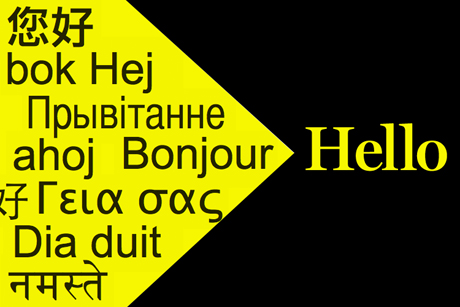
For most of human history, the notion of a “Star Trek”-style universal translator seemed as farfetched as a warp drive or American universal healthcare. Not anymore: In recent years, Google Translate has made automated translation as easy as copy-and-pasting text into a browser; you can now auto-translate entire news articles at the click of a button, and a host of mind-blowing translation apps have hit the iPhone. Word Lens, for example, allows you to point your camera at a piece of text and see it translated in real time on your phone. (Check out the app trailer here).

It’s a change that raises a number of bigger questions: Will automation completely replace human translation? Are we about to see the end of multilingualism? According to David Bellos, a professor of French and comparative literature at Princeton and Booker Prize-winning translator, that’s not likely to happen anytime soon. In his new book, “Is That a Fish in Your Ear?,” about process and social meaning of translation, he persuasively argues that human translators are as crucial as ever. At a time when the world seems more globalized and small than ever, they play a central role helping us understand each other and bring art to a broader audience.

Salon spoke to Bellos over the phone about the future of English, the rise of the auto-translator and America’s cultural aversion to multilingualism.

Why is Google Translate succeeding where other automated translators failed?

In terms of user experience I think it’s a quantum leap in machine translation. In terms of its intellectual presuppositions it’s not a quantum leap, it’s just a very clever engineering solution. It uses a statistical method to find the most probably match for an expression — it doesn’t try to understand it or strip it down into vocabulary, syntax and meaning. It just looks for matches using a probabilistic computational device.

Obviously Google didn’t invent all of that by itself — statistical machine-based translation had sort of been invented in the 1980s, and there had been small systems using it in the 1990s — but now Google has the Web to work with. There are now millions of pages in many languages that Google’s huge service can scour in an instant. And it’s also crowd based, in that when it gives you a result it invites you to present a better translation. And people do. They are pleased to show a machine where it went wrong, so the database gets more and more refined. But one thing people must remember is that Google Translate is not conceivable outside of a world in which millions of humans are producing and translating these texts.

Do you think the rise of Google Translate — and astonishing iPhone translation apps like Word Lens, which allows you to automatically translate signs on your phone — means people are going to stop learning other languages?

That could happen in the way the generalization of the pocket calculator means my grandchildren don’t know how to do arithmetic. That would be a sad result. Obviously it removes the motivation for language learning for all sorts of minor, everyday trivial tasks. But I think that people in positions of responsibility in the educational system and in schools and public life should know full well that the existence of Google Translate in no way reduces the educational need and the utility of acquiring foreign languages. We should struggle ever harder so that some of the next generation have a proper understanding of a variety of other languages — not just French, but Chinese, Japanese or Arabic.

There are about 8,000 languages in the world, but only a small number of them are spoken by large numbers of people across borders. You call these languages “vehicular.” What are they?

A vehicular language is a language that is used as a vehicle of communication between people who are not native speakers of it. So when a Marathi-speaking citizen of Mumbai phones a Chinese business contact working in Hong Kong, they speak English to communicate. English is the vehicular language. There are maybe 80 such languages that play that role. If you know somewhere between 9 and 15 of the vehicular languages of the world you’ve got a means of communication with something like 95 percent of the world’s population.

When a language does become vehicular, it escapes the control of the home country completely and starts to absorb and hybridize. English is the most obvious example. It’s a very hybrid language — it’s got bits of Danish and Celtic and words from Bengali and obviously lots of words from French and Latin and Greek. It’s like a vacuum sweeper, so the vehicular language acquires that central role and does in a sense become marginally more recognizable to speakers of any other language simply because it hybridizes bits of them.

So why did languages like English and German catch on while others didn’t? Is it because they were imperial powers?

I think the imperial answer is too easy. Look, the Dutch had an empire at least as far flung and opulent as the British empire 300 years ago, but Dutch has not become a vehicular language of any importance in the world today. The Portuguese are similar.

In linguistic terms, there is absolutely no difference between a language that’s become vehicular and one spoken by a small tribe in Papua New Guinea. All languages are equal and can be made to serve whatever purposes their speakers want to achieve with them. The old pre-1920s view that the hierarchy of language reflects something inherent in the languages themselves is really not true, and you can’t map the complexity of the language onto the complexity of the society that uses it. There’s nothing inherently better about English than about Chinese or Russian or whatever.

The role of English in the world at present is without historical precedent. Some people like Nicholas Ostler foresee the English language splitting up into a myriad of dialects that will bit by bit become mutually incomprehensible, but I think the conservative forces of print will slow that down very substantially. God knows how long that will take.

In the book you also point out that Eskimos don’t actually have 30 words for snow, which I had actually bought into. And I didn’t realize that myth had such racist connotations.

It was first debunked by Geoffrey Pullum, and it’s really significant that this factoid became lodged in the popular consciousness without people realizing the baggage it brings with it. It suggests that “Eskimo” is a primitive language, because, unlike languages like English, it has all these concrete terms for snow but not the abstract or general term [i.e. "snow"]. There’s this idea that languages with a general term are able to cope with the world in a more abstract or sophisticated way. It’s a very 19th-century colonialist view, which was a time when people were trying to figure out why English or French were better than Swahili or Eskimo. And on top of that, Eskimo is not a language. There are many languages of the Inuit peoples. It’s like saying there’s a language called “European.”

The idea of speaking multiple languages is much more celebrated in Europe than it is in the U.S. Why do you think that Americans are so much less interested in being multilingual?

I think one needs to be a bit more subtle about it than that. One out of every five Americans is functionally bilingual — either because they are recent immigrants or they inherited it from their family or because they learned it at school or from residence abroad. That’s quite a high percentage for an English-speaking country. America isn’t as monolingual as people say it is — but it is culturally monolingual.

The motivation of most immigrant groups when they get here is to naturalize and assimilate as soon as possible. If they do carry on speaking Italian or Hungarian at home, they don’t especially want it to be known because they want to be new Americans. That’s a special emotional and political ideology that’s particular to the U.S. In Europe, where people move across borders, that kind of aspiration — to pass yourself off as French, for example  is first of all unachievable because the French won’t let you (and the British even less). Multilingualism is by no means absent from the U.S., but it configures differently in American cultural values.

Canada, where I’m from, has an official bilingual policy — so the packaging on all products, from potato chips to diapers, has to be in both French and English. We obviously have our own historical and political reasons for that, but what’s interesting is that many parts of America are now also becoming bilingual, albeit in a very chaotic, unlegislated way. In New York subways, for example, you’ll see lots of ads in Spanish with no English translation, and it’s completely unremarkable at this point.

I think it says a lot about the past of America. If you look outside of the big cities of the Northeast, the real areas of creeping bilingualism are precisely the areas that used to belong to the Spanish empire: California, New Mexico, Arizona, Louisiana, Florida. So it’s kind of a reversion. I’m not a real academic sociolinguist, but I understand from colleagues that some people are skeptical about the next generation maintaining their Spanish. The generations growing up in the U.S. and getting an elementary U.S. education may, like the grandchildren of Italian immigrants, just drop that language in the next 20 to 30 years. Or maybe for political reasons they will assert their identities as Spanish-speaking American and we’ll move towards something more like the Canadian model. All these things are open to negotiation.

In some parts of the world, foreign movies are dubbed over instead of subtitled. I remember watching dubbed TV shows and movies when I was a kid, and even then I thought it was very strange. In the U.S., we clearly prefer subtitles.

Even among the countries of the European Union, there are very different traditions. When sound came into movies in the 1930s and the industry de-internationalized, different countries established traditions and expectations that remained quite firmly fixed. France, for example, dubs its foreign films — except for films considered as art — while in England and America that’s unheard of. The way America treats subtitles says a lot. In Germany and France and Italy, the people who produce the local versions of foreign movies, whether dubbing or subtitling, are respected professionals with a public profile. Here they are a completely obscure network of guys who do it for a few dollars an hour in a garret at night. And I’m hardly exaggerating actually. And these are some of the most difficult operations you can do with language.

Does that suggest that Americans just don’t care about translation as an art form?

Twenty years ago, if you were an academic and also a translator you never put your translations on your C.V. because they would count against you when it came to promotion time. Translation was seen as second-rate. But I think that is changing. I think there is much more respect now for translators in the academy and elsewhere.

Far more titles are translated from English than into English every year. What does that say about the relative status of English-speaking culture in the world?

There is a huge asymmetry. Somewhere around 3 or 4 percent of books appearing in the U.S. each year are of foreign origin, whereas in other developed book cultures, like France or Germany, it ranges from 15 to 20 percent. The English language book industry is vastly bigger than any other, so 4 percent of all the books published in English is actually quite a large number of books.

It’s partly because English is written by so many different cultures around the world — South Africans, Australians, and so forth — so the English book world is already diverse. But the fundamental reason is that publishers remain convinced that translated books are a hard sell and that they don’t have much of a public. They don’t really believe in translated books as way of making money. It’s true that very few New York Times bestsellers were originally written in another language, but these are to some degree self-fulfilling prophecies. It’s something I really want to carry on struggling against. Publishers should be more courageous and less enclosed in the received idea that translation is expensive and needs a subsidy and is never going to appeal to anybody.

And there’s the idea that a translation of a book is just a degraded copy of the original.

That argument is self-contradictory. There are good translations and less good translations, but the general argument that a translation is less good than the original is impossible to support with any kind of intellectual self-respect. To put it in a nutshell: How do you know?

Thomas Rogers

Thomas Rogers is Salon's Arts Editor.

“Farther Away”: Franzen on Wallace

In a new essay collection, "Freedom's" author reflects on his best friend's suicide with betrayal, anger and sorrow

This article appears courtesy of The Barnes & Noble Review.

Jonathan Franzen wants you to like him. In “Mr. Difficult,” a 2002 New Yorker essay, Franzen identifies two types of authorship: the Status model, devoted to the pursuit of difficult art at the expense of commercial gain, and the Contract model, which privileges the enjoyment and connectedness of the reader. Franzen is, in his own estimation, “a Contract kind of person.” His novels don’t ask more of the reader than she is willing to give in turn. “[T]o build the reader an uncomfortable house you wouldn’t want to live in: this violates what seems to me the categorical imperative for any fiction writer.”

Barnes & Noble Review
But if Franzen the fiction writer diligently abides by this Kantian fiat, Franzen the essayist is not in the business of building comfortable houses. In his nonfiction, Franzen violates the writerly contract he so vaunts, not by high-art subversion but simply by being a grouch. “How to Be Alone,” which appeared in 2003 two years after the breakout success of “The Corrections,” collected his essays of the previous decade into an angry bundle. Anchored by his famous Harper’s essay on the plight of the modern novelist, the book lambasted our national preference for cultural pablum and lamented the demise of a virtuous solitude. “Farther Away,” coming nearly two years on the heels of “Freedom,” follows much the same pattern. Like its predecessor, this assemblage of essays finds Franzen in a curmudgeonly mood — ranting against the encroachments of social media and other people’s cellphone “I love yous” — and like its predecessor, it contains one long essay that has already proved a lightning rod.

“Farther Away,” the essay that lends the book its title, arrived with the force of a gathering storm, an electric anticipation (literally: the New Yorker used it to bait new fans on Facebook, never mind Franzen’s public denunciation of the Like button) giving way to a blustery fracas. Here was a major novelist, possibly even the novelist of his generation, prepared to issue a public verdict on the life and work of another literary titan, his late friend and friendly rival, David Foster Wallace. And what a mournful, vengeful, bitter, sad, ambivalent verdict it was.

“Farther Away” has a deliberately inorganic quality: Franzen, having deferred the emotional work of making sense of his friend’s suicide to deal with the professional work of finishing and promoting “Freedom,” decides to isolate himself on the same remote Chilean island where Defoe set “Robinson Crusoe,” in order to contemplate the origins of the novel and work through his feelings about Wallace’s death. In Franzen’s mind, these subjects are not unrelated. The modern novel, whose genealogy begins with “Robinson Crusoe,” was born of a need to fill the leisure hours of a newly emergent bourgeoisie in 18th-century England; Wallace “in one interpretation of his suicide … had died of boredom and in despair about his future novels.” The novel was meant to be a solution to boredom, and Wallace, in taking boredom as his subject in the work eventually published as “The Pale King,” had plunged into a fatal nihilism.

While Franzen never admits subscribing to this interpretation, he has elsewhere described his and Wallace’s shared understanding of fiction as “a particularly effective way for strangers to connect across time and distance” — a conclusion that Wallace, by his suicide, would seem to have abandoned. And yet what makes Franzen angriest, and where his sense of injury over Wallace’s death begins to show through most fully, isn’t Wallace’s implicit rejection of the redemptive possibilities of fiction. It’s the way in which Wallace’s suicide has itself transmogrified into an unlikely act of connection:

But if you happened to know that his actual character was more complex and dubious than he was getting credit for, and if you also know that he was more lovable — funnier, sillier, needier, more poignantly at war with his demons, more lost, more childishly transparent in his lies and inconsistencies — than the benignant and morally clairvoyant artist/saint that had been made of him, it was still hard not to feel wounded by the part of him that had chosen the adulation of strangers over the love of the people closest to him.

The story of their friendship is the story of two great writers caught in a dialectic of mutual admiration and resentment, each finding in the other a counterpart against whom to define his own relationship both to his art and to his public. As Franzen said in his interview for the Paris Review’s “Art of Fiction” series, “I perceived, rightly or wrongly, that our friendship was haunted by a competition between the writer who was pursuing art for art’s sake and the writer who was trying to be out in the world. The art-for-art’s-sake writer gets a certain kind of cult credibility, gets books written about him or his work, whereas the writer out in the world gets public attention and money.” Some of Franzen’s bitterness in “Farther Away” seems to be directed at the ways in which Wallace’s inexplicable act thwarts the narrative he had constructed around their respective relationships to the Contract and the Status models:

[W]e who loved him were left feeling betrayed. Betrayed not merely by the failure of our investment of love but by the way in which his suicide took him away from us and made him a very public legend. People who had never read his fiction, or had never even heard of him, read his Kenyon College commencement address in The Wall Street Journal and mourned the loss of a great and gentle soul. A literary establishment that had never so much as short-listed one of his books for a national prize now united to declare him a lost national treasure.

Wallace dies not only with his cult credibility intact; he also gets public attention and money.

The fact that “Farther Away” (the collection, not the essay) opens with Franzen’s own commencement address at Kenyon makes for an instructive irony: Was Franzen ever really the populist of the two? Certainly, when we enter the terrain of nonfiction, the dichotomy begins to break down. Franzen’s essays hold his reader at arm’s length, whereas Wallace’s are more readily welcoming than his fiction. Both Kenyon speeches — Wallace’s from 2005, Franzen’s from last spring — warn against the lure of narcissism. Wallace asks the graduating class to do the hard work of consciousness, of keeping their brains from flying on autopilot; Franzen rails against the techno-consumerist threats of Facebook and the iPhone. For a talk so concerned with the importance of connecting with other people, Franzen comes across as willfully obtuse: “Very probably you’re sick to death of hearing social media dissed by cranky 51-year-olds. My aim here is mainly to set up a contrast between the narcissistic tendencies of technology and the problem of actual love.”

There are, it is worth noting, other essays in this collection: “Farther Away” is one of 22 pieces assembled from Franzen’s extra-fictional writing career since 1998. There are his environmental writings from the New Yorker, born of a midlife love affair with birdwatching; assorted literary criticism; and a handful of essays in which he uses his pedestal to plead the case of deserving, overlooked authors: Christina Stead, Donald Antrim, Alice Munro. In this last category, Franzen is at his best, shedding his perennial irritation to treat them with a nuance he fails to bring to his readings of the 21st-century cultural landscape. But it’s “Farther Away” — a document of one great writer tangling with the ghost of another — that we’re going to be reading 30 years from now. It’s the only essay Franzen has written that directs the current of anger that runs through all of his nonfiction at a subject actually worthy of it: the suicide of his best friend. His willingness to say the unsayable, to let all his ugly feelings show through, may not make him likable, but in finally writing for himself instead of for his reader, he’s given us a fitting tribute to Wallace — a confrontation with the problem of actual love.

Continue Reading Close

“When women were birds”: Reading blank journals

A writer makes sense of the rows of empty cloth-bound diaries her mother left her

This article appears courtesy of The Barnes & Noble Review.

If you are a reader who cares about nature, wilderness, our place in nature, writing and nature, how to choose a course of action when something you care about is threatened, the lifelong search for voice, and what it means to be a woman in this world, you will have crossed paths with the work of Terry Tempest Williams. Perhaps you grew up reading Aldo Leopold, John Muir, Edward Abbey, Gary Snyder and Bill McKibben and, loving their work, still felt something missing — that your relationship with these issues was not fully rendered. Then you discovered Williams, and, not unlike Alfred Stieglitz’s famous response when he first saw Georgia O’Keeffe’s paintings, you might have breathed: “At last! A woman on paper!”

A woman on paper.

Barnes & Noble ReviewWhen Williams was 22 her beloved mother, then 54, died of cancer. She left her only daughter all of her journals, rows of cloth-covered books. When Williams opened them, the pages were blank. Disappointed, she used some of them for her own; others were put away and forgotten. Quite simply, she was too young to know what to make of them. Decades later, at fifty-four, Williams seeks an explanation for these white, white pages. The result is “When Women Were Birds: Fifty-four Variations on Voice.” “My mother was a great reader,” she writes. “She left me her journals, and all her journals were blank. I believe she wanted them read. How do I read them now?”

If you’re like many readers, your first introduction to Williams’s work was her fourth book, “Refuge: An Unnatural History of Family and Place,” published in 1991, when the author, who hails from a large Mormon clan in northern Utah, was 36. This was a memoir in which Williams tried to understand how 10 women in her family, living downwind from the atomic bomb testing grounds in Utah, had died from or been diagnosed with breast cancer. She struggled at the same time to capture a world in which the rising of the Great Salt Lake was flooding the Bear River Migratory Bird Refuge, a much-beloved ecosystem. She knew that somehow, in the deep aquifer that contains the American, the western, the feminine, and the human subconscious, these events were connected.

Williams went on to create 13 more books: essays, poetry, edited volumes. She protested nuclear testing in the Nevada Desert in the late eighties and early nineties, testified in Congress on women’s health and environmental links to cancer, opposed the war in Iraq and joined the Wilderness Society in support of the Redrock Wilderness Act, which would limit the ravaging of 5.7 million acres in that state. She has served on the Governing Council of the Wilderness Society and was a member of the western team for the President’s Council for Sustainable Development. She is currently on the advisory board of the National Parks and Conservation Association, the Nature Conservancy, and the Southern Utah Wilderness Alliance.

You might say she found her voice.

With each new book, the reader feels she knows a little more about the writer; each book is autobiographical but finds a different angle of repose. Threads run through the books like rivers — a love of birds, revelations inspired by paintings, silence and sound, a lifelong conversation with the Mormon Church in which Williams challenges, confronts, encourages, illuminates the dark corners and keeps her fingers crossed that she will not be excommunicated. Women in the Mormon Church are expected to keep a journal and to bear children (“The only things I’ve done religiously are keep a journal and use birth control.”) Williams has thought a great deal about motherhood. In “When Women Were Birds,” she writes that the first voice she heard was her mother’s. She writes about the many ways that mothers withhold their voices to allow their children to develop their own. “She spoke through gestures,” she writes of her mother, Diane Dixon Tempest, “largely quiet and graceful. A letter. A meal. A walk together. Her touch.”

Williams traces the evolution of her own voice. She remembers long hours as a child listening to Prokofiev’s “Peter and the Wolf” and memorizing the music and the voices of the animals and birds. She remembers a kind teacher who helped her to overcome a speech impediment, and some of her fear of speaking out loud, by reciting poems about birds. Her new husband, Brooke, also a lover of wilderness and wildness, understood “when I threw back my head and howled.”

And then there were the silencers: a terrifying man in Idaho’s Sawtooth wilderness who tried to kill her with an axe when she was doing fieldwork in college — the story was too terrifying to tell anyone except Brooke. Or the headmistress at the ultra-conservative school where Williams taught biology, who told her environmentalism was the work of the Devil. Or Congressman Jim Hansen, who looked over his glasses at Williams when she testified to preserve Utah’s wilderness against extractive and other industries and said: “I’m sorry Ms. Williams, there is something about your voice I cannot hear.”

And then in 2010, Williams receives a diagnosis with the power to silence: a cavernous hemangioma, “located in what doctors call the ‘eloquent’ part of my brain, or Wernicke’s brain, the home of language comprehension, where metaphor and the patterned mind live.” She is given two possible treatments: brain surgery or waiting. “How well do you live with uncertainty?” the neurosurgeon asks. “What else is there?” Williams responds. This is not my story, she thinks. This is not my story.

“When Women Were Birds” is in many ways a thank-you letter to a mother who gave her daughter the gift of words, the gift of locating herself in the world with words and the gift of recognizing, describing, and protecting beauty in the world, using words. But there is more. Diane Dixon Tempest’s blank journals gave her daughter the great gift of peace with a terrible fact: words are often inadequate. “I will never be able to say what is in my heart,” Williams realizes, “because words fail us, because it is in our nature to protect, because there are times when what is public and what is private must be discerned.” Looking at a photograph of her mother, she remembers this poem by Wallace Stevens, called “The Bird Listener”:

I do not know which to prefer,
The beauty of inflections
Or the beauty of innuendos,
The blackbird whistling
Or just after.

My mother’s journals,” Williams writes, are ‘just after.’ ”

Continue Reading Close

“Drop Dead Healthy”: A failed addition to “shtick lit”

In a book about one man's "quest for bodily perfection," the author doesn't even bother to try

This article appears courtesy of The Barnes & Noble Review.

In “Memoir: A History,” Ben Yagoda defines “shtick lit” as “[b]ooks perpetrated by people who undertook an unusual project with the express purpose of writing about it.” He identifies “Walden” as the earliest example of the genre, which would seem to establish a respectable pedigree, but the word perpetrated leaves little doubt as to Yagoda’s opinion of more recent efforts. He can’t be alone in casting a skeptical eye on shtick-lit superstar A. J. Jacobs, the Esquire writer responsible for “The Know-It-All” (shtick: reading the “Encyclopaedia Britannica” in its entirety), “The Year of Living Biblically” (shtick: following every biblical injunction to the letter for 12 lushly bearded, annoying months), and now “Drop Dead Healthy,” evidently a reboot of Remar Sutton’s out-of-print “Body Worry.”

Barnes & Noble ReviewFull disclosure: I undertook the project of reading an A. J. Jacobs’ book with the express purpose of writing about it. My plan was to acknowledge, with a touch of self-deprecating humor, the unlikeliness of my enterprise: I know this seems like a crazy waste of time, guys, but just hear me out…. I’d suffer a few well-timed setbacks, and — this is de rigueur — get chastised by my wife for neglecting her, the kids or my household chores. (I’m not married, but if memoir can massage the truth, why can’t reviews of memoir?) I thought about failing to finish the book. In the end, I may not have made it to my goal of 375 pages, but I did learn a whole lot about the value of shtick lit. Would I do it all again? Probably not, but I’m still glad I made the effort

Well, I did finish the book, and I did learn a lot about the value of shtick lit. The truth is, despite the warnings of Yagoda and others whose opinions I trust, I was never reluctant to read Jacobs. I find autodidacticism and self-improvement fascinating, and greatly to be encouraged. When I took up Jacobs, my hope was to defend him and his beleaguered genre from the cynics, the ones who can’t believe that anyone acts in a spirit of genuine curiosity or enthusiasm. I’d point out, too, that nobody is forcing them to buy shtick lit; if they have a philosophical objection to bogus projects undertaken expressly to be written about, they should make themselves useful and campaign to abolish the college essay.

The cover photo of Jacobs mock-struggling to do a pull-up is a clue to the fatal flaw of this book. It is not going to be, as advertised, a “quest for bodily perfection.” It is going to be a litany of shortcomings, a chronicle of thwartings and chastenings. It will consist of Jacobs dipping his toes in a thousand different dietary and fitness fads and will read like a novelization of every health-scare story and dubious medical study that ever beckoned from a website sidebar or nagged you from your Facebook feed. And because Jacobs will flit from topic to topic, body part to body part, anxiety to anxiety, the reader will almost but not quite fail to notice that Jacobs isn’t accomplishing very much at all.

It’s not that I wasn’t expecting this. I’m familiar with the conventions of the genre. It just took seeing them at their most conventional to realize that they’re dragging the genre down. Paradoxically, Jacobs expended an astonishing amount of hard work to produce a book this lazy. In just two years, he learned to eat better, to lift weights, to reduce his exposure to environmental toxins, to run correctly, and so on. He shed 16 pounds, or eight pounds per year — a little more impressive than it sounds when you consider that he must have gained muscle weight in the process. He cut his fat in half. He wrote his entire book on a treadmill, walking over a thousand miles in the process.

His labors culminate in conclusions any fool could have seen coming: “I’ll incorporate much of what I learned” and “I’ll follow fitness expert Oscar Wilde’s advice: Be moderate in all things, including moderation.” It’s not even really fair to call these conclusions, since they probably appeared verbatim in his book proposal. You aren’t supposed to criticize an author for not having written a different book, but what if the book he’s written doesn’t need to exist? What if everyone already knows that health fads are zany and that moderation is good? A book trading on such modest insights had better be mind-bendingly funny. A quick test: Jacobs is sold on skin care when he sees two guys — “leather jackets, Harley tattoos” — at Penn Station, talking moisturizers. Do you find this a) funny, b) funny but implausible, or c) so Shoebox Greetings unfunny that it doesn’t matter if it happened or not?

Most of Jacobs’ humor is of the self-deprecating or auto-emasculating variety. “[A]s an experiment,” Jacobs writes, “I’ve been wearing my blue bike helmet as I run my errands.” Have you been, man? Is anyone laughing at this? Hack comedy is one thing, but what irks me is that someone gave Jacobs a great deal of money — he mentions his advance repeatedly — to challenge himself, and instead of doing that he’s screwing around with stuff like wearing a bike helmet in public. “Bodily perfection” implies that your 44-year-old carcass is going to scale Half Dome or complete Marine Corps boot camp. I don’t care that you ate a bushel of vegetables, tried on a CPAP, or submitted to the indignity of wearing Vibram FiveFingers sneakers. I’d like to see some results. As it stands, we don’t even get an “after” photo.

Jacobs’ crowning achievement is a modest triathlon: 11 minutes of swimming, 33 minutes of bicycling, and an unspecified amount of jogging, probably 3.1 miles. Here lies the problem with shtick lit: the pedestrian nature of its goals. When men get old and retire — when they become the target market for books making light of their Jacobs-like ineptitude — they tend to read a lot of biography. Why? Perhaps it’s because age, regret and self-criticism conspire to produce a craving for real achievement, or at least for stories about real achievement. Most of us have been half-assing it since the day we were born. Self-deprecation has become a reflex, a preemptive excuse — which is why books like Jacobs’ will climb the bestseller lists and, let’s be fair, actually entertain the average reader. Yet if shtick lit is ever to live up to its promise, it’ll have to abandon its jokesy “points for trying” mentality and start attempting the impossible in earnest.

Continue Reading Close

“A Slave in the White House”: James Madison and his slaves

A new biography focuses on an overlooked part of the president's life: His perplexing relationship with slavery

This article appears courtesy of The Barnes & Noble Review.

When James Madison died, he still owned about 100 slaves. He freed none of them, not even Paul Jennings, his valet. Jennings could read and write, and in fact published the first White House memoir, declaring that Madison was “one of the best men who ever lived.” Modern biographers of Madison, such as Richard Brookhiser and Jeff Broadwater, have frankly acknowledged the shocking truth that such a politically astute and sensitive founding father utterly failed to address the problem of slavery seriously. But most, including not only Mr. Brookhiser and Mr. Broadwater, but also Kevin R. C. Gutzman, Andrew Burstein, and Nancy Isenberg, treat the issue of slavery as a thing apart, in separate chapters, instead dealing with the place of the “peculiar institution” in Madison’s life in the years after he left the presidency.

Barnes & Noble ReviewAnd yet there never was a time when James Madison (1751 – 1836), a third-generation slave owner, did not believe slavery was evil — or a time when he did not recognize the capabilities of African-Americans. In 1791, Madison wrote admiringly about the “industry & good management” of a free African-American landowner who could read, keep accounts and supervise six white hired men on a 2,500-acre farm. In April 1800, Madison dined with Christopher McPherson, a confident and free African-American, who came as a guest to Madison’s plantation home, Montpelier, to deliver books and letters that Madison and Jefferson sent to each other. During Madison’s terms as president, he often heard out his private secretary, Edward Coles, who objected to slavery as a violation of the natural rights doctrine that Jefferson and Madison espoused. In 1816, Jesse Torrey, a zealous abolitionist, visited Montpelier and treated Madison to a tirade against slavery, afterward sending a letter of apology — only to receive, in reply, a letter from Madison saying no apology was necessary. In 1824, Madison endured with good grace the disapproval of Lafayette, then on a triumphal tour of the United States, who visited Montpelier and told off the retired president, expressing disgust that both Jefferson and Madison, such champions of liberty, should still own slaves and support such a vile institution. In 1835, Harriet Martineau, an outspoken abolitionist and an old friend of Madison’s, visited him for the last time, afterward reporting that her host “talked more on the subject of slavery than on any other, acknowledging, without limitations or hesitation, all the evils with which it has ever been charged.”

Like Madison himself, his biographers treat slavery as a kind of dirge, faintly heard offstage and nearly drowned out by the stirring music of the freedom fighters making an American Revolution and the framers of the Constitution going about the glorious work of creating a democratic republic. Elizabeth Dowling Taylor, however, wants us to listen to that more troubled theme, and the result is a revelation. In “A Slave in the White House: Paul Jennings and the Madisons,” we’re asked to consider Madison as a “garden-variety slaveholder”: “He followed the basic patterns and norms for slaves’ living conditions and treatment that had long been established on Virginia plantations and like most owners respected the customary “rights” — such as Sundays off — that enslaved people had come to consider their due.” If it is not oxymoronic to say so, Madison was a humane slaveholder. He was also not very enterprising, in that his human holdings constituted — as they did for Jefferson — a losing economic proposition. As soon as her husband died, Dolley Madison, whose Quaker father had freed his slaves, sold off batches of her slaves in order to pay off debts.

Ms. Dowling crafts a narrative in which African-Americans are virtually never out of sight. And that makes a great deal of sense: It is unlikely that Madison ever spent a day without relying on the services of a slave. He took at least one of them with him when he traveled. And Paul Jennings was the last one out the door, clutching some of Dolley Madison’s treasures, as the British advanced during the War of 1812 and set fire to the White House.

Harriet Martineau observed with some surprise how Madison could discourse on the evils of slavery, even as slaves served him at table. It is that Madison we see in Ms. Dowling’s narrative. Here is a sample sentence: “The Virginia Resolutions [1799] was yet another appeal against tyranny that Madison drafted at the place where he lived with scores of slaves.” When Lafayette comes to Montpelier, Jennings is there beside Madison, listening, although we do not know what the slave thought. And this silence forces Ms. Dowling, all too often, to resort to what “must have been” going through Jennings’ mind. It is no wonder, then, that most historians and biographers are much more comfortable dealing with Madison’s well-documented mind. Thus Kevin R. C. Gutzman writes a stirring narrative, showing his subject’s dexterity as politician and statesman, while Andrew Burstein and Nancy Isenberg portray how well the tag-team of Madison and Jefferson served their country.

The concluding pages of Richard Brookhiser’s concise biography seem to come closest to revealing why the mild-mannered Madison both deplored slavery and supported it; started the War of 1812, even as he was trying to negotiate peace with the British; and fought stoutly for maintaining the Union, even as he remained very much a son of the South. Mr. Brookhiser sees Madison as the epitome of the legislative mind. Madison was the man of principles who made deals, making sure the words “slave” and “slavery” did not appear in the Constitution, but also paying off his Southern vote-counting brethren with the three-fifths compromise. Slaves were partial “persons” for purposes of exerting political power. This political accommodation jibed with Madison’s statement that slaves were part of his family, but only a “degraded” part.

The legislative mind, Mr. Brookhiser suggests, has trouble with the idea of exerting executive power. Since Madison believed that he could secure no agreement among slaveholders to abolish slavery — let alone arrange some kind of compact with the North — then nothing could be done short of shipping African-Americans off to Liberia. But that strategy would work only if African-Americans themselves consented, Madison argued, and most did not. And the cost of reimbursing slaveholders proved a problem too large for Madison’s limited capacity as an economist.

But there is an even more important factor to consider in exploring why Madison, a mover and shaker of public opinion when it came to engineering such triumphs as the “Federalist Papers” to support the Constitution, never mounted a credible campaign to abolish or even attenuate the institution of slavery. From 1780 to 1784, William Gardner, Madison’s slave, resided in Philadelphia with his master, who attended meetings there of the Continental Congress. Upon Madison’s return to Virginia, Madison left Gardner behind, writing that his factotum’s mind had been “tainted” with ideas — the “contagion of liberty,” as Elizabeth Dowling Taylor puts it. This episode is reminiscent of that scene in Frederick Douglass’s autobiography when his white mistress is advised not to teach him to read, because doing so will only give him “notions” that do not befit a slave.

Madison’s idea of the American polity had no place for educated black men and women, let alone the masses of freed slaves that he believed had trouble governing themselves. No matter which biography you read, all of them eventually disclose this fundamental fact: Madison did not believe that white and black Americans could live side by side on terms of equality and amity. His failure to imagine a world more capacious and tolerant than his own helps explain a good deal of subsequent history, and America’s resistance to the very practice of equality that Madison otherwise did so much to foster.

Continue Reading Close

“Swim”: Our strange love of water

A new book explores the evolution of the water sport from tide pools to backyard ones

This article appears courtesy of The Barnes & Noble Review.

For nearly all of the 15,000 miles I have swum so far in my life, I have followed a black line in a pool. It’s hard to explain how simultaneously dull and exciting it has been. My days as an elite swimmer ended just after college, but my love of the sport, that sport, my sport, has always remained. The feel of water-saturated air or the smell of chlorinated water or wintergreen oil (used in rubdowns before competition) sends an endorphin shot into my brain like nothing else ever will.

Barnes & Noble ReviewThis coexisting love and addiction to both the sport and the pastime of swimming is what Lynn Sherr has attempted to capture in her new book, “Swim: Why We Love the Water.”

Best known as a correspondent for the ABC newsmagazine “20/20,” Sherr takes a broad brush and methodical approach to an elemental subject. She writes with enthusiasm as she travels from evolution in tide pools to the construction of backyard pools, and from the development of the modern swimming strokes to scientific musings on whether giraffes can swim (the animals are a favorite of Sherr’s and the subject of her wonderful book “Tall Blondes”). It’s a lot of ground to cover and makes more for a collection of factoids and vignettes than for a narrative, but there are many high-water marks in the course of the crossing. Illustrations are generously laid into the prose, sometimes on top of one another, and give the work a look that evokes both a school project and an Ode to Swimming Joy.

From the first pages, Sherr dives into the subtleties and nuances of what makes swimming an allure for most and a necessity for many. She rightly and repeatedly points out that we humans evolved from prehistoric fish and opines as to whether or not that fact drives us to take the plunge. She also outlines the reality that the modern application of humans to water can have disastrous results for the unprepared.

There are particularly poignant moments in Sherr’s interviews with the select athletes who compete at the top of swimming as a sport. Swimmer-athletes endure grueling daily training and dietary regimens, as well as a unique species of psychological strain caused by swimming’s intense, single-minded focus. Technological stretches (think high-tech bathing suits) have combined with modern training methods to lower world records dramatically in the last few decades. The subsequent competition is relentless. The admission by Olympians that they avoid the natatorium completely after retirement says much of the dedication demanded, and reflects something of my own experience.

All told, “Swim” is a gratifying read that enthusiasts will find buoyant.

Continue Reading Close

Page 1 of 81 in Nonfiction

www.salon.com/topic/nonfiction/