
Fiction

Why critics of MFA programs have it wrong

Salon exclusive: The Iowa Writers' Workshop director defends MFAs, laments young stardom and book-world cynicism

  • more
    • All Share Services

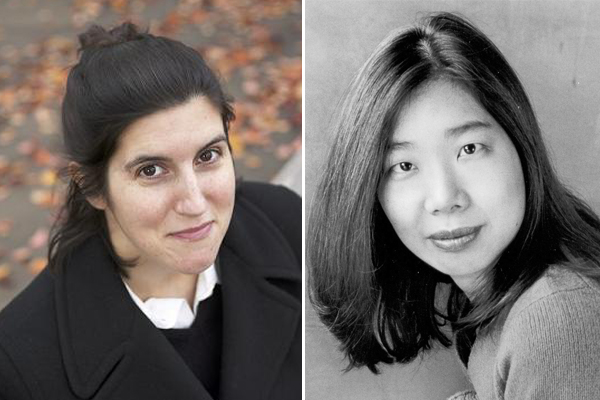
Why critics of MFA programs have it wrongCurtis Sittenfeld and Lan Samantha Chang

Lan Samantha Chang was already one of literature’s young stars — the author of the acclaimed “Hunger: A Novella and Stories” and the novel “Inheritance” — when she was tapped to succeed Frank Conroy as the director of the Iowa Writers’ Workshop, the most prestigious MFA program in American letters. Her latest novel, “All Is Forgotten, Nothing Is Lost,” now in paperback, is set within a writing program, and the Workshop celebrates its 75th anniversary this year, at a time when writers like Chad Harbach and Elif Batuman have written critiques of MFA culture. So we asked fellow Iowa graduate Curtis Sittenfeld, the bestselling author of “Prep” and “American Wife,” to discuss what really happens at Iowa, the consequences of early literary stardom and whether any criticism of workshop culture and “the Iowa story” rings true.

We’re having this conversation on the occasion of the paperback publication of “All Is Forgotten, Nothing Is Lost,” so I thought I’d start with a few questions about that. The first is a two-pronged question, and I’ll ask both prongs before you answer. One, what is it in human nature that makes us, as readers, want fiction to be autobiographical, or draw from real life? The second part of the question is what is your response to the people who want the writing program in your novel to be the Iowa Writers’ Workshop?

Interesting. OK: What is it in human nature that makes us want to read autobiographical fiction?

Perhaps not seeking out autobiographical fiction, as much as wanting fiction, in this sort of winking way, to draw from real life?

First of all, I think that fiction is deep and wide, and not all readers want the work they read to draw from real life. For example, in our program we have a science fiction writer who is deeply engaged in world building, and I don’t think that most of the people who are coming to his work are interested in his life. They are interested in the world he is able to build. They are interested in a world they haven’t experienced before and don’t know anything about. So that’s one thing. Prong one.

But the flip side of reading is that we read because we want to feel something. We want to get in on it. So there is a lot of reading that takes place where the reader is desiring some kind of inside information, or entrance, into a world that they know something about or nothing about. So it’s a completely different motivation, and these people want to believe that something really happened. They want to believe that what they’re getting is the inside scoop. It’s human nature. This is why people tell stories. The first stories were sort of the “I alone have survived to tell the tale,” and we get to hear the tale. So I guess that’s a pretty natural impulse.

What is my response to the people who want my novel to be about the Iowa Writers’ Workshop? You know, it’s so funny because I kind of knew this was going to happen, and that’s one of the reasons why when I wrote the book it was a secret project. I didn’t tell anyone I was working on it. It was this huge, private pleasure that I afforded myself in the middle of this hectic, chaotic period, which started with getting married at age 39, and then starting my job as director of the Iowa Writers’ Workshop, and then having a child.

My nonwriting life suddenly loomed large, so I think in response, the writing life sort of rose up against it in my mind and it became this secret box I retreated to. I created this secret novel that I thought would never get published because it seemed really kind of private, and it seemed also to be about a world that no one would be interested in. Then at some point I realized that I had written an entire novel, that it could very well be published — and that there were some problems bringing it out into the world. The main problem was that people would think that it was Iowa, and that the characters represented real people, and that I was doing it for the purpose of writing about real people, which was as far from the truth as I can imagine. So I guess I just have to tell people who want this book to be about the Workshop that, in a certain way — now that the book has been out for a year, I can think about it from more of a distance — maybe it is. It’s not about the actual Iowa Writers’ Workshop, but it’s about the part of the workshop that really matters, which is this intimate struggle with art. I have this privilege in my job of experiencing gifted people’s intimate struggles with art, and I wanted to capture what is a pretty ineffable experience of struggle as it affected the lives of two friends and their loved ones. I think to that extent, the story that takes place in the book is the kind of story that would happen to people here in this program, or at any number of places for that matter.

I can see that — the book doesn’t have a dishy feel at all. If you had been told as a student in the Workshop that you would become director of the Workshop, what do you think you would have thought?

Well, you know, the thought did occur to me when I was a student. I would watch Frank Conroy — the director that you and I both knew — and I would think I could never have his job because he had to make tough decisions and everybody got upset with him, and I wouldn’t like that. So I’d never do that.

Ha! Now that you are the director, can you explain how your time is divided? People probably imagine the director of the Iowa Writers’ Workshop reads nonstop. What is the breakdown of how you spend your time, day-to-day, month-to-month, etc.?

I do read a lot of wonderful fiction, but a lot of it is student fiction. And it’s true that a lot of the fiction that I read ends up being published, in somewhat different form, or in the exact same form as it was when I read it. But I have to make a concerted effort to read. My time is seasonal. The worst time of the year is in January, because that’s when the admissions applications come in. With the recession, the number of applications we’ve received at our program has jumped. In 2010 it jumped by 50 percent.

Wait, how many applications in 2010?

In fiction, it was over 1,200. I think it was more like 1,300.

What was it in poetry?

Gosh, close to 500. I’m not responsible for reading the poetry manuscripts, thank goodness.

Am I right in thinking that of the 1,300 applicants in fiction, 25 were accepted, and of the 500 in poetry, 25 were accepted?

That particular year I think I accepted 29 people because there were so many good people I just couldn’t resist. The poets accept around 25.

Those numbers are terrifying. For someone applying in fiction, if there are a maximum of 30 spots, and 1,200 people are applying — let’s say you met someone on an airplane who desperately wanted to go to the Workshop. What advice would you give that person?

Well, I would say turn in your best work. That’s the only advice. It doesn’t matter what your letters of recommendation say; it doesn’t matter what kind of grades you got. We just don’t look at that. We look at the work. We’ve done that always, and it’s still true.

Can you describe a little bit about how the admissions process works?

Ultimately what happens is that I choose 50 or 60 finalists, and then the permanent faculty and the visiting faculty read all of the finalists and have a vote. And every year, I’d say there are probably 25 or 30 people admitted to the program in fiction, and every year there are 80 people who deserve to be in the program. So, as you can imagine, we vote down a lot of wonderful people. What’s interesting to me is the number of extraordinary writers who are good enough to get in but who don’t get in because we don’t have enough spots.

Do you think there is an element of randomness? If 80 applicants are qualified to get in, is there much difference between the 30 who get in and the 50 who don’t? Is it the flip of a coin? Is it the subjectivity of the faculty’s taste? 

I don’t think that there is one answer for that question. What I have noticed is that among the, say, 50 finalists, it’s often the case that 10 of them don’t get any faculty votes at all. So, then I think, “Is there something off about the way of voting?” so I added a system where the faculty are allowed to choose one or two people that they feel that should get in even if they don’t get enough votes.

I want the admissions system to allow for quirks, because it seems to be that outliers are the ones who often end up being quite good. I don’t know what the difference would be between the people who get in and the people who don’t except sometimes I think it’s timing. A really promising writer in their early 20s who has just graduated from college and applies to the MFA, like straight out of college, stands a lower chance of getting into our program than someone who has been out for a few years and has had a chance to have some experience, and grow, and season, and write some more, and test their writing, and develop a larger body of work. That undergraduate who gets rejected from our program when they’re 22 could easily get in when they’re 26.

There’s the larger question, not specific to Iowa, about the purpose of an MFA: There are some people who lament the explosion of MFA programs. There was that essay by Elif Batuman …

“Get a Real Degree.”

When I was teaching at the Writers’ Workshop last fall, I talked to my students about that particular essay. I thought it made some interesting points. I’m not sure I agree with its overall argument, but it is something that is popular for people to say, that there are too many MFA programs. What’s your response to that?

It’s funny. When I took this job, I certainly didn’t expect that I would be in a position of being expected to defend the MFA system, because, as a matter of fact, I feel that this program is a specific program and that it doesn’t have very much to do with the MFA system at all. It’s its own quirky program.

Do you think, “Fine. Criticize MFAs. Who cares?”

No. It’s so fascinating to me that smart people waste, or spend, an enormous amount of effort criticizing people who love to read and write. You know?

I mean, people enter the MFA system, and some of them are paying money to do so, because they love to read and write. Bottom line. That’s not a sin to me. I feel that people have a lot of reasons for pursuing an MFA and they’re not all the reasons that the critics of the MFA program would necessarily accept and understand. For example, I think when you go to an MFA program, it gives you a different orientation toward time, generally.

How so?

You have time to think and to pursue something that you love. That’s pretty basic. I mean, if the program is supporting you, which I think it should. I think an MFA program should fund its students.

But you have more time to think, and you have time to think about your life. And to think about the lives of other human beings. That is a privilege, but it is something that a lot of people need and want. It’s a privilege and a basic human need. Our society pushes us toward productivity in a way that is antithetical to our basic needs.

Sometimes Iowa is used as a shorthand for MFA programs in general, or among critics there’s the idea of a particular kind of Iowa story, or Iowa novel, or Iowa kind of writing. Do you think that that view holds any truth?

Well, let’s see. First, in regard to people seeing us as representative of MFA programs, I don’t think we are. I should try to explain what it’s like here. For one thing, the Workshop was the first degree-granting creative writing program in the country. This is our 75th anniversary. I think people talk about the Workshop because it has such a high level of accomplishment. For example, in the last 20 years, 40 percent of the Pulitzer Prizes in poetry have been won by former students or faculty.

We’re also strange. I mean, I don’t know how many other programs you’ve been to, but we’re a little odder than most.

How so?

The program is so old, and so geographically on it own. It’s like we’re centrally located and geographically isolated, and we’re big. We’re big enough that we have our own community and our own traditions. And because of that, a lot of good things from way back, decades and decades ago, haven’t really changed. We’re still in some ways very similar to the way we were 75 years ago. An example of this is that we’re still very laissez-faire. We don’t really demand high productivity, and this is the age of professionalization, and in this day and age the degree of individuality that we encourage in our students, as I’ve come to realize, is stubbornly anachronistic. And to a large extent, the Workshop is protected from the current trend of widget-counting standards of the academy, and it works. We exist in order to bring writing to the center of life and to grow writers. Thankfully, the University of Iowa understands this and has been supportive of us for 75 years.

And then there’s the fact that we’re four to six hours by car from Chicago, Milwaukee, Omaha, Kansas City, St. Louis and Minneapolis. What that means is that we’re a high-residence program. So people are really here when they’re here. So some of the most significant learning in the program doesn’t take place in the Dey House at all — the Dey House is where we’re located; it’s our building. As you know, it takes place in the bars and restaurants, and people’s backyards and living rooms, and even though I’m the last person to hear about student romances, I assume in the bedrooms of Iowa City.

So we’re not small. We have, at any given time, 100 poets and fiction writers. We’ve got dozens of former students living in town. We have 10 professors; we have writers from all over the community in Iowa City. Then there are these other great graduate writing programs on campus: the International Writing Program, which is like a writers’ colony for writers from all over the world; the playwriting program; the nonfiction program; and then programs that didn’t exist when we were students — the Irish writing and Spanish writing programs — and then the translation program, which has a long history. Then there’s the thousands of undergrads who now come to Iowa because it has a reputation as a school that values writing. So there’s a huge community here, and that creates a kind of, I think, quirkiness. This is a town where if you say to somebody, “I’m a poet,” the person will be like, “Oh, yeah. My neighbor’s a poet.”

Instead of saying, “What?”

Yeah, “What do you do?”

So, those of us who work at the program, we see the Workshop as a kind of quirky home for gifted misfits. We feel like we’re nurturing young writers, and we’re thrilled by signs of promise. We have our own — and I don’t mean to speak for everyone — somewhat eclectic or eccentric lives. Small town lives. We don’t think of ourselves as representing anything at all.

So it’s more like the Iowa identity is thrust onto the Workshop, or members of the Workshop, from the outside?

I guess because of the place we hold in the history of the MFA, people equate us with the MFA. And actually, the MFA has taken on its own life, and our graduates have sort of coaxed MFA programs out of universities all over the country, and in that way we are related. You know, they call it the Iowa model. So in that way we are related to all other programs, and I think that some of the quirky messages carry along, but I don’t think we really represent anything at this point.

You mentioned that Iowa is a bigger program than most, which might be part of why it seems like there’s a disproportionate number of graduates of the Workshop who have been published. But I think there is an idea that you get a book contract at the same time you get your master’s degree.

That’s not true. You know that’s not true. But I will say that out of my spring semester 2009 workshop, five out of the 10 students in that workshop now have books.

Wait, spring 2009? So it’s been two and half years and 50 percent of them have books?

I guess so. There are a lot of recent graduates who have books, but can I just say, though, that for those of us who work and teach at the program, who see the Workshop as a quirky home for gifted misfits, we’re thrilled when people show signs of promise, but we also know that it takes a long time, sometimes decades, for talent to mature.  All the hoopla over the program and the people who graduate from the program has very little to do with the mission of the program, which is to make writing the center of each writer’s life for the brief period of time when they are here.

It’s interesting to hear you talk about your very recent students who already have books in light of your own path. You were in your early 30s when your story collection “Hunger” came out, and then you spent about 10 years writing your first novel, “Inheritance.” What are some of the pros and cons of having a career with that young sizzle?

Not to speak on behalf of others who’ve published books before 35, but I think it can be stressful to move from that period of life when your struggles are huge, private struggles, to suddenly being in a situation where people assume that you’ve never struggled, or have no struggles. And the fact is that the struggles continue. Being a writer is not easy.

And publishing a book is stressful. Very stressful. The book stops being a private thing and becomes a public thing. “All Is Forgotten, Nothing Is Lost” is an example of this. My first two books were about Asian-American immigrants, which I think is pretty much what everyone expected out of me. And then with “All Is Forgotten,” I published a book from the point of view of a man, and it was not about ethnic identity at all. All of a sudden, I found that my work was being scrutinized in a different way and that was a surprise. And because I had lived a private life for 20 years and was now writing about the things I’d learned about the life of the writer, and the influence of art on one’s emotional development, it was a surprise to see that stuff taken out of context and discussed as if I were writing — what did they say? They said it was an MFA novel, which it wasn’t. They said it was a novel of ideas, which it wasn’t. I wish I could write a novel of ideas.

I forget that critics are part of the production and marketing process; that their first job is to label and categorize what they call the product, or what people in business call the product. So it was a real shock to me, I think because I sat so close to the material, I couldn’t see how others might view it more cynically. As I said before, I have this privilege of experiencing gifted people’s intimate struggles with art, and I wanted to write about that, and it was a very strange thing to have it suddenly turned inside-out — from being something very intimate, to something very public.

I think that when you’re a young writer — and often young writers’ first books are about their identity and their life — and you suddenly discover that information is public, and, moreover, that it’s a product, it can be really disconcerting. My big plan when I was a student here was to wait to publish until I was ready. There were all these agents coming in and out of the program, and I didn’t go to a single meeting with an agent when I was here because I just felt like I wasn’t ready.

And when did you feel like you were ready?

Oh, a few years later. I’d revised the work that I did when I was in Iowa, and started thinking about a longer project, and something happened that just made me decide, “OK, I can handle it now.”

It was gradual, and one day I just realized I was ready to approach the world. I’m really glad I waited.

Because?

Because I wanted to have the emotional resources to cope with that kind of change.

You talked about writing “All Is Forgotten” as a secret project. Did you literally show it to zero people before completing it?

When I finished a draft, which is very similar to the current book, I showed it to one friend of mine, an old friend from the Workshop who I trust. I said to her, “Oh, this is this private thing I’ve been writing and I wanted to show it to you to see what you thought.” She said, “This is really good, and you should publish it.” And I thought, “What a strange idea.”

Curtis Sittenfeld is the author of the novels "Prep" and "American Wife."

50 shades of Shutterstock

Slide show: Everyone's favorite light-bondage bestseller illustrated by inexplicable stock photography SLIDE SHOW

  • more
    • All Share Services

50 shades of Shutterstock

View the slide show

This week, for roughly the millionth time, E.L. James’ romance-bondage trilogy “50 Shades” nabs the No. 1, 2 and 3 spots on the New York Times bestseller lists. We don’t get it either. Every page of that book, which famously began as “Twilight” fan fiction, elicits a sigh of confusion and weird secondary embarrassment. The question is: Who would read this? (The answer is: Apparently everyone.) It’s the same baffled, helpless feeling we get when we sort through stock photos on a daily basis. Stock photos – which have been the subject of recent outstanding Internet satire – are used by this site, and many others, to illustrate our flood of content. Many are plain and simple, but a good portion are flat-out mind-blowing. Why did anyone think that photo was a good idea? It only made sense to join these forces. And so, we present to you passages from the most head-scratching bestseller of our time, illustrated with the assistance of inexplicable stock photography.

View the slide show

Megaphone by Natalie Bakopoulos

Miracles happen, even in an Athens crippled by a garbage strike, to a young mother unsure of her ability to love

  • more
    • All Share Services

Megaphone by Natalie Bakopoulos (Credit: iStockphoto/caracterdesign)

It’s the third week of the garbage strike and Athens has begun to smell. Bright-colored trash bags fill the curbs and alleyways, and we have learned to step over the rubbish and avoid the blocks that had become unnavigable. We know which stretches are particularly foul — a stretch along Mavili Square, or the entire top end of Monastiraki. Odos Athinas is a sea of trash, and Omonia is ghastly but we don’t go there anyway. May has gone from unseasonably cool to raging hot, and the garbage seems to be melting. In front of the museum it’s like yet another installation project. When I arrive each morning I want to wretch.

My 5-year-old son, Alekos, sits on the balcony of our apartment. Visible from there are pine trees and details of other people’s lives, audible are the sounds of morning, the birds above and voices below. Evenings, Alekos lies on the divan on the balcony in his pajamas, watching the moon. He is obsessed with it, and his father made him a playlist of all the Greek songs that mention it. When he was smaller he’d stare at the moon until he fell asleep.

This morning, though, Alekos lies flat on the ground, peering down through the slats of the railing, staring at the trash. Next to him is his iPad ­– a gift from his father, and yes, I know, but his father doesn’t live with us and what can you do?­ — and now he favors bad pop music like the older kids at school. So I’m surprised this morning when I hear the sounds of Elmo counting. He’s embarrassed by this favorite YouTube clip­­ – it’s for babies, he says ­­­­– but it comforts him. The tension these days is overwhelming.

Alekos looks up when he sees me, furrows his brow, and tells me if he were a deputy like his father, he’d force everyone to clean up the garbage. “And to make a new government,” he says.

I tell him that would be nice.

“At least I can fly,” he says. He is wearing the Spider-Man costume my sister brought him from the States.

I tell him Spider-Man jumps and leaps and sticks to things. He doesn’t fly. “Besides,” I quickly add, thinking of all the balconies around us. “You’re not Spider-Man.” Even I have wondered what it might be like to jump from one to the next. I smooth his light hair, which is growing long. “You need a haircut,” I say.

I hold out two polos, one white, one blue, so he feels he has a choice. He pulls the blue shirt over the costume, and I hope that his teachers aren’t too upset by this because I am too exhausted to argue with him.

Outside, the trash has piled up, and Alekos can’t get into the car from the curb. I tell him I’ll pull the car up so he can get in without pushing his way through the refuse. He wrinkles his nose at the smell. But when I get to the driver’s side, Alekos is no longer standing there.

Instead he is floating 12 feet above the curb, his Spider-Man-clad arms stretched out like wings.

Alekos,” is all I can say, “get down.” He swoops over to me, hovering just above my reach, and finally glides gracefully to my feet as if he has been practicing this move for months. Bending down to face him and gripping the straps of his backpack, I have the panicked feeling that if I let go he will fly away.

“How long has this been going on?” I whisper. “Tell me.”

One old man walks past us with his hands behind his back and says nothing. He barely notices us. Across the street a woman hurries along in heels, yelling into her phone. No one else is around.

Alekos shrugs, aloof, and looks away with those dark eyes, almost black, like his father’s. “I tried to tell you.”

“Does Babas know about this?” I ask, suddenly sure his father would keep this from me, just the way he failed to mention his girlfriend was staying the night, reading Alekos bedtime stories when he stayed there. Oh, the flying? I thought you knew?

“No,” Alekos says.

“Just at home, OK?” I say. I don’t want to alarm him, but I want to be firm.

He digs in his backpack and tells me he saw his father on the news that morning. This is one reason I don’t like him to watch television at all. For the rest of the drive, we’re quiet.

“I know I’m not Spider-Man,” he says finally, when we arrive.

“OK,” I say. “Do you fly at school?” I ask.

“No.” He looks at me in the rearview mirror, completely incredulous. “Nobody does.”

He gets out of the car and hurries off to meet some other kids, who admire his Spider-Man arms as if they are tattooed. I wait for him to turn around and wave but he doesn’t, and for a moment it seems his feet levitate off the ground. But maybe I am imagining it; he walks in, one foot after the other, like everyone else. I park at the metro station and take the train into the city center, turning up the ringer on my phone.

I call his father three times but get his voice mail. I text him to call me. He texts me an hour later — Ola kala? — and I trip over a split-open trash bag, as if these sidewalks weren’t already treacherous enough. I answer, Yes, everything’s fine. This will have to wait until we are face to face, which is not often.

We met when I was teaching art classes on Paros one summer. I soon got pregnant, and we didn’t get married, but I stayed in Greece. I think he still resents me for not marrying him. To be honest, I can’t even remember my reasons. It all seems like another lifetime, decades ago, when Athens felt proud and vibrant those few years after the Olympics.

A few more messages come from him but I’m busy and don’t answer. Then, when I’m outside the museum, finishing my installation, he shows up.

“You don’t call me three times in a row with no message,” he says, frustrated. “You barely call me at all, unless the kid is on fire.”

No, not fire, I think.

He surveys my project, one giant megaphone outside the  museum, the size of a kiosk, with cameras inside that will film street activity and project it onto a screen inside. Tiny figurines in various stages of undress shoot out from the megaphone, suspended by invisible wire. I’ve compiled old Greek footage of both celebrations and protests, which will air inside the museum, and the outdoor footage will be superimposed on those old clips. I wonder if anyone is inside now, watching us, or what we’re matched with: a hectic street scene, a political rally, a brilliant August moon?

“I like it,” he says, in English, in that supportive tone he uses when he doesn’t know what to say about my work but wants to convey he approves.

“Oh, stop it,” I say.

“And with the garbage,” he says. “A nice touch.”

And the two of us laugh, the first time we have laughed together in a long time, since before the elections, since before the crisis, probably not since Alekos was an infant and we marveled at every smile and uttered “word.” Suddenly I think I should have thought to make those tiny figures children, with wings. I wonder why I didn’t think of it before, why it always takes the manifestation of something so crazy to make me realize something so simple.

“Let me take you for a coffee,” he says, “or something stronger? We can sit outside, where it’s quiet.” The trash stench is so bad that everyone sits inside, smoking.

“You have time for that?” I ask, knowing he doesn’t. I can hear his phone buzzing in his pocket. “I should keep working.”

One night, right before these last elections, he came to pick Alekos up and he kissed me when Alekos went to grab his toys. “Not yet,” I said. My attempt at self-preservation while the rest of the country implodes. It’s hard enough just to be friends.

“OK,” he said then. “We’ll get there, one day.”

Now, I lean into him a moment. Together we survey what I’ve made. I want to tell him, Our son can fly. I want to tell him, Stay.

“Are we there yet,” he says quietly, distantly, not as question but statement, and he rests his chin on my head and looks out into the street: the sleepy shops, the political posters pasted over the boarded-up kiosks, the hot afternoon sun beating down on it all. “Are we?”

And then my phone is ringing­­ — it’s the school office — and I know of course what has happened. I imagine Alekos flying around his classroom like an angry bee, out into the schoolyard, beyond the trash, beyond the protests and our land in limbo. Or maybe he is more relaxed, gliding effortlessly the way I fly in my dreams, his superhero costume and sandy hair glowing in the afternoon sun, until he finds us here, his parents who don’t know where we are or where we’re going, and taking us up with him, catapulting us into the vast unknown. Our images would flicker on the screen inside, soaring above that old footage of our shattered, magnificent city.

Continue Reading Close

Natalie Bakopoulos's first novel, "The Green Shore," will be published by Simon & Schuster in June 2012. Her work has appeared in Tin House, Ninth Letter, Granta Online, and The O. Henry Prize Stories 2010, and she is a contributing editor for the online journal Fiction Writers Review.

Almost by Chris Pavone

She never thought of herself as ambitious, until motherhood and career collided in one horrifying hospital ride

  • more
    • All Share Services

Almost by Chris Pavone (Credit: iStockphoto/caracterdesign)

It’s just before dawn when Isabel puts the final page down on the fat stack of paper that sits on the rumpled bedspread, next to an overflowing crystal ashtray and a crumpled soft-pack of cigarettes. She’d tried Wellbutrin and Xanax; she’d used patches and gum. In the end, the only thing that made her quit smoking was being pregnant.

But then, after everything, she couldn’t help but start up again. At first it was just a single cigarette per day, or two. Then it became a few, and within months she was back to full-throttle. Over the past couple of years, she’s tried to quit a few times, but not seriously. She anticipates — she accepts — failure. Because she doesn’t want to quit, not really. She wants instead to try, and fail.

Isabel picks up the manuscript with both hands, flips it over, and uses her thumbs to align the pages. She takes a deep breath, lets out a long sigh.

Another night lying in bed, working. She’d fallen asleep at 11, then woke sometime after 2, her mind unquiet. But it wasn’t until 3 that she admitted she was awake. She then picked up a manuscript and a pencil, and started working, page after page, all through the desperate hours. Vaguely reminiscent of those days when Nicky was an infant, in the middle of the night, sleep-deprived, awake in a dormant world. The small hours when a blanket of quiet smothers the city, but through the moth-eaten holes there’s the occasional lowing of a railroad in New Jersey, the distant Dopplered wail of an ambulance siren. Then the inevitable thump of the newspaper on the doormat, the end of the idea of night, even though it’s still dark out.

She stares across the room, off into the black nothingness of the picture window on the opposite wall, its severe surface barely softened by the half-drawn shades, an aggressive void invading the serene cocoon of her bedroom. The room is barely lit by a small bullet-shaped reading sconce mounted over the headboard, aiming a beam of light directly at the top of her head, creating a halo in the reflection in the window. An angel. Except she’s not.

Isabel shuffles into the dark hall, flips the light switch. She turns on the kitchen lights, and the coffee — switched from auto-on, which is set to start brewing an hour from now, to on — and the small television on the counter. Filling the lonely apartment with humming electronic life.

The coffee machine hisses and sputters, big plops falling into the tempered glass. She watches the contraption’s clock, changing from 5:48 to 5:49. Grabs the plastic handle of the carafe and fills the mug with hot, viscous, bitter, bracing caffeination. She takes a small sip, then a larger one.

She walks down the hall, lined with the photographs that she’d unearthed four years ago, when she was moving out of her matrimonial apartment, into this single-woman space in a new neighborhood, far from the painful memories of her home — of her life — downtown, where she’d been running into too many mothers, often with their children. Women she’d known from the playgrounds and the toy stores and the mommy-and-me music classes, from the gyms and grocers and coffee shops, from preschool drop-off and the waiting room at the pediatrician’s. All those other little children growing older, getting bigger.

So she’d bought herself a one-bedroom in an uptown full-service building, the type of apartment that a woman chooses when she reconciles herself that she’s not going to be living with another human being, probably forever. That she’s making her loneliness comfortable. Palliative care.

She lined this nice new hallway with framed photos. There she is, herself, a smiling little toddler. And with her mother on the first day of second grade. At college graduation with her two best friends. There are her grandparents, at the final family reunion before they both died, within weeks of each other. Isabel in a big white dress, aglow, in the middle of the panoramic-lens group shot. A much smaller print, lying in a hospital bed, beaming at Nicky in her arms, tiny and red and angry in his swaddling blanket and blue cap. A grainy shot of herself onstage in a little black dress, accepting an award, beaming again, but not as wide. Some joys aren’t as joyous as others.

It was more than possible — it was inevitable — to blame herself, her ambition, even though she’d never thought of herself as especially ambitious. But everyone has important moments, in any job, at any level of ambition. In the Supreme Court or a fourth-grade classroom, on an assembly line or a fishing boat, there are crucial days.

For Isabel the literary agent, this day was dominated by an auction she was running for a hotly anticipated second novel, whose author needed a lot of hand-holding, and whose bidders kept increasing their offers every half-hour, from mid-five figures to high-sixes in the course of the day. This lucrative 9-to-6 was followed by a 7 o’clock black-tie that included an honor for, and an interminable speech by, a different author of hers. So this frantic day, it featured a wardrobe change. And the evening portion was just as important work as the daytime; just because there was liquor and food and fancy dress didn’t mean it wasn’t work.

The nanny called a couple times during Isabel’s 16 hours at work, worrying that Nicky’s cold or flu or whatever was getting worse. Dave was away on a business trip, and Isabel didn’t want Lupe to be the one to go to the doctor with Nicky; the nanny’s English would be generously described as weak, and sometimes that mattered. So Isabel made an appointment for first thing the next morning. Anyone would’ve done the same thing.

Isabel returned home after midnight, exhausted. She thanked Lupe and sent her home in a taxi, and let her cocktail dress fall to the floor, and collapsed into bed.

She was awakened at dawn by the screaming. Nicky was burning up, 106. She rushed downstairs with the boy in her arms, and ran around the block, panting and desperate, until she found a taxi.  “Don’t worry, Sweetie,” she said. “We’ll be at the doctor’s in a minute.” The hospital was only a mile away.

The taxi peeled away from the curb, the eerie blue light washing over the dingy white garbage trucks, the Mexican kids swabbing down the sidewalks in front of all-night delis, the street-cart vendors positioning their pastries in front of office buildings, the joggers with reflective stripes down their shorts, the normal business of a city’s day starting, coming to life.

“Are we there yet?” Nicky asked, as he had so many times. From the back seat of the shiny SUV that was cleaned every week by the guys in the garage, on their way out to the weekend house in East Hampton, back when her life looked like something to be envied. He had said it on the way to visit Dave’s parents in Oyster Bay, or hers upstate in the Hudson Valley. While heading to Vermont, for a ski weekend; to Cape Cod, to visit friends; to the Bronx Zoo and the Brooklyn Aquarium, Yankee Stadium and Citi Field. It was something the little boy asked, all the time.

But this was the last time.

In the back of the moldy-smelling taxi she pushed the fever-damp hair off her son’s hot forehead. “Nearly,” she said. He shut his eyes, and then slipped silently into a coma, there on the slippery silver vinyl seat of the taxi.

An hour later, Nicky was dead. A supervirus, said the young doctor, who had been up all night, up for who knows how long, working; he was tired and frustrated, and perhaps not as tactful as he could’ve been.

At the end of the hall Isabel stops at the spotlit photograph, a small black-and-white in the center of a vast expanse of stark white matting. A little boy, her baby, laughing on a rocky beach, running out of gentle surf, holding a little toy hammer. Isabel reaches her hand to her lips, plants a kiss on her fingers, and transfers the kiss to the little boy. As she does every morning.

There was, the doctor added, almost nothing she could’ve done. Almost.

Continue Reading Close

Memorial Day fiction: Are we there yet?

Salon exclusive: At the start of the summer fiction season, new stories from Chris Pavone and Natalie Bakopoulos

  • more
    • All Share Services

Memorial Day fiction: Are we there yet? (Credit: iStockphoto/caracterdesign)

“Are we there yet?”

It’s a dreaded sentence. When it’s spoken by an anxious child from the back seat, it’s enough to make stressed-out parents wish they’d never taken a family vacation in the first place. And even if it’s delivered as a sing-songy punch line, from an impatient partner or spouse on a long road trip, it’s an irritating eye-roller of a joke.

So this Memorial Day weekend — the unofficial start of the summer vacation season, and therefore the summer fiction season — we asked two novelists to reclaim the sentence in a new and adult context. For our latest fiction project, there was only one simple rule: Each story had to include the line “Are we there yet?” in a fresh and surprising way.

Our authors are two people you should be taking to the beach with you this summer. Chris Pavone is the author of “The Expats,” the New York Times best-selling thriller with more satisfying twists than the Pacific Coast Highway. Natalie Bakopoulos is the author of “The Green Shore,” one of 2012′s most anticipated debut novels, a beautiful family drama that is set during another Greek crisis — the 1967 military coup.

To read the stories, just follow the links below:

“Megaphone” by Natalie Bakopoulos

“Almost” by Chris Pavone

Continue Reading Close

David Daley is the senior culture editor of Salon.

“Frankenstein” remixed

This masterful new adaptation of Mary Shelley's classic novel may be the best interactive fiction yet

  • more
    • All Share Services

This originally appeared on The Chimerist, a site devoted to the intersection of art, stories, and technology.

Whatever interactive fiction is (and we’re still figuring that out) it suffers from all the problems of traditional fiction and then some. The vast majority of novels and short stories aren’t much good, but when a branching fiction — along the lines of the old “Choose Your Own Adventure” children’s books — fails to engage, the first impulse is to blame the form rather than the content. Let “Frankenstein,” just released by Inkle Studios and Profile Books, serve as a reproach to that reflex. The app is a creative, subtle and sensitive adaptation of Mary Shelley’s classic novella, and it has singlehandedly renewed this critic’s hopes for interactive fiction.

What this “Frankenstein” isn’t is a replication of the source text with the addition of a lot of digital doohickeys like sound effects and illustrations that animate when tapped. The app is all about the text, even if it is beautifully framed by period art and anatomical illustrations. The reader is presented with a screenful of narration and then offered one or more responses to it. The preferred response, when tapped, delivers up another screen of text. (In an absurdly pleasing visual touch, these appear as sheets of paper fasted together by straight pins.) According to the press materials, the reader’s responses will shape the way the narrative is presented, although not to the degree of substantively changing the plot.

This is an important point. The pleasure of storytelling lies in the dynamic between the surprising and the inevitable. The reader wants to feel the story is going somewhere, that its events follow from each other in meaningful, but not too obvious ways. When a story can go anywhere, it feels meaningless. In Mary Shelley’s novella, which is saturated with the Western tradition of the tragedy, Viktor Frankenstein’s character is such that he must create a monster, and the monster’s body is such that he can never belong among human beings however much he yearns to. A “Frankenstein” that ended with either misfit finding a comfortable place in the world would be a travesty.

But that doesn’t mean the reader doesn’t long for the story to unfold otherwise; that’s the nature of tragedy. The great insight that writer Dave Morris brings to this adaptation of the novel is that while a reader cannot significantly change the outcome of the story, the interactive element can change the shading and flavor of the tale. It can be mournful and reflective or action-packed. The creature and his creator can show greater or lesser ambivalence about their own behaviors. The ambiguity of both figures is baked into Mary Shelley’s novella, and while Morris has nearly doubled the word count of the original, this mostly amounts to playing up or down what’s already there.

Morris — a novelist who has written graphic novels, games and, yes, Choose-Your-Own-Adventure stories for kids — has changed the original text in other ways, as well. (Let’s take a moment here to point out to all future narrative app developers that hiring a real writer who actually knows what he or she is doing is totally worth it.) He’s moved the setting to revolutionary France, a choice that shows shrewd understanding of the idealistic political climate that affected Shelley’s thinking; the new Republic is its own kind of Frankenstein’s monster. He’s also eliminated much of the 19th-century framing of the tale and converted it into two present-tense narrations. One is Frankenstein’s dialogue with either himself or a (possibly imaginary) companion. The other is a second-person account of the monster’s first weeks of life as it spies on a family of dispossessed French nobility and has the chance to observe the loving relationships it can never enjoy itself.

Morris presents the reader with choices I’ve not encountered in other interactive fictions. Is humanity mostly good, or mostly evil? Does the most recent development make you (the monster) feel hope or despair? Is the revolution the dawn of a brave new world or a descent into chaos and barbarity? While I’m usually skeptical that present-tense narration increases the “immediacy” of a story, in this case, it really does work, particularly in the sections concerning the monster. Depending on your own outlook, you may urge him to keep trying to connect with humanity, or promptly forward him on to homicidal rage.

In either case, the narrative is shaped not by the reader deciding to turn left or right, to go down into the cellar or to get out of the house — the usual actions offered on the choose-your-own menu. Instead, the options have more to do with personality and interpretation, beliefs and ideas. As a result of the reader’s choices, the characters seem more like him- or herself, with a concurrent ratcheting up of emotional investment. To my surprise, I found myself more moved by this adaptation of the Shelley novel than I have been by the source text. (Although the app does include the original if you want to compare and contrast.) This is the only interactive fiction I’ve ever read with that quintessential, old-fashioned readerly avidity: the hunger to know what happens next. Of course, I already knew, but that didn’t matter at all.

Continue Reading Close
Laura Miller

Laura Miller is a senior writer for Salon. She is the author of "The Magician's Book: A Skeptic's Adventures in Narnia" and has a Web site, magiciansbook.com.

Page 1 of 130 in Fiction