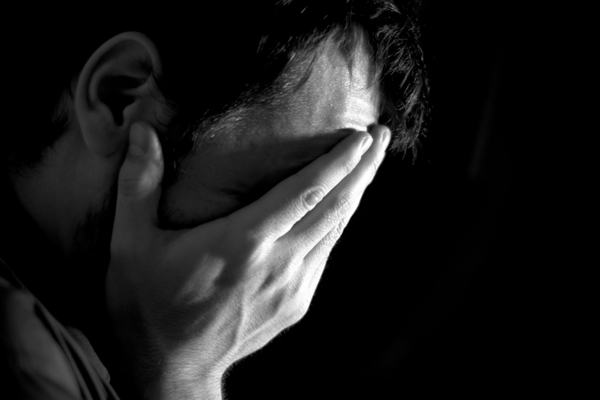

In the past 30 years, post-traumatic stress disorder has gone from exotic rarity to omnipresent. Once chiefly applied to wartime veterans returning from combat, it is now a much more common diagnosis, still linked to traumatic events but now including those occurring outside the battle zone: the death of a loved one on a hospital bed, a car crash on the highway, an assault in the neighborhood park. Many would argue that this is a good thing: greater recognition of psychologically distressing events will lead to more people seeking treatment and a decrease in the preponderance of PTSD – a win-win.
Stephen Joseph disagrees. In his new book, “What Doesn’t Kill Us,” the professor of psychology, health and social care at the University of Nottingham (in the U.K.) warns that our culture’s acceptance of PTSD has become excessive and has led to an over-medicalization of experiences that should be considered part of ordinary, normal, human experience. This has kept us from proactively working through our grief and anxiety: We’ve become too quick to go to the shrink expecting him to fix us, rather than allowing ourselves the opportunity to grow and find new meaning in our lives as a result of painful, but common, events. Joseph advocates for a push toward post-traumatic growth as therapy to treat the stress of trauma, which he distinguishes as being different from the hokey, blue skies and rainbows, pop psychology that he claims has exploded in our culture in the past decade.
Joseph spoke to Salon over the phone to discuss our misunderstanding of the disorders, the meaning and usefulness of suffering, and if some cultures are more prone to PTSD than others.
How would you define a traumatic event? Is it subjective or are there some basic requirements that must be met?
I see trauma as a psychological rupturing. It’s when something happens to us that ruptures our psychological skin. Or, something which shatters our assumptions about ourselves in the world. That’s what I think of as traumatic, and in a way that can be many things. So, that can include a wider range of experience, and I can understand trauma in that broader way. There are lots of different experiences, such as being in a road traffic collision, or experiencing an illness – those sorts of things can be traumatic to people. It can be experienced as psychologically traumatic. But whether it’s necessary to create a psychiatric diagnostic category to capture those experiences is perhaps not necessary.
Do you believe that PTSD is over-diagnosed?
Well, that’s a really, really tricky question to answer because in a way it’s diagnosed pretty much exactly as it’s described in the Diagnostic and Statistical Manual (DSM). So whether the definition of PTSD is too broad is a different question, if you see what I mean. When PTSD was first introduced in 1980, it was defined much more tightly. The gatekeeper criterion to the diagnosis was: Have you experienced a traumatic event? In 1980, it was defined in such a way that only people who had experienced an event that was really outside the range of usual human experience, [like] Vietnam or the Holocaust, had experienced the sorts of experiences that were thought to elicit PTSD. So if you experienced something like a car accident or a traumatic birth, then you couldn’t get a diagnosis of PTSD, because, by definition, you hadn’t experienced a traumatic event.
In 1994, the definition changed in such a way as to include other, broader experiences. Equally persistent was the person’s subjective experiences of what they thought was traumatic. When that happened, people who had experienced car accidents, traumatic births, what we would have otherwise thought of as more ordinary life events, insofar as they are not statistically unusual, could then be diagnosed as a having PTSD. So now we are in a position where lots of people are able to receive the diagnosis of PTSD. So it’s not that it’s being over-diagnosed in that sense. The difficulty or problem, if there is one, is whether, generally speaking – PTSD would be part of this – the DSM over-medicalizes human experience. Things which are relatively common, relatively normal, are turned into psychiatric disorders.
Can you describe some of the typical symptoms of PTSD?
When people experience trauma, when their assumptions about themselves and the world come crashing down, there’s often a period of avoidance. People just try to block out what happened. Switch off. Turn their attention to other things. That’s quite understandable. Then, over time, that gives rise to memories and emotions that come flooding in as the person sort of begins to try to make sense of what happened, and that can become so powerful and distressing that they have to push that away again and go back into a period of avoidance. So sometimes people go through that, periods of avoidance and intrusion. That seems to me as a healthy and adaptive way of working through something painful, emotionally painful, that has happened to us. So those are the experiences. PTSD is when those experiences become so overwhelming that the person can’t function anymore – at work, or school, or in their social life. It takes over so much. But otherwise the symptoms of PTSD are fairly normal, natural ways of dealing with adaptation.
It’s important to see those experiences as quite normal and natural. They are not symptoms of a disorder by themselves. They’re just the way that people deal with an upsetting event in order to be able to make sense of things and to move on. It’s only when they become so overwhelmingly intense that they might be considered a disorder. I think that’s where we get into the problem with what PTSD is: when people are going through that normal experience, but they see it as having a disorder rather than a normal process of adaptation.
That will diminish over time?
Exactly.
Is the emotional pain overblown in such cases?
The suffering is very real. We’re not saying that people don’t have difficult emotional experiences and aren’t suffering. What we’re saying is this is not necessarily a disorder that people are experiencing, and if people think like that, it can be very disempowering to them.
What is the detrimental effect of over-medicalizing these more common human experiences of grief and pain?
When we think of ourselves as suffering from a disorder in a medical sense, well we go to the doctor and we expect the doctor to prescribe whatever the medical treatment is. We’re not in the driver’s seat. We go along – we tell them [our] symptoms, they listen to us, they diagnose what the problem is, and then they work out what the appropriate treatment is. That’s the mind-set when we’re working within a medical framework and we think of ourselves as suffering from a disorder. We sit down in front of the therapist and we expect the therapist to be like a doctor – to be looking out for what the symptoms are so that they can make the correct diagnosis and prescribe us the right treatment. The language of PTSD invokes those ideas, and I think it’s those ideas that can be quite unhelpful at times. For what we’re talking about here, if it’s a normal, natural process, what’s really important is for the person to be in the driver’s seat for themselves – to make their own choices, their own decisions, because we’re dealing not with a disorder, but a battle within the person to find new meanings and new ways of understanding the world. That’s what they have to do. Nobody else can do that for them.
What is “post-traumatic growth”?
Post-traumatic growth is when people come out of trauma having learned new things about themselves and about the world and about their relationship with the world. People develop new philosophies of life. They develop new priorities in life. People learn an awful lot about themselves: their strengths; what they’re good at; having new respect for themselves. They sort of see their lives as divided into two halves: before the event happened and after the event happened. There is a clear demarcation. And they recognize that something happened to them that sliced their world in half in that way, and things for them are now completely different. How they lead their lives has been transformed – their priorities about life, their relationships.
I think one of the things that captures that the most [starts with] the idea that, sometimes, people lead their lives in a way that is dictated by external forces of status and wealth, which are very much big drivers in our capitalist society. We often, in our everyday lives, forget about the small things that are quite important – our relationships: remembering to nurture them, to look after the people around us, to be giving, to be compassionate. When traumatic events happen, people are often shaken back to reality, and remember what really matters to them. Often it is those other things – remembering somebody’s birthday; nurturing our friendships; looking after our parents, the people around us; really embracing our relationships; and letting go of a more materialistic outlook. People often describe it as getting back to who they really are, or feeling more true to themselves, or being more genuine or more authentic. Somehow the idea of the false self that people create around them is shattered, like Humpty Dumpty falling off a wall. The essence of who they are emerges.
Yes, becoming truer to oneself captures the idea very well. Realizing that life is short and sometimes there isn’t as much time left as we thought to put up facades.
This kind of makes trauma sound like a blessing (you even mention people describing it as a “gift”). Is finding meaning the same thing as condoning the traumatic event? And doesn’t this talk of growth all sound very “kumbaya-ish” and unrealistic?
One of the reasons, sometimes, that post-traumatic growth can be seen unfavorably is that it seems like saying that trauma can lead to greater happiness; that for people who have been through trauma, it’s a good for them – they’re happier. That’s just so not the message. It’s not saying that trauma leads to happiness, in terms of smiling and feeling good and laughing and joy – not that type of happiness. What we’re talking about is how trauma can lead to a deeper, more existentially meaningful and fulfilling life, and that in turn may lead to greater happiness further down the road. But, post-traumatic growth is not about happiness in the sort of yellow, smiley face sense.
In essence, post-traumatic growth is a very simple idea, but it has been overshadowed by this mass of psychiatric literature over the past 30 or 40 years about the overwhelming destructive side of trauma, and about how these lead to medical problems. It’s a very simple idea, but [post-traumatic growth] sits, on the one hand, very uncomfortably within mainstream culture of the world of psychology and psychiatry, and on the other hand it seems to sit very comfortably with some other parts of Western culture, such as positive thinking, but it also clashes with some of that literature which is quite superficial, and not grounded in scientific research, and makes unsupported claims.
So, no, post-traumatic growth] doesn’t mean that [people] value or cherish the bad thing that has happened to them. They just accept that it has happened to them. People will often say they wish it hadn’t happened, or they wish they could go back, but there is a realism that they know they can’t. So it’s accepting that they can’t go back; they can’t change things. The only way forward is to go forward. It’s when people can’t accept that something has happened, and they [try] to go back to how they were before, is when they struggle. Acceptance is just being realistic – not seeing it as a good thing.
And someone not experiencing growth — or experiencing PTSD — is that person always trying to go back?
I think that often that’s what gets people stuck – trying to go back, trying to rebuild their lives exactly as it was before. That can lead people to get very stuck because it just isn’t possible when traumatic events happen and we’re presented with new information about the world, or with losses. It just isn’t possible to go back and make things as they were. We have to somehow accept what has happened to us and move on.
Is post-traumatic growth something completely in opposition to PTSD or post-traumatic stress? Either you have one or the other?
They can sit together. The way I see it, post-traumatic growth mostly arises out of post-traumatic stress. So it’s how people deal with the post-traumatic stress; how they manage to deal with the intrusive thoughts that are plaguing them; and the new sense they make of their experiences. So it’s through the post-traumatic stress, through the struggle of post-traumatic stress that post-traumatic growth arises. So often there’s a period of time in which people will begin to talk about post-traumatic growth but they will still be suffering from post-traumatic stress. They’re not in opposition. In a way, they are opposite sides of a coin.
You make a claim that true happiness is something that in and of itself cannot be pursued, and one is doomed to fail if one tries. How is that?
Well, that’s an idea that some philosophers have put forward. Some of the research seems to suggest that what’s really important to finding happiness is meaning and purpose in life. If we think our road to happiness is through seeking hedonistic pleasures night after night, then that’s not likely to lead to a deep, fulfilling level of happiness. But, if we find ways of finding meaning and purpose, wherever that might be, then we’re not setting out directly aiming for happiness but that’s what we’re going to get. We’re going to find a more fulfilling life. Happiness is a byproduct, but in a sense it’s more guaranteed.
When we think of psychological therapies, and the helping professions in general, they often have been about helping people feel better. [For] people with various problems of depression, anxiety or post-traumatic stress, therapy is about getting the person to have a more positive emotional state. That’s been, really, what the therapy world has been about for 50 years, and yet that’s only half the picture. The other half is about the meaning we put on things, our purpose in life, our sense of ourselves, our sense of autonomy, our relationships. Psychology can also be about those things. I’m not saying that therapists have ignored them altogether; for sure, they haven’t, but those more existential ideas have been overshadowed by trying to feel good. This is the idea between what psychologists call subjective well-being, which is about feeling good, and psychological well-being, which is what you could call “meaning-good,” and it’s just about getting the balance between those two things right.
Are there some cultures that are more prone to post-traumatic growth?
That’s a really good question. I don’t think the research has really documented that yet as to whether it may be more common. What the research has shown, however, is that post-traumatic growth is something observed in pretty much all cultures that have been investigated, though differently defined in slight ways. “Post-traumatic growth” sounds like a very Western idea, but [it’s one that] gets back into history and into all sorts of cultures. It’s an idea that’s very resonant with Buddhist and some Chinese philosophy ideas, as well as ideas in Western religion.
My doctor always walks into the exam room smiling. It’s not necessarily the countenance you’d expect from a man who spends much of his time working with people with Stage 3 and Stage 4 cancers — the kind that haven’t responded to other forms of treatment. Yet even when we speak on the phone, I sometimes swear I can hear him smiling. Granted, I’ve given my doctor something to smile about – I’ve been doing spectacularly well in my Phase I trial, delivering CT scan results that he appreciatively refers to as “neat.” Yet the extraordinary thing about my doctor is that he was smiling the day I met him, when I was facing a diagnosis that put my long-term odds of survival in the “probably not going to happen” range. And from that first grin, he deflated my terror and made me believe I was in the hands of someone not just invested in my wellness, but downright optimistic about it.
A natively cheerful demeanor isn’t a requirement for being a competent healer. But what is far too often lost in our grueling, impersonal and cost-driven healthcare system is the basic fact that a human being in the chaotic and scary world of injury or illness deserves sensitivity and compassion. That a shivering person in a paper dress deserves dignity. So if you’re a doctor, nurse or technician, here’s your reminder. And if you’ve ever been a patient, we’d love to read your own additions to the list.
Take your hand off the goddamn doorknob already.
We know you are incredibly busy and important and that your office has wildly overbooked your schedule today. You know what, though? It’s not our job to streamline your day. Conveying information while you’re walking out the door may work if you’re a character on “Revenge,” but it’s a crummy way to have a conversation with a person about his or her health. We just sat out in the waiting room for 45 minutes reading last week’s hype-trolling issue of Time magazine; we’ve sat here in a robe for a half-hour looking at the pain assessment chart. Now you can at least pretend to give us your full attention for the five minutes you’re prodding our vulnerable, unclad bodies. You’ll immediately rise in our esteem.
Dr. Carma Bylund, director of the CommSkil program at Memorial Sloan-Kettering, notes that studies have shown that “when a doctor comes into the room and sits down with the patient, the patient perceives the visit as longer. The doctors are at eye level; they’re attentive — and they can’t put a hand on the doorknob.”
Remember that this random collection of faulty parts is a person.
At a Times talk last winter, Will Reiser, the writer of “50/50,” admitted he’d loosely based the poker-faced oncologist of the film on his own doctor, referring to him as “a mechanic” who saw him as the car he had to fix. It was a generous assessment of clinical sangfroid, one that acknowledged that nobody wants a doctor who’s lacking in the professional boundaries department. But that doesn’t mean you should let yourself turn into a robot.
Early in my treatment, I had a doctor on my clinical trial bring in a team of research fellows to look at “the tumor.” That the tumor had a sentient human host seemed utterly irrelevant to him. And when my friend Ariel had a miscarriage, the sonogram technician confirmed it by briskly announcing, “Yup, no heartbeat,” and walking out of the room. This is what is known, in medical terms, as a nightmare.
You may deal in tumors and miscarriages in a revolving door of horrible things all day long, but your patients live in a very different world. Their tumors and miscarriages and dying parents are pretty important to them. The moment they become trivial to you, seriously rethink why you ever wanted to do this for a living.
Consider that the patient is telling you something the charts don’t.
“I had one endocrinologist clearly point out during my exam all of the physical characteristics that lead him to believe I was hypothyroid and had adrenal function issues,” says my friend Alice. “He pointed out stretch marks (without childbirth). He pointed out dry skin. He pointed out my premature gray hair (specifically a prevalent streak near my forehead). My weight gain and inability to lose weight. Quite a few other characteristics. But the lab tests came back ‘normal’ and that is literally what he offered me. ‘Your tests say normal so there is nothing wrong.’” Can you understand why Alice was exasperated?
Most of us truly get it that doctors don’t know everything. We don’t expect all-seeing miracle workers. And we understand that some patients are either incapable of giving accurate information or are just plain wrong about what they believe they have. But a person who is suffering, who is symptomatic, is entitled to a fair and thorough investigation – and if you can’t provide it, please, suggest somebody who can. Don’t shrug off pain with a blasé suggestion of Tylenol or cutting out dairy and not even look at the person. Instead, be like the doctor who once told me, “There’s always something more we can do for a patient.” Do something more.
Accept that we didn’t go to medical school
You know how you’re rattling off protocols and surgery plans and fancy words for body parts we didn’t even know we had? Whoa whoa whoa – slow down there, partner. You’re talking to someone who may not know a colostomy from a semicolon. Your rapid-fire delivery is intimidating and scary. It makes us feel stupid and bothersome, like we should know all this stuff and not ask questions.
“Doctors forget that the minute a patient hears bad news or that there’s a problem, patients stop listening,” says my doctor friend Joe. “Or if they hear anything, they’re hearing incomplete info. The onus then is on us to find ways to help patients understand what just happened, whether it’s writing down instructions, calling a patient later in the day after the dust settles, or simply asking a patient to repeat something back.”
“Healthcare providers often have a kind of script,” adds Dr. Bylund. “They may have certain things they may always say to everybody. We teach doctors to check patients’ understanding and use that to tailor consultation to the person’s needs. Say things like, ‘Tell me what you know about your disease,’ or ‘Tell me what your last doctor said.’ And we show them how people’s past experiences may impact their choices now.” Maybe we don’t know anything about Parkinson’s. Maybe we know a harrowing amount because of what Mom went through, and we’re frightened to death of it. Start with what we know before you dump everything you know on us.
Leah Berkenwald, a health communication student and writer, says, “What good is the diagnosis or treatment if a patient cannot understand it or follow instructions? What is often deemed noncompliance is often a result of a failure to communicate.” And, she says, “It doesn’t matter how good a physician is at diagnosis or treatment if the patient doesn’t understand what they’re supposed to do, how to do it, or why it matters. Medical knowledge and clinical skill become moot when a physician makes assumptions about their patients’ cultural values, beliefs and practices.”
Talk frankly about how we’ll pay for this – and don’t assume anything
As Salon reader Lila says, “The calculation about what choices are available to me seems to be made before I hear the medical advice … Don’t get me wrong, it can be tricky for individuals to figure out how to afford healthcare, and I’m glad for healthcare professionals’ sensitivity to that. But when my husband was being sent home from the hospital — too early, we felt — a problem came to light: The doctor finally said she too felt it was too early but said the insurance wouldn’t pay another day. In fact she was wrong (and the insurance ultimately did pay another day), but more problematic is that she made a decision to discharge based upon something other than medical reasons — and we didn’t know that was happening.”
Nobody – on either the medical or patient end – wants to get walloped with a contentious bill. So talk to us so we can work together to get the most care for the buck. Don’t treat us like dirtbags if we’re out of network or uninsured, either; work with us to find other options. And you can pass that tidbit on to your office staff. Imagine what it feels like to be both sick and poor — now imagine what it’s like to add “demeaned” to your list of problems.
All of us, even the strongest among us, find ourselves on the business end of the stethoscope sometimes. And though it seems pretty basic, I’ll let a real doctor say it so you take it seriously: “Ultimately, health and wellness have a lot to do with the comfort a patient has with a doctor. You’ll give better information when you have a doctor who makes you feel secure,” says Dr. Bylund. When you’re compassionate to us, we’ll show up for our checkups. We’ll be honest about conditions and circumstances, because we aren’t afraid of being shamed or judged. We’ll still put our faith in science, and accept that pain and sickness are sometimes unavoidable. But we’ll be less scared when we walk through those very scary doors. And though we’ll do our best to ward off disease, we’ll gladly submit to something infectious – the power of being decent, and your faith in us.
Continue Reading
Close
This piece originally appeared on
AlterNet.
Almost two full years after the BP oil spill, a panel of experts gathered at the 17th annual Tulane Environmental Law Summit, to present the continuing impacts of the BP Oil Spill. That spill began with the April 20, 2010, explosion of the Deepwater Horizon drilling unit used by BP 40 miles off the Louisiana coast. Eleven men lost their lives. The resulting spill of oil into the Gulf of Mexico stands as the largest oil spill in U.S. history and the second largest environmental disaster in this country to date besides the nearly decade-long Dust Bowl of the 1930s. Scientists at the summit presented recent photographs of shrimp with no eyes and fish with cancerous tumors born long after the gulf was declared “safe” for fishing.
It turns out that testing water and fish flesh under the surface oil after the spill was not very telling about long-term impacts as oil and water don’t mix and the chronic, toxic impacts were delayed until long after BP was put in charge of the “cleanup.” When BP sprayed chemical dispersants containing a slew of toxic heavy metals including arsenic, the oil didn’t magically disappear. It sank into the sediment. Disturbingly, the allowable levels set by the government for the toxins in our seafood are based on health impacts for a 176-pound adult eating less than two medium shrimp a day. The testing is for one chemical out of a crude oil mixture containing thousands of chemicals. No synergistic effects are considered. This in no way protects children, fetuses, people who weigh less than 176 pounds or anyone who eats seafood on a daily basis like the folks here on the Gulf Coast.
Dr. Andrew Whitehead, Ph.D., associate professor, Department of Biological Sciences, Louisiana State University, who is studying the BP spill and has reviewed much of the scientific studies of the Exxon Valdez spill, explained that stock declines of species may take several years to develop as reproduction is impacted in successive generations and across species. The Exxon Valdez spill is now known to be responsible for the decline of many species, including marine mammals, marine birds, and fishes such as pink salmon and herring. Though we have a take on the immediate acute impacts of the BP spill on animals caught in the oil, the chronic ultimate impacts of the BP spill are still unknown. But we do know that the killifish, the most abundant forage fish for the bigger fish in Gulf Coast marshes, are being affected. Fish from oiled marshes show signs of direct toxicity and reproductive impairment. Dr. Whitehead’s experiments involving exposures to oiled sediments, done in collaboration with colleague Dr. Fernando Galvez, show that killifish embryos are taking longer to develop or don’t hatch at all. They are being born with malformed hearts and hearts that may not function properly when they mature. And as the impacts from the spill on the fish bioaccumulate and propagate across generations, liability is harder to prove without good and strategic scientific study that sadly is harder to fund.
But some impacts are being felt now, especially for sediment dwelling seafood. Current reports from fisherman up and down the coast are startling. The oyster harvest for 2010 was the worst in more than four decades and oystermen continue to report catches down as much as 75 percent. Crab catches are in steep decline. Brown shrimp production is down two-thirds. And the white shrimp season was even worse, leading to descriptions of “worst in memory” and “nonexistent.” This from the region that before the spill provided 40 percent of the nation’s seafood.
Dr. Patricia Williams, Ph.D., Diplomate of the American Board of Toxicology, Associate Professor, Coordinator of Toxicology Research Laboratories, Pontchartrain Institute for Environmental Sciences, University of New Orleans, spoke at the summit about what she sees as a failure to properly assess the impact of the spill on seafood and on human health. She said:
In 1996, the National Oceanic and Atmospheric Administration acknowledged that direct measurement of tissue for PAH (polycyclic aromatic hydrocarbon) concentrations generally does not provide a useful indicator of exposure of fish to PAHs from petroleum spills. Regardless, an extremely expensive seafood testing program was launched using this method. Testing included only 13 PAH parent compounds out of 200 PAHs present in crude oil. PAHs act on each other resulting in greater toxicity than expected from a single PAH (synergism). The synergistic nature of the PAHs were ignored in interpretation of the results. Additionally, the Levels of Concern were calculated for a 176 pound individual. This does not address toddlers and children or the developing fetus and placental transfer. The public was not warned of these deficiencies in the seafood testing program.
Dr. Williams explained that “PAHs are endocrine disruptors that interfere with the normal blood-borne hormones (e.g., estrogen and testosterone) that are responsible for the regulation of reproductive and developmental processes. Only very low amounts of chemicals are needed to disrupt the normal endocrine balance of both humans and animals. Evidence of reproduction imbalance is seen in the second generation of white shrimp in the 2011 harvest. Shrimp were harvested with defective eye stalks, pleopods, and pereiopods. Such anatomical defects are occurring in the markedly reduced white shrimp population in the Gulf and warn of endocrine dysfunction that could result in the loss of the species.”
Furthermore, “The heavy metals known to be present in crude oil are being ignored in the testing of seafood. Metal toxicity can produce neurobehavioral abnormalities in sea life such as: alterations in avoidance or attraction responses; critical swimming speed; changes in social interactions (e.g. aggression), reproduction, feeding, and predator avoidance; food foraging with reduced feeding ability; loss or orientation in swimming and changes in schooling behavior. Heavy metal testing in BP Oil clean-up workers has documented increased arsenic levels in 24 hour urine specimens.”
Finally, Dr. Williams warned that “The future chronic health effects from consumption of contaminated seafood and biomagnification along the food chain are yet to be realized in both sea life and humans. Chronic effects may take years to present and may elude an analysis of their causal origins. ”
On the second day of the summit, a settlement between private plaintiffs and BP was announced in the press. This settlement does not resolve the government cases, either civil or criminal, against the responsible parties. But the settlement of the private case raises the question whether the government prosecutions will be resolved without a trial and without jail time for executives ultimately responsible for the deaths of 11 workers and severe and ongoing environmental and economic impacts on the region. The summit attendees were abuzz with speculation about what will happen in the federal and State of Louisiana cases.
In Louisiana, petroleum is king. This state is the third largest producer of petroleum in America, Louisiana is responsible for more than one-quarter of the nation’s natural gas production, and Louisiana is the third leading refiner of petroleum in the country. In addition, the state makes over 600 petroleum products making it the second in the nation in primary production of petrochemicals. The 20-mile stretch on the Mississippi from New Orleans to Baton Rouge known as “The Cancer Corridor” pumps out one-quarter of the chemicals made in America. Louisiana leads the United States in release of toxic chemicals into the environment. The seven-parish industrial corridor has the highest density of petrochemical industries in the nation and possibly the world.
All this money in petroleum has a huge impact on politics in Louisiana, just as it does on a national and international level. It’s probably impossible to get elected to any Louisiana office without courting petroleum dollars and making campaign promises to that industry. A visit to the petroleum friendly website for the Louisiana Department of Natural Resources reveals the following section titled “Legacy Liability Reform.”
This “Legacy Liability Reform” is less likely to ensure any protection for Louisiana’s resources or its citizens than it is to assure petroleum companies that Louisiana and its resources are theirs for the taking. The reform is code for “don’t worry about liability because immunity for really bad stuff is all part of the deal for investing in Louisiana.” Oh, by the way, the Louisiana courts have been very protective historically of petroleum interests as well.
From the 1950s on, drilling for oil and gas on federal lands and waters has produced the second largest source of revenue for the federal government besides taxes. This has led to a rather cozy relationship between the federal government and those corporations that extract petroleum here. Let us not forget that since the inception of the Minerals Management Service (now renamed the Bureau of Ocean Energy Management, Regulation and Enforcement to emphasize what it should be doing) has been involved in numerous scandals. For example, in 1990, MMS employees were linked to prostitution, and in 2008 the Department of Interior’s inspector general reported that MMS employees were engaged in both drug use and sexual activity with employees from the very energy firms they were to be regulating. This wasn’t just the foxes guarding the chicken coop, but the foxes actually in bed doing lines of coke with the chickens.
Clint Guidry, president, Louisiana Shrimp Association, spoke at the summit about the political ramifications of the spill and the unlikelihood of real justice coming from the government case. Mr. Guidry had worked for BP earlier in his career like so many Louisiana men have. He knows intimately both the oil industry and the fishing industry. When the spill happened, Louisiana shrimping was devastated. First, Guidry lobbied for jobs for all the shrimpers when the fisheries closed. Then he fought for job site safety for the workers and community residents impacted by the cleanup. Guidry’s role became that of witness to the harms on fisherman response workers when they began to suffer from being exposed to aerial application of the chemical dispersant and being downwind from burn sites of the surface oil. For instance, on May 26 seven shrimpers from the offshore response crew were admitted to West Jefferson Hospital with chemical poisoning. Two days later, after Obama’s May 27 visit to Grand Isle where he was photographed picking up tar balls, two more shrimpers were airlifted to West Jefferson Hospital for emergency medical treatment, also for chemical poisoning. Guidry met with the Occupational Health and Safety Administration, the U.S. Coast Guard, the National Institute for Occupational Health and Safety, and with other government representatives from the local to the federal including Secretaries Napolitano and Salazar and U.S. EPA Administrator Lisa Jackson.
Mr. Guidry still has the following unresolved questions:
- Why did we allow people who caused the oil spill to be in charge of the cleanup? Everything they did was to limit liability, not to protect the environment, the resources or the people.
- How could the government announce on Aug. 5, 2010, that suddenly 75 percent of the oil had disappeared? Corporations run this country and they operate under the Golden Rule: Who holds the gold makes the rule.
- According to statements made by Louisiana Coastal Protection and Restoration Authority Chairman Garret Graves, BP is choosing the direction of the environmental damage assessment. Shouldn’t the Oil Spill Recovery fund be administered independently so it could fund real scientists like Dr. Whitehead?
- Oil companies are good at covering up spills and sinking the oil with additional chemicals, but they are no good at cleaning up spills. If we are allowing these companies to drill in the Gulf, shouldn’t they be required to have the technology to prevent disasters and to clean them up? They don’t.
- Even after the largest loss of life and oil, no laws have been changed. Eleven men are dead but I don’t believe anybody will go to jail. The government is the keeper of the record of the criminal investigation and if they settle the case, the public will never see that information. If the record is not made public in a trial, how do we learn from this spill?
- I’m a third generation fisherman. We were the first environmentalists because if you don’t take care of the environment, it doesn’t take care of you. I love wildlife. The spill has devastated wildlife. What price do you put on a dead dolphin?
- The head of Minerals Management Service at the time of the BP disaster came from big oil. She was fired by Obama and MMS was split up but no one else was fired. Is that enough house cleaning? Can these people keep us safe when they have failed in the past?
As the federal government and affected states including Louisiana move toward trial or settlement, we should all be asking these questions.
How will the government cases be resolved? Potential penalties of more than $17 billion for environmental violations remain on the books for BP. Peter Lehner, executive director of Natural Resources Defense Counsel writes in his blog, “How the remainder of the case pans out says a lot about the future of energy in this country. Will the government allow BP, and the rest of the oil industry, to continue business as usual with nothing more than a slap on the wrist? Or will the company be put on trial and held accountable for its actions? Will the penalties be severe enough to make the oil industry clean up its act? BP reported profits of $21.7 billion in 2011, nearly 3 times the estimated cost of its settlement with private parties in the Gulf.”
And one question looms even larger than the spill, the resulting legal cases or even BP profits: How can we establish a separation between the oil industry and our government?
Continue Reading
Close
“My clients don’t know,” he told me. How could they? My neighbor Edward (some names and some identifying details have been changed) doesn’t look sick. In many ways, he isn’t. He’s a dapper, graying-at-the-temples man with two young children, a consulting business — and a recurring cancer for which he’s currently facing another round of treatments. It’s hard enough drumming up business in this economy, Edward says. If a potential client’s choice comes down to the healthy 30-year-old and the middle-aged man with a tumor, well, who would you choose? So he presses on in secret, cleverly arranging his business schedule around doctor visits and scans. He’s in the cancer closet.
One of the first things you have to deal with when faced with a life-altering illness is the decision about whom you’re going to tell, and how. When I learned I had malignant melanoma a year and a half ago, I told my editor before I told my family. (OK, I was on a deadline at the time.) Two days later, I told the whole world in a cover story for Salon. Two months ago, Boing Boing writer Xeni Jardin live tweeted her first mammogram – and her stunning diagnosis of breast cancer – to thousands of followers. For some of us, the diagnosis is where we find our voice. For others that kind of candor isn’t an option, for either professional or personal reasons.
While a friend was going through breast cancer treatment a few years ago, few in our circle knew that her mother was facing it at the same time. Five years later, Ginger, a figure skating coach, says that “I knew if I told anyone, my students would immediately start looking for another coach.” Instead, she covered up surgery with a story of a vacation to Maine, and sandwiched months of afternoon chemo and radiation treatments in between early morning and evening coaching sessions – and weekends traveling with her team. “It took everything to get through it,” she says now. “There were times I was so exhausted I couldn’t see straight. A couple of times I had to leave the ice because I was so sick.” But she says she’s never regretted her choice to keep silent. On the contrary, sticking to her rigorous work schedule and maintaining the demeanor of health was “what got me through.”
In the midst of a health crisis, the routines of a career — the sense of purpose and obligation it provides — can provide motivation and escape, something that isn’t easy to pull off when everybody’s concerned about your condition. Chris, a doctoral student and teacher at an academic medical center, didn’t enjoy having his students popping in to check on him during his treatment after a lung transplant for his cystic fibrosis. He’s since switched his care to a different facility. Now that he’s no longer on oxygen – “when you can’t conceal a blessed thing” — he’s also discreet with his peers. “I don’t want people deciding for me what I’m able to do,” he says. “I’m pretty good at determining that for myself.” He knows first- and secondhand how damaging honesty can be. When his wife asked for a scheduling change around one of his procedures, her boss relieved her of her duties, telling her that “he’d decided she wouldn’t be able to handle her responsibilities.” Pretty bold of him to come out and say it. The ease with which employers can “restructure” or blame a termination on popular culprits “inconsistency” or “absenteeism” make it easy to conceal how often people with chronic conditions and their caretakers lose their jobs over them — and even harder to determine how great a role illness plays in hiring practices.
Thanks to our often punitive American healthcare system, the consequences of illness can be severe far beyond the illness itself. Linda, who was diagnosed with MS four years ago, says her friends know her condition but she rigorously keeps it from her co-workers. “It’s bad enough to live with this disease not knowing how it will affect me,” she says, “but I am terrified that it could also affect my employment prospects.” For Linda, like far too many of us in this country, “the thought of losing my job and thus my healthcare is probably my biggest nightmare.” The Patient Protection and Affordable Care Act doesn’t take full effect for another two years, when no one will be able to be denied coverage based on preexisting conditions. Currently, you can apply for a “high risk pool” if you’ve been uninsured for six months. That’s a lifetime for a person with a serious illness, and for those of us on ongoing treatments and drugs, an unfathomable expense.
There are other reasons beyond the fear of career repercussions for keeping illness a secret. Nobody wants to be viewed as an invalid, or the one who might be circling the drain. And as cancer blogger Katherine, who has metastatic breast cancer, says, “It’s often easier not to challenge people’s assumptions than to explain.” Linda agrees that “I am perfectly capable of working and living a mostly normal life. However, there is still an antiquated view of MS in our society, and many people automatically assume that once you are diagnosed, your next step is a wheelchair.” And Ginger notes that even in this day and age, when you can’t swing a cat without hitting a LIVESTRONG bracelet, “There’s such a death sentence that people put on cancer.” The reality of illness is that there are plenty of days when you’re going through the rigors of treatment and its side effects, that you just don’t want to be the official spokesperson and explainer for This Is What My Disease Looks Like.
Just as difficult as being pitied, though, is the risk of finding yourself scorned for a condition beyond your control. Bette, who has autoimmune disorders, says, “I’m very Type A, never miss a day of work or class or a deadline, even if that means having to go throw up in the bathroom in between meetings with clients. There’s a perception that people with autoimmune issues are weak, fragile, or delicate, which are characteristics I really try to avoid, especially as a woman. There’s also a ton of stigma about fibromyalgia. Someone in my office the other day actually made a comment about how so many women say they have fibro for sympathy, which strengthened my resolve to keep my conditions to myself. ” And Cheryl, who was diagnosed with Type 1 diabetes after an initial misdiagnosis of Type 2, says, “Many people think I ate my way to diabetes, since I’m overweight, but that’s really not the case. I feel like my food choices are always silently (and sometimes not silently) judged. Look at the backlash that Paula Deen suffered. My reaction to that controversy? How awful that another person has to have this disease, no matter how she got it. It also feels somewhat embarrassing to be ‘sick’ — like a personal failure that one of my organs doesn’t work properly.” Now, however, she says, “I decided to become more public about it,” because among other things, “I’d rather do a shot in the middle of a crowded restaurant than in some dirty bathroom stall.”
As Katherine advises, “Every individual will have their own reaction and coping mechanism” for dealing with long-term conditions and sudden, sharp reversals of fortune. We all grapple with the physical changes and scheduling nightmares, with balancing our privacy and our secrecy, with the desire to share and the longing to be seen as our healthiest, strongest selves. We know that when we say we have cancer or we have diabetes, we have cystic fibrosis or lupus we’re HIV-positive, that you will not look at us or treat us the same way ever again. We just don’t know whether we’ll be met with compassion or a pink slip, with support or with judgment. There’s so much about illness we can’t control. That’s why we care so much about the one thing we always still have power over: the way we get to talk to you about it.
Continue Reading
Close