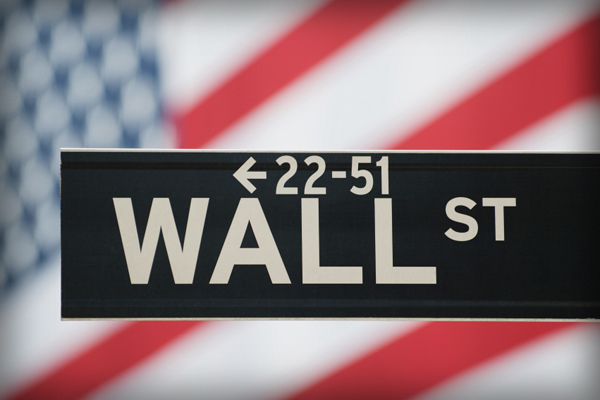

Do corporations have a social responsibility to be decent, upstanding citizens? Is there a moral imperative that the likes of Bank of America, General Electric and Apple should boost employment, refrain from contributing to inequality, or restrain themselves from despoiling the environment, simply because those are the right things to do?
If you spend even a cursory amount of time investigating this question, you will speedily find yourself reckoning with the answer delivered four decades ago by the economist Milton Friedman: A most emphatic no.
In “The Social Responsibility of Business Is to Increase Its Profits,” originally published in the New York Times Sunday Magazine in 1970, Friedman, the arch-deacon of free market economics, declared that any businessman who thinks a corporation should take “seriously its responsibilities for providing employment, eliminating discrimination, avoiding pollution and whatever else” was “preaching pure and unadulterated socialism.”
Businessmen who talk this way are unwitting puppets of the intellectual forces that have been undermining the basis of a free society these past decades … In a free-enterprise, private-property system, a corporate executive is an employee of the owners of the business. He has direct responsibility to his employers. That responsibility is to conduct the business in accordance with their desires, which generally will be to make as much money as possible while conforming to the basic rules of the society, both those embodied in law and those embodied in ethical custom.
The great irony of Friedman’s hard line is that in 1970, his words probably sounded much more extreme than they do today. Despite decades of lip service to the idea of “corporate social responsibility,” the notions that corporations do best when most untrammeled by regulatory constraint or that they should only be guided by a desire to generate the maximum return on investment for their shareholders are now bedrock ideological fixations of the contemporary Republican Party.
In fact, one could well argue that we are currently closer to Friedman’s utopia than during any other period in living memory. The Supreme Court has vastly loosened restrictions on corporate spending on the political process, trade policy has supported a decades-long trend toward foreign investment, offshoring and outsourcing, corporate taxes are at a historic low, and even the worst financial crisis in decades has hardly resulted in more than a slap on the regulatory wrist for the guilty parties.
But one wonders what even Milton Friedman might think if he could survey today’s wreckage. Would he have any remorse at the sight of bailed-out banks generating huge profits while ordinary Americans struggled to find and keep jobs and millions more faced foreclosure? Would he feel any necessity to reexamine his own argument, in particular that line that states that businessmen should conform “to the basic rules of the society, both those embodied in law and those embodied in ethical custom”?
Because the huge loophole gaping wide open there is hard to miss. It has two parts:
First, what does it mean to play by the rules when you are writing the rules in your own favor? It is obviously in the interest of corporations to lobby Congress for laws that help them to increase their profits. But it is by no means clear that such a practice is in the best interest of society as a whole.
Second, there is the matter of just what precisely is defined as “embodied in ethical custom.” What do Americans believe, what values do we share that should, perhaps, also be shared by our corporations? Inadvertently or not, by throwing “custom” a bone, Friedman opened up a huge can of worms. Maybe, as a society, we do believe that corporations have an obligation to boost employment at home rather than abroad, or pay their fair share of taxes. Maybe, as a society, we think it is repugnant that Fortune 500 CEOs make 400 times as much as their average worker. Maybe, in general, we support the clean air and water regulations that corporate lobbyists are so eager to castrate?
And maybe, just maybe, we believe that corporations that are bailed out with taxpayer funds have an extra responsibility to behave as responsible citizens, and not merely as amoral profit-generating automatons.
There are other considerations to contemplate as well that Friedman appears not to have taken into account. For example, in a society where economic activity is dominated by consumers, doesn’t it matter what consumers think? In other words, if enough people find Nike’s Asian labor practices or Citigroup’s foreclosure rate so objectionable that a meaningful number actually switch their business, isn’t it in the profitmaking interest of those corporations to change their behavior to match consumer expectations?
The time is ripe for a reevaluation of the role of the corporation in American society. The passion motivating Occupy Wall Street protesters tells us this, as does the spectacle of a political and economic system that is so clearly broken.
Therefore, in the spirit of contributing to enhancing consumer enlightenment as to how our corporations rank as responsible citizens, Salon is launching a new series: The Corporate Citizen Challenge — an attempt to rate the good citizenship performance of America’s biggest companies.
Look for the first installment the week after Thanksgiving. We’ll start with the big financial institutions that benefited the most from government bailouts. We’ll evaluate them according to a series of metrics: job creation, dollars spent lobbying, total taxes paid, executive compensation, impact on the environment, and others.
But we won’t limit ourselves to just the likes of Citigroup or Bank of America. Every U.S. corporation, whether saved from bankruptcy by the federal government or not, deserves a hard look — and we welcome suggestions as to likely targets for our gaze.
Milton Friedman would hate this project — which, in and of itself, is one big obvious reason why we should undertake it. But let’s give him credit: He opened the door to this journey with his nod toward that mysterious concept of “ethical custom.”
What are our ethics? How do we want our corporations to behave? And shouldn’t we take our business elsewhere if we feel our values are being trampled? Legally speaking, the corporation is an “artificial person.” The Supreme Court obviously believes that these artificial people are true citizens insofar as their right to free speech — in the form of political advertising — is concerned. But if corporations are people too, with the rights that pertain thereto, shouldn’t they also bear some responsibility?
Once upon a time, Bank of America was a bank for the 99 percent. History tells us that A.P. Giannini, the son of Italian immigrants who built Bank of America into one of the greatest banks in the world, practically pioneered the concept of retail banking. In contrast to his peers, he firmly believed that “there was money to be made lending to the little guy.”
But he wasn’t particularly interested in accumulating millions for himself.
From a Time magazine profile:
When Giannini died at age 79, his estate was worth less than $500,000. It was purely by choice. He could have been a billionaire but disdained great wealth, believing it would make him lose touch with the people he wanted to serve. For years he accepted virtually no pay, and upon being granted a surprise $1.5 million bonus one year promptly gave it all to the University of California. “Money itch is a bad thing,” he once said. “I never had that trouble.”
Where have you gone, A.P. Giannini? Giannini died long before debit cards became ubiquitous, but one suspects he would have frowned upon Bank of America’s recent bid, during a down economy, to charge $5 just to use them. It’s hard to imagine a more stark contrast between the values he espoused than with those displayed by the conglomerate now headquartered in Charlotte, N.C. — a bank that is the very definition of Too Big To Fail.
It is tempting, when evaluating Bank of America as a responsible corporate citizen, to simply throw one’s hands up in horror and run screaming. Here are three quick reasons why.
- On Dec. 7, Bank of America federal officials announced that Bank of America would pay $137.3 million to settle charges that “it defrauded schools, hospitals and dozens of other state and local government organizations … by engaging in illegal behavior when investing the proceeds of municipal bond sales.
- Just before Christmas, the Justice Department announced that Bank of America had agreed to pay $335 million to settle allegations that its Countrywide mortgage lending unit had discriminated against black and Hispanic borrowers.
That’s just in December!
Defenders of Bank of America, if there are any, might argue that the abuses committed by Countrywide and Merrill Lynch, two of the most flagrantly irresponsible financial institutions at the heart of the financial crisis, did not occur on Bank of America’s watch. Bank of America absorbed those entities only after they had already suffered mortal wounds as a result of the crash.
But that misunderstands the nature of the Bank of America beast.
The Bank of America built by North Carolina’s Hugh McColl and his successor Ken Lewis is a goliath constructed from an endless chain of mergers. McColl’s NationsBank, itself assembled from engulfing a series of smaller banks, swallowed up San Francisco-headquartered Bank of America in 1998. In 2004, it gobbled up FleetBoston Financial (price tag: $47 billion). In 2005, the credit card giant MBNA ($35 billion). In 2007, the LaSalle Bank Corp. ($21 billion). The Countrywide and Merrill Lynch purchases in 2007 and 2008 were just the most recent (and most disastrous) examples of an operating strategy built into the new monster’s DNA.
Which means we can hold Bank of America responsible for the excesses of Countrywide and Merrill Lynch, because the essence of Bank of America is the inexorable creation of size and scale and power from the annexation of other financial institutions. The result of it all: an entity that is too big for bankruptcy, too big to be well run, and too politically influential to ignore.
We could break it down further. Bank of America received $45 billion in TARP funds, but then turned around and lobbied to reduce the scope of the Dodd-Frank bank reform bill while fighting hard against the creation of the Consumer Financial Protection Bureau — an agency designed to prevent exactly the kind of abuses that Bank of America has had to pay so many millions of dollars to escape criminal prosecution for. And Bank of America is still likely to be on the hook for millions more in fees to settle accusations of foreclosure fraud.
But it seems like overkill. The record is clear: Bank of America gets an F-.
Continue Reading
Close
In the magisterial report released in April by the Senate’s Permanent Subcommittee on Investigations, “Wall Street and the Financial Crisis: Anatomy of a Financial Collapse,” a section recounting how Goldman Sachs profited off speculation in mortgage-backed securities — at the expense of its own clients! — closes with the following j’accuse:
Investment banks were the driving force behind the structured finance products that provided a steady stream of funding for lenders originating high risk, poor quality loans and that magnified risk throughout the U.S. financial system. The investment banks that engineered, sold, traded, and profited from mortgage related structured finance products were a major cause of the financial crisis.
In this formulation, all the investment banks are equally guilty of bad corporate citizenship. But as anyone who has been to an Occupy protest or read a Matt Taibbi Rolling Stone screed or simply scanned the business headlines for the last three years knows, the name Goldman Sachs means something different to the general public today than Morgan Stanley or Citigroup or Merrill Lynch. Goldman Sachs, once lauded as the acme of capitalism, is now, in the popular mind, a watchword for Wall Street greed and irresponsibility. It is the vampire squid. None other can compare.
There are many reasons, large and small, for Goldman’s notoriety. Not least is pure arrogance — perfectly exemplified by the sorry spectacle of Lloyd Blankfein declaring that Goldman was “doing God’s work.” Or we could start with the legacy of one Goldman CEO turned treasury secretary, Robert Rubin, who supported and helped pass many of the deregulatory measures that encouraged Wall Street irresponsibility. Or another, Hank Paulson, who not long after leaving Goldman for Washington orchestrated a massive handout to his own industry, without any strings attached. And then there’s even a third, Jon Corzine, who has spent much of this week disingenuously testifying about his lack of knowledge as to what employees at his most recent firm, MF Global, were actually doing as the company somehow misplaced billions of dollars of its clients’ money.
It has not been an edifying spectacle. Goldman’s political influence has historically been greater than any other investment bank’s. This is no longer a mark in the bank’s favor.
But what singles Goldman Sachs out for special opprobrium isn’t the culpability it shares with other investment banks for helping to create the financial crisis and then get bailed out with taxpayer dollars. It’s the fact that Goldman Sachs figured out, before any of its Wall Street colleagues, that the housing boom was a house of cards and the entire mortgage-backed security market was headed for a crash. Goldman wasn’t caught by surprise by the revelation that the mortgage securities it was creating were toxic junk. Quite the opposite. But instead of sending up an alarm bell and using its political influence and lobbying muscle to try to fend off the coming disaster, Goldman Sachs simply liquidated the positions in which it would be vulnerable to a downturn and started betting, instead, on the likelihood of disaster. As the Senate report acidly notes, in December 2006, “when it saw evidence that the high risk mortgages underlying many RMBS and CDO securities were incurring accelerated rates of delinquency and default, Goldman quietly and abruptly reversed course.”
Smart for Goldman — in 2007, the company had one of the best years any investment bank has ever enjoyed. CEO Lloyd Blankfein alone earned $68.5 million that year. But not so smart for the rest of us. We despise Goldman Sachs more than we despise any other Wall Street institution because Goldman was smart enough to know what was happening to the economy, smart enough to mint billions in profit while the world headed toward the worst economic disaster since the Great Depression, but not smart enough to share the news. A responsible CEO of one of the nation’s most influential corporations should have been testifying before Congress every week warning of imminent disaster. But that might have ended up negatively influencing his compensation.
With that background in mind, a review of some of our favorite metrics seems beside the point. But for what it’s worth:
Executive compensation: In 2010, Lloyd Blankfein earned $13.2 million as CEO of Goldman Sachs. A far cry, to be sure, from his 2007 heyday, but still pretty good for the head of a company that had to settle civil fraud charges brought against the firm by the SEC. In 2011, even as the company reported a quarterly loss for only the second time since going public in 1999, the firm still managed to put aside $10 billion for a bonus pool to be divided up among its 30,000 employees.
Lobbying: For the perfect, paradigmatic Goldman lobbying story, we must go back to 2004, when five Wall Street investment banks, with Hank Paulson taking the lead, pressured the SEC to change a rule that limited how much debt a bank could take on. The banks wanted the SEC to lower its requirement for how much capital the banks had to keep as a cushion against possible trading losses — Hank Paulson had been personally arguing for a change in this rule as far back as 2000. The banks won — and then proceeded to employ their new leverage to engage in a speculative frenzy that left them all desperately vulnerable — and requiring a federal bailout — when the market crashed. Who delivered the bailout? Hank Paulson!
Taxes: Goldman Sachs paid no income taxes in 2008, but paid a hefty tax bill in 2009 (at a 38.0 percent rate) and came in at close to the average in 2010 (a 20 percent rate).
We’ll leave you in suspense no longer: Salon’s corporate citizenship grade for Goldman Sachs is an F-.
Continue Reading
Close
As an advertisement for a successfully executed government bailout, General Motors passes with flying colors. After an injection of $50 billion from the federal government, combined with a structured bankruptcy that allowed it to shed debt and cut labor and pension costs, General Motors returned to profitability far faster than even the most bullish socialist interventionist might have expected.
The company is reopening shuttered manufacturing plants and hiring workers at a healthy pace, and even signed a deal with the United Auto Workers in September that will result in higher wages for the new, lower-class tier of workers that was created as part of the bankruptcy process. And after years of resisting the hybrid wave and ridiculing the very notion of an electric car, the automaker is also finally moving aggressively on the green front with its showcase Chevy Volt.
But when we try to evaluate General Motors as a responsible corporate citizen, the calculus gets a little tougher. The U.S. government still owns 33 percent of GM, and that constrains the company in some meaningful ways that are clearly causing irritation to GM management. The company is adding jobs in the U.S. but the majority of its sales, profits and employees are now overseas. If the U.S. domestic market is just a minority share of GM, should the company even be considered an American citizen?
In comparison with its fellow bailout lucky duckies — the big banks — GM scores high. The company isn’t actively forcing Americans out of their homes, attempting to scuttle regulations aimed at preventing a repeat of the financial crisis, or claiming that the president is anti-business or waging class warfare. General Motors’ survival is unquestionably good for Michigan, the Midwest and the entire auto industry supply chain. There’s a reason why Ford’s CEO, Alan Mulally, supported the bailout of his competitor: If GM had been liquidated, thousands of suppliers who also make parts for Ford would have collapsed.
But you can line just about anybody up with the likes of Citigroup or Bank of America and they’ll look pretty good. A closer review of General Motors’ record reveals some significant warts.
Executive compensation
For four months of work in 2010, GM’s CEO, Daniel Akerson, earned $2.5 million (a salary of $566,667, $1.8 million in stock, and $194,088 for serving on the company’s board). For the full year of 2011, his pay package will come out to around $9 million, or about a third of the $26 million that Ford’s CEO, Alan Mulally, will pull in. As far as your typical Fortune 500 CEO is concerned, Akerson comes in below the average, so, if we’re feeling charitable, we might give GM some good marks for restraint.
But we’re not, because GM’s relative moderation is through no good fault of its own — it’s a result of pay caps that apply to GM’s top 25 executives owing to the fact that the U.S. government still owns one-third of the company. And Akerson is not happy about the caps. In November he complained that the pay limits wouldn’t allow GM to give bonuses to its top executives, warning that “we’ve got some very, very good people that could do well at other companies who are doing this one for the home team.”
Lobbying
There’s also something disconcerting about the sight of a company that is partly government owned spending taxpayer dollars to lobby the government on policy issues. In 2010, GM spent $10 million lobbying the government on a variety of auto-related issues. Perhaps most objectionably, as a member of the Alliance of Automobile Manufacturers, GM lobbying dollars backed the trade group’s opposition to stronger fuel economy standards.
Job creation
According to a study conducted by Michigan’s Center for Automotive Research, the bailout of GM and Chrysler saved around 1 million jobs, if you add up all the downstream effects that liquidating the automakers would have had on the supply chain and local economies. So just GM’s mere survival deserves high marks.
The company itself has registered modest growth in United States employment since its post-bankruptcy low. In July 2009, GM’s payroll included 88,000 American employees and the company projected that its workforce would be reduced by another 20,000 by the end of the year. But by the close of 2010, the payroll had started climbing again, to 79,000. And as sales and profits have continued to grow throughout 2011, there have been numerous press reports of reopened assembly plants and rehired workers. All of this is good news for the U.S. economy.
But increasingly, the United States is becoming a minority partner in GM’s overall business. GM’s total North American payroll counts 96,000 employees, but Europe, Asia and South America together add up to 103,000 workers. A whopping 73 percent of GM’s sales are generated overseas.
And, as GM is quick to point out, emerging markets like China, Brazil and India are where the prospects are brightest for future growth. So the true success of GM’s bailout is in allowing a company that is headquartered in Detroit to accelerate its sales of cars that are made in China, by the Chinese, to the Chinese.
Taking all these factors into account, Salon’s grade for General Motors is a provisional C. The company is building cars in the United States and employing American workers and is more environmentally responsible now than it’s ever been, and all that is good. But we’ll be watching very closely to see what happens when the U.S. government is no longer a minority owner, and the automaker is free to do as it pleases.
Continue Reading
Close