
Lobbying

How Bahrain works Washington

In the latest twist on lobbying, Mideast autocracies repackage propaganda as "media awareness"

  • more
    • All Share Services

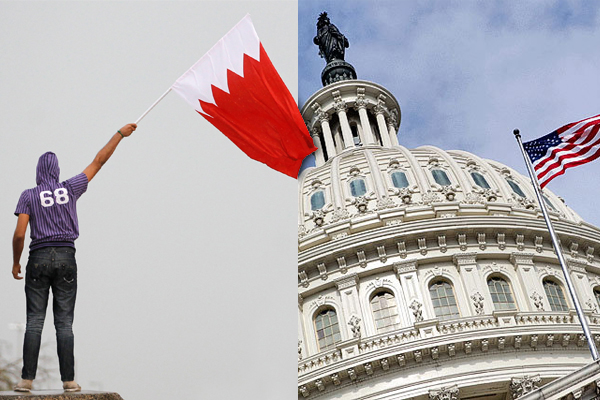
How Bahrain works Washington (Credit: Reuters/Hamad I Mohammed/AP/J. Scott Applewhite)

Ever since last February, when security forces in Bahrain brutally cracked down on demonstrators at the Pearl Monument, human rights groups have documented extensive violence by the government against pro-democracy protesters. In late  November, an independent commission hired by the country’s king released a report that said 35 people had been killed during the protests, including five detainees who were tortured to death, and that hundreds more had been injured and nearly 3,000 arrested.

But to judge from Tom Squitieri — the self-described “stargazer, Award winning reporter, communications crafter” who has tweeted and blogged about events in Bahrain for Huffington Post and the Foreign Policy Association — demonstrators are largely to blame for the violence. In one item he wrote about a girl named Zahra who “was attacked with an iron bar wielded by protestors” and a demonstrator named Ali who was killed “after being hit by a police car.” While Ali’s family claimed “he was deliberately run down” by the cops, Squitieri suggested it was more likely that “the police car swerved out of control after skidding on oil poured on the road by protestors.”

Squitieri states in his blog posts that he “works with the Bahrain government on media awareness and press freedom,” which is an odd way of describing work that amounts to propaganda. But unless you count his work at NewsMax, the right-wing media organization, Squitieri hasn’t been a journalist since 2005, when he resigned from USA Today for plagiarism. Nor does he mention anywhere that he is an employee of Qorvis Communications, a Washington firm that is registered to lobby for the government of Bahrain.

Traditionally, people think of foreign lobbyists as seeking to directly influence staffers on Capitol Hill and policymakers at the State or Defense Departments. But foreign governments have increasingly sought to augment this conventional mode of lobbying with other tactics that might be described as meta-lobbying.

Now lobbyists (for foreign and domestic clients) seek to advance their clients’ interests in Washington through other means: making contributions to think tanks and universities; arranging for allegedly independent pro-democracy groups to shill for their bogus elections, funding bilateral business associations that focus on trade issues while advocating, directly or indirectly, for enhanced political ties; and influencing the media and public opinion by hiring American opinion-makers to mouth their talking points.

U.S. laws on traditional lobbying are flimsy enough, but these new meta-lobbying tactics are largely unregulated and free of disclosure requirements — which of course makes them all the more effective and useful. As one Washington lobbyist told me, “Access lobbying is dead. Congress is gridlocked so meetings on the Hill are useless. Now it’s all about perception and molding public opinion. That’s why so many lobby firms have become integrated, and do so much work on the PR side.”

The Washington influence business has been in overdrive recently, as the Arab Spring erodes (Syria) or shakes (Egypt) or destroys (Libya) the U.S. government’s alliances in the Middle East. And even before foreign governments and their hired hands began scrambling to adapt to the region’s democratic awakening, they had begun seeking to shape perception by hiring former journalists or paying influential “opinion leaders” to support their regime or their cause.

The departed Libyan leader Moammar Gadhafi recruited prominent academics and former officials through the Monitor Group of Cambridge, Mass., which was charging his regime $250,000 per month to burnish its image. Among those the Monitor Group lined up — in exchange for big fees — were historian Francis Fukuyama, the Middle East scholar Bernard Lewis, neoconservative Richard Perle (who twice traveled to Libya for meetings with Gadhafi) and professor Joseph Nye of Harvard, who also visited Libya and wrote a favorable story afterward for the New Republic. Nye also offered advice to Saif Gadhafi, the colonel’s son, on the dissertation he wrote for the London School of Economics.

Gadhafi also counted on support from the Washington-based U.S.-Libya Business Association. It was founded and financed by U.S. oil companies that were unhappy about the pace at which the Washington-Tripoli relationship was developing after George W. Bush’s administration forged a rapprochement with Gadhafi’s regime in 2004. Despite the political thaw, there remained strong opposition in Congress to Gadhafi’s regime due to his past support of terrorism. Meanwhile, European governments had been far less squeamish about embracing the colonel, giving their oil companies a leg up on American firms in the race to win concessions in Libya.

To supplement their stable of K Street lobbyists dedicated to improving ties with Tripoli, Occidental, ConocoPhillips, ExxonMobil, Marathon Oil, Chevron and other companies set up the USLBA. According to its federal tax filings, the association sought to “educate the public on the importance of US-Libya trade and investment, and facilitate the commercial and diplomatic dialogue between the two countries.” At least seven of its eight directors were registered lobbyists for oil companies.

David Goldwyn — who had served at the Energy Department under Bill Clinton and who then ran a consulting firm that provided “political and business intelligence” to oil companies — was hired to head the group. The USLBA spent over $1 million between 2006 and 2009, of which more than $600,000 was used to pay Goldwyn’s firm.

In 2008, Gadhafi demanded that American oil companies help Libya win an exemption from a law signed by President Bush that allowed American victims of terrorism to seize assets of countries found liable for attacks. Libya was a specific target of the law. The USLBA was happy to help out. Working in close collaboration with official lobbyists for Libya and the oil companies, the association urged Secretary of State Condoleezza Rice to pursue a waiver for Libya, according to a recent Bloomberg story. Rice and three other Bush Cabinet members soon wrote congressional leaders saying that the exemption was needed or there would be “a chilling effect on potentially billions of dollars in investments by U.S. companies in Libya’s oil sector.”

Congress soon passed a measure that gave Libya the immunity it sought. Goldwyn, meanwhile, took a business delegation to Libya in December of 2008 and talked about the “fantastically warm reception” they received from senior government officials.

In 2009, Goldwyn joined the Obama administration as the State Department’s Coordinator for International Energy Affairs. He resigned earlier this year and returned to the private sector as an energy consultant. Goldwyn declined a request for comment about his work for Libya, other than to say, in response to a question about why he had never registered as a lobbyist for the USLBA, that he was not legally required to because he didn’t spend sufficient hours to trigger the disclosure rule.

The USLBA has seamlessly transitioned into the post-Gadhafi era. Its website bears no mention of the colonel and now carries news about the new government’s naming of an interim cabinet and the arrival in the U.S. for “urgent medical care” of two dozen wounded Libyan fighters. Never mind that they were wounded fighting the government of the association’s former pal Gadhafi.

Bahrain’s chief Washington lobbying organization is Qorvis, which also represents controversial autocratic clients such as Saudi Arabia and Equatorial Guinea. Qorvis doesn’t seem to do much for Bahrain (or its other clients) other than put out a steady stream of press releases at PR Newswire. For example, after Bahraini security forces in July raided the offices of Doctors Without Borders — human rights activists allege this was part of the government’s effort to deny medical services to injured protesters — Qorvis distributed a statement saying the medical group was to blame because it had failed to obtain the proper permit to operate in the country.

Such releases are not aimed directly at public opinion so much as at Google and other search engines. A steady stream of press releases serves to push news stories lower in search engine returns; when it comes to Qorvis’ clients, the news is almost invariably bad so burying it makes sense. “Qorvis’ releases are pure propaganda and it doesn’t even bother flogging them to journalists,” said the lobbyist cited above. “They just trot the stuff out so there’s something else to read on Google when one of their clients fucks up.”

Then there’s Squitieri, who has worked for a range of domestic and foreign clients through his own P.R. firm, TS Navigations. On the domestic front, he has helped — according to his list of “key accomplishments — “craft and lead the campaign to reposition Taser International from a severe crisis communication dilemma” and won an exemption for an unnamed tobacco processing company from “congressional legislation giving the FDA regulatory control over tobacco.”

On the foreign front he (like Qorvis) worked for the Kurdistan Regional Government, whose representatives he hooked up with journalists andprofessionals in the wider communications community” including “sign and banner makers” and “event planners.” He also wrote speeches for Kurdish officials, like one delivered to the World Affairs Council in West Palm Beach earlier this year that had his Kurdish client quoting ’60s Yippie Abbie Hoffman about the virtues of democracy.

For Bahrain, Squitieri tweets and blogs. He puts on airs of objectivity and impartiality yet his paymaster’s point of view, delivered in hackneyed prose, is obvious.

“As Bahrain wheezes and convulses in its uncertain steps,” he wrote for Huffington Post, in October, “the gray is slowly emerging more in the reports of those spending at least a little time letting all the senses embrace.” He described Bahraini protesters seeking a more democratic government as being driven by “anger without a purpose” and called them “foot soldiers for puppet masters with a greater agenda,” referring obliquely to Iran. (Incidentally, the newly commissioned Bahraini government report said it found no evidence that the Iranians were behind the protests.)

Even though he works for Qorvis, Bahrain’s registered lobbying firm, Squitieri insisted in an email that he does not “engage in any lobbying.” He describes his work for Bahrain as “media awareness, media training and helping to identify possible stories.”

Asked why Squitieri’s blog posts weren’t identified as paid product for Qorvis, Matt Lauer of the firm said by email, “Tom’s blogs are his own thoughts,  but he does disclose his affiliation with the government.”

Incidentally, the Independent of London reported this week  on a journalistic sting operation on Bell Pottinger, a major British P.R. firm that Qorvis works with on Bahrain. The sting — modeled on a similar piece I did for Harper’s several years ago — involved reporters posing as agents of the government of Uzbekistan, who contacted Bell Pottinger to see if the firm would run a P.R. campaign on behalf of that country’s dictatorial regime.

Bell Pottinger was keen to do so and gave a presentation to the undercover journalists during which it promised it would utilize the “dark arts” to influence public opinion for Uzbekistan. That included creating “third-party blogs” – which would look independent but be run by the P.R. firm — that would, along with other tactics, help bury bad news about the country on Internet searches. “The ambition obviously is to drown that negative content and make sure that you have positive content out there online,” a Bell Pottinger representative told the undercover reporters.

All of which appears to be the very model that Qorvis, with the help of Squitieri, employs on behalf of Bahrain.

Ken Silverstein is a contributing editor at Harper’s magazine and an Open Society fellow. Research support for this article was provided by The Investigative Fund at The Nation Institute.

ALEC: We will stop being gun nuts now

Right-wing legislation drafting house refocuses on business issues following bad press and boycotts

  • more
    • All Share Services

ALEC: We will stop being gun nuts nowGeorge W. Bush speaks to the American Legislative Exchange Council in Philadelphia in 2007. (Credit: Chris Greenberg)

The American Legislative Exchange Council, or ALEC, is a group that helps major industry players write their own legislation that Republicans then pass in state legislatures across the country. Traditionally, ALEC would draw up and promote bills limiting labor organizing rights and weakening workplace safety regulations and environmental protections, because those things anger the Market Gods. Fewer of those things means more money for ALEC’s funders! Recently, though, ALEC also began dabbling in things that wouldn’t make anyone any money but that happened to be right-wing political priorities.

ALEC is now shutting down its “Public Safety and Elections” task force. ALEC’s Public Safety and Elections task force’s goals were twofold: to improve “public safety” by making it easier for citizens to carry guns everywhere they go and to shoot certain people without fear of arrest or prosecution, and to improve elections by making it harder for politically undesirable types to exercise their right to vote. (Why were gun rights and voter disenfranchisement the purview of one task force? Those two issues really have very little in common besides being of supreme importance to paranoid white people.)

What happened is, people suddenly noticed that self-defense laws had recently become much more “robust” (slash-”insane”) in lots of states after this guy in Florida named George Zimmerman shot and killed an unarmed black teenager named Trayvon Martin and then somehow was not arrested. These new self-defense laws were widely blamed for the police reaction, or non-reaction, and while the NRA had predictably lobbied for them in the various states where they passed, it turned out that ALEC had been instrumental in drafting these laws and others like them that had nothing to do with being “pro-business” but everything to do with quietly remaking the nation into a right-wing paradise.

So major corporations began abandoning ALEC, because they hadn’t signed on for the full right-wing culture war. While Coca-Cola has a vested interest in, say, stopping public health initiatives, there’s no compelling profit-based reason for it to support the dismantling of gun control legislation. People do not get thirstier when they are carrying concealed firearms, as far as I know. Kraft does not, as a company, have any interest in making it more difficult for poor people to vote.

So! ALEC is giving up on the items of its agenda not directly related to helping giant corporations make as much money as possible without fear of lawsuits or union agitation. Because those are less “hot-button” issues.

Continue Reading Close
Alex Pareene

Alex Pareene writes about politics for Salon and is the author of "The Rude Guide to Mitt." Email him at apareene@salon.com and follow him on Twitter @pareene

The fracking trade-offs

The oil industry is muscling through pro-drilling legislation by tying it to appealing tax cuts and education bills

  • more
    • All Share Services

The fracking trade-offsThe well head for for a gas well on Friday, Oct. 14, 2011 in Dimock, Pa. (Credit: AP/Alex Brandon)

Of all the political tactics used to protect business interests, none is as powerful as the layer ploy — the one in which an ugly corporate giveaway is hidden one layer beneath something popular. It’s the oldest trick in the book: Offer up Mom and apple pie, and few are likely to notice the noxious serving plate.

Whether it’s a lobbyist-written trade deal lurking beneath a bill extending unemployment benefits or a corporate subsidy undergirding a must-pass defense spending bill, this is the way some of the most corrupt policy has become law in recent years. It’s also the way oil and gas business allies are now advancing that industry’s interests in the face of proof that drilling may be endangering Americans’ health.

The situation is harrowing. In just the last year, the Environmental Protection Agency and Duke University have both uncovered evidence linking groundwater contamination to the controversial drilling practice known as hydrofracking. The incriminating findings are so clear that according to Pittsburgh’s CBS affiliate, fossil fuel firms in Pennsylvania acknowledge that the “natural gas exploration industry is partly responsible for rising levels of contaminants found in area drinking water.”

In response, many communities are trying to slow the drilling boom. That has created a serious problem for oil and gas companies, who want to drill as much and as quickly as possible. So their political allies are working to tie drilling to Mom-and-apple-pie initiatives as a means of crushing any opposition.

In Republican-controlled Ohio, where Columbia University scientists say drilling caused recent earthquakes, that means trying to lash oil and gas revenues to the GOP’s popular income tax cut orthodoxy. Indeed, this is the obvious objective of Ohio Gov. John Kasich’s recent proposal to institute a hydrofracking tax whose “fresh revenue (will) give a personal income tax cut to Ohioans,” according to the Cleveland Plain-Dealer.

To understand Kasich’s true motive is to appreciate that he is no tax-and-spend liberal or fossil-fuel hater. He’s the opposite: an anti-tax crusader who has taken $213,000 in campaign donations from the oil and gas industry, and who has tried to open up state parks to drilling. That record suggests his new tax moves are really designed to help drillers overcome any grass-roots opposition — in this case, by tying drilling’s expansion to alluring tax-cut policies. In the vernacular of political sloganeering, Kasich is basically saying, “Drilling for Tax Cuts.”

In Colorado, where 343 oil and gas spills occurred in 2011, the oil and gas industry’s mantra is a bit different: It’s “Drilling for Kids,” according to Democratic state Sen. Morgan Carroll. She has criticized the state land board for giving ConocoPhillips the drilling rights to a 26,000-acre parcel adjacent to Aurora, Colorado’s third-largest city. The massive swath of land is not just any old property; it’s an old Air Force base that’s home to a Superfund site and a major reservoir, and also filled with unexploded munitions and depleted uranium.

The idea of drilling on such a fragile and dangerous site seems ludicrous — but the governor-appointed land board has been able to push the deal forward and stymie tougher regulations by insisting that oil and gas exploration will help schoolchildren.

“They’ve been telling Democrats in the legislature that it’s really for the kids,” Carroll says. “They are able to make that argument because some of the money from the sale is earmarked for K-12 education.”

As the industry’s “drill, baby, drill!” mantra butts up against more science-based opposition, be on the lookout for this same layer ploy in every state. It’s at once enticing and deceptive — but when that platter of Mom and apple pie is inevitably served up, try to remember what the dish is made of.

Continue Reading Close
David Sirota

David Sirota is a best-selling author of the new book "Back to Our Future: How the 1980s Explain the World We Live In Now." He hosts the morning show on AM760 in Colorado. E-mail him at ds@davidsirota.com, follow him on Twitter @davidsirota or visit his website at www.davidsirota.com.

Romney aide lobbied for high-speed rail

Ron Kaufman is one of the lobbyists who advise Mitt Romney, who is attacking Newt Gingrich for his lobbying past

  • more
    • All Share Services

Romney aide lobbied for high-speed railMitt Romney, right, makes a joke with advisor Ron Kaufman and a potted plant on his campaign charter plane in Feb., 2008. (Credit: AP/LM Otero)

The Romney campaign has made Newt Gingrich’s recent history as an unregistered “lobbyist” — particularly his work for conservative bête noire Freddie Mac — the key front in its attacks on him in Florida.

It’s no surprise that Romney is using the lobbyist card: Polls consistently show that the American public view lobbying as one of the worst professions when it comes to honesty and ethics. More surprising is that the Gingrich campaign has not turned the tables on Romney by looking at the recent lobbying work of several of Romney’s top aides.

I recently reported that informal Romney advisor Charlie Black, for example, lobbied for the DREAM Act, putting him directly at odds with Romney’s position on the immigration legislation.

Another Romney aide who has broken from conservative orthodoxy in his lobbying work is top advisor Ron Kaufman, who “has been traveling across the country with Romney, providing advice and conducting strategic meetings,” according to the Boston Globe.

Kaufman is currently listed on the website of international lobbying and public-relations firm Dutko Grayling as a senior advisor who is on leave. A longtime Republican operative, Kaufman worked on Ronald Reagan’s 1980 campaign and held high positions in the George. H.W. Bush White House. He was also an advisor to Romney’s 2007-08 campaign, a fact that sparked a famous argument between Romney and an AP reporter who challenged the candidate on his claim that lobbyists were not running his campaign.

Disclosure filings suggest that Kaufman stopped his lobbying work at the end of 2010. But before that, Kaufman had a healthy lobbying business representing a range of corporate clients.

In 2010, for example, Kaufman and a few other Dutko lobbyists were paid $110,000 to lobby for U.S.-Japan High-Speed Rail Inc. That company, which is associated with Central Japan Railways (JRC), is trying to get Japanese-style bullet trains deployed in the United States.

Outside of the healthcare bill, there is perhaps no other Obama policy that Republicans despise more than his proposal to build a high-speed rail network. Indeed, opposition to Obama’s high-speed rail hopes seems to have killed any chances for construction of such a system any time soon.

Back in 2010, Kaufman and his colleagues were working to “create universal equal high speed rail standards that will lead to safe, efficient, and cost effective high speed rail solutions,” according to lobbying disclosures (.pdf). They also lobbied Congress on the since-killed project to build a section of a high-speed rail system in Florida.

Among Kaufman’s many other clients in recent years are Botox-maker Allergan and the In Situ Oil Sands Alliance, a Canadian group that lobbies in favor of the tar sands industry, which was dealt a blow recently when President Obama rejected the Keystone XL pipeline.

A Romney spokeswoman says that Kaufman is a volunteer for the campaign. He did not immediately respond to a request for comment.

Continue Reading Close
Justin Elliott

Justin Elliott is a reporter for ProPublica. You can follow him on Twitter @ElliottJustin

Romney attacks Newt as “lobbyist”

Even as he goes after Gingrich for working for Freddie Mac, Romney has surrounded himself with lobbyists

  • more
    • All Share Services

Romney attacks Newt as Mitt Romney and Newt Gingrich (Credit: Reuters/Jim Young)

Part of the aggressive new Romney campaign offensive against Newt Gingrich is to attack Gingrich for having been a lobbyist. The irony of the strategy is that Mitt Romney has surrounded himself with multiple registered lobbyists at the highest level of his campaign.

“Over the last 15 years since he left the House, he talks about great bold movements and ideas,” Romney told a Florida crowd this week. “Well, what’s he been doing for 15 years? He’s been working as a lobbyist, yeah, he’s been working as a lobbyist and selling influence around Washington.”

In fact, Gingrich has never been a registered lobbyist — a distinction that Gingrich invoked in the Monday night debate — but his “strategic advice” work for Freddie Mac looked a lot like what can be colloquially described as lobbying, or at least something close to it.

And Gingrich’s work for healthcare companies in his post-congressional career looks even more like lobbying than the Freddie Mac consulting. The Times reported in November:

In a variety of instances, documents and interviews show, Mr. Gingrich arranged meetings between executives and officials, and salted his presentations to lawmakers with pitches for his clients, who pay as much as $200,000 a year to belong to his Center for Health Transformation.

When the center sponsored a “health transformation summit” at the Florida State Capitol in March 2006, lawmakers who attended Mr. Gingrich’s keynote speech inside the House chamber received a booklet promoting not just ideas but also the specific services of two dozen of his clients. Executives from some of those companies sat on panels for discussions that lawmakers were encouraged to attend after Mr. Gingrich’s address.

Romney is now suggesting that Gingrich did not register as a lobbyist when perhaps, by law, he should have.

But this line of attack is undermined by the fact that the Romney campaign is chock-full of people who have been lobbyists. They include:

  • Former Sen. Jim Talent, a Romney surrogate and co-chairman of a top Washington lobby shop, Mercury Public Affairs, which has recently worked for big banks and the coal industry. (We explored Talent’s recent background here.)
  • Charlie Black, an informal Romney advisor who is easily one of the best-known Republican lobbyists of his generation. Black has recently lobbied for Boeing, WalMart and the financial services industry.
  • Ron Kaufman, who, according to the Globe, has been traveling with the Romney campaign and providing strategic advice. He was formerly chairman of the Dutko Group Worldwide.
  • Former Rep. Vin Weber, a Romney policy advisor and also managing partner at Clark & Weinstock.

The lobbyist question is not a new one for Romney. Back in his first presidential run in 2007, he famously got into a verbal tussle with an Associated Press reporter who challenged Romney’s claim that lobbyists were not running his campaign. The must-see video of that exchange is here.

Continue Reading Close
Justin Elliott

Justin Elliott is a reporter for ProPublica. You can follow him on Twitter @ElliottJustin

The Wall Streeters Obama loves most

The president may call them "fat cats" in public, but far too many of his closest advisors are former bankers

  • more
    • All Share Services

The Wall Streeters Obama loves mostPresident Barack Obama speaks about the resignation of White House Chief of Staff Bill Daley, right, Monday, Jan. 9, 2012 (Credit: AP Photo/Susan Walsh)

We’ve already made our choice for the best headline of the year, so far:

“Citigroup Replaces JPMorgan as White House Chief of Staff.”

When we saw it on the website Gawker.com we had to smile — but the smile didn’t last long.  There’s simply too much truth in that headline; it says a lot about how Wall Street and Washington have colluded to create the winner-take-all economy that rewards the very few at the expense of everyone else.

The story behind it is that Jack Lew is President Obama’s new chief of staff — arguably the most powerful office in the White House that isn’t shaped like an oval. He used to work for the giant banking conglomerate Citigroup. His predecessor as chief of staff is Bill Daley, who used to work at the giant banking conglomerate JPMorgan Chase, where he was maestro of the bank’s global lobbying and chief liaison to the White House.

Daley replaced Obama’s first chief of staff, Rahm Emanuel, who once worked  as a rainmaker for the investment bank now known as Wasserstein & Company, where in less than three years he was paid a reported eighteen and a half million dollars.

The new guy, Jack Lew – said by those who know to be a skilled and principled public servant – ran hedge funds and private equity at Citigroup, which means he’s a member of the Wall Street gang, too.  His last job was as head of President Obama’s Office of Management and Budget, where he replaced Peter Orzag, who now works as vice chairman for global banking at – hold onto your deposit slip — Citigroup.

Still with us? It’s startling the number of high-ranking Obama officials who have spun through the revolving door between the White House and the sacred halls of investment banking. Sure, you can argue that it makes sense that the chief executive of the nation would look to other executives for the expertise you need to build back from the disastrous collapse of the banks in the final year of the Bush Administration.

Remember — it was Bush and Cheney with their cronies in big business who helped walk us right into the blast furnace of financial meltdown, then rushed to save the banks with taxpayer money. That little fact seems to have been overlooked in the current primaries.

All this brings back memories of Hank Paulson, doesn’t it? Hank Paulson, the $700-million man who became secretary of the treasury for President Bush. Paulson had been head of Goldman Sachs, the rich investment bank.  As his successor at Goldman Sachs, Paulson chose Lloyd Blankfein. Several times, according to Bloomberg News, Rolling Stone,and Paulson’s own memoir, the treasury secretary made sure Blankfein and Goldman got privileged inside information.

But Bush and Cheney aren’t the only ones to have a soft spot for financiers. President Obama may call bankers “fat cats” and stir the rabble against them with populist rhetoric when it serves his interest, but after the fiscal fiasco, he allowed the culprits to escape virtually scot-free. When he’s in New York he dines with them frequently and eagerly accepts their big contributions.  Like his predecessors, his administration also has provided them with billions of taxpayer dollars – low-cost money that they used for high-yielding investments to make big profits. The largest banks are bigger than they were when he took office and earned more in the first two-and-a-half years of his term than they did during the entire eight years of the Bush administration. That’s confirmed by industry data.

And get this. It turns out, according to The New York Times, that as President Obama’s inner circle has been shrinking, his “rare new best friend” is Robert Wolf. They play basketball, golf and talk economics when Wolf is not raising money for the president’s campaign.

Robert Wolf runs the U.S. branch of the giant Swiss bank UBS, which participated in schemes to help rich Americans evade their taxes. During hearings in 2009, Michigan’s Senator Carl Levin, chairman of the permanent subcommittee on investigations, described some of the tricks used by UBS: “Swiss bankers aided and abetted violations of U.S. tax law by traveling to this country with client code names, encrypted computers, counter- surveillance training, and all the rest of it, to enable U.S. residents to hide assets and money in Swiss accounts.

“The bankers then returned to Switzerland and treated their conduct as blameless since Swiss law says tax evasion is no crime. The Swiss bank before us deliberately entered United States, actively sought U.S. clients and secretly helped those U.S. clients defraud the United States of America.”

And so it goes, the revolving door between government service and big money in the private sector spinning so fast it becomes an irresistible force hurling politics and high finance together so completely it’s impossible to tell one from the other.

Bill Moyers is managing editor of the new weekly public affairs program, "Moyers & Company," airing on public television. Check local airtimes or comment at www.BillMoyers.com.

Michael Winship is senior writing fellow at Demos and a senior writer of the new series, Moyers & Company, airing on public television.

Page 1 of 2 in Lobbying