
Paul Ryan

The real problem in Iowa

The issue isn't the indecisiveness of the caucus voters. It's the terrible GOP field

  • more
    • All Share Services

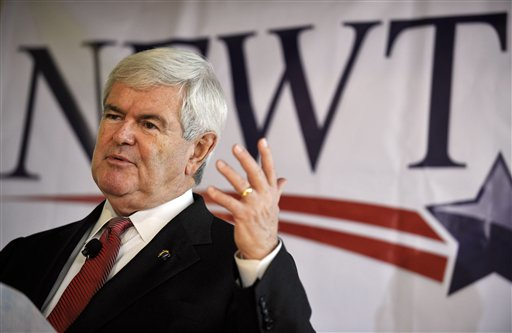
The real problem in Iowa (Credit: AP Photo/Rainier Ehrhardt)

Pardon me if I fail to join the crowd handicapping next week’s Iowa GOP caucuses like race track touts peddling betting tips on the Kentucky Derby.

To begin with, I have no clue. Except on the sports page, I normally skip articles speculating about what might happen tomorrow. Damned if I’m going to start writing them.

Also, who cares? History teaches that Iowa Republicans have a particularly poor record of supporting the eventual presidential winner. In six contested GOP primaries dating back to 1976, Iowans have gotten it right exactly once. They chose George W. Bush in 2000 — definitely nothing to brag about.

In essence, the Iowa caucuses amount to a marketing device for cable TV news channels; it’s “American Idol” for the politically obsessed. Their secondary function is to introduce cosmopolitan news correspondents to the homespun wisdom of Real Americans in places like Ankeny, Iowa, a Des Moines suburb where John Deere tractors are manufactured.

A Washington Post reporter found a grandmother there he thought epitomized Iowa voters’ inability to make up their minds. First, she liked Texas Gov. Rick Perry on account of his advertised piety. Then she watched Perry’s hilarious impersonation of a stoned cowboy during the umpty-seven GOP debates, and switched to The Girl With the Faraway Eyes, as Esquire’s Charles Pierce calls her, also due to her religiosity.

Alas, Michele Bachmann “has kind of an annoying voice,” so grandma changed to Newt for a few days before seeing a TV report of U.S. troops pulling out of Iraq, taking no casualties as they went. God, she believed, had protected them in spite of gay marriage, abortion, consumerism and greed. And if God hadn’t given up on America, how could she? So she dropped “the smart one” (Newt) in favor of the holiest candidate of all.

“It was just this big epiphany,” she said. “We’ve got to vote for Santorum! That’s all there is to it.”

If Santorum’s lucky, his newest supporter won’t learn that he has bitterly criticized President Obama on the grounds that very far from following God’s plan, by leaving Iraq the U.S. has “lost the war.” He’s also keen on attacking Iran, a nearby country several times larger than Iraq.

Anyway, who knows? Maybe the nice lady in Ankeny — whose vote counts every bit as much as yours, mine and Lady Gaga’s — would be down with that, although in my experience it’s the rare grandmother who’s enthused about preemptive bombing strikes.

Besides, what’s alarming about the GOP contest isn’t the indecisiveness or poor reasoning processes of Iowa voters. It’s the dismal quality of the choices they’re offered. Is this the best that one of America’s two major political parties can do? You’ve got to wonder what would happen if they put “None of the Above” on the ballot.

With the possible exception of Mitt Romney, there’s not one among them you’d hire to run a WalMart — a difficult job requiring mastery of a million details and an ability to manage people. Of course, if you did hire Romney, you might wake up to find he’d fired all the employees, spun off the grocery operation, and sold the building to Dollar General for a fraction of its value and a player to be named later.

Even the former Massachusetts governor appears only intermittently in touch with the visible world. Recently he described himself as an advocate of “the opportunity society” and his putative opponent as follows: “President Obama believes that government should create equal outcomes. In an entitlement society, everyone receives the same or similar rewards, regardless of education, effort and willingness to take risk. That which is earned by some is redistributed to the others. And the only people who truly enjoy any real rewards are those who do the redistributing — the government.”

In short, Obama’s a communist. And the evidence for this preposterous claim? Certainly nothing the president has ever said or done. Obama favors a return to Clinton-era tax rates, a time of balanced budgets and growing prosperity. A multimillionaire like Romney would find his marginal tax rate on income over $1 million had risen from 35 to 39.6 percent. I believe he can afford it. True, Obama’s healthcare reform is mildly redistributive, but then so is Romney’s Massachusetts insurance plan it so closely resembles.

For that matter, Social Security’s mildly progressive too. But then candidate Romney wants to privatize that. And, oh yeah, bomb Iran. Or he pretends to believe these things, anyway, and none too convincingly. Hence, the confusion we observe.

The GOP’s larger problem is that following upon the 2008 financial crisis, Barack Obama’s election stunned and frightened a significant fraction of the GOP base. Psychologists call it “projection,” the habit of attributing one’s own darkest motives and fears to others. Rather than govern, Republican leaders went with it.

This dreadful spectacle is exactly what they deserve.

Arkansas Times columnist Gene Lyons is a National Magazine Award winner and co-author of "The Hunting of the President" (St. Martin's Press, 2000). You can e-mail Lyons at eugenelyons2@yahoo.com.

Sabotage: The new GOP plan

Paul Ryan and the Republicans' latest tactic is outright treachery: They want to break the government

  • more
    • All Share Services

Sabotage: The new GOP plan (Credit: Benjamin Wheelock)

Paul Ryan is nothing if not indefatigable. On Wednesday, the Wisconsin Republican introduced yet another budget bill. The targets of his cuts — a long list of Democratic priorities — are painfully familiar. But this time around Ryan wrapped them up in a new package of urgency: preserving national security!

Ryan and his fellow Republicans (and a not inconsiderable number of Democrats) are desperate to find a way to avoid the dreaded  ”sequester” — a package of around $600 billion in defense spending cuts that are scheduled to start kicking in at the end of this year. Never mind the holy grail of deficit reduction: When the beggar with his hand stuck out is the Pentagon, “entitlement” isn’t such a dirty word, after all.

As usual, the suffocating stench of Washington kabuki permeates the whole affair. The only reason defense cuts are on the table in the first place dates back to the failure of Republicans and Democrats to come to a real agreement on long-term deficit reduction at the end of last summer’s debt ceiling debacle. The threat of looming defense cuts that would automatically take effect in 2013 was supposed to force a bipartisan agreement before that dire day arrived. But the chances that Ryan’s newest salvo will get through the Democratic-controlled Senate during an election year are even more unlikely now than they were a year ago. The most realistic scenario? After the election, a lame-duck Congress will kick the can forward, again, to the new Congress and whoever inhabits the White House in 2013.

But a close look at the insidious nature of proposed cuts is still revealing, even in the midst of all the posturing. Ever since the midterm elections of 2010, House Republicans have been honing a new approach to government. Forget about old school “starve the beast” politics, the simple-minded belief that lowering taxes and depriving the government of revenue will ultimately topple the social welfare state. The new school tactic is sabotage. Break the government. Pour sugar into the gas tank. Steal the spark plugs.

Ryan’s new package of cuts takes aim at the heart of the two biggest pieces of legislation Democrats passed during the Obama administration, bank reform and healthcare reform. The details are wonky, but the goal is clear. By defunding crucial mechanisms designed to ensure that the laws actually work as intended, Republicans achieve two goals simultaneously: They avoid the anathema of cuts to defense spending, while rendering the legislation that they hate so much not just toothless, but incapacitated.

Machiavelli would applaud. Republicans may have lost the 2008 presidential election, but their insurgency-style guerrilla tactics ever since have ensured that the war is far from over. In 2012, the politics of sabotage rule Washington.

Ryan’s new bill, the Sequester Replacement Reconciliation Act of 2012, is constructed from recommendations formulated by six different House committees. The targeted cuts reflect familiar GOP priorities. One of the ways the Agriculture Committee, for example, proposes to save $33.2 billion over 10 years is by slashing food stamp assistance. The House Judiciary Committee put forward medical malpractice liability reforms that would theoretically cut federal reimbursements for spending on “defensive medicine” — such as medical tests ordered by doctors simply to protect against lawsuits. And so on.

But for our purposes the two most provocative proposed cuts are the House Financial Services Committee’s plan to defund the “orderly liquidation authority” mechanism in the Dodd-Frank bank reform act, and the House Energy and Commerce Committee’s effort to defund federal support for the construction of the health insurance exchanges at the heart of the Affordable Care Act.

Let’s break it down. The “orderly liquidation authority” — also known as the “resolution authority” — is the mechanism by which the Dodd-Frank Act aims to avoid the bailout chaos of the financial crisis of 2008. The Dodd-Frank Act includes a vast array of new rules for the financial sector, some of which are more far-reaching than others. But the resolution authority is crucial: it’s the law’s primary attempt at solving the Too Big To Fail problem — the frustrating reality that our biggest financial institutions are now so large that their failure routinely threatens to crash the entire U.S. economy. As was demonstrated by the collapse of Lehman Brothers, simply standing by and watching as a major Wall Street financial firm collapses into bankruptcy is an untenable solution. But mindlessly injecting billions of taxpayer dollars without accountability into the likes of Citigroup or the Bank of America or A.I.G. is equally irresponsible.

The Dodd-Frank Act set up a process for determining whether the collapse of a financial institution posed a systemic threat to the economy, putting that company into federal receivership, and guiding it through a government-managed liquidation process. The cost would be recouped by asset sales after the fact. A crucial point: The funding for the resolution authority can only be used to liquidate a financial firm, not to preserve it.

It’s probably worth noting here that the “savings” envisioned by getting rid of the resolution authority are entirely illusory. The Congressional Budget Office determined the cost of the resolution authority as around $30 billion over 10 years. But that’s contingent on whether there are financial firms that require liquidation. The $30 billion price tag is what the CBO thinks the government would have to pay if it was forced to liquidate “one or more” financial institutions sometime in the next decade.

So if Wall Street manages to avoid disaster over the next 10 years, there would be no government outlay. Win win! But the nasty little secret here is that, with or without the liquidation authority in place, the government will still be forced to take action if Citigroup or JP Morgan Chase is on the verge of collapse. Because there’s one thing we know for sure: No matter how much House Republicans claim to revere the autonomously acting free market, when push comes to shove, if the alternative is widespread economic collapse, Wall Street will get its bailout.

It’s also important to point out that the Dodd-Frank bill originally pre-funded the liquidation authority with $50 billion in assessments that would be levied on Wall Street’s biggest financial institutions. But after much screaming from financial sector lobbyists, that provision was dropped at the insistence of Senate Republicans. So what’s really going on here is that after first ensuring that Wall Street was not liable for paying the costs of its own government rescue ahead of time, now Republicans are intent on making sure that Wall Street won’t have to pay after it gets bailed out.

One can certainly question whether the Dodd-Frank resolution authority will work as planned in the heat of another crisis. But what’s the alternative? Republicans have put forth no other plan other than to simply watch as the economy crashes and burns. Instead, under the cover of budget cuts, they are taking aim at one of the core parts of the bank reform laws intended to prevent a repetition of the 2008 catastrophe. We shouldn’t label that fiscal restraint: We should call it vandalism.

The attack on health insurance exchanges is, in some ways, even more reprehensible. If Republicans are supposed to believe in anything, it’s the virtue of free-market competition. And that’s exactly what the health exchanges are supposed to provide. As set forth in the Affordable Care Act, starting in 2014, the health exchanges are where Americans who can’t get employer-provided insurance will go to compare and contrast the costs and benefits of different health insurance plans.

Way back in 2009, Ezra Klein called the exchanges “the most important, unnoticed part of health reform.”

And what happens when you introduce productive competition, efficiencies of scale, more innovation and increased consumer power into a market as dysfunctional as the current situation for health insurance? In theory, you get lower prices and higher quality. And if the Health Insurance Exchange has lower prices and higher quality, more individuals will use it and more companies will buy into it. And if that happens, then the efficiencies of scale should increase, and so should the pace of innovation (as the rewards will be greater with more customers), and so the Health Insurance Exchange should further outpace the other markets, thereby attracting yet more customers, thereby further accelerating the virtuous cycle. Eventually, it could become the country’s primary insurance market.

The Affordable Care Act includes federal funding to help set up the exchanges. The “Sequester Replacement Reconciliation Act” zeroes out that funding. How much will this save taxpayers? Hard to say — the language of Ryan’s bill simply orders the repeal of the provision in the ACA that allows the secretary of the Department of Health and Human Services to make financial aid grants to states at his or her discretion. As of February 2012, 33 states and the District of Columbia had received about $610 million in grants so far.

The attack on funding for exchanges is just one of half a dozen jabs at healthcare reform included in Ryan’s new bill. (Indeed, picking away at healthcare reform has become the GOP’s go-to move for funding any new government expense, as demonstrated, yet again, by last week’s House vote to fund an extension of low interest rates on government student loans by raiding so-called Obamacare slush funds.)  And as a deficit-reduction measure, the exchange defunding doesn’t offer anything close to the largest savings. For example: The provision for repealing the Prevention and Public Health Fund, an effort to reduce healthcare costs in the long run by spending more on prevention, would save $16 billion over 10 years. In the big scheme of things, a billion here or a billion there for the exchanges won’t make that much progress toward $600 billion worth of defense cuts.

But as a targeted cut designed to cripple the long-term efficacy of the Affordable Care Act, Ryan could hardly be wielding his scalpel with more precision. It’s brilliant. The part of the ACA that one might imagine most Republicans would be ideologically predisposed to agree with — the use of free market competition to provide consumers with more choice and lower costs — is the part that Republicans want to go after.

But that’s what the politics of sabotage are all about. If Republicans really cared about the federal budget, they wouldn’t insist that tax cuts or wars did not need to be paid for. The point, now, of the budget showdown is not to ensure fiscal restraint, but to disembowel the legislation that a duly elected president and Democratic Congress passed. Starve the beast, so far, has failed. But making sure that government doesn’t work at all? That’s much more doable.

Continue Reading Close
Andrew Leonard

Andrew Leonard is a staff writer at Salon. On Twitter, @koxinga21.

Now apparently it’s a “slam” to say Paul Ryan likes Ayn Rand

The right's favorite congressman declares backsies on admiration for notorious author

  • more
    • All Share Services

Now apparently it's a

Here’s something kinda nutty. One guy said all of the following things:

  • “The reason I got involved in public service, by and large, if I had to credit one thinker, one person, it would be Ayn Rand.”
  • “You know you’ve arrived in politics when you have an urban legend about you, and this one is mine,” chuckles Representative Paul Ryan, the Budget Committee chairman, as we discuss his purported obsession with author and philosopher Ayn Rand.”
  • I give out ‘Atlas Shrugged’ as Christmas presents, and I make all my interns read it. Well… I try to make my interns read it.”
  • “Ayn Rand, more than anybody else, did a fantastic job explaining the morality of capitalism, the morality of individualism, and that, to me, is what matters most.”
  • “I reject her philosophy…. It’s an atheist philosophy. It reduces human interactions down to mere contracts and it is antithetical to my worldview. “

That one guy is U.S. Rep. Paul Ryan of Wisconsin, who used to love Ayn Rand so much that he hosted a birthday party for her in Washington, but who now apparently doesn’t like her anymore, because of God. (And because her extremist philosophy is liable to turn off “swing voters” and “people who aren’t 18-year-old boys with delusional fantasies of superiority.”)

It looks like — after some obvious excitement among conservatives and Republicans that it was suddenly OK to openly admit to being enough of a stunted adolescent asshole that Ayn Rand seemed like visionary instead of a bad pulp author and even worse philosopher — Rand is back to being an embarrassment. Which is fine with me! It’s not all that shocking that Ryan would want to back off from openly admiring a stringent atheist radical right-winger around the time that his party is trying to paint the president as anti-religion.

What’s funny, though, is how incredibly suddenly Rand worship went from something proudly stated to something described as a liberal slander. (“Rand-related slams,” in Robert Costa’s words.) When will the cruel liberal media stop accusing conservatives of admiring the people they throw birthday parties for and repeatedly praise?

Continue Reading Close
Alex Pareene

Alex Pareene writes about politics for Salon and is the author of "The Rude Guide to Mitt." Email him at apareene@salon.com and follow him on Twitter @pareene

Paul Ryan’s biblical bilge

Liberals are wrong to engage conservatives about the religious merits of the Wisconsin congressman's budget plan

  • more
    • All Share Services

Paul Ryan's biblical bilgePaul Ryan (Credit: AP)

Rep. Paul Ryan R-Wis., the mastermind of what New York Times columnist Paul Krugman calls an “inconceivably cruel” budget, has once again tried to claim that Jesus would approve of it. Speaking to David Brody of Pat Robertson’s Christian Broadcasting Network this week, Ryan described how his Catholic faith, particularly the tradition of subsidiarity, is reflected in his scheme to cut the deficit by slashing programs like Medicaid, Pell Grants, food stamps and job training.

Subsidiarity, Ryan contends, is nothing more than the theological justification for shrinking the federal government down to a size that will fit in Grover Norquist’s bathtub. If I were a cartoonist, I’d draw Ryan dreamily doodling Jesus’ name on the Federalist Society masthead.

For many Catholic scholars and theologians, though, Ryan’s views are both laughably and dangerously wrong. As Daniel Maguire, a Catholic ethicist, wrote even before Ryan’s interview with Brody, subsidiarity “means that nothing should be done by a higher authority that can be done by active participation at lower levels. Right-wingers like Paul Ryan grab that one word, ‘subsidiarity,’ and claim it supports their maniacal hatred of government. It doesn’t.”

Joseph Palacios, Adjunct Professor of Latin American Studies at Georgetown University, told me, “Historically, Christian Democratic parties in Europe and Latin America have used subsidiarity to highlight the need for a social safety net to guarantee the common good that gets organized and guaranteed through state functions such as healthcare, education, economic development, housing, transportation.” Here in the U.S., though, Palacios says, “a lot of progressive
Catholics are unfamiliar with this principle and have allowed it to be usurped by conservatives and libertarians in the Church,” who attempt to lend religious justification for the position of Catholic Republicans like Ryan.

These disputes — particularly for a religion reporter like me — are the stuff of fascinating and illuminating stories on religious history, theology and political gamesmanship. In a pluralistic democracy, though, they have no place in determining the federal budget.

No one’s religious view is entitled to preference when Congress is crafting the federal budget. To be sure, given the attention paid to the plight of the poor by the most prevalent religions in the United States, there are many politicians, and many citizens, whose faith would inform how they evaluate the priorities — or lack thereof — in the Ryan budget. At the same time, secular humanists, atheists, and other varieties of the non-religious also have a set of values on income and wealth inequality.

Progressives and conservatives should duke it out — but without invoking religion. The budget should be based on shared concepts of fairness and justice, not whether Jesus or God or Allah (oh, never mind, the Republicans would never go for that!) approves.

But Ryan, who did not invoke his faith when first offering his budget proposal, is now scrambling to devise a post-hoc theological justification for it. This week’s revelations to Brody were hardly his first salvo. Last spring, he and his fellow Catholic, Speaker John Boehner, sought approval from clerical authorities.

Boehner, for his part, already had come under fire from Catholic academics for his deviation from church teachings. In a May 2011 letter reacting to his upcoming commencement address at Catholic University, the academics told Boehner, “[f]rom the apostles to the present, the magisterium of the church has insisted that those in power are morally obliged to preference the needs of the poor” (a principle Ryan claims his budget upholds). Boehner’s record on addressing “the desperate needs of the poor,” the academics charged, “is among the worst in Congress.”

Ryan and Boehner dashed off a letter of their own, to then-Archbishop (now Cardinal) Timothy Dolan, the president of the U.S. Conference of Catholic Bishops. Dolan, of course, does not mince words when reacting to perceived transgressions by elected officials. In January, he pronounced the Department of Health and Human Services requirement for insurance coverage for contraception “literally unconscionable” and on Easter Sunday described it as a “dramatic, radical intrusion of a government bureaucracy into the internal life of the Church.”

Such bombast was notably missing from his letter responding to Ryan and Boehner. It’s true that Dolan’s letter didn’t directly say Ryan’s budget was in line with Catholic teaching, only that Dolan appreciated Ryan’s effort to claim (however disingenuously) that it was. But given that Obama made significant efforts to yield to religious objections to the contraception rule and has been treated only to vitriol from the bishops and their Republican allies, it was significant that Dolan was far more gentle with Ryan: “Care must be taken that those currently in need not be left to suffer. I appreciate your assurance that your budget would be attentive to such considerations and would protect those at risk in the processes and programs of such a transition.” Not, take note, “literally unconscionable.” Even though it is.

Liberals, for their part, have sought to counter Ryan with more religion. Last year, in a stunt staged at Ralph Reed’s Faith and Freedom Coalition conference, fellow Catholics confronted Ryan and tried to give him a Bible with passages on the poor highlighted. An anti-Ryan advertisement was critical of his admiration for Tea Party heroine Ayn Rand — not because of her cruelly libertarian views on economics, but because she was an atheist.

More recently, a coalition of Christian, Jewish and Muslim leaders known as the Faithful Budget Campaign have pushed back against Ryan with their own Faithful Budget. The coalition says its “faithful” budget “protects the common good, values every individual and lifts the burden on the poor.” These are worthy goals, but shouldn’t be elevated merely because they have a religious imprimatur.

Surely it’s understandable that liberal Catholics are angry that Ryan is misrepresenting their faith to justify his punishing and heartless assault on his fellow Americans. They should — and they will — persist in protest, in discussion and in argument. But just as Ryan shouldn’t run to Cardinal Dolan for approval, or at least acquiescence, nor should liberals seek religious cover for their counter-proposals. Religious leaders and voters are free to have their say, but when it comes down to the rationale for defeating Ryan’s budget, it should be based on the economic realities of the people whose lives would be destroyed by it, coupled with a cogent case for the role of government, and not on theology.

Continue Reading Close

Sarah Posner is the senior editor of Religion Dispatches, where she writes about politics. She is also the author of God's Profits: Faith, Fraud, and the Republican Crusade for Values Voters" (PoliPoint Press, 2008).

Steve Kornacki on “Rachel Maddow”

Steve Kornacki talks about Paul Ryan's weak and unpopular budget plan VIDEO

  • more
    • All Share Services

Steve Kornacki on

On Tuesday evening, Salon senior writer Steve Kornacki joined Rachel Maddow to discuss Paul Ryan’s budget plan and whether President Obama can attract alienated moderate Republican voters in 2012.

Continue Reading Close

The GOP rides Paul Ryan’s road to ruin

His snake oil-castor oil budget is a gift to Dems, but only if they give up on "grand bargains" with extremists

  • more
    • All Share Services

The GOP rides Paul Ryan's road to ruinPaul Ryan (Credit: AP)

Most Democrats rejoiced when the newly elected House Tea Party extremists got behind Paul Ryan’s tax-slashing and program-cutting budget plan almost a year ago. The budget had no chance of passing the Senate, but it committed Republicans to unpopular spending cuts, including to Social Security and Medicare, and continued the party’s slavish devotion to tax protection for the top 1 percent. That’s why many liberals were horrified by reports that the White House was entertaining comparable budget-cutting proposals to resolve the debt-ceiling crisis last summer. Not only was it bad policy, it was terrible politics, sacrificing the huge advantage Republicans had conceded when they backed Ryan’s plan, especially his assault on Medicare.

The debt ceiling “grand bargain” failed. President Obama learned from the debacle and switched his focus to job growth from deficit-cutting. But the Ryan plan, with its political benefits for Democrats, also receded from the front pages. Until now, that is. Ryan brazenly released the 2013 version of his budget this morning. It’s a cocktail of snake oil and castor oil. It proposes $1.028 trillion in discretionary spending, less than the $1.047 trillion spending cap established by the debt-ceiling deal, repeals Obamacare, and cuts the top individual tax rate and the corporate rate as well. It aims to replace Medicare with a voucher plan again. Ryan says all of the GOP presidential candidates are down with his budget proposal. “I have spoken to all of these guys and they believe we are going in the right direction,” he told reporters. That’s great news for Democrats.

Unfortunately, the new Ryan plan comes on the heels of bad news from the Washington Post: a closely reported story about last summer’s debt-ceiling negotiations, which brought back the bad old days when the president was indulging the ideas of Ryan and friends to avoid defaulting on our credit obligations while also becoming the champion of fiscal prudence.

If you believe the Post’s reporting – its slant places most blame for the deal’s troubles on Democrats, but the key facts come from participants’ notes, emails and on the record recollections – the “deal” Obama entertained was worse than anything reported at the time: $1.2 trillion in spending cuts, reduced cost-of-living adjustments for Social Security and an unspecified hike in the Medicare eligibility age, in exchange for around $800 billion in “revenue” that relied on closing “loopholes” and (possibly) increased tax receipts thanks to an improved economy, while actually lowering top rates. What finally scuttled the deal was the work of the so-called Gang of Six – three senators from each party, whose proposal contained much bigger tax hikes and revenue increases, plus smaller spending cuts, than the Obama team had negotiated.

“I don’t think it was a mischaracterization on our part to say we’d be beat up miserably by Democrats who thought we got out-negotiated,” former White House chief of staff Bill Daley told the Post. The Gang of Six deal forced the embarrassed White House to ratchet up its tax-hike demands, and the bargain fell apart – but not before Obama reportedly called Boehner and offered to take the horrible pre-Gang of Six, no-tax-hike deal. The most ominous line in the entire piece: “White House officials said this week that the offer is still on the table.”

Let’s hope that’s not true. The Obama White House made a convincing pivot back to economic growth after its summer humiliation. I’m a big believer in forgiving, if not forgetting. We’ve all made mistakes. New York’s Jonathan Chait wrote about the Post piece Monday with surprising outrage, given his many essays chastising liberals and progressives for being too hard on the president. “Obama’s disastrous weakness in the summer of 2011 went further toward undermining liberalism than anybody previously knew,” he railed. I think a lot of us knew it, even if we didn’t have the ugliest details, and we tried to tell Chait at the time.  But I’m ready to let bygones be bygones.

Democrats are being given another gift with the new Ryan budget, especially given its new assault on Medicare. I don’t care what Politifact or Rep. Ron Wyden (who co-sponsored Medicare cuts with Ryan) try to say: By giving seniors vouchers to purchase insurance on the private market, the plan would abolish Medicare. Because let’s be clear: Vouchers aren’t Medicare. In fact, Republicans and private insurers tried for years to create a program for elderly Americans that would run as a voucher plan, or otherwise funnel seniors into private insurance; in 1965 Democrats under Lyndon B. Johnson rejected that route in favor of a federal government-run program they called “Medicare.” The GOP is against it, plain and simple. (Ryan and Wyden’s plan would supposedly allow seniors who chose to to stay in a government-run plan, but how long would that hybrid exist? And how much would it cost; Medicare’s main efficiencies come from the fact that all seniors participate.)

Democrats need to stop sabotaging themselves and undermining their party’s signature accomplishments, including Medicare. The program needs reforms, but they will not be accomplished as long as the extremist wing of the GOP is in control. I think the president learned that the hard way, and I trust he’ll remember the lesson.

I’ll be talking about the Ryan budget and 2012 presidential politics on MSNBC’s “Politics Nation” with Rev. Al Sharpton at 6 ET.

Continue Reading Close
Joan Walsh

Joan Walsh is Salon's editor at large.

Page 1 of 2 in Paul Ryan