Ron Paul

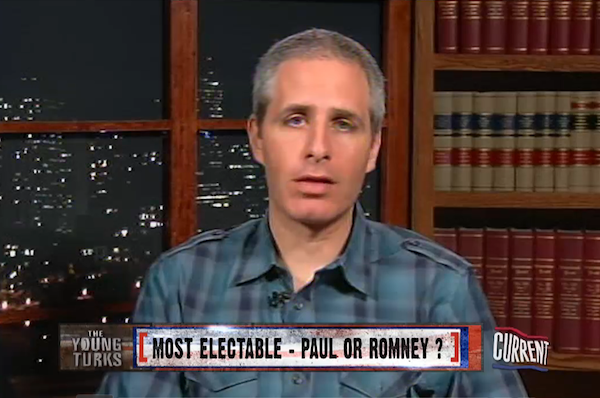
Sirota talks Ron Paul on Current TV

The Salon contributor explains why the Texas Republican could be a better general election bet than Romney VIDEO

  • more
    • All Share Services

Sirota talks Ron Paul on Current TV

Despite his impressive showing in New Hampshire, the media continues to dismiss Rep. Ron Paul as “unelectable.” In an appearance on “The Young Turks,” Salon writer David Sirota argues that the Texas Republican, given his strong support among independents, could be a better nominee for the Republican party than Mitt Romney. Watch here:

Ron Paul sets up Rand for 2016

The cult libertarian hero keeps his campaign alive, barely, as he prepares to hand the reins to his son

  • more
    • All Share Services

Ron Paul sets up Rand for 2016Ron Paul and Rand Paul (Credit: AP/Charles Dharapak)

So Ron Paul says he is going to stop actively campaigning, but his supporters will continue to rack up delegates by storming state conventions. What will he do with these delegates? That is still unclear. (Barter them for gold?) What is the point of this strategy, exactly? Also unclear, but the Daily Beast’s Ben Jacobs today says it’s part of a “sneaky maneuver” to help his son Rand out. Ron will continue to consolidate power but will not appear to be actively sabotaging the party’s nominee. Dave Weigel says the maneuver is less sneaky and barely a maneuver: He doesn’t want it to be a huge embarrassment when he loses Kentucky, the state his son represents in the Senate.

Interestingly, though perhaps not surprisingly, Paul declined to endorse Libertarian Party nominee Gary Johnson, the former New Mexico governor who endorsed Paul in 2008. Johnson was, formerly, the Republican presidential candidate all those young “liberal” college stoner Ron Paul supporters should have gone with if they’d wanted to support a candidate who believed strongly in liberty but who wasn’t a racist Alex Jonesian conspiracy-mongering goldbug loon. But Johnson had “extensive executive experience” instead of a blimp and a sweet logo, so he did not win over many Paul fanatics.

Ron Paul’s strategy seems to be a gradual takeover of the Republican Party itself, instead of attempting to build a Libertarian alternative to the GOP. I think he’ll find that he can get the party to happily sign on, at least rhetorically, to his fiscal message, as they continue to ignore his popular and populist isolationism and his eminently agreeable but politically untenable positions on criminal justice and civil liberties, forever. The party, in other words, will continue to co-opt whatever they find electorally useful about the Paul phenomenon, as the Tea Party movement stole his iconography and messaging wholesale while attaching it to the same religious-right/nativist sentiment that has driven the party’s activist base for decades.

But Paul thinks the future lies with his son Rand, who shares many of his father’s enthusiasms and beliefs while also appearing to be more acceptable to the mainstream. Various Paul allies and a few other Republicans strongly suggest that Rand is gearing up for a 2016 run; which would mean, of course, that they expect Romney to lose, but that they need to not appear to be rooting for Romney to lose.

The problem is that what makes Rand Paul more acceptable to the mainstream of the Republican Party is what makes him more repellent than his father. Take, for example, Rand Paul’s funny joke this last weekend about Barack Obama and gay marriage.

The president recently weighed in on marriage. And, you know, he said his views were evolving on marriage. Call me cynical but I wasn’t sure that his views on marriage could get any gayer. Now it did kind of bother me, though, that he used the justification for it in a biblical reference. He said the biblical Golden Rule caused him to be for gay marriage …

And I’m like: What version of the Bible is he reading? It’s not the King James version. It’s not the New American Standard. It’s not the New Revised version. I don’t know what version he is getting it from.

Haha Barack Obama is so gay, he should read a Bible for once. Libertarianism!

Nick Gillespie, of the libertarian Reason Magazine, does not get this joke. The crowd, at the Iowa Faith and Freedom Coalition, did seem to get it, or at least they appreciated it. But Rand sounds very different when he speaks to Iowa conservatives than he does when interviewed by Gillespie and Matt Welch. (His address received a nice notice from Robert Costa of the National Review, who did not mention his funny joke.)

While Rand Paul may be, as Gillespie says, the most libertarian senator, he is also not an actual libertarian, as demonstrated by his support for anti-constitutional anti-immigrant legislation and his very vocal antiabortion position. He is also a dumb lout, and I tend to think that having the Senate’s most libertarian member be a dumb lout is not actually that good for the Libertarian movement. When he makes explicitly libertarian arguments, he makes them dumbly. When he goes all anti-gay talk-radio bigot culture warrior, which he does increasingly frequently, he does so dumbly. (If he wants to be a mainstream politician and presidential contender, it was certainly dumb to appear — more than once — on the radio program of Truther/Birther/New World Orderer/every-other-conspiracy promoter Alex Jones, but for some reason he almost entirely escaped mainstream press scrutiny for these appearances.) While I don’t feel much affection for Ron Paul, he seems both significantly smarter and leagues more principled than his son the senator.

If the “electable” face of libertarianism is a fratty anti-gay, anti-choice nitwit like Rand Paul, I will stick with socialism, thank you. And I wonder if the Paul family’s plan is to promote “liberty” or to promote the Paul family.

Continue Reading Close
Alex Pareene

Alex Pareene writes about politics for Salon and is the author of "The Rude Guide to Mitt." Email him at apareene@salon.com and follow him on Twitter @pareene

Whatever happened to Ron Paul? He just isn’t that popular

The Times asks why the libertarian candidate turned out to be less beloved than the Internet made him seem

  • more
    • All Share Services

Whatever happened to Ron Paul? He just isn't that popularRon Paul (Credit: AP)

The New York Times asks a tough question, today:

Whatever happened to Ron Paul?

He, uh… well, this happened to him: He is running for president still but he hasn’t won any primaries. He has 50 delegates. The end.

But how did that happen? How did Ron Paul not win all the primaries and the delegates, after he raised a bunch of money and had big rallies?

His strategists are searching for answers, and one may be that many who turned up for his rallies were less eager to take part in Republican primaries or argue Mr. Paul’s case at Republican caucuses.

Even Mr. Paul cannot entirely explain why the passion he generated, especially among young people and those his campaign identified as motivated supporters, did not translate into more votes.

“I don’t have a full answer for that,” says Mr. Paul, who says he believes ballot irregularities have chipped into his numbers in some places. He adds, “I think there’s some problem with always making sure this energy is translated into getting to the polls.”

Hm, “ballot irregularities,” that probably explains coming in third or fourth over and over again.

Or maybe, and just hear me out here, maybe Ron Paul has always been a niche candidate with a small but incredibly vocal base of support? Maybe the rallies full of thousands of college students represented essentially the entirety of his following and not just the most committed element? Maybe a cantankerous lifelong congressman who combines a steadfast antiwar position with long-discredited crank monetary ideas was never actually remotely likely to come close to winning the Republican nomination? (And his history of embracing racist white populism probably hurt him with “independents,” besides the racist independents.)

Maybe, maybe, most of America actually doesn’t care for Ron Paul or his ideas!

I dunno. That or ballot irregularities. One of the two.

It is true that Ron Paul has slightly underperformed in areas where he expected to do much better, and the reasons for that are still up for debate — it certainly doesn’t help that a certain political party has made “making it difficult or at least inconvenient for young people to vote” one of its central electoral strategies — but there is no great mystery to Ron Paul’s failure to have more of an impact in the Republican nomination fight. When the campaign wonders how it could possibly receive only 100 more votes in a given county than it had rally attendees, they should perhaps consider than all of the area’s Ron Paul supporters attended the rally.

A poll commissioned by the libertarian and Paul-sympathetic Reason Foundation says in a three-way race Ron Paul would receive around 17 percent of the vote, which would be around Ross Perot’s 1992 showing, and is almost certainly higher than his vote total would be in reality. And Obama polls better against Paul, beating him 47 percent to 37 percent in a two-man race, than he does against Romney alone.

So that’s whatever happened to Ron Paul.

Continue Reading Close
Alex Pareene

Alex Pareene writes about politics for Salon and is the author of "The Rude Guide to Mitt." Email him at apareene@salon.com and follow him on Twitter @pareene

Why Ron Paul is still relevant

Those of us who hate him need to understand those who love him

  • more
    • All Share Services

Why Ron Paul is still relevantHe's wacky. He's wise. (Credit: AP/Robert F. Bukaty)

These are depressing days if, as I do, you don’t care much for Ron Paul.

His strong showing against Mitt Romney in Maine is further proof that the libertarian Texas congressman is not going away. So this is as good a time as any for those of us who view him as an off-the-charts extremist to come to grips with two larger questions presented by his candidacy: Why do so many people like this guy?

And even: Do Paul’s followers have a point?

My credentials in the anti-Paul camp are unassailable, and I have the hate mail to prove it. I haven’t changed my mind about his views. I still think that he’s a phony populist, because his positions would favor the 1 percent more than any other Republican candidate. I haven’t changed my mind that his “end the Fed” campaign is diversionary, and that his advocacy of the gold standard would put us in another Great Depression were it ever implemented. I’m concerned by the cult-like fervor of so many of his followers. I don’t buy his excuses for the racism that appears in newsletters that were published under his name.

But that doesn’t mean that those of us who aren’t won over by Paul should just dismiss the guy as a nut, which seems to be a popular practice in news organizations. I don’t think he’s been terribly forthcoming, especially on those newsletters, but you can’t deny that Paul has a number of positive qualities that moderates and liberals need to understand and appreciate, in order to effectively counter his views:

1.  He has integrity. I grimace as I write this, but it’s true. Perhaps not compared to Mother Teresa, but certainly he does when stacked up against pretty much any other politician I know, including more than a few Democrats. (He obviously has more integrity than Mitt Romney, but that’s not saying much.) His consistent dedication to the same ideals, the same causes — obsessions, actually — cannot be seriously disputed. A perusal of his books, House of Representatives floor speeches and miscellaneous bloviating over the years shows that the man has been hammering away at the same isolationist/monetary/no-government/”Constitution” themes for decades. He has opposed the war on drugs for decades, just as for years he has opposed the Civil Rights Act of 1964. Mind you, he’s not always internally consistent, in the sense that he takes positions that stray from the libertarian ideal: taking earmarks for his district and stridently opposing abortion. But on most issues you can expect that his rigidity on matters of ideology will shine through, no matter how politically inexpedient.

2. He’s likable. Paul doesn’t give off mean-S.O.B. vibes like Newt Gingrich. He’s rumpled, and walks with the head-forward bad posture of a slightly distracted junior college professor, shuffling along, late for his next class. He doesn’t make a big show of bullying debate moderators as Gingrich has been doing (though he has walked out on an interview). Though his positions are even more uncompassionately conservative than Romney’s, he comes across with considerably more warmth (again, not saying much). His delivery on the stump is folksy, not fanatical. He talks about cutting $1 trillion out of the federal budget like your family doctor telling you he’s got to take out a gallstone. It’s good for you. It won’t hurt for long. Paul is often compared to the old man in the neighborhood who shoos the kids off his lawn, but he reminds me a lot more of Sen. Eugene McCarthy, the antiwar Democrat of the 1968 campaign. He doesn’t have McCarthy’s urbane wit, but that’s asking a bit much.

3. He’s smart, and in a nice way, unlike Gingrich or Romney. He doesn’t lecture; he doesn’t talk down to people. I think this explains a great deal of his appeal to the young. He’s this generation’s Mr. Wizard, the affable TV science teacher who taught baby boomers how refrigerators operate and how to get electricity out of a spool of wire and a magnet. Ron Paul’s Mr. Wizard character similarly reduces complex issues that people don’t understand into simple concepts amenable to simple solutions, such as abolishing a good part of the federal government and getting rid of the income tax. Yet he is able to embrace these off-the-charts positions in a manner that doesn’t make them seem extreme. It takes a genius to do that, and I don’t mean that in a nice way.

4. He knows the American people are fed up. He’s struck a chord with a lot of people I respect. His talk about American “empire” makes many a progressive feel warm and fuzzy. More than any other candidate — including President Obama — he understands how tired Americans are of being underemployed, exploited by the big banks and sent to engage in nation-building overseas. Sure, his policies would entirely wipe out regulation of banks, but he gets away with it from sheer force of personality. (And yes, I can already see the comments — the hedge fund managers and bankers support Romney. Sure they do: because he’s going to get the nomination.)

Paul’s views on foreign policy hearken back to the Republican isolationists of the 1930s, the Robert Tafts and Gerald Nyes, and he similarly taps into the latent Heartland “fortress America” mentality. He cannily exploits the paranoia that has long characterized American politics, and the deep-rooted dislike of foreign entanglements that has been dormant for decades. There’s an aroma of the old America First movement to much of what he says about foreign policy, and that’s scary to people who’ve read a lot about the 1930s, and know that we’d all be speaking German today if the Firsters had gained power. But they didn’t. Most people don’t give a hoot about what happened five years ago, much less 70.

5. He talks some sense. That’s what Paul haters have had a lot of trouble digesting: He’s an extremist on most issues who makes a lot of sense on foreign policy. He’s the only antiwar candidate in 2012. Even people who don’t agree with him totally on foreign policy have to admit that his opposition to the U.S. getting involved in Libya is looking smarter as every day passes, as do his views on staying out of the maelstrom in Syria. Sure, it’s insane for progressives to support a candidate who wants to turn back the clock on the New Deal and Great Society, as I pointed out a few weeks ago. But Paul has outsmarted us. He knows that dismay about Iraq and Afghanistan is strong enough to overcome any lingering doubts about his foreign policy views among a staggering number of people who’d otherwise find him repugnant.

The solution, I think, is the same one that applies to the spreading influence of another extremist who has gone mainstream, Ayn Rand. What’s needed is not shunning but debate, and an understanding that his positions need to be viewed as part of an organic whole. Anyone who reads “Atlas Shrugged knows that laissez-faire capitalism is just part of the Randian package. So are atheism and a lot of other concepts that people in the Tea Party don’t always recognize when they brandish those “Who is John Galt?” posters.

It’s the same with Ron Paul. If you swallow his foreign policy, you guzzle down laissez-faire capitalism as well, whether you like it or not. So, sure, he makes sense on Syria, but he has one of the worst records on the environment and global warming of any member of Congress. That’s just one part of the price tag. It’s a long list.

Politics is compromise, and so do the choices that voters have to make. Those of us who oppose Ron Paul believe that his positions are too extreme to warrant compromise. But we need to understand why so many reasonable people feel differently.

Continue Reading Close

Gary Weiss is a journalist and the author of "Ayn Rand Nation: The Hidden Struggle for America's Soul," to be published by St. Martin's Press on February 28, 2012. Follow him on Twitter @gary_weiss.

The screwed generation: Libertarian, not liberal

Ron Paul's popularity has doubled in the past four years for one simple reason

  • more
    • All Share Services

The screwed generation: Libertarian, not liberalRon Paul and friends (Credit: Reuters/Joel Page)

There is an old adage that says, “If you’re young and conservative you have no heart, if you’re old and liberal you have no brain.” The idea is that young people tend to make decisions more on idealistic views or out of passionate attempts at charity and altruism. While there is some truth to that for Generation Y (meaning people born in the ’80s and ’90s), the results are  manifesting themselves in a totally different way.

We are the generation that continues to pay into Social Security with every paycheck but suspects we may never see the benefits of it. We are the recipients of degrees that don’t mean much from educational institutions that teach less and cost more. We are the casualties of wars that have gone on for over half of the lifetime of 2012′s first-time voters. In short, we are the screwed generation. The decisions of those before us has left us with an uncertain future and little opportunity to fix things through traditional means.

The ever-present skepticism of youth is even greater within the collective consciousness of Generation Y. And how could it not be? With our first real chance to make a splash in the world, we got behind Barack Obama in overwhelming numbers. He was a candidate who promised progress in every issue that the under-30 crowd found to be important: end the wars, defend gay rights and provide universal healthcare to the American people. While he’s made some steps forward, it’s been slow moving. Meanwhile, the House and Senate have deliberated on bills that would censor our voices on the Internet, a medium on which my generation relies heavily for communication and pretty much everything else. Just as we organized online to support Obama in 2008, we organized the protests against legislation like SOPA and PIPA, and the Occupy Wall Street movement uses the Internet to broadcast its events and actions.

So when the traditional liberal means of protecting ourselves — uniting behind the government to promote action that benefits the common good — no longer serves our best interest, we begin to serve our own. We have a new set of morals that have been established because the old ones were no longer cutting it.

Ask any kid on the street their opinion on gay marriage. I can almost guarantee you they’ll be in favor of it, or at the very least aren’t opposed to it. Ask the same about abortion and you’ll find a similar amount of permissiveness. If they aren’t in possession of marijuana, they probably know someone who is. This is what we bring to the table: a lenient, open-minded approach to personal decisions. It’s reflected in almost every part of our culture. We’re decidedly less religious, with only 44 percent of our age bracket finding religion to be important. That doesn’t mean there aren’t still many people of faith in our generation, but even those who believe are more understanding of those who don’t. We’re a generation that pirates television shows, movies, games and music, but will show up to more concerts and support independent artists and the media we love. Many of the universal views of our generation come down to holding a permissive attitude toward the behaviors of individuals.

The caveat that comes with this leniency is personal responsibility. This is a cautionary message that this generation is more than happy to deal with. We’re willing to grant people the right to live their lives however they please, but if they mess up it’s on them to fix it.

This is why libertarianism — and the Ron Paul candidacy — has been so appealing to young voters. Paul ended his candidacy for president in 2008 polling at about 6.5 percent nationally. From the moment the campaign trail opened back up for a 2012 run, his support has increased steadily, and he currently sits at around 12 percent in national polls. He’s also continually dominated the youth vote in nearly every primary. It’s no fluke that the old guy preaching liberty and personal freedom is getting the attention of the youngest demographic, either. Because Paul supports sending social issues down to the states, he’s no longer having those discussions; he’d rather talk economics.

This is what makes the Ron Paul movement truly important. He’s not the perfect candidate, but watch any event that he shows up to in any given state. His audience is overwhelmingly made up of college-age kids who happily applaud at ideas like a 0 percent income tax, abolishing the Federal Reserve, and reinstituting the gold standard (or something equivalent) that would put value behind the U.S. dollar again. Not only do they cheer, but they understand. These are concepts that aren’t lost on them, but rather resonate in them. These are the conversations that we’re willing to have, and the ideas we’re willing to debate about.

The fact that there are still discussions between contending candidates about whether gay marriage should be legal or if women should have the right to have an abortion is shameful in the eyes of the youth vote. We’re done with those debates. There may not be a total consensus, but it’s pretty clear where the majority of our generation stands. Marriage equality falls under basic civil rights and there shouldn’t be a need to debate such right any longer. Let’s be honest, when we’re facing a domestic and global recession, high unemployment and a blunder-filled tax code, social issues act only as a distraction to engage the “religious right” and the “hippie left.” By jettisoning social issues, Paul is able to have a conversation about fiscal policy with a bunch of kids who are growing up in a new economy. With Paul, we’re able to talk about what we’re willing to support and where we want our tax dollars to be spent.

We still vote with our heart; it’s just in a slightly different place. We’d rather bring home our troops from overseas and save those lives while spending that money to establish a universal healthcare system that will save even more. This isn’t necessarily because we believe the government should take care of us, it’s because everyone deserves to be healthy and the powers that be before us mangled the system so badly that it’s becoming impossible to afford. This is an example of our generation trying to take care of our own as much as it is trying to create change. While the concept of universal healthcare may be defined as “liberal,” it’s a fairly libertarian approach of non-interventionism and personal rights that brings us there.

It’s a compassion for the lives of our cohort combined with an understanding of personal responsibility that defines the ideals of this generation. We’re still “liberal,” we still may vote with our hearts, but we do it out of the belief that we have the freedom to make those choices and live with them. Ron Paul might drop from the sight of the media after the election but his ideas will continue to boil. If our conversation about fiscal reform starts to reshape our economy, we will spearhead sweeping social change.

Continue Reading Close

AJ Dellinger is a freelance writer who blogs at ajrambling.com. Follow him on Twitter @ajdell.

Our selective stance on bigotry

Some of Paul's stances are odious. But our racist drug war and Islamophobic invasions are equally offensive

  • more
    • All Share Services

Our selective stance on bigotryRep. Ron Paul, R-Texas, speaks during a campaign stop Wednesday in West Columbia, S.C. (AP Photo/David Goldman) (Credit: AP)

If they have any value at all anymore, presidential election campaigns at least remain larger-than-life mirrors reflecting back painful truths about our society. As evidence, ponder the two-sided debate over Republican candidate Ron Paul and bigotry.

One camp cites Paul’s hate-filled newsletters and his libertarian opposition to civil rights regulations as evidence that he aligns with racists. As the esteemed scholar Tim Wise puts it: This part of Paul’s record proves that he represents “the reactionary, white supremacist, Social Darwinists of this culture, who believe … the police who dragged sit-in protesters off soda fountain stools for trespassing on a white man’s property were justified in doing so, and that the freedom of department store owners to refuse to let black people try on clothes in their dressing rooms was more sacrosanct than the right of black people to be treated like human beings.”

The other camp tends to acknowledge those ugly truths about Paul, but then points out that the Texas congressman has been one of the only politicians 1) fighting surveillance, indefinite detention and due-process-free assassination policies almost exclusively aimed at minorities; 2) opposing wars that often seem motivated by rank Islamophobia; and 3) railing against the bigotry of a drug war that disproportionately targets people of color. Summarizing this part of Paul’s record, the Atlantic Monthly’s Conor Friedersdorf has written: “When it comes to America’s most racist or racially fraught policies” affecting the world today, “Paul is arguably on the right side of all of them (while) his opponents are often on the wrong side.”

So which side is right? Both of them, and thanks to that powerful oxymoron, Paul has become a mirror reflecting back our own problematic biases. Specifically, his candidacy is showing that the conventional definition of intolerable bigotry is disturbingly narrow — and embarrassingly selective.

This reality is best demonstrated by those voters who say they detest Paul not because of his extreme economic ideas, but because they feel his record represents an unacceptable form of racism. These folks will likely tell you that their alleged commitment to policies promoting racial equality has moved them to support Mitt Romney or Barack Obama, politicians who, of course, support bigoted civil liberties atrocities, Islamophobic foreign invasions and a racist drug war.

In making such a choice, then, these voters are tacitly embracing the definition of unacceptable bigotry as only hate speech (Paul’s newsletters) and opposition to civil rights laws (Paul’s odious position), but not also various forms of institutional bigotry that their favored candidates support and that Paul has fought to end. Incredibly, this selective definition asks us to ignore many of the most destructive tenets of what legal scholar Michelle Alexander’s celebrated book calls “The New Jim Crow.” And yet, as the reaction to Paul proves, it is precisely this definition that pervades so much of American society.

To be clear: Noting this hypocrisy is not meant to urge a vote for Paul (I’m not a Paul supporter), nor does it absolve those Paul fans who wholly ignore the objectionable parts of their candidate’s record on race. Instead, it is simply meant to argue that if we’re going to have a long overdue discussion about bigotry, then let’s have an honest conversation about all forms of bigotry — not our current talking-points-driven screamfest that rightly criticizes one kind of prejudice but wrongly tolerates other forms of prejudice that are often just as destructive.

Perpetuating that kind of naked bait-and-switchery may help one set of candidates and hurt another in a given presidential campaign, but it does nothing to advance the cause of equality in America.

Continue Reading Close
David Sirota

David Sirota is a best-selling author of the new book "Back to Our Future: How the 1980s Explain the World We Live In Now." He hosts the morning show on AM760 in Colorado. E-mail him at ds@davidsirota.com, follow him on Twitter @davidsirota or visit his website at www.davidsirota.com.

Page 1 of 18 in Ron Paul