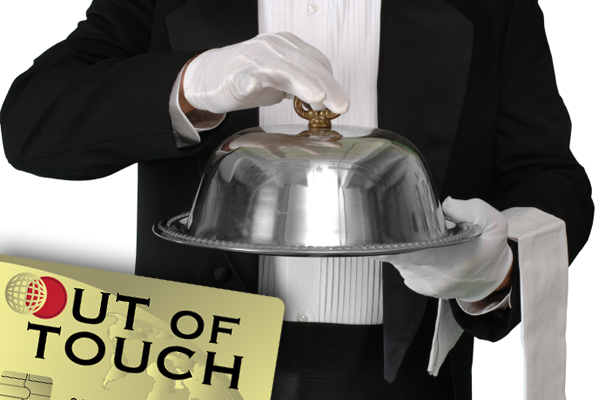

The medical-care gap worsens, as hospitals invest in luxurious digs and fancy meals for the wealthy
The U.S. Census Bureau has estimated that just over 16 percent of the population — nearly 50 million individuals — lacked health insurance in 2010. For people who are uninsured, the financial impact of a single illness or emergency room visit can be disastrous.
That’s one reason why the luxury services available at a number of hospitals across the country — lavishly detailed in a New York Times feature over the weekend — seem so misguided. While lesser mortals face sometimes hellish emergency room circumstances that they often can’t afford, wealthy patients can shell out thousands of dollars a night for “bed linens … by Frette, Italian purveyors of high-thread-count sheets to popes and princes” — not to mention “polished marble” bathrooms, multi-course menus and “Ciao Bella gelato … available on demand.”
The Times piece cites the recent birth of Beyoncé and Jay-Z’s first child, and subsequent flare-up over accusations that expensive security measures significantly disrupted routines in the maternity ward of New York’s Lenox Hill Hospital, as an example of the ill will these luxury services can engender in less-privileged patients. Add this to a Times piece last month on a company that helps hospital fundraisers “take advantage of the captive audience” by “sending hospital admissions lists to the development office for a wealth screening within hours of when the patients are admitted” and it’s easy to see that the ties between big money and big medicine are stronger than ever.
It’s hardly surprising that people who can afford full-frills service decide to book expensive, private hospital rooms instead of slumming it in crowded general-care areas — and it may indeed be that, as a health facilities consultant suggests to the Times, their business has some “trickle-down effect.” But building gated communities within hospitals seems a dangerous road to go down, at a time when so many struggle to afford even basic levels of care. These opulent amenities and services available to the 1 percent — from waterfalls and private libraries to mushroom risotto and lobster tails — aren’t just out of touch during a recession. That our hospitals are using resources to turn themselves into the Ritz-Carlton while the less fortunate are one bad break away from bankruptcy is just plain wrong.
Continue Reading
Emma Mustich is an assistant editor at Salon. Follow her on Twitter: @emustich. More Emma Mustich
From Simon Cowell to the Kardashians, Barbara Walters' tired list of insipid tabloid stars is remarkably irrelevant
You’d be excused for thinking Barbara Walters’ list of 2011′s “most fascinating people” is some sort of bizarre joke.
Her headliners include Donald Trump, Simon Cowell and the Kardashians — not to mention other pop-culture aristocrats like Katy Perry, Derek Jeter and Pippa Middleton. Walters’ trump card, the year’s single “most fascinating” figure, won’t be announced until Dec. 14. But on the basis of the stars whose names have been released, things aren’t looking particularly timely.
Walters’ celebs may “fascinate” in the sense that they continually hijack our attention — crowding magazine covers, newspaper headlines and TV screens. But in a year of profound social and economic turmoil — for individuals and whole continents alike — are they really the sort of cultural idols we need to pretend are interesting?
This year has seen some of the most spirited revolutions and impassioned public protests of the new millennium. Citizens in Tunisia, Egypt, Libya and Syria have given their lives to change those of their countrymen. The remarkable movement that began as a camp-out in New York City’s Zuccotti Park has inspired deep soul-searching in America and further protests worldwide. Stories of individual perseverance — like Rep. Gabby Giffords’, D-Ariz., efforts to recover from a horrific assassination attempt — have inspired us. Not to mention that we’ve witnessed stunning successes in film, music, television and literature (Walters nods to this with her nomination of “Modern Family’s” Eric Stonestreet and Jesse Tyler Ferguson). Where are the movers and shakers behind all of these truly fascinating political, social and cultural developments? Their accomplishments are miles more relevant than those of affluent reality TV stars or British socialites.
Of course, it’s not unusual for Walters to favor pop-culture mojo in her year-end specials; last year, the cast of “Jersey Shore” joined overall winner David Petraeus. An ABC press release says the 2011 list seeks to “[highlight] some of the year’s most prominent names in entertainment, sports and popular culture” — which it certainly does, especially if you gauge prominence by mentions in Us Weekly. But to sum up a year of spectacular social unrest and heady history-making by trotting out the Kardashians one more time is more than unimaginative: It’s out of touch.
Continue Reading
Emma Mustich is an assistant editor at Salon. Follow her on Twitter: @emustich. More Emma Mustich
When airlines make top customers parade down a red carpet with their boarding pass, it merely embarrasses everyone
Airline travel is littered with indignities. Long lines, screaming children, cramped quarters, insane fees. Most ridiculous of all, however, are the tiny red carpets installed at boarding gates for “priority” passengers: the rich, the famous, the holders of frequent-flier cards.
What purpose do these gaudy, petty pieces of fabric — awash in a larger sea of airport gray — actually serve? It’s one thing to board priority passengers first; they have likely paid through the nose for that particular privilege. But is it really necessary to physically separate them from their flight mates, herding them into a distinct but adjacent line — and making them cross a brightly colored rug on their way out of the terminal?
In any case, it’s not exactly a “red carpet,” in the traditional sense. It’s barely even long enough! No one stops to preen or pose, and it doesn’t start or finish at any useful location. It takes you roughly three steps closer to your destination than you were before. A red carpet leading directly to the plane — now, that would be something to see.
You rarely catch priority customers openly enjoying their red-carpet experience. Businessmen and other small-time dignitaries hurry across this area awkwardly, rushing to scan their boarding passes. Regular Joes lucky enough to have scored an upgrade are downright apologetic, keeping their eyes down as if to tell their fellow travelers, “I’m not one of those people.” Underneath this veneer, they may be enjoying their star turn; it would still betray a certain insensitivity to show it.
However absurd this tiny stretch of fabric might be, once it stands before you, it’s hard not to find its presence grating — no matter which side of the little rope barrier you’re on. Economy travelers, waiting with mounting impatience for their rows to be called, look on with barely concealed hostility as unencumbered passengers swan past the final checkpoint; red-carpet regulars glance furtively around or avoid eye contact completely, their willingness to shell out the big bucks for a plane ticket betrayed by their physical position in relation to an otherwise undistinguished piece of plush. The class divide — or at least, a perceived one — is brought rudely to the fore, and it’s hard to imagine that the whole experience doesn’t make everyone just a little bit uncomfortable.
If you’re traveling by plane this holiday weekend, it’s highly likely you’ll encounter a red carpet or two yourself. Perhaps you’ll actually be walking across it; perhaps you’ll merely be an observer. Either way, take a look around and consider the bizarre effect it has. It succeeds in sorting people by the price tag of their tickets but fails in almost every other sense; one glance at the passengers in its vicinity should be enough to note it’s less a luxurious bonus than a harbinger of mutual discomfort.
Continue Reading
Emma Mustich is an assistant editor at Salon. Follow her on Twitter: @emustich. More Emma Mustich
Infant luxury? The sparkly "diamond bathtub" -- a gift from Kelly Rowland -- seems like a joke. It's not
“Taking a bath is a luxuary [sic] nowadays,” writes designer Lori Gardner on the website for her showy Diamond Bathtub, a symbol of all that is over-the-top. And soon, the daughter of Beyoncé and Jay-Z will have one of her own.
“The Diamond Bathtub makes it easy to relax, unwind, and bask in the glow of a true indulgence” — allowing you to loosen up in the presence of more than 45,000 “precious imported crystals,” Gardner boasts. Sure, it might make some bathers nervous to “unwind” in a tub worth enough to feed a small army — but how could you say no to something that “brings new meaning to indulgent ‘me’ time reserved for leisurely soaking in the tub”? And what baby doesn’t need some me time after a long day of napping?
According to ABC News, Kelly Rowland has purchased a mini version of the “Diamond Bathtub” — designed specifically for babies — as a gift for Beyoncé and Jay-Z’s expected baby daughter. “Your baby bathtub will be a lasting memory to keep forever!” Gardner’s website raves. If nothing else, at $5,200, it seems like a rock-solid early investment.
Did someone buy Beyoncé’s baby a matching rubber duckie? Seen something else that’s Out of Touch? Send us a tip: outoftouch@salon.com.
Continue Reading
Emma Mustich is an assistant editor at Salon. Follow her on Twitter: @emustich. More Emma Mustich
The actress' accessory, made partly of python skin, horrifies PETA -- and is mind-bogglingly expensive
“Most Americans can’t afford a $1,000 emergency expense,” a recent CNNMoney headline proclaimed. But according to RadarOnline, Reese Witherspoon has been spotted carrying a python-skin handbag worth nearly $4,000.
It’s not just the item’s price tag that’s raising eyebrows. A PETA spokeswoman expressed her frustration about the snakeskin accessory (the sale of which is illegal in California, where the star was spotted with her tote), telling the Mail Online: “No matter how much Reese paid for that bag, the animals paid a much higher price. … These days, it’s easy to have a look that kills without killing.”
Not only would fake snakeskin be more humane — it would also be a whole lot cheaper!
Seen something that’s Out Of Touch? Send us a tip: outoftouch@salon.com.
Emma Mustich is an assistant editor at Salon. Follow her on Twitter: @emustich. More Emma Mustich
Kim Kardashian's wedding cost millions. The marriage lasted only 72 days. Those aren't the only outrageous numbers
The rumors weren’t so crazy after all. It turns out that Kim Kardashian and Kris Humphries — whose August wedding was a black hole for money and media attention — really are done.
The Kardashians and their pervasive public narrative are fueled by nothing if not the power of conspicuous consumption. (Kim herself makes no secret of the fact that she’s a “business woman” — in fact, it’s first of the four adjectives she uses to describe herself on Twitter.) Here are 10 of the most shameful numbers related to the couple’s dizzyingly short-lived union:
$15,000-$20,000: Estimated value of Kim & Kris’s wedding cake. [New York Post]
$400,000: Total value of the champagne served at the wedding. [New York Post]
$2 million: Value of the wedding’s floral arrangements. [Styleite]
Nearly $3 million: Amount Kim & Kris received from People magazine for wedding- and engagement-related rights. [New York Post]
5 million: Number of people said to have watched E!’s four-hour wedding special. [THR]
$15 million+: Amount Kardashians were paid by E! for rights to air the wedding special. [New York Post]
$17.9 million: Total amount of money Kim & Kris are thought to have made from the wedding and related publicity. [The Week]
Nearly 1,000: Number of sources covering the story of Kim & Kris’s divorce late Monday afternoon, according to Google News.
87 days: Length of Kim & Kris’s engagement.
72 days: Amount of time between the wedding and Kim’s divorce filing.
Continue Reading
Emma Mustich is an assistant editor at Salon. Follow her on Twitter: @emustich. More Emma Mustich