
LGBT

Is gay literature over?

In an era of same-sex marriage and "Modern Family," the role of gay writers is changing. An expert explains how

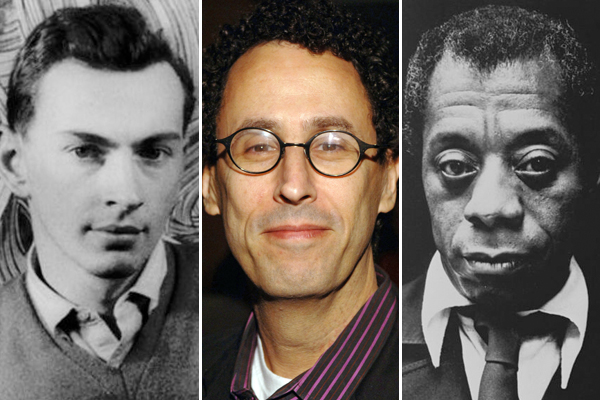
Gore Vidal, Tony Kushner and James Baldwin (Credit: Library of Congress/Carl Van Vechten/Reuters/Phil McCarten/Miami Dade College)

Gay life in America has utterly transformed itself since World War II. In the 1950s, homosexuality was a crime. Now, openly gay people are everywhere in popular culture, gay kids are coming out as early as elementary school and we can get even get married in a half-dozen states (including, soon, Washington). One of the most crucial, but least-talked about, reasons for this change is gay literature. Starting in the 1940s, a coterie of bold writers — Gore Vidal, James Baldwin, Armistead Maupin and Tony Kushner, among many others — played a central role in creating what we now think of as gay life. Their words gave voice to a segment of the American population that, for much of its history, was hidden away.

In his new book, “Eminent Outlaws,” novelist Christopher Bram uses a series of complex portraits of America’s most influential gay literary lions to argue for their position in the pantheon of American culture. The book covers expansive territory, charting the tumultuous relationship between Gore Vidal and Truman Capote, whose passionate hatred for one another lasted until the latter’s death (Vidal called it a “good career move”). It describes Tennessee Williams’ tortured relationship with his sexuality and gradual descent into alcoholic misery, James Baldwin’s struggles against racism and Edmund White’s eloquent reactions to the terror of AIDS. For anybody interested in gay culture, “Eminent Outlaws” offers a crucial and fascinating overview of  decades of American literary history. It also raises the question: In an era when being gay is considered mainstream, does gay writing still matter?

Salon spoke to Bram (who is also the author of “The Father of Frankenstein,” which was later turned into the film “Gods and Monsters”) over the phone about Gore Vidal’s importance, the death of the gay bookstore and the problem with gay men today.

As you point out in the book, literature has had an outsize role in the evolution of gay culture. Why do you think that is?

For the longest time, there were no gay characters or story lines in television or in the movies, so people had nowhere else to go but books for stories of gay life. After WWII there was suddenly a slew of them. It was surprising how many came so quickly. People could and wanted to write about it and the publishers would publish it. In my book I emphasize Capote’s “Other Voices, Other Rooms” and Gore Vidal’s “The City and the Pillar,” but there were others. The mainstream houses backed away from gay material in the ’50s but it was picked up by smaller presses, like Greenberg and Guild. Once it started it couldn’t stop.

Why do you think the gay literary explosion happened right after World War II?

It was partly WWII itself. Gay boys who had grown up in the middle of nowhere entered the service, and found out they weren’t alone. Alan Berube, in his book “Coming Out Under Fire,” does a great job of painting this sudden awareness and huge change. Gay people also wanted to read about each other, and after WWII censorship for books loosened. Before, cities would ban any book with sexual content, and after WWII people could write about sex, even gay sex.

Gore Vidal is the major thread connecting the book. Do you think he’s the most important figure in gay literature of the last 50 years?

Yes, but almost by accident. It’s not a role he wanted. “The City and the Pillar” is a very gay book published early on in 1948. It sold very well but he got kicked in the teeth for writing it, and after that he played a little more coy. He adopted the strategy that there’s no such thing as a homosexual, there’s only a homosexual act; homosexual is an adjective and not a noun. He wrote “Myra Breckinridge” in the ’60s, which is this wonderfully polymorphously perverse novel about a transsexual who rapes a straight man at one point. It’s over the top and out there and was a huge bestseller. Then he started writing historical novels, which hardly dealt with homosexuality. But one of the most amazing things he wrote from a gay political point of view is the essay “Pink Triangle, Yellow Star,” which was sparked by a very foolish bizarre essay by Midge Decter about gay men and their identity. He tore her essay to shreds, but he also argued that  Jews and homosexuals had a lot in common, that they were both minorities that are in the same boat.

In the last few years we’ve seen the disappearance of a lot of gay bookstores around the country. What do you think this says about the state of gay literature?

That is a major change and it’s an important and worrisome one. There are a couple of factors causing it. Independent bookstores have been in trouble for a while, struggling to compete first with super-chains and then Amazon and the Internet. Now the whole book business is going to transition, and even the super-chains are in trouble. Gay bookstores were always just keeping their heads above water. But I don’t think it says so much about gay books in particular as it does about the book business.

Edmund White once wrote that “‘Will & Grace’ killed gay literature.” Do you think he’s right — that the rise of gay TV and movies has made gay writing less appealing?

I think it’s reduced the gay readership by 10 or 15 percent — not a huge amount. And those were the people who didn’t really enjoy reading anyway. For them, it was their only way to get gay stories. Now they don’t have to. Independent film has dried up the same way indie bookstores have, so there’s not as much gay film as there used to be just 4-5 years ago, but the change in TV is phenomenal. These shows matter-of-factly include gay story lines and characters and do really good jobs with them. They’re not just here as comic relief, they’re really fully fleshed out, well-drawn characters. These TV shows are following in the footsteps of Armistead Maupin’s “Tales of the City” by including gay characters in this larger world.

Larry Kramer has very forcefully argued that young gay people these days don’t respect their elders or their history. Do you get the sense that young gay men today are less interested in gay culture and literature than they were in the past?

Not really. I don’t think the current younger generation is different from mine or even Larry’s. In my generation, we hated our elders. We might like Christopher Isherwood, but there was a dislike of the older generation: “They got it all wrong, we’re going to get it right.” I think that’s a natural generational dynamic; as time goes on you learn to keep what was good from the older generations and drop what was bad. I like the generations being different. Every generation wants to carve out their own space and to some extent it’s going to mean rejecting the older generation.

But Larry Kramer isn’t alone in feeling hurt by this. What do you think spurs this particular kind of anger among older gay men?

You’re getting older and you know you’re going to die, and you’re not happy about that, so you take out your anger on the generation coming behind you. I teach at NYU, so I work with people in their early 20s and I expect us to have nothing in common but I’m always surprised by the books they like, the movies they like, the things we do have in common.

I also think older gay men are pissed off that young gay men seem entitled and don’t seem to know what gay life was like in the ’50s, ’60s, ’70s, and especially the ’80s, during the first wave of the AIDS crisis.

Why should they know it? When they are aware of it, I’m pleased but I don’t expect them to. They’re lucky they didn’t grow up with the hardships Larry’s generation grew up with. My generation didn’t have it as harsh as Larry’s did, but I had it a little harsher than yours. It’s only natural. You just kind of have to accept that.

In his famous essay in the Atlantic, Andrew Sullivan argued that we’re witnessing the “end of gay culture,” that it’s splintering and dissolving as a result of mainstream acceptance.

Old gay culture wasn’t that solid to begin with, and [literary gay men] were always a minority within a minority. Even when gay books were the only game in town, there were plenty of gay people who didn’t read. For them being gay was about sex and going to bars and dancing. There’s still gay culture around and it takes different shapes and forms. Gay bars don’t play the same role in gay life they once did 10-15 years ago. The Internet has changed that too. I miss the gay bookstores, but I like the difference and the variety.

Do you think there’s such a thing as a gay sensibility in literature?

When Jeff Weinstein, the New York culture critic, was asked if there was a gay sensibility and if it affected culture, he said, “No, there’s no such thing as a gay sensibility and yes, it does affect culture.” I feel that way. The only thing holding these men together is that these were men who were sexually attracted to men who would write about it and about how that mixed with the rest of their lives. For some writers, [their gayness] was just one more ingredient in the stew, like Armistead Maupin. For some, sex and love with other men was everything, like Edmund White. But even he mixed things up. His new book is about the friendship between a gay man and a straight man (though I think his best writing is his sexual writing).

Speaking of Edmund White, he has very strong feelings about writers, like Susan Sontag, who were famous but did not come out of the closet.

I think if she had actually written as a lesbian about lesbian life it would have given a whole other dimension to her work and she would have been a much more interesting and exciting writer than she was. But I just think of her as a writer [not a gay writer]. The other writer he talks about is Harold Brodky. Being unable to write directly about gay life made his prose weird and baroque and really blocked him as a writer. For me, their being in the closet becomes its own punishment.

A friend of mine recently told me that he thought we just don’t have the kinds of great gay literary writers that we used to. I think we do, they’re just not known as primarily gay writers. Do you think that’s true?

There’s good stuff being done by younger writers than the old war horses. It just hasn’t gotten the attention it deserves. Paul Russell just did an amazing book last year called “The Unreal life of Sergei Nabokov,” following Vladimir Nabokov’s gay brother from pre-revolutionary Russia to Paris in the time of Cocteau to Nazi Germany. Peter Cameron’s last book, “Someday This Pain Will Be Useful to You,” was very smart and beautifully written. Bob Smith, a comedian, did a wonderful novel called “Remembrance of Things I Forgot,” about a gay man who travels through time to help his family and discovers he’s been pursued by that arch-villain Dick Cheney. And then there’s Rakesh Satyal, and the novel he published two years ago, “Blue Boy,” about a gay 12-year-old boy in an Indian family in Cincinnati.

What gay books would you recommend as must-reads to a gay kid coming of age right now.

You could do far worse than Armistead’s Maupin’s “Tales of the City”; the entire series would be a great education in itself. Maupin imagines and records this world in San Francisco where gay people are just one more piece of the puzzle and accepted as such. And there’s “Giovanni’s Room” by James Baldwin. It’s set in Paris in the 1950s, about a gay man who almost comes out but doesn’t. It’s very painful, beautifully written and it would show him what we’ve come away from. I’ll be selfish and recommend one of mine, “Surprising Myself.” It was my first novel, published in like 1987, and it’s set in New York in the ’70s — the sexual golden age.

Thomas Rogers

Thomas Rogers is Salon's Arts Editor.

Manny Pacquiao doesn’t want you dead

A gross misquote gets out of hand -- but the iconic boxer still has a long way to go on the sensitivity front

Manny Pacquiao (Credit: Reuters/Steve Marcus)

Updated below

Let’s get something straight, so to speak, right off the bat. There’s no disputing that Manny Pacquiao is not the most enlightened guy to ever put on gloves and fight for a belt. In a story for Examiner.com this past weekend, blogger Granville Ampong wrote of how the boxing champ takes issue with Barack Obama’s recent groundbreaking declaration of support for same-sex unions. “God’s words first … obey God’s law first before considering the laws of man,” Pacquiao told Ampong, in what the writer described as “an exclusive interview.” Pacquiao was further quoted explaining that “God only expects man and woman to be together and to be legally married, only if they so are in love with each other… It should not be of the same sex so as to adulterate the altar of matrimony, like in the days of Sodom and Gomorrah of Old.”

OK, it’s generally accepted that invoking Sodom and Gomorrah in general — and Sodom and Gomorrah of Old, in particular — is not going to win anybody a seat at the GLAAD awards. Sure enough, Pacquiao’s statements quickly set off a chain of angry and just plain disappointed responses from across the Net, where Pacquiao has been celebrated as a Filipino icon, and beloved for his humanitarian works. On Tuesday evening, the Los Angeles shopping center the Grove, where Pacquiao was to be interviewed for “Extra,” called off the event. “Based on news reports of statements made by Mr. Pacquiao,” read a statement from the center’s spokesman Bill Reich, “we have made it be known that he is not welcome at the Grove and will not be interviewed here now or in the future. The Grove is a gathering place for all Angelenos and not a place for intolerance.”

It’s a relatively free country, which means that the Catholic Pacquiao is welcome to express his views, even views many of us find backward and exclusionary. In return, a business like a shopping mall may choose to decline his patronage. What is not OK is what happened along the way.

You see, within the original Examiner.com piece, Ampong went off on a bit of biblical tangent. “Pacquiao’s directive for Obama calls societies to fear God and not to promote sin, inclusive of same-sex marriage and cohabitation,” he wrote, “notwithstanding what Leviticus 20:13 has been pointing all along: ‘If a man lies with a man as one lies with a woman, both of them have done what is detestable. They must be put to death; their blood will be on their own heads.’”

That’s Ampong. Quoting Leviticus. You could go ahead and infer that this is what Pacquiao was alluding to in his remarks, and you definitely could say that’s some convoluted writing there. But Pacquiao himself clearly didn’t issue the quote. But let’s not let the barest understanding of attribution get in the way of a sensational headline, shall we? Before you could say gross perversion of the facts, Change.org was running a petition asking Nike to drop “homophobic boxer Manny Pacquiao,” declaring, “In an interview published Tuesday, March 15th with the conservative Examiner newspaper, the world-famous boxer and Los Angeles resident quoted Leviticus…” And except for the fact that Pacquiao didn’t quote Leviticus, Examiner.com is not a conservative newspaper, and the interview didn’t run on Tuesday, sure.

The confusion stems largely from a Tuesday L.A. Weekly blog post by Simone Wilson, in which she wrote, “Pacquiao told the National Conservative Examiner over the weekend that gay men should be ‘put to death’ for their sexual crimes.” She then backpedaled a tad by noting “Yes, he was quoting Leviticus 20:13, but he hasn’t backed down from his harsh stance.” She continued further in the piece to invoke “what Pacquiao said” and ponder that “For the sports star to announce that he thinks thousands of gay Angelenos should be ‘put to death’ for loving a same-sex partner should hugely alienate him to the locals,” adding that “Because … uh … ‘put to death’? You just don’t say that kind of thing in 21st century America.” Maybe that’s why he didn’t. And by the way, calling the source “the National Conservative Examiner” greatly glorifies Examiner.com, a site anybody with an Internet connection and rudimentary typing ability can write for, “even if you’re not a professional writer.” It’s a site with all the journalistic credibility of, oh, L.A. Weekly.

But what kind of commitment to facts could we have expected from Simone Wilson? This is the person who, when real journalist Lara Logan was attacked in Egypt last year, hastily banged out a grotesquely offensive fantasy version of events, writing, “In a rush of frenzied excitement, some Egyptian protestors apparently consummated their newfound independence by sexually assaulting the blonde reporter.”

Wilson’s colleague Dennis Romero added more fuel to the mythic Pacquiao interview story Tuesday, in a piece headlined “Manny Pacquiao Says Gay Men Should Be ‘Put to Death.’” USA Today then jumped in, reporting that “Pacquiao also invoked Old Testament, and recited Leviticus 20:13, saying: “If a man lies with a man as one lies with a woman.” And the Village Voice blog, for good measure, reported, “The Bible Via-Manny Pacquiao: Gays Shouldn’t Get Married, They Should Be ‘Put To Death.’” How ridiculous did the whole thing get? On Pacquiao’s own “official” website Tuesday, writer Keith Terceira said, “Manny Pacquiao was recently quoted in the USAToday as invoking the old testament.” [sic]

I get that nobody really pays attention to what anybody posts on Examiner.com, but seriously. If you’re going to quote someone, read the damn source material already. You need to have an eighth-grade reading proficiency level to get a driver’s license, yet apparently you can be functionally illiterate and work for L.A. Weekly and USA Today.

On Wednesday, Granville Ampong wrote a follow-up post on the matter, saying of the Leviticus quote, “Pacquiao never said nor recited, nor invoked and nor did he ever refer to such context.” And Pacquiao likewise issued a statement, saying, “I didn’t say that, that’s a lie… I didn’t know that quote from Leviticus because I haven’t read the Book of Leviticus yet,” and adding, “I’m not against gay people … I have a relative who is also gay. We can’t help it if they were born that way. What I’m critical off are actions that violate the word of God. I only gave out my opinion that same-sex marriage is against the law of God.”

Pacquiao inarguably has a long way to go in the tolerance department. And his remarks were ignorant, to be sure. But you can’t cure ignorant with stupid. And you can’t change minds with lies.

UPDATE: LA Weekly writer Simone Wilson called us Wednesday to clarify our assertion that she initiated the story that Pacquiao himself deployed the Leviticus quote, telling us that “USA Today, the Village Voice, and his own Web site had already reported it” by the time she wrote her piece. Though the misleading content of her story remains the same, her place in the fray was not first. For which we apologize — and offer the sincere hope that the story can’t get any more meta now.

Continue Reading Close
Mary Elizabeth Williams

Mary Elizabeth Williams is a staff writer for Salon and the author of "Gimme Shelter: My Three Years Searching for the American Dream." Follow her on Twitter: @embeedub.

Obama goes viral, wins Twitter

The president's endorsement of gay marriage becomes a cleverly -- and intensely -- choreographed meme

When Barack Obama blew America’s mind by declaring his support for same-sex marriage Wednesday, he explained that his views on the subject had long been “evolving.” But while evolution is a process that can take millennia, social media moves with considerably more swiftness. However long it took the White House (nudged though it was by Joe Biden’s Sunday blurt that he was “absolutely comfortable” with marriage equality) to get to that place, it took no time at all for Obama’s sentiments to become a meme.

It’s no accident that the president’s change of heart happened to make for a perfect sound bite. Nearly as fast as Barack Obama, leader of the free world, could utter the words “Same-sex couples should be able to get married,” to ABC News correspondent Robin Roberts, @barackobama — the president’s not-nearly-as-popular-as@JustinBieber Twitter account — was announcing “Same-sex couples should be able to get married.” As of Thursday morning, it had been retweeted over 56,000 times and counting.

And just like that, what had been a fuzzy campaign issue for Obama just a week ago became a defiant stance – and an easily forwarded post. The president’s Twitter and Facebook accounts wasted no time issuing a photo of Obama with his statement, under the heading, “history.” The campaign’s main page itself immediately splashed up the quote, along with the ABC News clip and the invitation to “stand up with the president.” And the campaign’s colorful, friendly-looking poster stating that “Every single American/Gay Straight Lesbian Bisexual Transgender/Deserves to be treated equally in the eyes of the law and in the eyes of our society/It’s a pretty simple proposition” popped into a place of honor on the Obama Pinterest and Instagram pages.

Elections can turn on a few provocative words – from “Read my lips” to “It’s the economy, stupid” to, simply, “Hope.” But there’s never been a time when a single sentiment could be parroted across so many different platforms. The Obama campaign knows this, and has shrewdly seized upon the immediate, visceral reaction that one sentence can inspire with impressive immediacy. Watch and learn, Romney. Though we’ve yet to see how the president’s “evolved” stance will shake out into real votes in November, for now, it sure makes for a whole lot of likes and pins. Whatever happens next, Obama’s won Twitter.

Continue Reading Close
Mary Elizabeth Williams

Mary Elizabeth Williams is a staff writer for Salon and the author of "Gimme Shelter: My Three Years Searching for the American Dream." Follow her on Twitter: @embeedub.

A Catholic school’s anti-gay snub

When a student wins the Matthew Shepard Scholarship, the bishop steps in -- and everybody loses

Keaton Fuller

Remember last month, when the Vatican issued a smackdown to American nuns for their “radical feminist themes,” like not being vocal enough about opposing same-sex marriage? Now, just to really hammer home how divisive the issue has become, a bishop in Davenport, Iowa, has vetoed Catholic school officials and said he would not permit the Eychaner Foundation to present its Matthew Shepard Scholarship to a gay senior at his high school graduation.

Bishop Martin Amos alerted the Prince of Peace school staff last week that “We cannot allow any one or any organization which promotes a position that is contrary to the teachings of the Catholic Church to present at a diocesan institution.” The Eychaner Foundation describes itself as “a non-profit organization committed to promoting tolerance and non-discrimination.” Tell us, Bishop Amos, exactly how that conflicts with Christianity?

The $40,000 scholarship to the University of Iowa is named in honor of gay college student Matthew Shepard, who was brutally murdered in 1998. This year’s recipient, Keaton Fuller, will still be acknowledged – by a school staffer – at the ceremony. But it’s a huge dis nonetheless to block the very organization that’s honoring the kid from handing him his prize. And it blatantly pulls of the rug out from under Fuller, after the school board’s president himself says that the presentation had already been discussed at a board meeting with no opposition.

In an open letter to the school, Fuller says that “Being the lone openly gay student in a small, Catholic school has not always been easy” but that he’s been honored by the “acceptance and respect” he’s received. And he says that the moment he learned he’d won the scholarship was “one of the happiest of my life.” Now, however, he writes, “I have never felt as invalidated and unaccepted as I have upon hearing the news that the scholarship that I have worked so hard for not just in the application process, but also in my deportment and actions over the years, would not be recognized in the way that it should at the graduation ceremony. It is difficult to understand how after I have spent thirteen years at this school and worked hard during all of them, I would be made to feel that my accomplishments are less than everybody else’s. This whole ordeal has been incredibly hurtful, and I am even sadder that this will be one of my last experiences to remember my high school years by.”

It’s an articulate, impassioned plea for support and basic courtesy. Oh, and I have a letter too. It’s from Jesus. It says, Bishop Amos, you’re doing this wrong.

Sure, one could argue that you wouldn’t expect an outpouring of gay pride at a Catholic school. But it’s worth noting that Fuller’s school was supportive of him, and proud of his accomplishment. It’s Bishop Amos who should grok that it’s called Prince of Peace for a reason. The values of tolerance that name represents are the same values that the Matthew Shepherd scholarship represents, a scholarship created in the name of a young man who died horribly simply for being who he was. And it would be a terrible shame if the last thing Fuller learned at his school was that his church is too cowardly to applaud him for being who he is.

Continue Reading Close
Mary Elizabeth Williams

Mary Elizabeth Williams is a staff writer for Salon and the author of "Gimme Shelter: My Three Years Searching for the American Dream." Follow her on Twitter: @embeedub.

My Scientology excommunication

I was one of the world's top 50 church members -- then one mistake changed my life

(Credit: PeterG via Shutterstock)
This article is an adapted excerpt from the new book, "A Queer and Pleasant Danger," from Beacon Press.

They made a lovely couple, my parents. Mildred was as gracious as she was elegant and beautiful. Paul was as gallant as he was rugged and handsome. My mom thought she was the luckiest girl in the world. My dad never got it, how a class act like Mildred could fall for a palooka like him.

Around the time that my teenaged mom-to-be was making googly eyes at my dad-to-be, L. Ron Hubbard — like my father — was in his early twenties. While my father was setting up a medical practice on the Jersey Shore, Ron Hubbard was reportedly off tramping through Asia, learning Eastern religions and customs. All of us in Scientology believed this about Ron. He was an explorer, an intrepid researcher into the darkest depths and starry heights of the human soul. He engineered and built the Bridge to Total Freedom.

Lafayette Ronald Hubbard was a rugged guy, just like my dad.

He was born on March 13, 1911, in Tilden, Nebraska. My dad was born just a few months later, on May 19. If you believe the authorized biography, Ron grew up out by a tribe of Blackfoot peoples. By the time he was four, he’d already learned all the Blackfoot lore there was to learn, so tribal elders made him a full-fledged blood brother. What’s more, at thirteen years old, Ron became the youngest Eagle Scout in the history of Scouting. So goes the authorized biography, and as Scientologists, we believed it.

A great deal of that authorized biography has been poked full of holes. There’s evidence that many of the outrageous claims about Hubbard’s life are out-and-out lies — go ahead, give it a Google. As Scientologists, we always figured he stretched the truth a little — to make a good story a little bit better — but we thought most of his reportedly grandiose and holy life was true.

—————

I joined the Church of Scientology in 1970, and by the end of the decade, I was at the top of my game. I was a full Lieutenant. Only fifty people in all of Scientology outranked me. I’d been First Mate of the Flagship; and a few years later, I was working directly with the Commodore [Hubbard], planning public relations strategies for Scientology worldwide. I managed an entire fucking continent for them. Then I crashed and burned on Southern Comfort and Coca-Cola, sex, junk food, and tranny porn. My job performance took a nosedive, and I was summarily removed from my post in middle management and demoted to sales, where, phoenix-like, I rose from my own ashes brighter and stronger than ever.

I was a terrific salesman, a natural. I’d spent my life trying to make people happy with me, and there’s nothing more happy-making than selling someone their dreams-come-true. In Scientology sales, we were taught to find a person’s “ruin” — whatever it was that was making a person’s life miserable and keeping them from achieving their goals. I could find anyone’s ruin in minutes — and in less than an hour, I’d have sold them thousands of dollars worth of Scientology services to handle it. I put together a crack staff, and together the six of us pulled in close to a quarter of a million dollars a week. I was a real man in every aspect of my life — and it all came down to money money money. After all, what are your dreams worth to you? How much money would you spend if that’s all it took to make your dreams come true? You needed what we had, and we needed your money — most, if not all, of it.

It was common knowledge in the Sea Org that the US government and economy could topple at any moment — splat — end of the world as we know it. That’s when we’d march in and take over. We were amassing a war chest for that day, and with that in mind, L. Ron Hubbard took very little money from the Church — only the royalties on his books and a small administrative stipend on top of his room and board. Beyond that, every penny went into Church maintenance, defense, and expansion.

In Scientology, we never used the word sales. People who sell Scientology services have always gone by the more pleasant euphemism registrar, often shortened to reg. In the Sea Org, we softened the euphemism even further: I was first posted in New York City as part of the international sales team called Flag Service Consultants. We were among the most highly skilled sales people in all of Scientology, and we sold only the most expensive services — the topmost levels of Scientology, all of which were delivered solely on Flag by the most highly trained Sea Org members in the world. In the late 1970s, I was transferred to the post of Tours Reg — Europe became my primary beat, and I was pulling in an average of $20,000 a week for Flag. My personal sales figures often topped out at $50,000 to $70,000, which made me one of the Sea Org’s top income makers, which in turn gave me what they call ethics protection. In short, no one was allowed to fuck with me.

In Europe, Scientologists wrote us checks made out to the Religious Research Foundation, a shell company that maintained a Swiss bank account that was in no way linked to the Church of Scientology. Any money we deposited would be used in the service of the Church without having to pass through any country’s tax system — it’s a common business practice used by many international organizations. Of course, L. Ron Hubbard had no connection with that Swiss account because it was vitally important to keep all his personal finances on the up-and-up so that no enemy of the Church could use any inadvertent financial glitch against him. But that was unthinkable — (a) because he was so powerful, and (b) because he had both the Sea Org and the Guardian’s Office to protect him, and we protected him fiercely.

So, life was . . . great. Thanks to my high income, I’d become a Sea Org star. Crew members actually lined up at the doors to send me off on tour, or welcome me home. It all came unraveled on a sunny autumn day in Zurich, 1982. I had just finished making a sizable deposit to the Swiss bank account. I was out on a quickie one-week tour on my own; my second wife, Becky, was back in Clearwater.

This was my first time inside the bank’s home office. What a beautiful old place it was! The reverence for wealth was manifest in the severe architecture, lightly touched here and there with tasteful elegance. I was waiting for the teller to return to his window with my receipts when a clerk appeared at my elbow and asked me to step inside the office of the vice president of the bank. Now, this had never happened to anyone else on my staff in all the time we’d been making deposits at this branch, so my antennae went up. I allowed the clerk to usher me into the huge office of what very well might be a member of some vast international Swiss banking conspiracy. An old man sat behind the huge desk. He rose creakily to his feet, his face broke into a wide smile, and he walked around his desk toward me with his hand extended as if in friendship. Swiss bankers never do that.

“Mr. L. Ron Hubbard,” the old guy said to me, “the bank so appreciates your business all these years, and it’s such a pleasure to finally meet you in person.”

Oops. No, this was much more than an oops — this was a genuine oh fuck! It must have been the work of some SP [Suppressive Person — Scientology’s term for a person who is completely and irredeemably evil. Like me today; I’m an SP.] Well, some SP inside the Swiss banking conspiracy had obviously broken into the files of the Religious Research Foundation and falsely linked them to the Old Man. Fuck, fuck, fuck! I took a deep breath and reminded myself that I was a far superior being to the old man — lying to him came easy.

“I’m so sorry,” I say. “But I am not this Mr. El? Hub Hubbard? of whom you speak.”

By then, we were both visibly pale. My mind was racing with worst-case scenarios — and the old guy realized that by naming me, he’d violated some strict law of Swiss banking privacy. We froze, our eyes locked in a long awkward silence. Then we each forced a laugh at the silly mistake, we said our goodbyes, and I strolled casually out of the bank.

There was no such thing as a cell phone. I walked across the city square to my hotel, where I placed a call from the pay phone in the lobby. I couldn’t trust that the phone in my room wasn’t tapped. I called a secret number and reached a telex operator in Denmark. I spoke to her guardedly, but she got what I was saying and fired a message off to Florida that there was some plot afoot that warranted investigation, and I would stand by for orders. Orders came back swiftly. I flew to England, where I was questioned for three days. Then the all clear came through, and I was ordered to fly home to Clearwater, Florida. I’d done a great job uncovering the plot against the Old Man!

As I stepped off the plane in Tampa, I was met at the gate by seven tall, muscular young guys in Sea Org officer uniforms. Heh. I was still the superstar. But it did strike me as odd that I didn’t recognize any of these officers, and I knew personally every senior officer in the Sea Org. The young men had serious faces — they told me they were members of the newly formed Financial Police. I’d never heard of that.

“What’s going on here . . . sir?”

“You’ll find out, and don’t speak unless you’re spoken to, mister.”

“Yessir.”

One for one, they outranked me, so there was no questioning their authority. These guys escorted me into a cold, damp hallway in the basement of the Fort Harrison Hotel. Two of the Financial Police sat me down on a metal folding chair, then took up more comfortable chairs for themselves on either side of me. I couldn’t say a word — I still hadn’t been spoken to.

After three hours, the other five officers showed up — showered, freshly shaven. I smelled sour to myself, and I had a five o’clock shadow that rivaled Richard M. Nixon’s. The seven officers escorted me down the hall into a room set up with a table and an e-meter. Non-Scientologists (we called you wogs) believed that at best, the e-meter — short for electropsychometer — was an unsophisticated lie detector. But we believed completely that in the hands of a trained Scientologist, that little meter could detect your deepest, darkest thoughts and deeds — going back millions and millions of years. That’s the basic principle of their therapy, which they call spiritual counseling, or auditing.

Now, mostly when you’re audited, you’re in a small room with one other person, the auditor. There’s never more than the two of you. But now, one member of the Financial Police sits across from me, operating the meter. Two big guys are standing behind him, two more big guys stand behind me, and one more big guy stands at the door. Years later, I’d find out they call it a gang-bang security check. One of them spoke.

“How long have you been an agent for a foreign government?”

“What the fuck?”

“Thank you,” says the big guy across from me.

Now, he didn’t say thank you because I’d told him anything he felt grateful for. He said thank you because in Scientology you’re supposed to verbally acknowledge anything that anyone says to you. You use words that show you’ve heard the other person — Thank you, OK, Good, Very Good, and so on — words that show you’ve heard the other person. It’s actually quite a civilized way to talk with people, letting them know you heard them. So he says Thank you, then a guy behind me says,

“How long have you been a drug addict?”

“What?!” I turned to face the guy.

“Good.”

“Have you ever had unkind thoughts about L. Ron Hubbard?”

“Not a one,” I answered. “Ever.” But why wasn’t he personally pinning a medal on my chest for pulling his ass out of the financial fires? Unless the Swiss account actually did belong to him, in which case . . .

“OK. That read on the meter. I’ll repeat the question: Have you ever had unkind thoughts about L. Ron Hubbard?”

“Not unless you’re telling me that the Religious Research Foundation is a bank account that funnels money into the Old Man’s pockets. Is that what you’re telling me?”

“Good. Have you ever had unkind thoughts about L. Ron Hubbard?”

For two more hours, they quizzed me about all the possible unkind thoughts I could ever have had about L. Ron Hubbard, until the meter convinced them I was OK on that score.

“Thank you. How long have you been a spy for a foreign government?”

And they kept asking me those kinds of questions for a total of six hours, carefully watching the e-meter for any signs that might reveal my evil deeds. Six hours, no evil deeds. Finally, the guy across from me played his ace. He said I’ve got a choice: I can do three years of hard physical labor, sleeping a maximum of six hours a night on a cold cement floor, eating only table scraps, and talking only with other bad people like me who were relegated to the months-old Rehabilitation Project Force. I could either do that, he said, or I could leave and be excommunicated from the Church of Scientology for the remainder of all my lifetimes ahead of me. The young officer told me that he’s going to live into the future as a hero.

“Without Scientology, you are gonna degrade into a mindless slug of a spiritual being. You’re gonna be a body thetan, attached to the toe of some street bum.”

So help me, that’s what he said. I didn’t thank him for saying it. It had been twelve years since I failed to acknowledge something another person said to me. Twelve years.

What was he saying? Sleeping on a cement floor with this neck? And he never answered my question about the Old Man and the Swiss bank account.

Twelve years.

It had to be true. Daddy was a liar and a cheat — I could deal with everything else about Scientology but that. My mind shattered like a plate glass window in a Mack Sennett comedy.

“You excommunicate me,” I said, and so they did.

———-

It was January 24, 1986, when a judge handed down her approval of my legal name change from Albert Herman Bornstein to Katherine Vandam Bornstein. It was the very same day L. Ron Hubbard died.

The Commodore was seventy-five years old, living alone in a double-wide out on a Church-owned ranch in the desert of Southern California. It was a luxury trailer, but it was a trailer, and it was the best he could do for a hideout. The Old Man had been named as a co-conspirator by US government prosecutors, but he hadn’t been indicted so he was on the lam. The government had a pretty much iron-clad case against more than twenty Scientologists who’d infiltrated the IRS for years in order, reportedly, to mine personnel files that the Church could leverage into getting itself a nonprofit status. Ron’s wife, Mary Sue, had been tried and found guilty, along with ten other Scientologists — they were all serving time in jail. Mary Sue Hubbard adored Ron as deeply as my mom adored my dad. Both women worshipped their men, fought for their men, and placed their men above themselves. Mary Sue and my mother were women of a generation, and I loved them both. Mary Sue Hubbard was behind bars the day the love of her life died alone out in the desert. That’s just not right.

There’s a photo of L. Ron Hubbard taken just before he died. You can find it online easily enough — it’s the grainy blotchy one. He’s disheveled and unshaven, wearing what looks like a stained nightshirt. His eyes are unfocused and his jaw’s gone all slack. It’s heartbreaking. Yes, yes, yes, he was a mean old man. But so many of us held him in our hearts like we’d hold daddy. He was a bad daddy to be sure, but he was daddy. No one’s come forward online to say they were there when the Old Man was lost, or that they held his hand and cried with him. If I’d been there, I would have.

Adapted excerpt from A Queer and Pleasant Danger by Kate Bornstein. Copyright © 2012 by Kate Bornstein. Reprinted by permission of Beacon Press, Boston.


Continue Reading Close

Republicans: Wired for homophobia

New research sheds light on why conservatives are so eager to embrace anti-gay pseudoscience

(Credit: Sebastian Kaulitzki via Shutterstock)
This article originally appeared on AlterNet.

On May 8, North Carolinians will vote on a constitutional amendment that defines a marriage between a man and a woman as the “only domestic legal union” the state will recognize — thereby barring LGBT marriage equality. The amendment would also ban civil unions and end domestic partner benefits like prescription drug and health care coverage for the partners and children of public employees. At its deepest level, this issue is about fairness for everyone under the law. But less mentioned is that it is also about science, and about what’s factually true.

AlterNetMany voters who go to the polls to support Amendment One will do so believing outright falsehoods about same-sex marriages and civil unions. In particular, they hold the belief that such partnerships are damaging to the health and well-being of the children raised in them. That is, after all, one of the chief justifications for the amendment.

According to the pro-Amendment One group Vote for Marriage NC, for instance, “the overwhelming body of social science evidence establishes that children do best when raised by their married mother and father.” If marriage is defined as anything other than the union between man and woman, the group adds, we will see “a higher incidence of all the documented social ills associated with children being raised in a home without their married biological parents.”

“Overwhelming body of social science evidence”? “Documented social ills”? Is this really true? Are same-sex marriages and civil unions bad for kids?

Well, no. Indeed, as I report in my new book ”The Republican Brain: The Science of Why They Deny Science — and Reality,” the claim that the kids won’t be all right in same sex marriages or partnerships now rates up there with a number of other hoary old falsehoods about homosexuality: the assertion that people can “choose” whether to be gay; the notion that homosexuality is a type of disorder; and the wrong idea that it can be cured through “reparative” therapy. All of these claims are explicitly disavowed by the American Psychological Association (APA).

In a moment, I want to explore the underlying psychology behind how conservatives, especially religious ones, can believe such falsehoods. But first, let’s dismantle, on a substantive level, the idea that research shows that kids fare worse when raised by two parents who are of the same gender.

According to the APA, the relevant science shows nothing of the kind. “Beliefs that lesbian and gay adults are not fit parents … have no empirical foundation,” concludes a recent publication from the organization. To the contrary, the association states, the “development, adjustment, and well-being of children with lesbian and gay parents do not differ markedly from that of children with heterosexual parents.”

So how can Christian conservatives possibly claim otherwise?

Well, one favored approach is literally citing the wrong studies. There is, after all, a vast amount of research on kids in heterosexual two-parent families, and mostly these kids do quite well — certainly better than kids in single-parent families (for obvious reasons). Christian conservatives cite these studies to argue that heterosexual families are best for kids, but there’s just one glaring problem. In the studies of heterosexual two-parent families where children fare well, the comparison group is families with one mother or one father — not two mothers or two fathers. So to leap from these studies to conclusions about same-sex parenting, explains University of Virginia social scientist Charlotte Patterson, is “what we call in the trade bad sampling techniques.”

But wait: Don’t Christian conservatives want to be factually right and to believe what’s true about the world? And shouldn’t a proper reading of this research actually come as a relief to them and help to assuage their concerns about dangerous social consequences of same-sex marriage or civil unions? If only it were that simple. We all want to be right and to believe that our views are based on the best available information. But in this case, Christian conservatives utterly fail to get past their emotions, which powerfully bias their reasoning. Indeed, science doesn’t just demonstrate that the kids are all right in same-sex unions. It also shows how and why some people reason poorly in highly politicized cases like this one — and, in the case of the anti-gay views of Christian conservatives, rely on their gut emotions to come up with wrong beliefs. Here’s how it works.

There are a small number of Christian right researchers and intellectuals who have tried to make a scientific case against same-sex marriages and unions by citing alleged harms to children. This stuff isn’t mainstream or scientifically accepted — witness the APA’s statements on the matter. But from the perspective of the Christian right, that doesn’t really matter. When people are looking for evidence to support their deeply held views, the science suggests that people engage in “motivated reasoning.” Their deep emotional convictions guide the retrieval of self-supporting information that they then use to argue with, and to prop themselves up. It isn’t about truth, it’s about feeling that you’re right — righteous, even.

And where, in turn, do these emotions come from? Well, there’s the crux. A growing body of research shows that liberals and conservatives, on average, have different moral intuitions, impulses that bias us in different directions before we’re even consciously thinking about situations or issues. Indeed, this research suggests that liberals and conservatives even have different bodily responses to stimuli, of a sort that they cannot control. And one of the strongest areas of difference involves one’s sensitivity to the feeling of disgust.

recent study, for instance, found that “individuals with marked involuntary physiological responses to disgusting images, such as of a man eating a large mouthful of writhing worms, are more likely to self-identify as conservative and, especially, to oppose gay marriage than are individuals with more muted physiological responses to the same images.” In other words, there’s now data to back up what we’ve always kind of known: The average conservative, much more than the average liberal, is having visceral feelings of disgust toward same-sex marriage. And then, when these conservatives try to consciously reason about the matter, they seize on any information to support or justify their deep-seated and uncontrolled response — which pushes them in the direction of believing and embracing information that appears to justify and ratify the emotional impulse.

And voila. Suddenly same-sex marriages and civil unions are bad for kids. How’s that for the power of human reason?

All people engage in emotion-guided or -motivated reasoning, to be sure. But mounting evidence suggests that the Left and Right may do so differently. And they definitely do so for different reasons — as the present case so strongly demonstrates.

Does this mean we should be more tolerant of the intolerant, or less disgusted by those who may consider us disgusting? Maybe. After all, people may not have much control over these impulses. They may not even be aware of them. At the very least, such knowledge should increase our level of understanding of those who disagree with us.

In the end, however, facts are facts — and emotions and gut instincts are an utterly unreliable way of identifying them. We can try to be understanding of people different from us — even when they’re manifestly failing at the same task. But the latest research makes it more untenable than ever to base public policy on gut-driven misinformation.

Continue Reading Close

Chris Mooney is the author of four books, including "The Republican War on Science" (2005). His next book, "The Republican Brain: The Science of Why They Deny Science—and Reality," is due out in April.

Page 1 of 128 in LGBT

www.salon.com/topic/lgbt/