
Wall Street

An offensive advocate for LGBT rights

By choosing Goldman CEO Blankfein as a spokesman, HRC signals that corporate malfeasance is perfectly acceptable

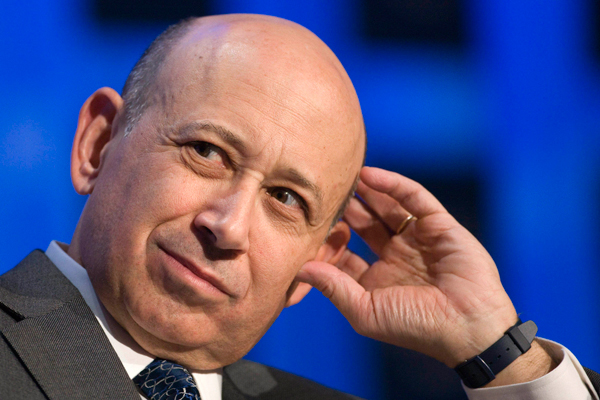
Lloyd Blankfein (Credit: AP/Alessandro della Valle)

Last week, the Human Rights Campaign, the organization that advocates for equal rights for gay, lesbian, bisexual and transgender people, announced that Goldman Sachs CEO Lloyd Blankfein will be its first “national corporate spokesman for same-sex marriage.” HRC’s move was almost universally portrayed in the media as a laudable one for the cause of equality: a supposed Nixon-goes-to-China-esque coup that aligned a politically conservative icon with a liberal cause. As one HRC executive told the New York Times: “Lloyd Blankfein is not someone average Americans would think is going to support marriage equality.”

In all the ovation and self-congratulation, however, two big problems were left unmentioned.

First and foremost is the simple fact that this is not some brilliant P.R. move in the Nixon-to-China vein. On the contrary, many (though certainly not all) Wall Street financiers have long professed their support for gay rights, culminating in their pivotal role helping legalize gay marriage in New York state. That’s, in part, because it’s an effective strategy to divert attention from their economic agenda.

Taking a page out of corporate greenwashing strategies, many of the most offensively greedy, right-wing thieves in the business world have long touted their personally progressive position on select social issues like gay rights as a means of publicly presenting themselves as Good and Decent People. Not surprisingly, the particular progressive causes they choose tend to be those that do not impact their businesses or personal economic situations. In some cases, in fact, these thugs seem as if they are leveraging their stands on such progressive issues as a quid pro quo bargaining chip for their personal financial interests. As just one example of where that kind of dynamic may have played out, recall that almost immediately after Wall Streeters underwrote Democratic Gov. Andrew Cuomo’s campaign to legalize gay marriage, Cuomo launched a public (though ultimately unsuccessful) campaign to halt the extension of a so-called millionaires tax on those same Wall Streeters.

This isn’t to say that Wall Streeters’ support for marriage equality isn’t a good thing; it most certainly is. (As a strong supporter of marriage equality, for instance, I’m glad those Wall Streeters helped New York State legalize gay marriage.) It’s only to say that Blankfein’s support of gay marriage isn’t some hard-to-believe coup; it’s probably exactly what many “average Americans” would expect from a Manhattan investment banker.

That gets to the second, even bigger problem: What, then, is the movement for equal rights really saying to “average Americans” when that movement promotes someone like Blankfein as its chief public spokesman? And what is the muted reaction to the HRC announcement saying about what is acceptable in America?

To answer that question, consider who Blankfein is — and recall specifically that he is not some quiet, buttoned-up executive in a staid manufacturing industry, nor is he known as a new Lee Iacoca or Steve Jobs — aka a person widely revered (rightly or wrongly) for how his innovation and business savvy (supposedly) helped the world. On the contrary, Blankfein is the singular — and rightly detested — poster boy for the lies, crimes and avaricious schemes that destroyed the economy, impoverished millions of Americans and ripped off taxpayers.

This is a man who refused to tell Congress the truth about the basic facts of how the firm he led bet against — and profited off — the destruction of the American economy. As Rolling Stone’s Matt Taibbi documented, in 2010 Blankfein “went to Washington and testified under oath that Goldman Sachs didn’t make a massive short bet and didn’t bet against its clients” — even though the Senate’s “Levin report proves that Goldman spent the whole summer of 2007 riding a ‘big short’ and took a multibillion-dollar bet against its clients, a bet that incidentally made them enormous profits.” Blankfein’s lying was so egregious, the Senate Subcommittee on Investigations has recommended that the Justice Department consider perjury charges against him.

Blankfein is also the CEO who oversaw Goldman at the very moment that the firm engineered the infamous Abacus deal, a deal that was so insidious, that it ultimately drew a record $550 million fine from the Securities and Exchange Commission. Lately, he’s made headlines personally lawyering himself up in preparation for possible criminal prosecution, which is probably a smart move because he’s already being formally deposed in a civil lawsuit related to the SEC settlement. And, of course, this says nothing about Blankfein and Goldman’s central role in the deceptive mortgage securitization schemes that, ya know, cratered the entire global economy.

Considering all of this through the prism of HRC’s decision to promote him and the political/media world’s supportive reaction to that decision, we see a disturbing message: namely, that in America, if you commit the most odious economic crimes against humanity, you can not only get taxpayers to bail you out, you can not only keep your job atop the most powerful corporations, but you get to keep your social status as well. In this case, you get to be promoted as the cheery spokesman of a progressive social cause.

This elucidates a troubling double standard between how we see civil rights/equality and how we see economic justice. Most mainstream organizations (and certainly all progressive organizations) would never willfully brand themselves to opponents of the former — that is, they would never make their spokespeople open proponents of bigotry, prejudice and homophobia, and they would never do so in the name of reaching “average Americans” (yes, there are of course still groups like Focus on the Family and the Family Research Council that align themselves with that kind of hate, but at least as they do so it’s considered controversial and cause for widespread criticism). Yet, when a group pushing the progressive cause of civil rights and social equality promotes one of the avatars of economic injustice as a spokesman, there’s either no criticism at all — or widespread applause.

To be sure, when it comes to divisive political issues, there are no perfect high-profile spokespeople for public awareness campaigns. Everyone has a flaw, nobody is pure, and almost nobody is universally liked. But there’s a clear and obvious difference between imperfect and villainous. When a progressive group refuses to find the former and instead willfully aligns itself with the latter, it may help the specific and worthy cause at hand in the short term (in this case, marriage equality). But over the long haul, it sanitizes that villain and, worse, helps legitimize all he represents — including all the terrible things he represents.

That’s why Blankfein probably jumped at the chance to be HRC’s spokesperson — it’s a great deal for him, even as it gives the big middle finger to the millions of Americans he harmed in this recession.

David Sirota

David Sirota is a best-selling author of the new book "Back to Our Future: How the 1980s Explain the World We Live In Now." He hosts the morning show on AM760 in Colorado. E-mail him at ds@davidsirota.com, follow him on Twitter @davidsirota or visit his website at www.davidsirota.com.

Let’s put Jamie Dimon on trial

JPMorgan CEO Jamie Dimon should explain why a megabank that accidentally loses billions is good for the economy

Jamie Dimon (Credit: Reuters/Keith Bedford)

Let’s put JPMorgan Chase chairman, president and CEO James “Jamie” Dimon on trial. Mr. Dimon has a reputation for being the sagest guy on Wall Street and an expert at managing risk. JPMorgan emerged from the financial crisis not just unscathed but secure enough to step in and rescue Bear Stearns when the government asked it to. (He gets very mad when you say that his bank got bailed out by the government, and he insists that the government made him take all that free money.) Then his bank somehow accidentally lost billions of dollars last week, whoops! And he is really embarrassed, but not embarrassed enough to fire himself. So, let’s put him on trial and force him to explain what good he and his bank are.

The SEC is investigating the massive loss, but that will take a lot of time and the eventual report will probably be very difficult for novices to understand and probably they won’t put anyone in jail. Dimon might have to be hauled before Congress to answer questions, but no one watches congressional hearings, and no one likes members of Congress. I think a big televised prime-time tribunal would be best. And then maybe some JPMorgan shareholders, unemployed people, journalists and angry bloggers can just ask him some really simple questions about why he thinks JPMorgan shouldn’t be regulated at all.

While I am definitely endorsing a humiliating show trial, we don’t have to send Jamie Dimon to jail afterward, even if a jury of people who had their houses foreclosed on them find him guilty. The point of this is to mainly have him on the record, compelled to answer questions plainly and clearly, to an unfriendly audience of non-Davos people.

This very good explainer helps us to understand how exactly JPMorgan came to misplace billions of dollars, but it raises more questions than it answers. Questions like, “Wouldn’t it have been better if that $2 billion had been used for almost anything in the world besides shady mega-bank gambling that no one understands?” And, “Doesn’t it seem you guys could save a bit of money on salaries and so forth while still achieving basically the same results if you replaced your chief investment officer with some old people who play video slots all day?”

I am just not really clear on the role JPMorgan has in a healthy and functioning economy, whether it is making billions in high-stakes gambling or losing billions in high-stakes gambling. It seems like America was actually doing pretty well with there not being any such thing as credit-default swaps, which JPMorgan invented, in the 1990s, right before investment banks were allowed to merge with retail banks and do whatever they wanted with everyone’s money.

I’d also like Mr. Dimon to have to explain whether he knew he was about to have to admit to losing billions of dollars when, on May 3, he complained about the “discrimination” faced by bankers. Dimon also argued a few days later that the economy would’ve added twice as many jobs in the last 24 months if it weren’t for a “constant attack on business” from various unnamed hippies and government bureaucrats. I would like to know how many jobs were created when JPMorgan accidentally lost some unknown amount of money that is likely to end up being more than $2 billion? Also did Dimon lie during his first-quarter earnings call last month, or did he have no idea what sort of things his chief investment office was up to (even after their actions were reported in the press)? If he didn’t have any idea, shouldn’t he maybe step down to run a smaller bank, where he can keep a closer eye on everything? Dimon said initially that the stuff that lost all the money wouldn’t have violated the Volcker Rule, even though it plainly violates the spirit of the Volcker Rule but also he’s not sure if the bank broke any laws? Jamie, I think maybe you should consider retirement; this bank is too complicated for you.

Dimon gets so defensive when people trash banks and bankers because he thinks his bank makes the world a better place. He thinks that JPMorgan making as much money for itself as possible is good for everyone, because capitalism. Much as today’s super-rich, the .01 percent who are largely CEOs and financial industry professionals, are a bunch of rentiers who’ve convinced themselves that they are job-creating titans of industry, Dimon has convinced himself that his firm is making our economy function better instead of just playing incredibly complex computer games with unimaginable sums of other people’s money.

So let’s haul him before a judge (I would be fine with Judge Judy) and ask him to explain, without jargon, what positive role JPMorgan plays for the American and world economies that a few much smaller, less leveraged firms couldn’t also play while not being at risk of losing billions of dollars by accident in a “hedge” and sending world markets reeling.

I mean, I’m sure he’d never admit to any sort of culpability for our current morass (it’s the gubmint’s fault!) because he clearly believes his own bullshit and he’s never faced any sort of serious challenge to his viewpoint, but it still might be very good television.

Continue Reading Close
Alex Pareene

Alex Pareene writes about politics for Salon and is the author of "The Rude Guide to Mitt." Email him at apareene@salon.com and follow him on Twitter @pareene

Romney’s Jamie Dimon problem

JPMorgan's $2 billion blunder makes Mitt's pledge to repeal Obama's bank reform look dumb

Jamie Dimon (Credit: Reuters/Shannon Stapleton)

Here is the most important sentence in Jamie Dimon’s Thursday afternoon conference call discussing JPMorgan’s colossal trading screw-up: “Just because we’re stupid doesn’t mean everybody else was.”

If you’re looking for the most easy-to-understand breakdown of how JPMorgan managed to lose $2 billion, read Marketplace reporter Heidi Moore’s fabulous explainer. Readers who fancy themselves financially sophisticated can ponder DealBreaker’s Matt Levine’s analysis. If all you want is a guide to the critics “flaying” Dimon’s hide, check out the New York Times’ DealBook.

But for our purposes right now, all you need to concern yourselves with is Dimon’s monumentally disingenuous self-castigation. Because Dimon is not stupid. Under his tenure, JPMorgan has been the best-run of the big banks. So Dimon’s self-criticism gets it all backward. The fact that JPMorgan was so very stupid is so very scary because we can rest assured that just about everybody else is doing things even more idiotic.

The whole point of the infamous “Volcker Rule” included in the Dodd-Frank bank reform act is to restrict the banking sector’s ability to clobber the economy by doing dumb things. As the Huffington Post’s Mark Gongloff noted, if  a strict version of the Volcker rule had been in place, JPMorgan, quite possibly, would have been prevented from making a bet that would lose the bank $2 billion — or more.

However, the Volcker Rule is not yet in effect. The final details are still being hammered out, and the brutal truth is that financial sector lobbyists have almost undoubtedly ensured that the kind of “hedging” bet JPMorgan just made would be technically legal under the new rules. There’s a remote possibility that the blowback from Morgan’s disaster might strengthen the final version of the rule, but don’t hold your breath. The worst financial crisis in 80 years resulted in bank reform that at best can be categorized as tepid and perhaps fatally compromised. One bad stumble by JPMorgan that, lucky for us, doesn’t seem likely to ignite a system-wide crash isn’t going to make a dent in Washington regulatory policy.

On the other hand, there could well be real political repercussions. Because if anyone is going to come out of this mess looking even stupider than Jamie Dimon, it’s got to be Mitt Romney — the presidential candidate actively campaigning on a pledge to repeal Dodd-Frank.

Barack Obama has been rightly dinged from the left for his soft approach to Wall Street, but there’s a reason why Big Capital is shunning him and pouring money into Romney’s campaign. Romney’s answer to the financial meltdown is to do absolutely nothing; to abandon even any pretense of reining in Wall Street bad behavior, to return us to the pre-crash regulatory status quo.

That’s suicidal. The U.S. economy may well skip over JPMorgan’s folly without any serious long-term damage. But that’s not the point. What we learned from the financial crisis is that the real danger inherent in Wall Street’s endless orgy of speculative trading is the prospect that multiple bets could go bad simultaneously when there is a big external shock to the system — like the housing bust. That’s when a downturn becomes a crash.

I can’t say with certainty that Dodd-Frank will do a good job of protecting us from a replay of the great financial crash of 2008. But the prospect of electing someone as president who is promising Wall Street that he will let them blithely self-regulate? That seems even stupider than JPMorgan’s $2 billion bad bet.

Continue Reading Close
Andrew Leonard

Andrew Leonard is a staff writer at Salon. On Twitter, @koxinga21.

Wall Street’s infrastructure racket

Mayor Rahm Emanual's new strategy for financing renovations isn't actually new -- and it rewards the greedy

Rahm Emanuel (Credit: AP/Jacquelyn Martin)
This article originally appeared on AlterNet.

When Mayor Rahm Emanuel introduced a “new and innovative” financing tool last month to help Chicago renovate failing infrastructure without precipitating another budget crisis, many in the city were understandably critical.

Chicagoans have already endured the notorious 75-year lease of their parking meters to a consortium headed by Morgan Stanley. That sale promulgated a system wherein the public is held hostage by private finance, due largely to the inclusion of arcane legal stipulations like “non-compete clauses” and “compensation events” in the language of the contract.

AlterNetEllen Danin, writing in the Northwestern Journal of Law and Social Policy relates that: “Chicagoans learned about compensation events when CBS reported that the city’s parking meter contract required reimbursement for events like repairing streets. Public records showed that in the first quarter of 2009, the city was liable to the parking meter contractor for more than $106,000 in lost income during the slow months for street repair and street closings for festivals, parades, and holidays, as well as repairs and maintenance. At that rate, it is not unreasonable to predict that Chicago will owe roughly $500,000 a year to the private contractor.”

The city essentially acts as an insurer for the meter merchants, with the return being a one-time injection of roughly a billion dollars that the previous mayor, Daley the Second, haphazardly exhausted on closing budget deficits in the waning years of his two-decade tour at the helm.

With the current infrastructure deal, Emanuel has repeatedly claimed that this is not privatization: This is not like the parking meter deal. Can the public believe him?

Here is how the “infrastructure trust” works: the city pays for upgrades to its roads, rail or schools with dollars pooled by Emanuel’s friends from the banking and investment world. Meanwhile, the city retains “ownership” of the infrastructure, though this comes at the cost of having to ensure a revenue stream for the fund. Emanuel’s favorite example is his $225 million pet project to green-retrofit some of the city’s older buildings. The savings on energy usage stemming from the renovations are then extracted and used to pay off investors. Of course, the city could also sell municipal bonds to raise necessary funds, and then use the savings in energy costs to pay the loan back at a much lower cost to taxpayers. But then Emanuel’s friends (and campaign donors) would not be the richer for it.

While the mayor bills his plan as “bold” and “innovative,” the reality could not be further from the truth. Public-private partnerships (PPPs) have been around for decades in various forms and their track record is replete with delays, cost overruns and prolonged legal battles. What’s more, the beneficiaries of these investment mechanisms are the same rapacious Morgan Stanleys and Goldman Sachs that gave us the mortgage-backed securities scandal and the ensuing recession. Using the economic malaise they created as cause, they have ratcheted up their advocacy of PPPs as a means of helping cash-starved public entities finance capital-intensive projects.

The upshot is that they are holding us hostage all over again. They are using infrastructure built over decades with public monies as collateral to extract profit off of the back of taxpayers. A cursory look at some past projects of this nature demonstrates that PPPs are often inefficient, overly costly and inherently unjust.

The London Tube Nightmare

The granddaddy of all PPP debacles is the London Underground. Metronet PPP is the brainchild of former Prime Minister Gordon Brown. The contract design kept London Underground in public hands while privatizing the renovation and renewal elements to the system. As with the Chicago parking meter deal, the contract was replete with virtually unintelligible legalese designed to give the private partners an advantage in court, while also rendering public scrutiny of the contract exceedingly difficult. Bureaucratic costs related to drawing up contracts with external bidders ultimately surpassed 500 million pounds.

In the Guardian, Christian Wolmar notes that “the idea that the PPP would keep costs down has also proved fanciful. It is a recipe for disputes, which often end up in the hands of expensive lawyers. During the first contract, there is a mega dispute brewing over Tube Lines’ failure to complete the resignalling of the Jubilee Line which should have been finished this month and is now set to take until the autumn, with numerous extra weekend closures. In addition, the arbiter’s report says that claims involving a staggering £727m have been laid by Tube Lines, £500m of which are still outstanding.”

As bloated contractual costs and project overruns spun out of control, Metronet ultimately collapsed in 2008. A year later, the entire PPP went down with it after an arbiter refused to allow funds for the other private partner, Tube Lines, to do further renovations. The final cost to taxpayers is estimated at somewhere between 170 million and 410 million pounds, which does not account for the inconvenience of relentless service stoppages and construction delays. Former London Mayor Ken Livingstone complained at the time: “We are being asked to write a blank cheque in order to prop up failing Tube Lines. In other countries this would be called looting, here it is called the PPP.”

Orange County’s Privatized HOV Lane

Almost equal in disrepute to the London Tube fiasco was the privatization of one high-occupancy vehicle (HOV) lane on California’s SR-91. In the early ’90s, the Orange County Transportation Authority (OCTA) proved incapable of procuring necessary funding for implementation of the new HOV using traditional revenue streams, so instead developed a private partnership to construct and manage the project, which opened December 27, 1995.

This contract included “non-compete” clauses that prevented the public from providing necessary maintenance to the adjacent free lanes. The California Department of Transportation hoped to add new lanes between SR-91 and another recently completed public toll road. These improvements would have violated the non-compete terms of the contract, though CalTrans argued there were overriding safety concerns that permitted them to proceed with the construction.

The ensuing public row served to turn opinion against the private toll lane. Ultimately, the outcry led to passage of Assembly Bill 1010, which authorized OCTA to acquire the lane for $207.5 million in 2003. California’s earliest experiment with private financing of a publicly controlled entity, like the London Tube, came crashing to a premature halt on the heels of widespread public outrage.

What is most telling is that popular frustration centered on a principal term of the contract, which was publicly available for viewing prior to approval. Once again, a common ploy of instigators of these contracts is rendering the terms so confusing as to limit public scrutiny. Meanwhile, the mainstream press tends to focus on the bottom line and avoid the esoteric legal mumbo jumbo, much to the detriment of an enlightened public.

The SDX

California, ever the epicenter of political innovation, was also the site of another one of the most significant PPP boondoggles. In this case, Australian investment group Macquerie led an assortment of banks that invested in a new expressway from San Diego to the Mexican border, beginning with the project’s commencement in 2000 and lasting until the contract expiry in 2042.

However, faced with the challenges of the housing crisis and wider economic slump, the project faced persistent toll revenue shortfalls and ultimately filed for bankruptcy last year. Meanwhile, the cost of the project jumped from $360 million to $843 million, while being delayed for over a year. In the bankruptcy proceeding, the South Bay Expressway LLC was created to administer the road and ultimately purchased by the San Diego Association of Governments (SANDAG) for $344.5 million.

This project received an initial $140 million boost from funds provided by the Transportation Infrastructure Finance and Innovation Act (TIFIA). TIFIA is designed as a tool to provide federal investment in PPPs. Interestingly, Rahm Emanuel cited the program as an example of a financing tool that his Infrastructure Trust is based on. However, this is a bit misleading, as TIFIA is composed entirely of federal funds used to augment existing finances for capitol projects. Meanwhile, Emanuel’s trust is composed of $1.7 billion in funds raised from private banks leveraged against a $200 million investment by the city.

Nonetheless, the two shortcomings of this project are particularly instructive. Its primary problem was the failure to meet the initial high-shooting projections initially set out. Traffic patterns are extremely difficult to accurately anticipate: a situation not helped by the backdrop of the worldwide recession and the location of this road in a region that was particularly burdened by the foreclosure crisis. The intrinsic uncertainty of usage of public infrastructure renders it a poor focal point for private, profit-driven investment. The reality is that parks, roadways and bridges require periodic capital investment irrespective of profitability. Public entities are far more well-equipped to finance these unreliable projects for the very reason that government is not motivated by profit.

The second problem this project faced by this PPP, like so many others, was its predilection to legal wrangles. SBX was involved in legal proceedings with InTrans, the toll system provider, and a number of construction related contractors. One source speaking with TollRoadNews called the governing contract a “sue-me contract” that was “made for litigation.” Given the immense costs seen by the London Tube PPP, this should come as no surprise. These projects seem to invite costly litigation just from their sheer complexity.

Toward Sustainable Investment in Infrastructure

PPPs are purported to make additional resources available for public expenditure on capital-intensive infrastructure projects. However, the opposite tends to be the case. A report published by the Public Services International Research Unit notes: “The great majority of PPP’s rely on a stream of income from payments by government – i.e. public spending…In a context where there are political demands to cut public spending, the existence of PPP’s creates greater threats to other spending on public services. This is because PPP’s create long-term contractual rights to streams of income, and so governments are legally constrained from reducing payments to PPPs.”

Even the International Monetary Fund warns that public investment in PPPs should be subject to strict scrutiny in a July 2009 publication: “Intervention measures should be consistent with the wider fiscal policy stance, be contingent on specific circumstances, and be adequately costed and budgeted.” The IMF also argues that PPPs related to weathering the economic crisis should include a “turn off” mechanism. A green paper published by the Commission of the European Communities in April 2004 even went further, recommending against PPPs as a tool to close any budget deficits. They argue that the mechanism should be employed primarily when the private entity is providing a specific field of expertise.

After all, why should anyone trust the same racketeers who precipitated the global economic crisis to make acute investment decisions on behalf of the people? All levels of government face serious fiscal constraints stemming from a range of causes, including the ongoing recession and regressive tax policy across the board. When financiers so generously offer to open up the purse strings to invest in pet infrastructure projects, the public response ought be: “No, thank you. Instead, we are going to raise the top marginal tax rate.” That would be a far more efficient and prudent way of beginning to tackle the fiscal crises in government.

Continue Reading Close

No one went to jail, so why is Wall Street so mad?

Not prosecuting any of the parties responsible for the recession has just served to embolden them

(Credit: Reuters/Joshua Roberts)

In Newsweek, Peter Boyer and Peter Schweizer explore the question of President Obama’s Justice Department’s failure to press any major criminal charges against Wall Street. We learn, distressingly, that “finance-fraud prosecutions by the Department of Justice are at 20-year lows.” Ex-Countrywide whistle-blower Eileen Foster, to name one prominent critic of the Justice Department’s inaction, is still urging the Justice Department to do something about her former colleagues, but to no avail. What’s holding them back?

Well, a lot of things. For one, criminal cases for finance-related wrongdoing are hard and complicated to prosecute. The Justice Department is stocked with a lot of people with experience defending financial institutions — including Attorney General Eric Holder, a former partner at Covington & Burling, which represents many of the worst of the mega-banks. Plus, curiously, a lot of Goldman executives and other Wall Street types keep donating lots of money to Obama! (Though less money than they gave him in 2008.) The simple answer is that Holder, and Obama, seem to think that while Wall Street did a lot of stupid, venal things that ruined everyone’s lives, those things were largely … legal. Obama said as much to Rolling Stone: “In some cases, really irresponsible practices that hurt a lot of people might not have been technically against the law.” He might be not entirely wrong! Lots of horrible finance industry practices were and are perfectly legal. But we’ll never quite know whether the line was crossed until we … actually investigate.

So it’s all the odder that Wall Street is so damn mad at Obama, right?

In the only slightly oversimplified narrative of the financial crisis and subsequent recession as you and I and most non-billionaires understand it, Wall Street blew up the world economy, then got bailed out to the tune of billions of dollars, and then resumed being hugely profitable and irresponsible as everyone else suffered through foreclosures, massive debt and mass unemployment. In this narrative, the government, led at various points by members of both parties, did everything in its power to maintain the status quo on Wall Street, while offering primarily temporary relief and various ineffectual half-measures to everyone else. Eventually the Democrats passed some form of “financial regulation” that largely has not yet gone into effect and that will not do much to stem or reverse the financialization of our economy. (The SEC is way, way behind on implenting Dodd-Frank and seems in no great hurry to finish.) The president eventually began noting the existence of mass outrage toward the financial sector, but he did little to actually address that outrage beyond proposing a new tax bracket for millionaires.

So, based on all that, it is very hard to see what Wall Street is so mad about! But as I explained earlier today, most of these rich financial industry titans are also dumb, spoiled children. If anything, the president’s failure to treat the chicanery and fraud that led to the crisis as crimes worth prosecuting had the same effect that his failure to prosecute the architects of Bush’s torture regime had: It emboldened the wrongdoers, who are now convinced that they never did wrong. In this environment, the public’s real and justified outrage at Wall Street is wholly inexplicable to finance types, who blame it on the media and Obama’s occasional rhetorical populism. (He is making people hate bankers by pointing out that people hate bankers!)

Now, in lieu of subpoenas and indictments, we have mild criticism — Obama’s occasional off-message mentions of “fat cat bankers” or whatever — and those mild criticisms set off hysterical waves of paranoia and self-righteous fury. Because no one was hauled off in chains, the people who wreaked so much havoc think it’s actually been established that they did not do wrong.

So Obama has now not succeeded in cowing or placating Wall Street.

Continue Reading Close
Alex Pareene

Alex Pareene writes about politics for Salon and is the author of "The Rude Guide to Mitt." Email him at apareene@salon.com and follow him on Twitter @pareene

A big day for the 1%

America's wealthiest made a killing on Wall Street today -- at the expense of the nation's under-employed workforce

Traders work on the floor of the New York Stock Exchange Tuesday, Feb. 28, 2012. World stock markets fell Thursday March 29, 2012 as signs of weakness in the world's two biggest economies kept investors at bay. (AP Photo/Richard Drew) (Credit: AP Photo/Richard Drew)
This originally appeared on Robert Reich's blog.

The Dow Jones Industrial Average hit 13,338 Tuesday, it’s highest since December, 2007. The S&P 500 added 16 points. Wall Street will remember May 1 as a great day.

But most of these gains are going to the richest 10 percent of Americans who own 90 percent of the shares traded on Wall Street. And the lion’s share of the gains are going to the wealthiest 1 percent.

Shares are up because corporate profits are up, and profits are up largely because companies have figured out how to do more with less.

Payrolls used to account for almost 70 percent of the typical company’s costs. But one of the most striking legacies of the Great Recession has been the decline of full-time employment – as companies have substituted software or outsourced jobs abroad (courtesy of the Internet, making outsourcing more efficient than ever), or shifted them to contract workers also linked via Internet and software.

That’s why most of the gains from the productivity revolution are going to the owners of capital, while typical workers are either unemployed or underemployed, or else getting wages and benefits whose real value continues to drop. The portion of total income going to capital rather than labor is the highest since the 1920s.

Increasingly, the world belongs to those collecting capital gains.

They’re the ones who demanded and got massive tax cuts in 2001 and 2003, on the false promise that the gains would “trickle down” to everyone else in the form of more jobs and better wages.

They’re now advocating austerity economics, on the false basis that cuts in public spending – including education, infrastructure and safety nets – will generate more “confidence” and “certainty” among lenders and investors, and also lead to more jobs and better wages.

None of this is sustainable, economically or socially.

It’s not sustainable economically because it has resulted in chronically inadequate demand for goods and services. That’s meant anemic growth punctuated by recessions. Without a larger share of the economic gains, the vast middle class doesn’t have the purchasing power to buy the goods and services an ever-more productive economy can generate.

It’s not sustainable socially because it has resulted in rising frustration over the inability of most people to get ahead.

Austerity economics in Europe is fanning the flames, as public budgets are slashed on the false crucible of fiscal responsibility. In the United States, an anemic recovery and plunging home prices are taking a toll: a large portion of the public believes the game is rigged, and no longer trusts that the major institutions of society – big business, Wall Street or government – are on their side. In Europe and America, 30 to 50 percent of recent college graduates are unemployed or underemployed.

Inequality is also widening in China, where the scandal surrounding Bo Xilai and his family is serving as a public morality tale about great wealth and official corruption. Students in Chile are in revolt over soaring tuition and other perceived social injustices.

It’s a combustible concoction wherever it occurs: Increasing productivity, widening inequality, and rising unemployment create tinder-box societies.

Public anger and frustration can ignite in two very different ways. One is toward reforms that more broadly share the productivity gains.

The other is toward demagogues that turn people against one another.

Demagogues use fear and frustration to advance themselves and their own narrow political agendas – scapegoating immigrants, foreigners, ethnic minorities, labor unions, government workers, the poor, the rich and “enemies within” such as communists, terrorists or other conspirators.

Be warned. The demagogues already are on the loose.

Continue Reading Close

Robert Reich, one of the nation’s leading experts on work and the economy, is Chancellor’s Professor of Public Policy at the Goldman School of Public Policy at the University of California at Berkeley. He has served in three national administrations, most recently as secretary of labor under President Bill Clinton. Time Magazine has named him one of the ten most effective cabinet secretaries of the last century. He has written 13 books, including his latest best-seller, “Aftershock: The Next Economy and America’s Future;” “The Work of Nations,” which has been translated into 22 languages; and his newest, an e-book, “Beyond Outrage.” His syndicated columns, television appearances, and public radio commentaries reach millions of people each week. He is also a founding editor of the American Prospect magazine, and Chairman of the citizen’s group Common Cause. His widely-read blog can be found at www.robertreich.org.

Page 1 of 85 in Wall Street

www.salon.com/topic/wall_street/