War Room
Now Mitt’s refusing to debate
The calculation – and risk – behind his apparent decision to boycott the final pre-Super Tuesday debate
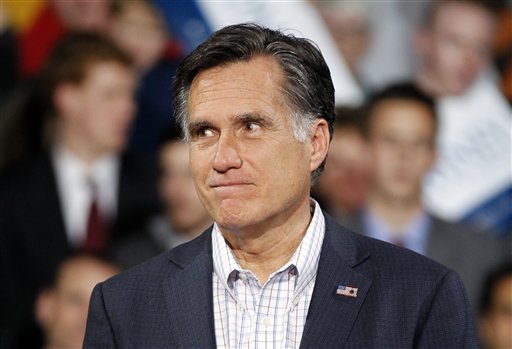
Republican presidential candidate, former Massachusetts Gov. Mitt Romney (Credit: AP) (Updated)
Word is now breaking that Mitt Romney has decided not to participate in a long-scheduled debate on March 1, just days before the critical Super Tuesday primaries. Romney’s campaign has yet to confirm the news, but a spokesman for the Georgia Republican Party — which along with CNN is sponsoring the debate — is saying that “word was passed along to CNN this morning” by the campaign, while CBS News and National Journal report that Romney is blaming a scheduling conflict.
Assuming the reports are true, that’s a transparently lame excuse. Even if Romney has other events planned for the same night, he has two weeks to shuffle his schedule around. Besides, the GOP debates have been must-see events that have attracted massive audiences; the entire political world essentially shuts down when they take place. What could Romney possibly have scheduled that would keep him from attending?
Clearly, this is about Romney not wanting to take part — which, in and of itself, is hardly surprising. Debates can be tense and unpredictable and Romney comes to all of them with a target on his back. And in Rick Santorum, he now faces a main rival who is actually pretty good at them. Santorum knows exactly where Romney’s weaknesses are and exactly how to attack him. This is a threat that Romney didn’t have to worry much about with Rick Perry (who struggled to formulate complete thoughts on his feet), Herman Cain (who literally had nothing to say besides “9-9-9″) and Newt Gingrich, who melted down when Romney turned up the heat in two Florida debates last month. So from Romney’s standpoint, it would be ideal not to have to worry about any debate slip-ups and to focus on using his huge financial advantage to destroy Santorum with negative ads.
The problem is that skipping debates is something that confident, inevitable front-runners do — not front-runners who are so wounded that they might not even be front-runners anymore. With his poll numbers crashing and Santorum surging, Romney’s debate boycott looks awful, a reeling candidate who’s afraid to face his opponents. And it plays right into Santorum’s efforts to paint Romney as a candidate who has nothing to offer besides a deep bankroll and negative ads. This gives Santorum a valuable talking point for the days ahead — one that will become even more potent if he’s able to knock off Romney in Michigan on Feb. 28.
The funny thing is that Romney is actually pretty good at debates. Yes, he’s had a few slip-ups and he’s benefited from feeble opposition, but chances are he’d do just fine on March 1 — just as he’ll probably survive next week’s debate in Arizona, assuming he doesn’t back out of that too. In other words, he may get more grief now for skipping a debate than he’d get from his opponents if he actually showed up at it.
Update: Romney’s campaign has now confirmed that he won’t be at the March 1 debate:
“Gov. Romney will be spending a lot of time campaigning in Georgia and Ohio ahead of Super Tuesday,” spokeswoman Andrea Saul said in a statement. “With eight other states voting on March 6, we will be campaigning in other parts of the country and unable to schedule the CNN Georgia debate. We have participated in 20 debates, including eight from CNN.”
Steve Kornacki writes about politics for Salon. Reach him by email at SKornacki@salon.com and follow him on Twitter @SteveKornacki More Steve Kornacki.
It’s looking grim for Wisconsin Dems
A tough new poll undermines Democrats’ claim that they’re closing in on Scott Walker
Scott Walker (Credit: AP) The most telling sign about where the Wisconsin recall race stands is probably this: The only encouraging polling news for Democrats these past few weeks has come from Democratic polls.
Last week, a Greenberg Quinlan Rosner survey purported to show Democrat Tom Barrett breathing down Gov. Scott Walker’s neck, trailing by just three points, while today Democratic pollster Celinda Lake is claiming the race is tied at 49 percent. Generally, there’s good reason to be skeptical about partisan and internal polls. Sure enough, just hours after Lake’s numbers leaked came a new independent poll – this one from Marquette Law School — showing a very different result: Walker 52, Barrett 45.
Continue Reading Close
Steve Kornacki writes about politics for Salon. Reach him by email at SKornacki@salon.com and follow him on Twitter @SteveKornacki More Steve Kornacki.
The Massachusetts assault
The Obama campaign wants to do to Mitt Romney what Republicans did to Michael Dukakis 24 years ago
Mitt Romney holds up a Boston newspaper announcing his victory in the Massachusetts Governor's race in 2002. (Credit: Reuters/Jim Bourg) Get ready to hear a lot about Massachusetts in the days and weeks ahead. It’s the next component of Mitt Romney’s resume that the Obama campaign plans to focus its attacks on, as ABC News reports:
Continue Reading CloseTeam Obama will point to Romney’s rhetoric on job creation, size of government, education, deficits and taxes during the 2002 gubernatorial campaign and draw parallels with his presidential stump speeches of 2012. The goal is to illustrate that Romney has made the same promises before with unimpressive results, officials say.
Steve Kornacki writes about politics for Salon. Reach him by email at SKornacki@salon.com and follow him on Twitter @SteveKornacki More Steve Kornacki.
The sad story of Thaddeus McCotter
The guitar-playing GOP congressman thought he was presidential material but can’t even make a House primary ballot
Thaddeus McCotter (Credit: Reuters/Rebecca Cook) Rep. Thaddeus McCotter, a four-term Republican from Michigan, just became the first incumbent congressman in seven decades not to qualify for his party’s primary ballot.
Of the 1,830 signatures that his campaign turned in, election officials have decreed that just 244 are valid – well short of the 1,000 needed for ballot access. So while the state attorney general’s office looks into whether there was any intentional fraud on his campaign’s part, McCotter will now run as a write-in candidate in the August 7 primary. He still might survive – he says party leaders are on-board with the effort, and the only candidate whose name will be on the ballot has little money or name recognition – but Michigan’s rules for write-in candidates are a bit stringent, and the use of ballot stickers is barred.
Continue Reading Close
Steve Kornacki writes about politics for Salon. Reach him by email at SKornacki@salon.com and follow him on Twitter @SteveKornacki More Steve Kornacki.
Mitt’s lucky breaks
So much for a brokered convention. Romney crosses the threshold tonight, making lots of punditry look foolish
Mitt Romney (Credit: AP) Nearly two months after he began sporting the title “presumptive Republican nominee,” Mitt Romney is poised to cross the magic 1,144-delegate threshold in Texas today. In terms of the current campaign, it’s a ho-hum milestone; the political world’s attention long ago shifted to the Romney/Obama general election fight. But take a step back, and the circumstances are a bit more remarkable.
After all, it was almost exactly one year ago that another development in Texas seemed to put Romney’s nomination prospects in grave danger: Rick Perry’s unexpected May 27, 2011, announcement that he was considering jumping into the race.
Continue Reading Close
Steve Kornacki writes about politics for Salon. Reach him by email at SKornacki@salon.com and follow him on Twitter @SteveKornacki More Steve Kornacki.
Obama’s Wis. harbinger
Is it panic time for the president if his party’s effort to recall Scott Walker fails next week?
Barack Obama(Credit: AP) There’s still a week left, but the prevailing expectation is that Scott Walker will survive Wisconsin’s June 5 recall election.
The Republican incumbent has led by a margin in the mid-single digits for the past few weeks, though Democrats insist their internal polls are closer. Tom Barrett, the Democratic candidate, turned in an aggressive and generally well-received performance in a Friday debate, the first of two head-to-head showdowns, and is now playing up the ongoing federal inquiry into Walker’s fundraising practices from his days as a county executive. The possibility of a late charge by Barrett can’t be dismissed, but he enters the campaign’s final days as a decided underdog.
Continue Reading Close
Steve Kornacki writes about politics for Salon. Reach him by email at SKornacki@salon.com and follow him on Twitter @SteveKornacki More Steve Kornacki.
Page 1 of 2653 in War Room