
Syria

Iraq war booster urges Syria intervention

Kanan Mikaya insists we must save a besieged people, but that's what he said about Iraq in 2003. Should we listen?

  • more
    • All Share Services

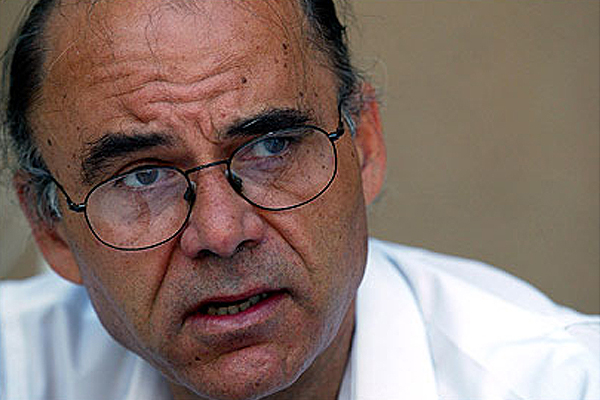
Iraq war booster urges Syria interventionKanan Makiya (Credit: AP/Manish Swarup)

Outside of the fraudulent Ahmed Chalabi, Kanan Makiya was the Iraqi exile most influential in driving America to war with Iraq in 2003. His 1989 book “Republic of Fear” was arguably the greatest effort to chronicle and categorize the horror of Saddam Hussein’s Iraq. His 1993 work “Cruelty and Silence” was a devastating broadside aimed at the Arab intelligentsia’s refusal to admit the horrors of Saddam. Makiya’s unique credibility and eloquence (he is now a professor at Brandeis University) made him a singularly powerful voice among those who believed it was a moral imperative to overthrow Saddam and democratize Iraq. He met with President George W. Bush and spoke at the right-wing American Enterprise Institute to make his case, promising that American troops would be greeted as liberators. Peter Beinart, in his final column as editor of the New Republic, wrote in regret that he supported the war primarily “because Kanan Makiya did.”

Makiya was no academic advocate, however. He returned to Iraq to set up an NGO, and was an advisor to the Iraq interim governing council. He oversaw the drafting of a prototype Iraqi constitution, which called for a secular, democratic state. He argued with Chalabi about pushing Iraq into a civil war. He has been back to Iraq “many times” since the 2003 invasion, he says.

Now Makiya is back as a pundit, talking about Iraq’s neighbor to the west, Syria, a country increasingly engulfed in civil war. All efforts to reached negotiated solution have failed and the government’s attacks on its opponents, armed and unarmed, have widened. An estimated 8,000 civilians have been killed in the past year. In challenging President Bashar al-Assad’s entrenched dictatorship, the Arab Spring has suffered its most violent repression.

Makiya has written a powerful article  for the New Republic, calling international intervention in Syria a “moral and human imperative.” “There is a moral and a human imperative to act that is larger than any nation’s interests and larger than any strategic calculation,” he writes. “That is so obvious it is an embarrassment to have to say it. This is how I thought about intervention in Iraq 20 years ago and it is how I think about what needs to be done in Syria today.”

But, of course, the disaster of the Iraq war that Makiya supported causes many to draw the opposite conclusion: that America should avoid intervening in the Middle East militarily, at least unless it is directly attacked. For Makiya the mistake came not in 2003, but 1991, the year that hundreds of thousands of Iraqis were slaughtered after they rose up to overthrow Saddam Hussein, while President George H.W. Bush and his Allied Coalition sat by, despite having urged the uprising. Many Iraqis understandably felt betrayed. But the first President Bush, unlike his son, had few illusions about America’s ability to govern Iraq after getting rid of Saddam.

Makiya spoke to Salon about these ideas in a recent phone conversation. He wrote the TNR piece, he says, because he has a “sense of déjà vu” that the world is making the same mistakes that it did in 1991. In 1991, the case for intervention was “much, much greater,” Makiya says. The population had risen in opposition, the Iraqi army was devastated, and help was nearby. No help was given.

“The result was, not only did you have an immediate crushing of the uprising, but in the two to four months following that, as the regime retaliated, the result was some 200,000 dead,” he says.

The single biggest problem in Iraq is the devastation that resulted from the failure of the state following the 1991 uprising, Makiya says. “A state that I described as semi-totalitarian in ‘Republic of Fear’ turned into a criminal state. Sanctions took a huge toll, and institutions crumbled. They were totalitarian institutions, to be sure, but they had functioning health and education systems. The infrastructure for all that collapsed.” By the time the Americans did invade, in 2003, “the institutions are a shell of their former selves, and the entire thing collapsed like a house of cards,” he says. That is the lesson Makiya believes we should learn from Iraq. “It’s not a case of intervening too much or too little,” he argues, “but when it happens that matters.”

Makiya says that “what we are looking at in Syria is very similar.” Aside from the failures of the Arab Spring, the cost will be not just victims who have already been killed. The cost of keeping Syrian leader Basher al-Assad, he says, will be “hundreds of thousands dead,” as the regime retaliates over the long term. Not letting that happen is Makiya’s imperative, he says.

His plan relies on the leadership not of the United States, but of Turkey. A safe haven for the Syrian opposition should be established that would be policed by Turkish troops and funded by Arab countries. “Establish a place where the Syrians can be safe from the bombardment and killing machine of Assad, No. 1. No. 2, give them a chance to organize their future.” America uses its political capital, not its military capital, to establish a safe haven protected by the Turks. “It just requires political will, but that is the crucial first step before we can talk about arming the Syrian opposition and finding out who the opposition is. That’s where I would start.”

The solution may not be so simple. The rebels are determined to bring Assad down. Will those protecting them prevent the government’s overthrow? With much of the country targeted, a no-kill zone will have to engulf much of the country. At that point, the Assad government may simply make war on the Turks, lest the government lose control of a majority of the populace. Why the Turks would sign on to such an open-ended venture is unclear.

Hanging over all this is the specter of Iraq. How one evaluates that war often determines how one views the prospect of further involvement in Syria. Makiya still believes the war was worth it; indeed, he wishes it came in 1991.

“2003 didn’t come out of nowhere. It directly follows the tragic outcome of 1991, which only looked on paper like a victory because Saddam Hussein was kicked out of Kuwait.” For the Iraqis who faced retaliation and 13 years of crippling sanctions, it was not a victory at all. “From an Iraqi point of view, containment didn’t work.” For all the horrors of the war and the many mistakes America made,  Makiya says, “Iraqis have a future. They have elections, they are starting to learn politics because their institutions were destroyed by 30 years of Saddam Hussein, and there is hope.”

Many Iraqis disagree with that argument. According to November 2011 polling conducted by Zogby, a full one-half of Iraqi Shiites and Sunnis say they are “worse off” as a result of the war. Eighty-eight percent and 81 percent of Sunni and Shia Arabs, respectively, say “personal safety and security” has worsened. Those figures, of course, do not include the feelings of the many Iraqis dead from the war, nor of the more than 5 million refugees that resulted from the conflict.

Moreover, the war was an unmitigated disaster for the United States. Whatever benefits were accrued from the removal of Saddam Hussein were outweighed by the deaths of 4,486 American troops, the expenditure of at least $1 trillion, the erosion of U.S. credibility and international support, and the bolstering of Iranian power.

Nonetheless, Syria is not Iraq, which was at worst a potential threat to the United States. Syria is undoubtedly a humanitarian crisis. But Makiya concedes Syria is like Iraq in another way: We don’t know much about it.

“It turns out we don’t know an awful lot about what happens after 30 years of a totalitarian regime. We didn’t really understand the legacy of pain and brutalization that this kind of situation in Iraq and, perhaps to a lesser extent, in Syria, have gone through,” he admits.

Trying to replace a dictatorship is something the United States should avoid, given its disastrous history in the region. Only the people of Syria can do that and the world community may have to protect them in order to avoid an even great massacre and a wider war. Makiya’s plan hinges on Turkey taking a leading role. It’s difficult to see how it would work but such a scheme may be the only hope Syria has left.

Jordan Michael Smith writes about U.S. foreign policy for Salon. He has written for the New York Times, Boston Globe and Washington Post.

Syria defiantly denies killings, UN council meets

Following the massacre of over 100 civilians, The UN reconsiders sanctions

  • more
    • All Share Services

Syria defiantly denies killings, UN council meetsThis citizen journalism image provided by Shaam News Network taken Saturday, May 26, 2012, purports to show shrouded dead bodies following a Syrian government assault on Houla, Syria. The Syrian government denied Sunday its troops were behind an attack on a string of villages that left more than 90 people dead, blaming the killings on "hundreds of heavily-armed gunmen" who also attacked soldiers in the area. Friday's assault on Houla, an area northwest of the central city of Homs, was one of the bloodiest single events in Syria's 15-month-old uprising. The U.N. says 32 children under 10 were among the dead. (AP Photo) THE ASSOCIATED PRESS IS UNABLE TO INDEPENDENTLY VERIFY THE AUTHENTICITY, CONTENT, LOCATION OR DATE OF THIS CITIZEN JOURNALISM IMAGE(Credit: AP)

BEIRUT (AP) — Syria on Sunday strongly denied U.N. allegations that its forces killed more than 90 people in one of the deadliest events of the country’s uprising, and diplomats said the Security Council met in an emergency session to discuss the massacre.

The killings in the west-central area of Houla on Friday brought widespread international criticism of the regime of President Bashar Assad, although differences emerged from world powers over whether his forces were exclusively to blame.

Britain and France had proposed issuing a press statement condemning the massacre, but Russia told Security Council members it could not agree and wanted a briefing first by Norwegian Maj. Gen. Robert Mood, the head of the U.N. observer team inside the country. Russia has been Syria’s most powerful ally during the uprising, and along with China has used its veto power to shield Damascus from U.N. sanctions.

The massacre in Houla on Friday cast fresh doubts on the ability of an international peace plan put forward by envoy Kofi Annan to end Syria’s 14-month-old crisis.

The brutality of the killings became clear in amateur videos posted online that showed scores of bodies, many of them young children, in neat rows and covered with blood and deep wounds. A later video showed the bodies, wrapped in white sheets, being placed in a sprawling mass grave.

The U.N. counted at least 32 children under the age of 10 among more than 90 dead and said its observers found tank and artillery shells at the site, suggesting the regime’s well-equipped forces were to blame.

Activists from the area said the army pounded the villages with artillery and clashed with local rebels after protests Friday. Some activists said pro-regime thugs later stormed the area, doing the bulk of the killing.

The Syrian government rejected that narrative Sunday, painting a vastly different picture.

Speaking to reporters in Damascus, Foreign Ministry spokesman Jihad Makdissi said Syrian security forces were in their local bases Friday when they were attacked by “hundreds of heavily armed gunmen” firing mortars, heavy machine guns and anti-tank missiles, staring a nine-hour battle that killed three soldiers and wounded 16.

The soldiers fought back, but didn’t leave their bases, he said.

“No Syrian tank or artillery entered this place where the massacres were committed,” he said. “The security forces did not leave their places because they were in a state of self-defense.”

He blamed the gunmen for what he called a “terrorist massacre” in Houla and accused the media, Western officials and others of spinning a “tsunami of lies” to justify foreign intervention in Syria.

Makdissi did not provide videos or other evidence to support his version of events, nor did he give a death toll. He said the government had formed a committee to investigate and share its findings with Annan, who is due to visit Damascus in the coming days.

Throughout the uprising, the government has deployed snipers, troops and thugs to quash protests and shelled opposition areas.

A video released by the U.N. team in Syria on Sunday showed observers in Houla the day after the attack, meeting with local rebels and watching residents collect more bodies for burial. It also showed two destroyed armored personnel carriers — suggesting that local rebels put up more of a fight than the activists acknowledged.

At U.N. headquarters, Russia’s deputy U.N. ambassador Alexander Pankin told reporters as he headed into the closed-door Security Council meeting that “there is substantial ground to believe that the majority of those who were killed were either slashed, cut by knives, or executed at point-blank distance.”

“We have to establish whether it was Syrian authorities … before we agree on something,” he said.

Annan’s peace plan for Syria, sponsored by the U.N. and the Arab League, is one of the few points of agreement among world powers about Syria’s crisis, which began in March 2011 with protests calling for political change. As the government violently cracked down on the uprising, many in the opposition took up arms to defend themselves and attack government troops.

The U.N. put the death toll weeks ago at more than 9,000. Hundreds more have been killed since then.

Daily violence has marred the plan since a cease-fire was supposed to begin April 12. The Houla attack made Friday the deadliest day since the truce was announced, and has cast a shadow over Annan’s visit.

In another defiant move, Syria on Sunday denied permission for Annan’s deputy to travel to Damascus with his boss, a senior Arab League official said. The rejection of former Palestinian Foreign Minister Nasser al-Kidwa was intended as a slap to the Arab League, which suspended Syria’s membership and approved sanctions against it last year.

The official spoke on condition of anonymity because of the sensitivity of the issue. Annan’s spokesman declined to comment.

The Houla attacks caused outrage among American and international officials that Makdissi’s comments Sunday failed to assuage.

British Foreign Secretary William Hague said he would summon Syria’s most senior diplomat in the U.K. on Monday so the Foreign Office could “make clear our condemnation of the Syrian regime’s actions.”

Kuwait, which currently heads the 22-member Arab League, called for an Arab ministerial meeting to “take steps to put an end to the oppressive practices against the Syrian people.”

Switzerland’s Foreign Ministry urged that an international inquiry be convened, saying the killings “could constitute a war crime.”

In Paris, the head of the exile Syrian National Council also condemned the killings.

“The kids of Houla are the kids of all of Syria,” Burhan Ghalioun told reporters. “Killing the kids of Houla is like killing the kids of all of Syria.”

Anti-regime activists scoffed at the government’s version of events. One Houla activist said via Skype that the area had at most 300 fighters, but that none had more than rifles and that they often lacked ammunition.

“If we had anti-tank missiles, there would be no tanks left in the area,” said Mohammed, declining to give his full name for fear of retribution.

Activists reported shelling, gunfire and arrest raids in opposition areas throughout the country Sunday as well as clashes between regime forces and rebels in a number of areas. The Britain-based Syrian Observatory for Human Rights said security forces killed at least 14 civilians, while rebels killed nine soldiers.

Activist claims could not be independently verified. The Syrian government bars most media from operating in the country.

Annan’s plan calls for eventual talks between all sides on a political solution to the crisis.

The U.S. hopes Russia can use its influence with Damascus to press for a political transition similar to that seen in Yemen. In February, longtime Yemeni President Ali Abdullah Saleh passed power to his deputy in exchange for immunity from prosecution.

U.S. officials say Russia does not oppose a political transition in Syria in theory, but has not agreed to specific terms.

___

Associated Press writers Edith M. Lederer at the United Nations, Adam Schreck in Dubai and Hamza Hendawi in Cairo contributed to this report.

Continue Reading Close

Syria’s sealed-off rebels

Baba Amr in Homs, once an opposition stronghold, is now isolated by a 10-foot high concrete wall

  • more
    • All Share Services

Syria's sealed-off rebelsIn this Saturday April 21, 2012 photo, a Syrian man leaves his home carriying a suitcase as he walks in a destroyed alley damaged from Syrian army forces shelling, at Bab Sbaa neighborhood in Homs province, central Syria.(Credit: AP)
A GlobalPost journalist whose name has been withheld for security reasons, reported this story from Baba Amr, Syria. Hugh Macleod and Annasofie Flamand contributed reporting and wrote the story from Beirut, Lebanon. This article originally appeared on GlobalPost.

BABA AMR, Syria — For Syrians on both sides of the concrete wall that now surrounds this neighborhood, the comparisons to the region’s longest running conflict are unavoidable.

Global Post

“When my wife described the wall to me I immediately thought of the wall built by the Israelis to isolate Palestinian villages and towns in the West Bank,” said Abu Annas, formerly a resident of Homs’ devastated Baba Amr district.

“I can understand that Israel built a wall to protect Israeli settlers from Palestinians. But I cannot understand how a national government builds a wall to separate its citizens from each other.”

Since forcing the retreat of rebel fighters from Baba Amr after a brutal month-long bombardment in February, government forces have constructed a massive concrete wall to seal off the former opposition stronghold.

A reporter for GlobalPost recently visited Baba Amr and the wall, describing it as up to 10-feet high and made of cement. It’s still so new there is no graffiti. Since most residents have long fled, the neighborhood behind the wall has become “a dead land for cats and dogs,” as one former resident described it.

Soldiers and secret police guard the few narrow passages through the wall, arresting any male aged between 13 and 60, said Annas, whose wife and young daughter recently went to check on what remained of their home inside Baba Amr.

“They spent half an hour arguing with the security officer who said his men would have to check them before they passed through,” he said. “She came back crying, saying, ‘There is no Baba Amr.’”

Those houses not destroyed in February’s siege have been taken over by soldiers, Annas said. Electricity and phone lines have been cut for months and now cars cannot enter, nor delivery trucks, meaning shops are almost all closed.

Activists in the area said the neighborhood — once home to some 28,000 people — has now been all but abandoned, with only about 1,000 still living inside the wall.

In other Sunni-majority opposition neighborhoods throughout Homs, such as Karm al-Zeitoune, where whole families were killed in recent sectarian massacres, and Deir Balbah and Qarabes, the majority of residents have also fled.

With the UN-Arab League ceasefire plan in tatters — at least 462 people have been killed since April 16 when the UN resolved to send ceasefire monitors, according to the opposition Local Coordination Committees — and veto-wielding Russia blaming the armed opposition for the majority of attacks, the Assad regime appears to be taking steps to re-exert long-term security control and collectively punish rebellious communities.

On Saturday, Abu Bakr Saleh, a spokesman for the Baba Amr media center who lived through the bombardment, said other security measures were preventing residents from traveling between Baba Amr and neighboring Joubar neighborhood, to the far southwest of the city.

Last week, GlobalPost witnessed continued shelling in Khaldiyeh and Bayada, Sunni-majority neighborhoods in north Homs that support the opposition and lie adjacent to Zahara, a neighborhood of mainly Allawites, an offshoot of Shiite Islam, to which the ruling Assad family and a majority of government elites belong.

Cairo Street, which leads from north Homs into Zahara in the east of the city, has been renamed “Death Street” by locals after the deadly snipers deployed to rooftops, presumably to protect the pro-regime neighborhood.

On their first visit to Homs on April 21, members of the advance team of UN observers, the first of 300 due to be deployed to monitor violations of the ceasefire agreement, were forced to take cover after shots rang out as they walked down Cairo Street from Bayada.

“The regime will not adhere to the Annan plan and the near future will prove that,” said Omar, a 24-year-old member of the rebel Free Syrian Army, told GlobalPost in an interview at his home in Homs’ Deir Balba.

“The regime is preparing for the post-Annan cease-fire by building walls around Sunni districts to block our movement and is digging a long trench around Homs two meters wide.”

Reports of Assad’s forces digging trenches around the south and west of Homs, where Baba Amr is located, first emerged last November. A video journalist working with GlobalPost witnessed the trench during a visit to Homs this February. The purpose of the trench remains unclear, but it appears to be a another military tactic to hinder access to rebellious neighborhoods.

In Daraa, the first city to rise up against the regime and suffer a sustained military assault, GlobalPost recently witnessed a labyrinth of checkpoints and deployment of tanks, troops and snipers, effectively sealing off the population from surrounding areas and the capital.

The regime blames “armed terrorist groups” for the breakdown in the ceasefire agreement. Information Minister Adnan Mahmoud told state-run Syrian Arab News Agency last week that the “terrorists” had committed more than 1,300 violations.

Russia last week echoed a similar line. Foreign Ministry spokesman Alexander Lukashevich accused the opposition of shifting “to tactics of terror on a regional scale,” claiming Western governments were arming the rebel fighters.

Rather, it appears post-revolutionary Libya, which strongly supports Syria’s opposition, has made the first serious effort to arm the rebels. On Saturday Lebanese authorities announced they had discovered guns and rocket propelled grenades aboard a ship attempting to dock in north Lebanon’s Tripoli, a Sunni-majority city also widely supportive of Syria’s opposition.

Omar, the young rebel fighter from Homs, said the FSA was now restructuring after suffering a strategic defeat in Baba Amr.

“We will adopt guerilla tactics,” he said. “We are fighting in small groups and moving from one district to another so we don’t let the regime block this district and kill us. The FSA leaders made a big mistake when they tried to hold Baba Amr.”

As the rebels seek new strategies for their armed struggle, the Assad regime has made its contempt of the international diplomatic effort clear. Assad himself revealed his scorn for last December’s Arab League monitoring mission in an email, first obtained and verified by the Guardian.

Writing to Hadeel Ali, his young media consultant, the president forwarded a YouTube video ridiculing the mission’s inability to spot hidden Syrian tanks, to which she responded, “Hahahahahahaha, OMG!!!”

That same contempt appeared to be on display more recently as Kofi Annan, the Arab League envoy, briefed the Security Council on a letter received from Syrian Foreign Minister Waleed Mualem on April 21. The letter stated that the government had now withdrawn all heavy armor and troops from population centers, the first step in Annan’s cease-fire plan.

But daily videos of smoke billowing above Homs and troops opening fire in urban protest centers have told a very different story.

Syrian officials see Annan’s plan as “a license for the regime to do more of the same,” the respected International Crisis Group, one of the only international think tanks able to still interview Syrian officials, wrote in its April 10 report.

“As the regime sees it, Annan’s mission, far from presenting a threat, can be a way to drag the process on and shift the focus from regime change to regime concessions,” ICG reported, “granting humanitarian access, agreeing to a ceasefire and beginning a vaguely defined political dialogue, all of which can be endlessly negotiated and renegotiated.”

As that process unfolds, the wall in Baba Amr stands as a physical symbol of the deep-seeded sectarian hatred that a year of relentless violence in Syria has engendered in former neighbors.

“The Sunni districts are hosting terrorists and armed gangs so the government should close them off by all means. If this needs a high wall, why not?” Haidar, a 35-year-old Allawite from Homs’ Zahara neighborhood, told GlobalPost.

A member of the Popular Committees, the official name for armed civilian militias fighting for the regime, Haidar said the possible collapse of the regime would mean no future for three million Allawites in Syria’s big cities. “We would return to our villages in the mountains,” he said.

“We have been occupying senior positions in the army, security agencies and government in Syria for four decades and we will keep the power in our hands, whatever this costs us.”

Continue Reading Close

Syria under lockdown

We travel back to Daraa, where the nation's uprising began, to find a city under complete military control

  • more
    • All Share Services

Syria under lockdownIn this image made from amateur video released by the Shaam News Network and accessed Wednesday, April 18, 2012, smoke billows an impact following purported shelling in Khaldiyeh district, Homs, Syria. (AP Photo/Shaam News Network via AP video) (Credit: AP)
A GlobalPost journalist, whose name has been withheld for security reasons, reported this story from Daraa, Syria. Hugh Macleod contributed reporting from Beirut, Lebanon. This article originally appeared on GlobalPost.

DARAA, Syria — In the heart of Old Daraa — the tough, tribal, farming community on Syria’s southern border with Jordan — the Omari Mosque once stood as a symbol of resistance, a gathering point for those demanding the end of the regime, and a field hospital for when they received their reply.

Global PostToday, a year after GlobalPost first visited the city where Syria’s uprising began, the mosque has been transformed into a military base. Cement rooms have been built around its walls, home to dozens of soldiers.

The snipers who picked off civilians during the siege here last year are still posted atop the highest buildings and the headquarters of the ruling Baath Party and the regime’s many security agencies.

Tanks and armored vehicles remain deployed not only inside the main city itself — in violation of the UN-Arab League cease-fire plan — but around most towns and villages where anti-regime protests have taken place.

On road signs, bridges, schools and clinics the graffiti slogan that children first scrawled back in March 2011 still stands: “The people want to topple the regime.”

Dozens of checkpoints still ring Daraa and divide its streets and neighborhoods. Soldiers and secret police mete out arbitrary humiliation, residents said, often abusing women or making locals wait an hour in the blazing sun while they leisurely finish their cigarettes and tea.

Locals said government services are running at a minimum and state employees now regularly work only one or two days a week. The shops are open again, but night markets are a thing of the past as shutters come down promptly at 7 p.m., just before the regular nightly clashes between regime troops and armed rebels of the Free Syrian Army.

Exactly one year after first visiting this city, which gave birth to the Syrian uprising, a GlobalPost reporter described Daraa as “dying,” a “demolished battlefield” where residents complain bitterly about the destruction of their livelihoods and discuss international military intervention, finding arms to fight and other means to bring down the regime.

As the first major city to suffer a full military assault, the situation in Daraa could foreshadow the fate that likely awaits Homs, Hama and other major protest centers if the regime re-exerts long-term security control over urban opposition strongholds.

“We know that if we give up now the regime will finish us later,” said Abu Rami, a member of the Zuabi tribe, one of the four big tribal families that dominate Syria’s south, a land of black basalt rock, known to locals as the Houran.

“To keep our revolution going now costs less than if we stay at home until the army or security men come and slaughter us like sheep.”

One of Abu Rami’s cousins was among the 15 schoolboys whom security forces arrested last March for spray-painting anti-regime graffiti. The boys were tortured, sparking the mass protest movement. A year later, the 40-year-old said that security forces have killed at least 70 members of the Zuabi tribe. Each one — under the local system of tribal law — represents a blood feud between the tribe and the regime.

To travel from his home in Old Daraa’s Arbaeen quarter into the city center means Abu Rami must pass through three checkpoints, his every movement monitored by snipers.

Protests still go on across the Houran most Fridays, but they are now usually small and unable to join together as they did this time last year.

And every weekend, Syrian activist groups report the endless morbid toll: Reem Abdul Rahman, 17, killed in Giza yesterday, a day after her brother; Adel Ghaleb al-Zuabi, died of wounds untreated in Taiba; Ali al-Turk, tortured to death after being arrested in Al Karak al-Sharwi eight days ago; an unknown male from Heet, detained and tortured to death; Mahmoud al-Badawi, also from Heet, whose body was discovered in the village of Sahm, bearing the scars of torture.

All of these fatalities were from Daraa, just one area of Syria. The respected Syrian Network for Human Rights (SNHR) confirmed their deaths on Sunday. All told, the SNHR found 25 people killed on Sunday in Syria, a modest toll by the standards of the past month.

Against this backdrop of everyday long-term violence, even overtly non-political residents of Daraa appear to be becoming increasingly radicalized against the regime.

Ali is a 45-year-old engineer who works for the state and lives comfortably in a big house with his wife, four children and elderly parents in Daraa’s Qusour district. For the past year, however, Ali’s middle-class status has taken a serious hit: With regular electricity blackouts lasting between 12 and 14 hours, Ali can’t keep fresh food in his fridge, and his children have to study by candle or flashlight.

If his parents need medical treatment they can no longer seek it for free at the state-run Daraa National Hospital because Ali said the facility has been taken over by the military for the treatment of injured soldiers, secret police and armed pro-regime thugs.

Instead, they must travel to Damascus and endure the one aspect of the regime’s vice-like grip on Daraa that irks Ali the most: checkpoints.

“I am an engineer and earn a good income and have no problems with the government. But when I cross any checkpoint, the security men deal with me as if I am an armed fighter,” Ali said. “They don’t respect anyone: The elderly, women, the educated, they see all people as nothing.”

Last week, as he was trying to cross a checkpoint, Ali said a young member of the secret police took his ID and slapped him in the face with it.

“He said, ‘I’ve seen you before.’ He was joking and making fun of me. I felt so angry, but what can I do? It is very easy for him to shoot me and say that I am an armed fighter. No one will investigate or hold him accountable.”

As well as IDs, residents of Daraa wishing to travel north to the capital must now show security men at checkpoints their recently paid electricity, water and phone bills, a move by the regime to counter the spread of civil disobedience in protest centers like Daraa and Hama where residents began burning their municipality bills.

With so many checkpoints choking it off, Ali said many large food companies no longer send their trucks to Daraa, creating spiraling inflation on basic commodities.

Many of Ali’s neighbors have moved to the slum-like illegal housing areas that have sprung up around Damascus over the past decade. Ali chose to stay in Daraa to continue working his government job but makes regular trips to Damascus to buy dry foodstuffs rather than pay exorbitant local prices.

And every time he travels he faces the same checkpoint humiliation.

“The military and security crackdown pushed the people to be more angry and radical but without solving any problems,” Ali said. “Personally, I used to be very supportive of Bashar al-Assad, but today I am not.”

Continue Reading Close

Syrian rebels’ man in D.C.

Radwan Ziadeh has been the loudest advocate in Washington for an intervention to oust al-Assad

  • more
    • All Share Services

Syrian rebels' man in D.C.Radwan Ziadeh

Radwan Ziadeh fled Syria with his wife via the Jordanian border in October 2007. He had come to Washington many times before that, for conferences dealing with his work on Syrian politics. But upon returning to his homeland after one Washington visit, the head of the Syria Security Forces told Ziadeh that if he left and returned again, he would be placed in prison. An arrest warrant was issued for him in 2008, and his family was banned from leaving the country. “I only have Skype conversations with my family back home now,” he says.

In Washington, however, Ziadeh has become a crucial figure for those hoping to establish a new Syrian order. In October 2011 he formed the Syrian National Council (SNC), “to unite the opposition and establish an inclusive organization that would include different groups.” It is now the main umbrella group for exiles and opposition groups. Ziadeh has met with Secretary of State Hillary Clinton, influential senators like John McCain and Joe Lieberman, and members of President Obama’s National Security Council. A senior fellow at the Institute for Social Policy and Understanding, a Washington-based Muslim think tank, he writes for publications like Foreign Policy and The New Republic, passionately urging the international community to save his people from their own government. And yet, the gap between Ziadeh’s pleas and America’s interests reveal the limitations of those hoping the United States can act as a savior on the international stage.

Ziadeh is one of a small number of liberal democrats in Arab and Muslim countries who harbor virtually no resentments towards the West in general, and the United States in particular, for its interventions in the Middle East, support for local autocracies and unconditional support for Israel. Like the Egyptian scholar Saad Ibrahim and the Iranian dissident Akbar Ganji, Ziadeh sees the West as a partner and its political institutions as a potential model. Unlike Ibrahim and Ganji, however, Ziadeh believes international intervention is the only thing that can stop the slaughter of his people.

He has credibility as a prescient observer of currents in his native land. In April of 2011, Ziadeh predicted that the Syrian people’s “determination is strong enough today, despite the increase in the number of those killed, and people will continue to participate despite the enormous arrest campaign launched by the security services.” More than a year later, Syrians continue to battle with the government despite a death toll monitors say has topped 10,000.

It certainly helps that Ziadeh had connections in the United States long before the uprising began. He has held fellowships at or been affiliated with everywhere from Harvard University’s Kennedy School of Government to the United States Institute of Peace to the National Endowment for Democracy. It is precisely that comfort in Washington, however, that makes him suspect among his critics. He is derided as a “State Department tool” and a neoconservative puppet on blogs and websites written by Middle Easterners far more hostile to the U.S. It surely doesn’t help that the State Department under President George W. Bush began funneling millions of dollars to Syrian opposition groups beginning in 2006, according to WikiLeaks cables. Syrian dissidents were unwilling to openly accept U.S. money: “[N]o bona fide opposition member will be courageous enough to accept funding,” a February 2006 cable lamented.  But the money still found its way into the country.

Despite the long history of enmity between Syria and the U.S., Ziadeh is confident that the vast majority of his countrymen want the international community to intervene. “Nobody is calling for U.S. troops on the ground,” Ziadeh is quick to say. “Syrians are ready to defend themselves and to force [Syrian leader Bashar al-Assad] to step down.” Rather, calls are coming from within for help as “the only way to stop the killing,” he says. He envisions something like what happened in Libya, where NATO established a no-fly zone and launched an air campaign. “It’s the only way to stop the killing,” he says. “The call for intervention is coming from Damascus, from people on the ground.” The SNC, for which Ziadeh is the spokesman, has daily contacts with citizens inside Syria, and although he admits a consensus is impossible to achieve, he is certain outside assistance is urgently desired.

It is easy to see how “the international community” can become a euphemism for American power, however. A confidential NATO report obtained by the New York Times this week shows that the Libya war was essentially a U.S.-carried effort. “The findings undercut the idea that the intervention was a model operation and that NATO could effectively carry out a more complicated campaign in Syria without relying disproportionately on the United States military,” the Times noted.

In addition, most analysts believe it would be far more difficult to accomplish in Syria what was done in Libya. Former National Security Advisor Zbigniew Brzezinski, for example, supported the intervention in Libya, but cautioned last month that conditions in Syria were far less conducive to a favorable outcome. “There was significant military and political opposition to Qaddafi at a high level, which surfaced immediately when the unrest and the violence erupted,” Brzezinski said, among other differences he noted.

Brzezinski’s comments are echoed by U.S. officials, who have been reluctant to intervene in Syria to a large degree. They also point to the gap between what many activists frequently want from America, and what America is capable of delivering. From Sudan to Syria, human rights campaigners want the United States to stop oppression across the globe. But with a mixed record at best on foreign interventions, and the U.S. badly overstretched as it is, internationally and economically, Radwan Ziadeh may be asking America more than it is capable and willing to give.

Continue Reading Close

Jordan Michael Smith writes about U.S. foreign policy for Salon. He has written for the New York Times, Boston Globe and Washington Post.

Don’t arm Syria’s rebels

Liberals arguing that the U.S. should give weapons to Syrian rebels underestimate Assad's power at home

  • more
    • All Share Services

Don't arm Syria's rebelsSyrian rebels aim during a weapons training exercise outside Idlib, Syria. (Credit: AP)

In Syria, the horror has taken a brief break. The Kofi Annan-brokered cease-fire is holding so far, give or take a few government snipers, but no one expects it to last. Within hours, days or weeks, something will break the fragile calm. President Bashir al-Assad’s tanks will once again begin firing high-explosive shells into civilian neighborhoods, blowing up houses and everyone in them. Opposition fighters will kill government troops and set off bombs. Mysterious massacres, which each side will blame on the other, will take place. Soldiers will continue to rape women, children will be tortured, and the horrible human toll – 9,000 deaths, 42,000 refugees since fighting began 13 months ago – will continue to climb.

There is a very good chance that this slow-motion blood bath could go on for years. And at the end, Assad could still be in power.

As this dreadful situation festers, calls for America to arm the opposition are growing louder. And they are not only coming from neocons, neo-imperialists and warmongers, proxy warriors for whom defeating Assad is part of a Great Game whose real goal is defeating Iran. No one is surprised that neocons like Joe Lieberman, for whom America’s foreign policy comes down to “Is it good for Israel?” or his chest-beating partner in imperialist Islamophobia, John McCain, want the U.S. to arm the Syrian opposition. Nor is it surprising that Elliott Abrams, Fox News or the Washington Post editorial board have beat the war drums. But these predictable hawks have been joined by an increasing number of liberals and humanitarians who have no ideological ax to grind.

Saying “the basis for any settlement must be a rough equality of forces,” New York Times columnist Roger Cohen called for the U.S. to arm the Syrian opposition. Analyst James Traub similarly called for the U.S. to back what he called a “neo-mujahadeen strategy.” Guardian columnist Simon Tisdall blasted Obama’s refusal to get the U.S. more involved, saying that the world had a “moral imperative” to intervene. “A shoulder shrug will just not cut it any more,” Tisdall wrote. In a column titled “Syria is not Iraq. And it is not always wrong to intervene,” Tisdall’s Guardian colleague Jonathan Freedland denounced facile left-wing opposition to Western intervention in Syria, writing, “we must not make the people of Homs pay the price for the mistake we made in Baghdad.” Oxford economist Paul Collier argued in the Financial Times that Assad’s regime was doomed and arming the opposition would push it over the edge.

None of these commentators are neoconservatives or proxy warriors, fans of the “War on Terror,” the Bush Doctrine or the unbridled use of American force. In their different ways, they are driven by simple, and legitimate, moral outrage. That outrage was expressed in its purest form by the Iraqi exile Kanan Makiya, the Iraqi exile whose powerful indictment of Saddam Hussein’s tyranny played a large role in convincing liberals like George Packer and Paul Berman to support the Iraq War. In a largely pro-intervention symposium posted recently by the New Republic, Makiya wrote, “I don’t really think there is any kind of a reasonable argument against intervention in Syria. Quite the opposite: There is a moral and a human imperative to act that is larger than any nation’s interests and larger than any strategic calculation. That is so obvious it is an embarrassment to have to say it. This is how I thought about intervention in Iraq 20 years ago and it is how I think about what needs to be done in Syria today.”

To their credit, most of these observers recognize that their call for the West in general and America in particular to support the Syrian opposition holds considerable risks. For example, after acknowledging the murky and disorganized nature of the Syrian opposition, the looming possibility of sectarian massacres, and the unhappy outcome of America’s mujahedin experiment in Afghanistan, Traub writes,  “[T]here are no good solutions; only less bad ones … I’m open to a better suggestion.”

So these commentators deserve respect for their intellectual integrity, their good intentions and their moral outrage. All of them find the unfolding carnage in Syria unbearable to behold, and anyone with a conscience would agree.

And yet, we must bear it. For the worst thing that America and the rest of the world could do is to arm the opposition.

This is not a knee-jerk left-wing response. It has nothing to do with Iraq. Nor does it have anything to do with the proxy war between the U.S. and its allies and Iran and its allies. It is not driven by pacifism or opposition to all war. All U.S. wars are not axiomatically foolish, evil or driven by brutal self-interest (although most of them since World War II have been). The airstrikes on Kosovo and the Libya campaign were justified (although the jury is still out on the latter intervention). If arming the Syrian opposition would result in fewer deaths and a faster transition to a peaceful, open, democratic society, we should arm them.

Every situation is different: There is no one-size-fits-all template for foreign affairs. And in Syria, the truth is that further militarizing the conflict will likely cause it to spiral out of control. Moral outrage alone is not enough. It must be tethered to a coldly rational analysis.

That analysis has been provided by a number of in-depth reports, most notably a new study by the International Crisis Group, as well as the excellent on-the-ground reporting of Nir Rosen for Al-Jazeera. The bottom line is simple. The war has become a zero-sum game for Assad. If he loses, he dies. But the only way he can lose is if he is abandoned by his crucial external patron, Russia, which is extremely unlikely to happen absent some slaughter so egregious that Moscow feels it has to cut ties with him. Assad has sufficient domestic support to hold on for a long time, and a huge army that is not likely to defect en masse. Under these circumstances, giving arms to the rebels, however much it may make conscience-stricken Western observers feel better, will simply make the civil war much bloodier and its outcome even more chaotic and dangerous.

The key point concerns Assad’s domestic support. Contrary to the widely held belief that most Syrians support the opposition and are opposed to the Assad regime, Syrians are in fact deeply divided. The country’s minorities – the ruling Alawites, Christians and Druze – tend to support the regime, if only because they fear what will follow its downfall. (The grocery on my corner in San Francisco is owned by a Christian Syrian from a village outside Damascus. When I asked him what he thought about what was going on in his country, he said, “It’s not like what you see on TV. Assad is a nice guy. He’s trying to do the right thing.”) As Rosen makes clear, Syria’s ruling Alawite minority is the key to Assad’s survival: Absent an outside invasion, the regime will not fall unless the Alawites turn on it. But the Alawites fear reprisals if the Sunni-dominated opposition, some of whose members have threatened to “exterminate the Alawites,” defeats the Assad regime. The fear of a sectarian war, exacerbated by the murky and incoherent nature of the opposition, means that the minorities are unlikely to join the opposition in large numbers.

As for the opposition, it has suffered too many losses to stop fighting.

What this means is that neither side has any reason to stop pursuing its present course, and short of a U.S. or NATO invasion – which only barking-mad neocons are suggesting we embark on – the regime will be able to hold on for years. The longer the struggle goes on, Rosen notes, the more radicalized and Islamist the opposition will become. As Rosen gloomily writes, “Syria is crumbling before our eyes, and a thoroughly modern nation is likely to be set back many decades.”

The International Crisis Group report argues that America’s current posture of talking about arming the opposition while simultaneously pursuing a diplomatic track is a mistake.

“In the meantime this dual U.S. and Arab approach – on the one hand, proclaiming support for Annan and for a diplomatic resolution; on the other, toying with greater militarization of the opposition – arguably is a strategy at war with itself and one that could readily backfire. Some argue that only by dangling the prospect of a stronger rebel force might Assad be persuaded to give in. But a different scenario is more likely: The regime will point to any decision to arm the opposition as a breach of the Annan plan and use it as a reason not to comply and to reinvigorate its own offensive; meanwhile, the military half-measures on behalf of the opposition might satisfy the urge to ‘do something’ – but these will be woefully inadequate to beat back a regime offensive.”

The ICG report recommends “a more pragmatic, consensual approach, a controlled, negotiated transition that would spare the country additional bloodshed … a middle course between chaos without the regime and chaos with it – a controlled transition that preserves state institutions, thoroughly reforms the security services and puts squarely on the table the issue of unaccountable family rule.” To get there, it suggests strengthening some of mediator Kofi Annan’s general ideas, including a monitoring mechanism to ensure that cease-fires are not violated, freezing of weapons smuggling across the border, and a pragmatic compromise on demonstrations that would allow them but not in the center of Damascus, where they would become Tahrir Square-style mass movements that would topple the regime. In the long run, the radioactive issue of the Assad family’s rule and legitimacy and the sectarian makeup of the security forces would have to be addressed. But in the short term, Assad would remain in power.

An Op-Ed piece in the New York Times by two law professors, Asli Bali and Aziz F. Rana, made the same point: The most humane thing for the Syrian people, the authors argue, would be to engage with Assad – which means leaving him, at least for now, in power.

This means that the best-case scenario is that the fighting winds down, the opposition eventually gives up the armed struggle, contents itself with whatever crumbs Assad throws it, and waits for the political winds to shift enough so that real change can start taking place.

For this, thousands of men, women and children gave their lives?

Such an outcome seems morally outrageous. It’s unthinkable. But the alternative – an all-out sectarian civil war between evenly matched adversaries, both of them fighting to the death – is even more unthinkable.

What America and the world are faced with in Syria, in short, is nothing less than a tragedy. And we are not good at dealing with tragedy.

Americans are not a tragic people. We do not understand tragedy, and we instinctively resist it. Our history has insulated us from it. American exceptionalism, the belief that we are qualitatively different from all other nations and immune to the woes that afflict them, goes back to the Puritans. No American president can avoid paying lip service to it. The Republican Party’s foreign policy consists almost entirely of endless variations on it. It is in our national DNA.

The American belief that we live in a city on a hill, that we are immune from tragedy, has not only molded our national character, it has shaped our relations with the rest of the world. Some of its influence has been positive. Optimism and generosity, the benign face of American exceptionalism, drove epochal achievements like the Marshall Plan, which rebuilt a shattered Europe after World War II.  That altruistic, engaged approach to the world known as “Wilsonian idealism” or “liberal interventionism” has resulted in some notable achievements, including the ouster of Serbian tyrant Slobodan Milosevic and the toppling of Libyan dictator Moammar Gadhafi. A foreign policy that does not have a moral component, a purely Machiavellian approach to the world, is soulless. Realism is essential, but  realism without compassion is deadly.

But America’s belief that it is inherently a force for good, that American interventions always have positive results, and that we can shape the world at will, have led us to make a number of appalling foreign policy decisions – ones that not only failed to advance our own interests, but that harmed the very people and causes we were allegedly trying to help. Vietnam and Afghanistan, our two longest wars, were both driven partly by altruistic motives – and both proved to be disastrous quagmires. George W. Bush’s Iraq War was motivated by a bizarre mixture of factors – Zimmerman-style vigilante vengeance for 9/11, a half-baked “grand strategy” to remake the Middle East for U.S. and Israel, a feckless and puerile president’s desire to play the he-man – but lurking among them was a myopic, almost drugged belief that because we were the ones dropping the bombs, and God was on our side, everything was going to be OK in the end. Hundreds of thousands of dead Iraqis, thousands of dead American and coalition troops and a wrecked country later, everything did not turn out to be OK.

Our national instinct is to come riding to the rescue. It goes against our character to simply sit on our hands.  Our sincere, naive and self-centered belief that America can fix everything, and our equally sincere, naive and self-centered belief that moral outrage justifies intervention, is a powerful tide, pulling us toward getting directly involved in Syria’s civil war.

But in the real world, we cannot always come riding to the rescue. Sometimes, we have no choice but to watch tragedy unfold, because anything we do will create an even bigger tragedy.

America is going to have to come to terms with this painful truth, and a lot of similar ones, in the years ahead. We’re going to have to accept that Obama’s drone war is creating more enemies than it kills and shut it down, even if that means some potential terrorists get away. We’re going to have to accept that Afghanistan and Iraq may end up as basket cases, even failed states. We’re going to have to learn to live with an Egypt run by Islamists, and an Israeli-Palestinian conflict that can no longer be solved with a two-state solution. We’re going to have to give up on the dream of perfect safety from terrorism.

After too many childish illusions, and childish wars that killed too many people, it’s time for us to grow up.

Continue Reading Close

Gary Kamiya is a Salon contributing writer.

Page 1 of 29 in Syria