
Bullying

The MPAA’s “Bully” outrage

A new documentary about tormented teens gets an "R" rating -- and creates a controversy

  • more
    • All Share Services

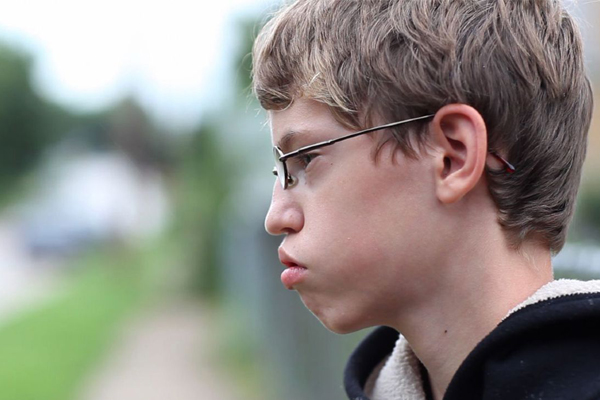
The MPAA's A still from "Bully"

As more details emerge about Monday’s fatal school shooting in Ohio, one question has been on the minds of many people: Was the shooter bullied? Some students have  suggested – unsurprisingly – that T.J. Lane, the 17-year-old who allegedly killed three of his peers and wounded others at Chardon High School, had been an outcast and the target of bullying. Others have argued that he was merely a nice-seeming, quiet kid.

Either way, this latest episode of alleged bullying and teenage death pins another town into a national mosaic that has startlingly sharpened in recent years. In the fall of 2010, within weeks of each other, news of three teenage suicides in Indiana, California and Texas initiated a new national conversation about the specter of bullying. The public consciousness reached its zenith that September with the story of Tyler Clementi, a freshman at Rutgers, who took his own life after his roommate secretly broadcast Clementi’s romantic encounter with a man in his dorm room. The media cycle passed, but the crisis continued; in late December 2011, a high school sophomore in Staten Island, who had been a victim of bullying, died after she threw herself in front of a city bus, a suicide note in her pocket.

“I believe we’re at a tipping point moment when it comes to bullying,” said filmmaker Lee Hirsch in a phone interview with Salon.

Hirsch is the director of “Bully,” a documentary about teenage bullying, which is set to be released at the end of March. The film chronicles the lives of five students through a school year, including high school and middle school students, as they endure the torments of their peers. It features two families who lost their children to suicide after they were bullied and also details the fate of a distressed 14-year-old girl who faced multiple felony counts after she pulled out a gun on a school bus.

Last week, the Motion Picture Association of America dealt the film a serious blow by upholding the film’s R rating, making the documentary less accessible to its target audience. For the MPAA, the problem with “Bully” stemmed from a scene in which a student was harassed and the f-word was said seven or eight times by various accosters. Hirsch, however, was adamant about keeping all the scenes intact as they were originally filmed.

“For me, when it comes to bullying, people are always minimizing the experience, they’re whitewashing it,” Hirsch explained. “The tendency is to say it’s a rite of passage or it’s just kids being kids, but it matters because the honesty and the brutality and the truth of those scenes are important and relevant. They aren’t thrown in there or scripted — this is what happens.”

Last week’s appeal to the MPAA was headed up by Harvey Weinstein, the co-chair of the Weinstein Co., who first saw the documentary during its successful run at independent film festivals last year. Weinstein was joined at the meeting by Alex Libby, a subject of the film who suffers from Asperger’s syndrome and frequently suffers ridicule. Afterward, Libby commented to Hirsch that the MPAA ruling meant that he wouldn’t be able to see his own life on film.

The battle between “Bully” and the MPAA reveals, once again, the seemingly arbitrary nature of the MPAA rating system. Last year “The King’s Speech,” which went on to win the Academy Award for best picture, made its initial run as an R-rated film because of a scene in which the f-word was used five times in rapid succession. To broaden the film’s reach, the Weinstein Co. (which also released “The King’s Speech”) muted part of the objectionable scene so that the word was only audible twice. This was enough to quell the MPAA’s opposition to a PG-13 rating.

“The movie rating system has endured for more than 40 years because it was designed to evolve not only with societal values, but with the growth and evolution of the motion picture industry itself,” said Bob Pisano, who was the president and COO of the MPAA at the time.

But as “Bully” suggests, teenagers themselves are not living in a PG-13 world. While the documentary may be particularly useful as a conversation point between parents and children, its R rating will prohibit it from being used by many schools and communities as an educational tool. In a statement last week, Weinstein explained that the Cincinnati school district had arranged to bus over 40,000 students to see documentary, but will have to cancel the plans because of its rating. In the meantime, petitions have begun to circulate online imploring the MPAA to reverse the decision.

“The R rating is not a judgment on the value of the movie,” read the MPAA statement. “The rating simply conveys to parents that a film has elements strong enough to require careful consideration before allowing their children to view it.”

Hirsch remains unconvinced:

“It’s hard when you look at films that do get PG or PG-13 rating and they are full of incredible amounts of violence and profanity as well. This just seems like such a poor decision.” 

Adam Chandler is a writer based in New York. His work has appeared in the Atlantic, Tablet Magazine, Haaretz, the Huffington Post, and the Jerusalem Post. Chandler tweets @allmychandler.

My bully, my best friend

At first, I thought it was a joke when John called me "gay." By the time the school intervened, no one was laughing

  • more
    • All Share Services

My bully, my best friend (Credit: Tad Denson via Shutterstock/Salon/Benjamin Wheelock)

The first time someone called me a “faggot” I didn’t hear it at all. That’s because my head was being slammed against a locker, the syllables crashing together like cymbals in my ear.

When I arrived at this new private school in seventh grade, after my mom got a job teaching, I hoped Fred and I might be friends. We were both faculty brats, and the school catered to elite students from wealthy families.

But our similarities ended there. Fred was tall for an eighth grader, and he was clear-skinned and golden, with hair so light it seemed more than blond. I was short, stocky and pale. He wore clothing emblazoned with Hilfiger and Klein. I was perpetually clothed in hand-me-downs. People whispered that he smoked pot and felt up girls after school. I had changed schools so often I’d forgotten how to make friends.

Something about my incompetence made Fred furious. In the locker room after lacrosse, he would snap at my ankles with his stick until they turned bright red. One day during practice, he dropped any pretense of chasing after the grounded ball and simply rammed into me with all his force. My helmet disappeared; my sweaty gloves flopped on the ground.

“Are you OK?” asked the assistant coach, a tall, heavy-set man who was also the head of the upper school we would both be joining next year.

I nodded, trying to breathe and pretending I wasn’t about to cry. But I lived the next months in fear. That August, before the start of high school, I walked into my brother’s room and asked him, with the most serious face I could muster, if he could teach me how to punch somebody.

But I didn’t have to learn. Fred left our school. I heard his dad was seen screaming in the office about what a screw-up his son was, a detail I relished with a grim smile. Mostly, I was relieved Fred was gone, and I could stop jumping every time I heard a locker slam.

Life was good. It got even better when I met John during soccer practice. He was quirky; he wore the same pair of purple sweatpants to school every day, and he joked about how much he masturbated.

“One time I did it 10 times in one day,” he said at practice, both of us standing at the end of the field waiting for the coach’s call.

“How does that even work?” I asked.

“I guess it was more just to prove that I can.” He shrugged. “By the end nothing was coming out.”

We became best friends.

I was happy to have someone to sit with at lunch, but eventually John started to do something I didn’t understand — he would constantly tell me I was gay. He wrote it on my textbook in biology, where we sat together, and he would whisper it while pointing at me. At that point, I had only had the most fleeting of interactions with girls. I was 14 and barely knew what sex was beyond the definitions I’d gleaned from health class and pornography. But I knew that “gay” meant more than having sex with men. “Gay” was a word that boys tossed around like hot potato, everyone hurling the insult in the vain hope it wouldn’t stick to them. It was a word to be feared, but still buoyant enough not to always be taken seriously. I figured John was using it playfully, among friends, the way he would also call me “Jew.”

A few weeks later, John invited me to join an online conference using our school’s in-house email system for a movie he wanted to make. The film was about one of our heavier friends, Drew, escaping from fat camp. (Fat. Gay. Jew. The words were piling up, but I didn’t care. I had finally wedged my foot in the door.) We went over to John’s house to mess around with a camera one Saturday, but all we ended up filming was Drew chasing a line of bagels rolling down the street while chanting “donut, donut, donut!” Instead, the conference became a place to jab at each other while sitting on school computers. Eventually, John started making more of his gay jokes.

At first I was flattered. This was still a form of attention. And, frankly, I craved attention. But things got weird around spring break. John wrote stories about me taking little boys and animals into the woods to have sex with them. Stories about me being molested by priests and loving it.

Finally, I asked him to stop. The insults meant nothing, I told him in an email, but I agreed to bow out of the group. Still, I would stay up late at night at the family computer, reading and re-reading more elaborately crafted insults and waiting for the page to refresh.

“Since Yannick isn’t reading any more,” he posted, “I can now say: Yannick is GAY GAY GAY GAY GAY GAY GAY GAY . . . ”

It went on like that for a while. The other boys just laughed.

Then one morning, I checked my email in the school library and saw a note from our IT adviser. He had discovered the online conference. The news spread quietly through the administration, which did its best to stop any further damage. A faculty member reminded kids during Monday announcements to be mindful of the correspondence we keep on the school’s email. John was identified as the ringleader and quietly whisked away for probation. Drew was called out for a note saying he was going to kill me (something I again took in jest).

I was rushed in to meet with the head of the upper school, my old lacrosse coach. Again he asked me that bland, unanswerable question: Are you OK?

I thought back to that sunny day on the lacrosse field when he looked down at me with concern while the other boys milled around idly, waiting for the drill to restart. It was all too familiar. Again he towered over me with concern, again the rest of the students milled around idly, having no idea what just happened right next to them. Only this time, the tears were in his eyes as he apologized for what the school had let happen to me.

There’s a weird tension once authorities become involved in teenage arguments. The “can you take it?” approach to maleness sees running to grown-ups as an act of cowardice, which is the very reason I never told anybody outside the email circle what was happening in the first place. In that way, it was a relief that someone finally made it stop. But it was equally bizarre to hear our conversations reinterpreted by adults who were trying to determine the arbitrary moment when a cruel jest slid into unacceptable hatred.

I sat with my mother and the school counselor as they flipped through pages of our correspondence. Read aloud, they sounded different than the jokes I’d convinced myself they were.

The night the news broke at school, John’s mother called me. She was livid with him, she said, and didn’t understand why someone would do something like this. She couldn’t say she was sorry enough. I stammered out the same response I would learn to tell everybody.

“It’s OK, I’m fine.”

Then she put John on the phone. It was the first time we’d spoken since an army of adults swarmed around us. It was the last time we would really speak for almost three years.

“Yannick?” John’s voice was frail, as if he was barely finished crying. I thought about his parents standing above him as he sat on the couch in his living room, face buried in his palms, trying to explain things he couldn’t and didn’t want to. It was the same position I was in earlier that day, the same position I would be in many times in the coming weeks. “I’m really sorry.”

“It’s OK,” I said. “I’m fine.”

“I really don’t know why I did that. I don’t know what I was thinking — I wasn’t really thinking, was I?” he asked to his mother. “Still friends?” he asked me.

“Still friends.”

We both knew the words were hollow. I switched seats in biology. One day, John and I got trapped walking down the same hallway. We joked weakly until my mother rounded the corner. An hour later, she yanked me into her office with my brother. This man is a monster, she said, and now you’re walking down the hall laughing with him? My brother fumed about how the school needed to expel him, to call the police. I sat with my face in my hands, telling them that everyone wanted me to be angry, but all I wanted was to have my friend back.

Hating Fred was much simpler. The violence of getting your head kicked into a locker is so obvious— I could either let it fester within me or redirect it. At night during that spring lacrosse season, I would stare at the knife rack in my kitchen and wonder what it would be like to make one of us bleed. I don’t think I really wanted to hurt him, or even myself. I just wanted him to go away. But John hadn’t hurt me in a way I understood. The standard call-and-response of bullying was gone.

So I did my best to disappear. I spent days down in the photo lab, bringing my lunch there to avoid the cafeteria. I took as many classes as I could. Empty space and time were to be feared. I pretended to search through my locker until the hallway was empty so I could walk to class alone. I tied and retied my shoes.

The next fall I dropped out of soccer. The coach didn’t ask why. John went to the varsity team and became class president. Every time he did something remotely public, someone would whisk me into an office and ask how I felt.

“It’s OK,” I would say. “I’m fine.”

By the end of senior year, my classmates would ask me periodically if I still went to school there.

The last time John and I spoke about what happened was senior spring. Each student was asked to give something called a “focus speech” to reflect on their time in high school. I emailed him that week to let him know I’d be talking about what happened between us.

“You were my best friend at the time,” he wrote back. “I can’t believe I messed that up so much.”

John wasn’t in the room when I gave the speech, but three of the other guys were. Afterward, one of them stood up and said he wanted to publicly apologize for what he participated in. The other two came to me later. Apologies are always awkward, and these were no exception. Our eyes never met.

For a long time, I didn’t hate the people in high school so much as I loathed the school itself for forcing me into this situation. The irony of our cultural anxiety over homophobic bullying is how people deplore it in teens even as it mimics the very policies of our most respected cultural and political institutions.

In that way, bullying isn’t a disease but a symptom of a larger social problem. We can gaze aghast at the horror of bullies every time a new tragedy surfaces, but asking where this violence truly comes from is much more difficult. The year after my school recorded its first case of cyber-bullying, the same administrator who cried in front of me in his office did his best to stop the school’s Gay Straight Alliance from hosting a queer prom. Lower-school parents, he explained to my friend who was planning the event, had seen posters in the high school hallways and didn’t want their children to be affected. I wonder if he ever questioned why there wasn’t a single openly gay teenager walking down those halls.

I’m grateful for one thing my school did, though. They forced all of us boys out of a little world where “gay” could mean anything and everything and into one where we had to look at each other and ask what we were doing. They were trying to foster our empathy.

But did it work? I still don’t know what the answer is.

One summer during college, I logged on to Facebook and saw one of the boys’ statuses unfold down my newsfeed. “Max is gay,” it read. Then a moment later, “Max is really gay,” followed by “Max is super hella gay.” Finally, it ended: “Thanks Dan for updating my status.”

I don’t know if John would still do the same. But I doubt it.

Continue Reading Close

Yannick LeJacq is a freelance writer and photographer living in New York City. His work has appeared in Kill Screen, The Wall Street Journal, The Atlantic, and other publications. You can follow him on twitter @YannickLeJacq.

Interview With My Bully: The bully who asked me out

Caleb insulted my dead boyfriend in front of our entire class. Years later, I learned what he'd really been after

  • more
    • All Share Services

Interview With My Bully: The bully who asked me out (Credit: Tad Denson via Shutterstock/Salon/Benjamin Wheelock)

My prep school may have been home to the offspring of politicians, federal judges and national media personalities, but first and foremost we were teenagers. And so in the spring of 1998, my class gathered in the school library to plan our senior prank.

“We should direct all highway traffic into the school parking lot!” somebody suggested.

“Let’s cover everything in Vaseline!” someone else said.

I played along, but I was having a tough time. Eight months before, my boyfriend Ben had been killed in a car accident. He’d been different from the other guys: almost preternaturally kind and, like me, overly intellectual. On the way to our junior prom, we’d sat in the limo discussing “The Great Gatsby.”

I knew Ben would have loved the senior prank a friend and I proposed — a series of odd, unexpected happenings throughout the day, like hiding alarm clocks in the ceiling panels, and switching teachers’ desks. But I’d barely started my presentation when Caleb Grossman (not his real name) cut me off.

“Jenny’s idea is stupid,” he announced to the class, some of whom began to snicker.

Caleb was Ben’s perfect foil, at least in my literature-obsessed brain. Both boys were brilliant, but Caleb was as cruel as Ben was virtuous. In English class, Caleb made frequent and obscene references to the nature of my relationship with our teacher. He criticized me during discussions. And I’d often catch him watching me with a malicious look that seemed to say: You’d better watch out, little girl.

“My prank is called the Plague of ’98,” Caleb continued. “We’re going to buy 10,000 grasshoppers and release them in the school.”

Pathetically, our high school mascot was the grasshopper.

“And how are we supposed to pay for 10,000 grasshoppers?” somebody asked.

“That’s easy,” Caleb said, then looked straight at me. “We’ll use the money from Ben’s memorial fund.”

I don’t remember how I removed myself from the front of the room. But the second I made it to safety, I started sobbing. I couldn’t stop. I cried through my free period, skipped my physics class, and was finally given permission to leave school early.

Before I left, a teacher made Caleb stand face-to-face with me in the school lobby.

“Sorry about what I said.” Caleb’s face was impassive. He might as well have been talking to a wall.

“OK,” I said, and walked away. But it was not OK. I felt furious. I felt bullied.

Of course, it’s not easy to define bullying. Look at the controversy over recent revelations about Mitt Romney’s high school behavior. What might be school-age antics to one person is violent assault to another.

So did Caleb’s treatment toward me constitute actual bullying? Even at the time, I feared I was overreacting. But as an adult, I can see that his aggressive, leering behavior in the classroom was a subtle kind of sexual harassment, and his outrageous comment about a boyfriend I was still mourning – a blow delivered in front of 120 classmates — felt like the culmination of a long, systematic campaign to wound the parts of my identity that mattered most.

Caleb and I didn’t speak after that debacle. Graduation came and went. I left for college, then moved to New York and became a journalist. I began writing a novel inspired by Ben’s death, and as I wrote, I thought about Caleb. Neither he nor I were the social crème de la crème of our school. We were both outcasts of a certain kind. In another world, we would have been united against more popular forces, not against each other. But instead, we were nemeses. Underdog fighting underdog became a central theme in my book.

As it turned out, Caleb had been thinking about me, too. A few years later, I received the following email:

Hi Jenny: This is Caleb — you may remember me, we went to school together for about ten years. I believe we may have played Orpheus and Persephone in Sue Jagger’s fourth grade production of the Orphic Tragedy. I have my own condo in Foggy Bottom and a job in the city, (where) I will be working for the immediate future. I also have my own car. Anyway, I hope everything is going well and look forward to hearing back from you soon! Caleb

The first thing I thought was: Of course I remember you. You made fun of my dead boyfriend in front of the entire senior class. The second thing was: I did not play Persephone in Sue Jagger’s fourth grade.

I read the note over and over, wondering why Caleb’s email sounded like he was proposing marriage in 16th-century Europe. “I have a fantastic job in the mud-pie-makers guild and can offer you five ducks and one cow,” it seemed to say.

But I couldn’t help myself: I wrote back immediately. I had to see what this was all about.

As it turns out, Caleb wanted to take me on a date. This seemed like a practical joke — a long-delayed maraschino cherry of meanness to drop on me, as if his mission hadn’t been completed. But my curiosity was too great. I said yes.

The day before our date, I received a lengthy, apologetic email from Caleb.

Jenny: I am embarrassed to say I was unable to get a prime time table at any of my favorite places — for instance Eric Ripert’s WestEnd Bistro. However, I have made alternative reservations for 8:30 at a few very viable locations.

Caleb proceeded to list restaurants and the qualifications of each, as if he were some Chamber of Commerce lackey: At Sabores, he wrote, “the dishes are scrumptious thanks to the mastery of Executive Chef Daniel Amaya. The atmosphere is hip and vibrant YET subdued and lounge-like.” At Matisse, he told me, “one of Washington’s foremost wine experts has combined the culinary and visual arts to complete an ambiance of dining bliss.” And finally, the email concluded, “A cheesy but perennial default favorite: Benihana. I have gotten a big kick out of the sense of community + belonging I get from dining with others (I come from a broken home).”

Talk about bizarre. The Caleb who was apparently trying to date me was so wildly different than the villain I’d created in my mind. He seemed less mean than awkward. Almost childlike.

My best friend from high school sent me a message: “Jenny, this is way too weird. will you call me before you go and when you get home?”

I went to meet Caleb, fully prepared to be stood up. I had chosen the “hip and vibrant YET subdued and lounge-like” Sabores, and picked a table in a well-lit part of the restaurant. Caleb arrived and proceeded to order us a ridiculous amount of food and ply me with drinks. I told him I was driving and had one cocktail. We had a stilted conversation over dinner, but I barely had the brain space to listen to him. I just kept wondering: What am I doing here? Does Caleb even remember what he said to me senior year? I didn’t bring it up, and neither did he. Instead, he flattered me incessantly, and I became so uncomfortable that I left early. I arrived home to find the following email:

Jenny: Thank you again for meeting me for dinner tonight. Seeing how as I had a crush on you since like fourth grade, it was sort of a dream come true! You have grown up to be a truly impressive woman and I hope we can stay in touch! Caleb

And there it was. An explanation.

All this time I thought he was a bully, but he was really a misguided kid, with an inability to read social cues.

When I was in the second grade and a boy made fun of me one day, my teacher said he was only doing it because he had a crush. Later, in fourth grade, it was Ben who had a crush on me, one that took me years to reciprocate, a fact about which I still harbored tremendous guilt.

Now, I felt like Caleb was attempting to shove himself into Ben’s role. He offered a hot-air balloon ride, a dinner cruise and, ironically, a pilgrimage to F. Scott Fitzgerald’s grave. But I didn’t want Caleb, a substitute for the boy I’d lost. I thought about all the experiences Ben and I had never shared, and I felt guilty all over again. I’d been so slow to see Ben for who he was, to figure out how good he would be in my life.

In the end, Caleb made a kind of confession — an acknowledgment that we’d been wrong about each other. In an email, he wrote:

With regard to the fourth grade Orphic Tragedy, I realize now that it was Rebecca Marshall — not you — who played Persephone to my Orpheus. I guess the mind (heart?) has a way of rewriting the past as it wishes it were!

I felt for Caleb. I understood his compulsion to strive after something he wanted so badly but would never have, because I felt the same way. But I also knew that the past couldn’t be rewritten or even revised. The last line of “The Great Gatsby” describes the current carrying ships ceaselessly into the past, but I wouldn’t let Caleb drag me back into those old struggles and adolescent longings.

I was forging ahead.

Continue Reading Close

Jennifer Miller's debut novel, "The Year of the Gadfly," is out now from Houghton Mifflin Harcourt.

Why the MPAA doesn’t want your kid to see “Bully”

With its R rating for "Bully," the ratings board reveals its true nature -- and may have doomed itself

  • more
    • All Share Services

Why the MPAA doesn't want your kid to see A still from "Bully"

With its unerring instinct for being on the wrong side of every major social and aesthetic issue, the Motion Picture Association of America’s ratings board has refused to budge off its R rating for “Bully,” an earnest and moving documentary made for and about tormented preteens and teenagers. There’s almost a perverse, Santorum-style integrity about the MPAA’s staunch resistance. Its ratings board — an anonymous group of Los Angeles-area parents — stands tall for some unspecified and imaginary set of American values, in the face of a viral lobbying campaign that has enlisted Justin Bieber, Johnny Depp, Martha Stewart, Ellen DeGeneres and nearly 500,000 other people, and made an overnight media celebrity out of 17-year-old Katy Butler, a self-described victim of bullying who started the online petition.

But what’s really perverse, of course — not to mention cruel and repellent — is a ratings decision that ensures that the kids who most need the succor that “Bully” has to offer are now the least likely to see it. I’m both a parent and a movie critic, and I understand the usefulness of a ratings code and the impossibility of screening all entertainment options for your kids in advance. But while the MPAA board pretends to be a source of neutral and non-ideological advice to parents, it all too often reveals itself to be a velvet-glove censorship agency, seemingly devoted to reactionary and defensive cultural standards. In the “Bully” case, the board has ended up doing what it usually does: favoring the strong against the weak, further marginalizing the marginalized, and enforcing a version of “family values” that has all sorts of unspoken stereotypes about gender and sexuality and race and other things baked into it. In short, the MPAA has sided with the bullies and creeps.

Controversies over MPAA ratings are nothing new, of course, and there’s already an entire documentary film — Kirby Dick’s “This Film Is Not Yet Rated” — devoted to the subject. But in the past they’ve usually concerned depictions of non-normative sexuality (especially lesbian/gay sex, or adult female sexuality of any kind), about which the ratings board is infamously panicky, or violence, which is tolerated at almost any level and intensity. In stigmatizing a social-issue documentary, the ratings board has accidentally opened up a new front in the culture wars — one where, over the long haul, its nervous-Nellie neo-Puritan values are unlikely to prevail.

Without doubt, the MPAA has handed “Bully” director Lee Hirsch and Harvey Weinstein, whose company is releasing the film, a formidable marketing weapon and a tremendous amount of free publicity. Even more significantly, it has provided Weinstein an opening to drive a wedge into the MPAA’s rating system and its hegemonic control over what films are shown where. As promised some weeks ago, the Weinstein Co. will now release “Bully” without a rating, which would ordinarily kill off any chance of reaching a mass audience. While MPAA ratings have no legal force, national cinema chains generally won’t program unrated movies, and often can’t advertise them in newspapers. (Unrated releases are assumed to be adult-oriented indies or foreign films, released by specialty distributors and confined to art-house theaters.)

Mind you, there’s no one in show business who knows how to sell a movie from a maverick or outsider position better than Harvey Weinstein. He has apparently persuaded AMC, the second-largest theater chain in North America, to screen “Bully” in some locations, and it’s possible other exhibitors will follow suit. But while the pissing contest between Weinstein and the MPAA should make for good spectator sport — and may further erode the MPAA’s power, which is certainly welcome — it’s still true that middle schools and high schools won’t be able to screen “Bully” for their students, and that in most cases theaters showing it won’t admit unaccompanied teenagers.

At least officially, the R rating for “Bully” is a response to some frank teenage conversation (especially the use of the word “fuck,” always a shibboleth). As a parent of young children, I wholeheartedly agree that young people should be instructed to avoid such language at Grandma’s dinner table (or within adult earshot generally). But are we really expected to take that seriously? A few F-bombs in a sober, serious, troubling documentary — and that’s what we need to protect real-life teenagers from? As I see it, the smatterings of profane language make a convenient stand-in for all the stuff in “Bully” that’s genuinely obscene, and that can and should make us all uncomfortable. Like the story of Kelby Johnson of Tuttle, Okla., a 16-year-old out lesbian who has been ostracized by her entire town, including her teachers, school officials and other authorities; or 17-year-old Tyler Long of rural Georgia, an awkward and introverted kid who hanged himself in his bedroom closet after years of taking abuse from classmates and being ignored by adults; or 14-year-old Ja’Meya Jackson of Yazoo County, Miss., who went to prison after confronting her school-bus tormentors with a loaded gun.

No one knows exactly how or why the MPAA voters make their decisions (the deliberations of the Supreme Court are a model of transparency, in comparison), so we can only judge them by their actions. Whether consciously or not, the board is acting to suppress the painful truths in “Bully” in exactly the same way as the movie’s adult authority figures do. One of Hirsch’s central subjects, in fact, is the difficulty that bullied kids often have communicating with grown-ups, and the difficulty grown-ups often have listening. At one point during the shoot, Hirsch actually hands over to school authorities footage he shot of 12-year-old Alex Libby being verbally and physically tormented during his morning bus ride in Sioux City, Iowa. Alex hadn’t told anyone about it; he said the kids on the bus were his friends, and described the constant threats, humiliations and physical abuse he endured every day as “messing around.”

Over and over again in “Bully,” we see adults who feel bureaucratically paralyzed, who look the other way, who are unwilling to make judgments between perpetrators and victims, or who actively condone vicious and sadistic behavior as the Darwinian natural order of childhood. In many cases you can feel considerable sympathy for these people. After all, the schools must try to educate bullies as well as victims (and the latter often turn into the former), the distinction between normal horseplay and bullying can be hard to parse, and no adult can protect a child from all possible harm. Declaring that underage kids can’t even see this film without a grown-up to hold their hands, however, falls somewhere near the nastier end of that spectrum of indecision. With the stated goal of not offending anybody, the MPAA has essentially told the bullied teens in the movie and outside it — gay and lesbian kids, autistic kids, disabled kids, fat kids and nerds and Goths and plain old weird kids who don’t fit in — that their very existence is too upsetting for normal kids to see, and they should crawl back under their rocks.

“Bully” opens this week in New York and Los Angeles, with wider release to follow.

Continue Reading Close

What’s the right sentence for hate?

Dharun Ravi faces 10 years in prison and deportation after a conviction on hate crimes in the Tyler Clementi case

  • more
    • All Share Services

What's the right sentence for hate? Former Rutgers University student, Dharun Ravi (Credit: AP/John Munson)

Dharun Ravi didn’t kill Tyler Clementi. But a year and a half after the Rutgers freshman threw himself off the George Washington Bridge — and after three intense days of jury deliberations — Ravi has been found guilty of several charges stemming from the events before and after his ex-roommate’s suicide. The guilty verdicts include invasion of privacy, intimidation, tampering with evidence, tampering with a witness and hindering apprehension. Ravi, who has not yet been sentenced, faces up to 10 years in prison and possible deportation back home to India.

The school year had just barely started back in September 2010 when Ravi tweeted, “Roommate asked for the room till midnight. I went into molly’s room and turned on my webcam. I saw him making out with a dude. Yay.” A few days later he tweeted similarly, “Anyone with iChat, I dare you to video chat me between the hours of 9:30 and 12. Yes, it’s happening again.” The next day, Clementi sent a message of his own. He wrote “Jumping off the gw bridge sorry” on Facebook before taking his life.

The death of Clementi, along with a harrowing string of other suicides by gay and lesbian youth, stunned the world and helped inspire the radically beautiful It Gets Better Project. But it’s left us still grappling with how to deal with bullying and intimidation, and what the appropriate punishments should be for legally vague offenses – often committed by very young offenders.

Ravi, now 20, had pleaded innocent to the string of charges against him and refused a deal. Yet Ravi admitted to investigators that he and his friend Molly Wei had deliberately spied on Clementi, who had told his parents he was gay only days before starting at Rutgers. (For her cooperation in the investigation, Wei was not charged for her participation in the spying.) And on the night of Clementi’s death, in an apparently gross misunderstanding of good intentions, Ravi texted him that “I’m sorry if you heard something distorted and disturbing but I assure you all my actions were good natured.”

But he then followed up with a sincere sounding apology, saying, “I’ve known you were gay and I have no problem with it…. I don’t want your freshman year to be ruined because of a petty misunderstanding, it’s adding to my guilt.” Later, Ravi would say that he didn’t know yet that Clementi had already posted his suicide note on Facebook, and was heading to his death.

Ravi is currently free on bail, awaiting his sentencing on May 21. Juror Bruno Ferreira told Reuters Friday that it was “Thinking about it not being done once, being done twice, not just on one day,” that swayed the jury on the more difficult to prove hate crime charges.

Ravi likely could not have imagined that his callow, cruel disregard for his roommate’s privacy would lead to his death. He couldn’t have predicted that his vile disrespect for another man would land him in a courtroom. But though he wasn’t standing by Tyler Clementi’s side that night on the George Washington Bridge, it seems he was very much there in Clementi’s mind. And now a jury in New Jersey has convicted him of hate crimes. A judge faces the difficult task of deciding to what extent he should pay. And a father who lost his son has a few words of advice to all of us left behind. “You’re going to meet a lot of people in your life,” Joe Clementi said at a press conference last week. “Some of these people you may not like. Just because you don’t like them doesn’t mean you have to work against them.”

Continue Reading Close
Mary Elizabeth Williams

Mary Elizabeth Williams is a staff writer for Salon and the author of "Gimme Shelter: My Three Years Searching for the American Dream." Follow her on Twitter: @embeedub.

When bullies go to work

The hidden epidemic of workplace mistreatment affects over a third of workers -- and is hurting us all

  • more
    • All Share Services

When bullies go to work (Credit: Tyler Olson via Shutterstock)

My friend Dennis* remembers the exact moment he knew he’d had enough. Enough of the “nonstop nagging and ostracizing and accusing” that had become his weekday routine. He was standing on the platform of the subway station at Union Square, leaning out toward the tracks to see if the train was approaching. “And I thought, if I don’t pull back, if I stay here like this, so many problems will be solved.”

Dennis’ tormenter? Not a schoolyard thug shaking him down for lunch money, but a high-ranking executive in one of the largest financial institutions in the country. When the mean kids of your childhood grow up, they don’t all evolve into self-aware, contrite adults. Sometimes, they just move from the playground to the corner office.

Dennis says that his problems began the day he dared to point out a flaw in his supervisor’s report during a meeting. From there, he was swiftly taken off a project he’d been immersed in and moved to one “I literally didn’t know anything about.” He was also, unlike the other members of his team, billed for taking the company’s car service after working late one night. “They told me I didn’t have to work overtime and accused me of malingering,” he says. But what sticks with him now, long after he’s left, are the sly humiliations and social ostracizations. Like when he broke a toe and couldn’t wear business shoes, he was sent up to the vice president’s office and made to show him his swollen, purple foot.

“They’d call meetings and not tell me,” he says. “I’d see them going into the conference room without me. They’d go out for lunch afterward and not include me.” His department abruptly banished office birthday parties in March, and resumed them in May. “My birthday is in April,” he explains. Unlike the guy in his department who a year earlier leaped to his death out a window, Dennis, fortunately, got out in time. By then his hair was turning gray. He was having self-destructive thoughts on the subway platform. And so even though it was the height of a recession, “I went in and I quit without having another job,” he says.

“There’s exclusion, there’s cliques — the same as school bullying,” says Cheryl Dellasega, a relational aggression expert who’s written “Mean Girls Grown Up” and “When Nurses Hurt Nurses.” But unlike school bullying, she says, the issue is still not widely addressed. “There’s a definite lack of awareness. People are very surprised when they think about these things happening in the workplace.” Yet it’s all around us –  a 2010 workplace bullying study found that 35 percent of workers say they have experienced bullying firsthand, and another 15 percent report witnessing it.

It happened to Nicole, who worked for two years in the marketing division of a fashion company. She sensed the organization might be a less than great fit when she didn’t wear makeup to work one day “and someone said to me, ‘What’s wrong with your face?’” Before long, she says her boss would “wait till I left the office, ask for changes on work, and expect them before I’d  returned.” And when she returned to the office after several days off, she says, “Then my boss really started turning on me, not giving me work. I got a written warning about my attitude. My boss would litter her emails with smiley faces, and I’d get called into the office and told that my emails were too ‘frosty.’ I was in complete shock. I’m a really tough cookie,” Nicole says. “I went to school for business. And I started to have panic attacks at work.”

For Beth, who worked for a cosmetics company, bullying stress hit her in the gut. She got off on the wrong foot when her aunt died on her first day at the job. “I told my boss I had to leave and she said, ‘Well what other days are you taking off?’” After that, she says, it got worse. “If I was leaving at 5:45, she’d say, ‘Just because I leave at 5:45, that’s not a green light for you to leave.” And when she had to take time off for surgery, her boss asked, “Can you change it? We have all these conference calls coming up; you’re going to have to do this from home.” Beth says, “When HR put me on disability, she went ballistic.”

After that, “She would yell at me in front of other people. Having worked on Wall Street, I’ve been yelled at and screamed at, but this was bullying like I’ve never seen. I got yelled at in the hallway one day and almost threw up at work.” And when Beth complained to HR, she says she was told, “Isn’t it a little early to not be getting along with your co-workers?” Beth was able to set up a safety net consulting gig and jumped ship, but the scars of the experience run deep. “I felt so rejected,” she says. “I have yet to update my LinkedIn profile because I’m so terrified of the idea of those people looking at it.”

Dennis, Nicole and Beth worked in different industries in different parts of the country. Yet in many ways they all fit the profile of a workplace target. Dellasega says office bullies tend to have an “inner lack of confidence that causes them to lash out” – something a competitive workplace feeds on exquisitely. So who do they look for in the pecking order? “The most thoroughly competent person,” says Dr. Gary Namie of the Workplace Bullying Institute. “The person is well-liked, has empathy, is ethical, and so has whistle-blower potential, and doesn’t want to get involved in office politics. They all say, ‘I loved my job. I just wanted to be left alone to do it.’ They can’t believe this happened to them. What distinguishes a target from a bully-proof person is the target thinks, it must be me.”

Part of what makes workplace bullying so insidious is that it’s so deeply entrenched in the corporate cultures where it flourishes. It’s not just one jerk — it’s a whole department of sycophants and terrorized underlings. As Liza, who works in graphic design, says, “One of my bosses likes to throw paperwork on the floor so we have to get on our knees. I commonly see a reaction of, ‘That’s just how he is,’ or ‘He’s just having a bad day,’ when an incident occurs.” Namie says this is common. “The whole group adopts the practice out of survival and fear, and over time it becomes the norm and the bullying becomes institutionalized. It’s about loyalty,” he says. “Once you start promoting people for that kind of behavior, you’ve sent the message.”

The stigma of being the unpopular kid in the lunchroom, of playing what Nicole calls the “emotional Russian roulette” of the workweek can wear a person down and wreak havoc on a person’s health. Unlike bullied kids, Namie says, “Adults are not nearly as resilient. When they’re devastated, recovery is so hard.” If you love what you do and you take pride in it, it’s traumatic to spend your days among people who undermine your confidence and tell you you’re bad at it. “Throughout every single week — sometimes every day — they would point out something wrong I’d done. And the constant phrase was, ‘You should have known,’” says Dennis. “It bothers me to this day.”

In a brutal economy, the options aren’t always as easy as simply walking out and going somewhere nicer. And the toxic workplace has been around since long before the first scribes got their butts chewed out for sloppy papyrus work. But it’s heartening that we’re beginning to make strides to raise awareness and make the workplace less toxic. “We’re focusing on prevention; we’re doing seminars on civility,” Cheryl Dellasega says. “Employers have to be more proactive now,” because “bullying impacts on productivity.” Statistics are hard to come by because targets themselves don’t always connect the dots between their absenteeism-causing migraines and ulcers and their aggressive colleagues, but Dellasega says at least 5 percent of workers say they’ve deliberately not gone in to work because of stress there.

Work can be stressful. Colleagues can be difficult. It’s sometimes easy to chalk it up to a high-pressure business or a prickly supervisory style, to suffer in silence and chalk it up to the nature of the industry. But just like school or family, your job isn’t supposed to give you headaches or high blood pressure or anxiety attacks or suicidal thoughts. If it is, there’s something seriously wrong. As Namie says, “Did you ever wake up on a weekday and say, ‘Today’s the day I deserve to be humiliated?’” And if you didn’t in grade school, why would you believe it now?

* Some names and identifying details have been changed

Continue Reading Close
Mary Elizabeth Williams

Mary Elizabeth Williams is a staff writer for Salon and the author of "Gimme Shelter: My Three Years Searching for the American Dream." Follow her on Twitter: @embeedub.

Page 1 of 2 in Bullying