
Cut, paste, plagiarize
Everything on the Internet is stolen. So why does the Web delight so much in nailing a plagiarist in the MSM?
By Michael BarthelTopics: Media Criticism, Internet Culture, Fareed Zakaria, Plagiarism, Politics News
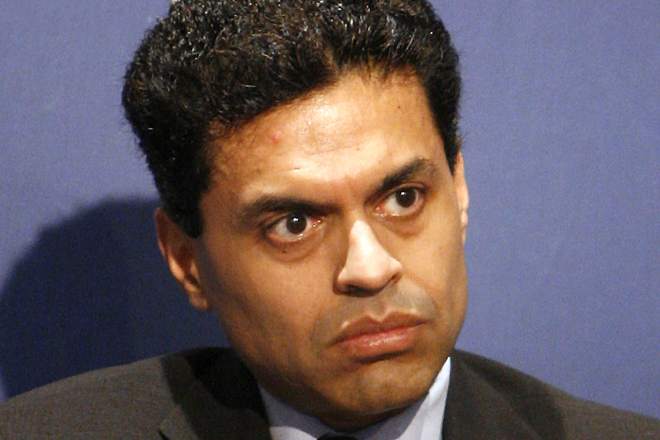
Major media organizations had faith in Fareed Zakaria. CNN gave him 60 minutes each week — several million dollars’ worth of time — to say whatever the hell he wanted, more or less. Time gave him a column, too, the one in which (as reported by conservative media blog NewsBusters) he reprinted barely changed paragraphs from Jill Lepore’s New Yorker article on gun control, and for which offense he has now been suspended from both perches.
Zakaria had achieved this perch based on several decades of work, work that led his employers to think he could produce such work for them in the future, work that gave a basis for the faith they put in him. (It was a faith that discouraged them from running his copy through Google to see if anything similar popped up, which should perhaps just be an automatic feature on content management systems now.) Any number of universities, nonprofits and corporations trusted him, too, to the tune of tens of thousands of dollars. In fact, all these institutions trusted him even when problems surfaced earlier. He’d been previously caught lifting interview quotes without attribution and repeating commencement addresses.
This was the final straw in a long line of straws. But even with this latest offense he’s still just on suspension for a month. That trust he’d built up may very well result in a return to the national media after a brief timeout.
The Web, where Zakaria’s plagiarism was both discovered and publicized into an unignorable story, had no such faith in him. He’d earned both scorn from the right as an Obama supporter and from the left as a Friedmanian flat-worlder, and epitomized the slick, substance-free mainstream media. Even more than that, though, he just didn’t seem to get the Internet. The Web trusts those who are transparent, informal, collaborative. Zakaria is endlessly formal and distanced, with a Twitter feed that’s just the worst sort of P.R. nothingness and a blog that’s almost entirely guest posts, lacking any kind of editorial voice and chilling any possibility of a commenter community. He seems to be deliberately sending the message that he regards the Web as a billboard, not a public square.
The plagiarism charges revealed at the very least that he was a lazy writer, most likely reliant on an army of uncredited assistants to construct his columns and then insufficiently careful in processing their work. It revealed the supposedly superior practices of the mainstream media as not noticeably different from the messy, chaotic process of blogging. Both were acts of massive collaboration and repurposing carefully covered up so the seams didn’t show. When Zakaria’s plagiarism was discovered, it was the rare moment when the Web’s standards aligned with the mainstream media’s, and he was out.
The problem is that those standards are far more often in conflict than they are in accord — and as the media moves more and more online, this is an increasing problem. Back in April, Trevor Butterworth wrote a great piece about Elizabeth Flock, a young blogger for the Washington Post who committed essentially the same sins as Zakaria, rewriting two paragraphs of a Discovery Channel post without giving credit. But where the CNN anchor was merely suspended, Flock swiftly resigned. The problem, as Butterworth points out, is that, unlike Zakaria, her job was explicitly to take other people’s stories and minimally transform them so they could appear on the Post’s site, a practice known in the biz as “aggregation,” and which was previously called “blogging.” The mainstream media wants the Web’s eyeballs, but it wants to stick to its old standards. The way you demonstrate your trustworthiness to a major media company (credentials, qualifications, professionalism) is almost diametrically opposed to how you demonstrate credibility online (transparency, reputation, accessibility).
The basic conflict here is that legacy media strictly forbids plagiarism, but, as Slacktory’s Nick Douglas put it in a recent post, everything on the Internet gets stolen. Writing is copy-and-pasted without attribution onto new websites, pictures are reposted with any credits, and all the world’s content is freely available. And that’s not conceptualized as a problem; such theft is an inherent quality of the medium. Information wants to be free, and Web culture is remix culture. The Web is collaborative, anonymous, tolerant of failure as long as it gets corrected. Zakaria’s copy-and-paste was a fireable offense, but the entire structure of the Web mediasphere was built on just such copy-and-pastes. Someone will call you on it if you don’t give credit, but then you just revise the post and maybe print a correction and no one really cares too much. What matters, instead, is the faith you’ve built up online, which such a sin will damage but hardly kill, especially if you handle it right. The Web, and the generation who grew up with it, think about plagiarism very differently than do the keepers of journalistic ethics. Helene Hegemann, a 17-year-old German writer who was discovered to have lifted numerous passages of her debut novel from other sources without attribution, responded to these revelations not with an apology but with a shrug. Her argument is a neat encapsulation of the ethos of the networked author: “There’s no such thing as originality anyway, just authenticity.”
This standard of acceptable theft is very real, widely agreed-upon and followed in a similar ways by lots of people across lots of websites. But that doesn’t necessarily mean it’s always good. The Internet was founded by a bunch of hippie libertarian nerds, and so we’re stuck with their standards, which are sometimes revolutionary and good, and sometimes encourage a problematic lack of interest in journalistic ethics. Web media often eschews accuracy, wallows in blatant conflicts of interest, and fails to follow basic journalistic procedures. And that’s all OK, mostly. The way journalists demonstrate credibility on the Web isn’t better than how they do in legacy media. It’s just almost entirely different.
For those journalists and institutions caught in the middle, that’s a real problem. Traditional media want the production pace and low personnel costs of the Web, but with the attention to detail and care that you find in a print paper. It’s very, very hard to do both, or at least to do both and still produce anything like quality journalism. The funny thing about Zakaria’s suspension isn’t that a major media figure would cut-and-paste someone else’s work; it’s that, if he had been someone like Andrew Sullivan, who has carefully (and admirably!) built up his credibility as an online figure, it never would’ve been that big of a deal. The Web called Zakaria out, and rightly so, for violating the basic tenets of his chosen professional realm. But he could just come over to the Web and do that all day every day and be basically fine as long as he posted pictures of his cat every once in a while. The old-school press wants to be the authoritative, distant voice of reason, and it keeps failing to live up to its own standards. Maybe it should come down here and play with the rest of us.
Michael Barthel is a PhD candidate in the communication department at the University of Washington. He has written about pop music for the Awl, Idolator, and the Village Voice. More Michael Barthel.
You Might Also Like
More Related Stories
-
GOP rules SCOTUS
-
Chris Christie's anti-LGBT crusade
-
Wendy Davis trails Rick Perry in potential Texas match-up
-
Bizarre gay pride photobomb makes it to front page of local paper
-
ENDA will reportedly get Senate committee vote
-
"Whistle-blower" now means "homegrown terrorist"
-
LeVar Burton explains how not to be killed by police
-
Meet the Wendy Davis truthers
-
Why is "sensible" Jeb Bush fundraising for nutty Paul LePage?
-
Watch Bill O'Reilly freak out over the gay marriage rulings
-
13 facts about tax-dodging corporations that will blow your mind
-
How epic GOP bumbling could inadvertently save food stamps
-
Christian leaders have always been misogynists
-
Federal judge approves challenge to Michigan ban on gay marriage
-
Five states see new antiabortion laws go into effect
-
Romney voted against presidential run in family poll
-
David Petraeus can’t lose (unless he goes to jail)!
-
DHS will begin reviewing visas for binational same-sex couples
-
Egyptian protesters gather before military deadline
-
Where are the young Democrats?
-
Will Fox News change with America?
Featured Slide Shows
7 motorist-friendly camping sites
close X- Share on Twitter
- Share on Facebook
- Thumbnails
- Fullscreen
- 1 of 9
- Previous
- Next
Sponsored Post
-
White River National Forest via Lower Crystal Lake, Colorado For those OK with the mainstream, White River Forest welcomes more than 10 million visitors a year, making it the most-visited recreation forest in the nation. But don’t hate it for being beautiful; it’s got substance, too. The forest boasts 8 wilderness areas, 2,500 miles of trail, 1,900 miles of winding service system roads, and 12 ski resorts (should your snow shredders fit the trunk space). If ice isn’t your thing: take the tire-friendly Flat Tops Trail Scenic Byway — 82 miles connecting the towns of Meeker and Yampa, half of which is unpaved for you road rebels. fs.usda.gov/whiteriveryou
Image credit: Getty
-
Chattahoochee-Oconee National Forest via Noontootla Creek, GeorgiaBoasting 10 wildernesses, 430 miles of trail and 1,367 miles of trout-filled stream, this Georgia forest is hailed as a camper’s paradise. Try driving the Ridge and Valley Scenic Byway, which saw Civil War battles fought. If the tall peaks make your engine tremble, opt for the relatively flat Oconee National Forest, which offers smaller hills and an easy trail to the ghost town of Scull Shoals. Scaredy-cats can opt for John’s Mountain Overlook, which leads to twin waterfalls for the sensitive sightseer in you. fs.usda.gov/conf
Image credit: flickr/chattoconeenf
-
Nordhouse Dunes Wilderness Area via Green Road, Michigan The only national forest in Lower Michigan, the Huron-Mainstee spans nearly 1 million acres of public land. Outside the requisite lush habitat for fish and wildlife on display, the Nordhouse Dunes Wilderness Area is among the biggest hooks for visitors: offering beach camping with shores pounded by big, cerulean surf. Splash in some rum and you just might think you were in the Caribbean. fs.usda.gov/hmnf
Image credit: umich.edu
-
Canaan Mountain via Backcountry Canaan Loop Road, West Virginia A favorite hailed by outdoorsman and author Johnny Molloy as some of the best high-country car camping sites anywhere in the country, you don’t have to go far to get away. Travel 20 miles west of Dolly Sods (among the busiest in the East) to find the Canaan Backcountry (for more quiet and peace). Those willing to leave the car for a bit and foot it would be remiss to neglect day-hiking the White Rim Rocks, Table Rock Overlook, or the rim at Blackwater River Gorge. fs.usda.gov/mnf
Image credit: Getty
-
Mt. Rogers NRA via Hurricane Creek Road, North CarolinaMost know it as the highest country they’ll see from North Carolina to New Hampshire. What they may not know? Car campers can get the same grand experience for less hassle. Drop the 50-pound backpacks and take the highway to the high country by stopping anywhere on the twisting (hence the name) Hurricane Road for access to a 15-mile loop that boasts the best of the grassy balds. It’s the road less travelled, and the high one, at that. fs.usda.gov/gwj
Image credit: wikipedia.org
-
Long Key State Park via the Overseas Highway, Florida Hiking can get old; sometimes you’d rather paddle. For a weekend getaway of the coastal variety and quieter version of the Florida Keys that’s no less luxe, stick your head in the sand (and ocean, if snorkeling’s your thing) at any of Long Key’s 60 sites. Canoes and kayaks are aplenty, as are the hot showers and electric power source amenities. Think of it as the getaway from the typical getaway. floridastateparks.org/longkey/default.cfm
Image credit: floridastateparks.org
-
Grand Canyon National Park via Crazy Jug Point, Arizona You didn’t think we’d neglect one of the world’s most famous national parks, did you? Nor would we dare lead you astray with one of the busiest parts of the park. With the Colorado River still within view of this cliff-edge site, Crazy Jug is a carside camper’s refuge from the troops of tourists. Find easy access to the Bill Hall Trail less than a mile from camp, and descend to get a peek at the volcanic Mt. Trumbull. (Fear not: It’s about as active as your typical lazy Sunday in front of the tube, if not more peaceful.) fs.usda.gov/kaibab
Image credit: flickr/Irish Typepad
-
As the go-to (weekend) getaway car for fiscally conscious field trips with friends, the 2013 MINI Convertible is your campground racer of choice, allowing you and up to three of your co-pilots to take in all the beauty of nature high and low. And with a fuel efficiency that won’t leave you in the latter, you won’t have to worry about being left stranded (or awkwardly asking to go halfsies on gas expenses).
Image credit: miniusa.com
-
Recent Slide Shows
-
7 motorist-friendly camping sites
-
Gripping photos: The people of the Turkey protests (slideshow)
-
The week in 10 pics
-
Photos: Turmoil and tear gas in Instanbul's Gezi Park - Slideshow
-
- Share on Twitter
- Share on Facebook
- Thumbnails
- Fullscreen
- 1 of 9
- Previous
- Next
-
The week in 10 pics
-
10 summer food festivals worth the pit stop
-
The week in 10 pics
-
The week in 10 pics
-
9 amazing drive-in movie theaters still standing
-
The week in 10 pics
-
The week in 10 pics
-
The week in 10 pics
-
The week in 10 pics
-
The week in 10 pics
-
The week in 10 pics
-
Netflix's April Fools' Day categories
-
The week in 10 pics
-
The week in 10 pics
-
The week in 10 pics
Related Videos
Most Read
-
We must hate our children Joan Walsh
-
NSA reportedly has secret data collection agreement with several European countries Prachi Gupta
-
The best of Tumblr porn Tracy Clark-Flory
-
James Clapper is still lying to America David Sirota
-
Thanks for nothing, college! Tim Donovan
-
Before Edward Snowden: "Sexual deviates" and the NSA Rick Anderson
-
You are how you sneeze Ryan O'Hanlon, Pacific Standard
-
SCOTUS: No right to remain silent unless you speak up Christopher Zara, International Business Times
-
The smearing of Rachel Jeantel Mary Elizabeth Williams
-
Texas Senate meets, promptly votes to recess until July 9 Katie Mcdonough


Comments
44 Comments