
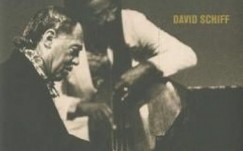

IN 1933, HAVING BUILT a national reputation as the composer-bandleader toiling nightly for white audiences at the Cotton Club, Edward Kennedy “Duke” Ellington and his “jungle” orchestra embarked on their first European tour. The following year, British music critic Constant Lambert proclaimed that Ellington was “skillful as compared with other jazz composers,” but that his music could stand alongside that of the European masters: “I know of nothing in Ravel so dexterous […] nothing in Stravinsky more dynamic.” The names of Ralph Vaughan Williams, Paul Hindemith, and César Franck were dropped in as well. Such proclamations by Lambert and his European peers were pounced on by American journalists, who responded with headlines like “Harpsichords and Jazz Trumpets” and “‘Hot Damn!’ Says Ellington When Ranked with Bach.” Ellington’s media image was reborn.

Comparisons between the black jazz giant and white European classical composers have been a touchy issue ever since. They even form the basis for a central tension within jazz criticism. Do efforts to differentiate the compositional vision Ellington pioneered within jazz from classical concert music represent a surrender to the racist white hegemony that has kept black music in the artistic and financial ghetto of “popular” music? Or do claims of commensurability between jazz and classical spheres pander to white conceptions of cultural legitimacy at the expense of the jazz tradition and Ellington’s own individual artistry? Some latter-day writings on Ellington, such as John Howland’s Ellington Uptown: Duke Ellington, James P. Johnson, and the Birth of Concert Jazz and many of the essays collected in Mark Tucker’s seminal The Duke Ellington Reader, emphasize the composer’s lifelong commitment to the creation of a “negro music” in quasi- (or explicitly) symphonic forms, and his efforts to present these extended works in Carnegie Hall and other iconic venues for European concert music. But this understanding of Ellington’s ambitions may only bring the central question into sharper relief: Does placing Ellington’s music alongside that of canonical European composers denigrate jazz, or celebrate its universality?
David Schiff’s The Ellington Century marks a significant if idiosyncratic milestone in this epic debate, not least in attempting to avoid uncritical appeals to the traditional classical/jazz schism. Schiff, also an active composer, is a music professor at Reed College whose previous books on Elliott Carter and George Gershwin indicate the breadth of his interests in both classical and jazz concert music. With the sly disclaimer that he is “not a historian either by training or by temperament,” Schiff adopts a conversational voice and deceptively improvisatory approach that masks an impressive organization and depth of vision. Intent on avoiding old, unfruitful academic debates, Schiff returns, as often as possible, to the Ellingtonian source: the musical scores, recordings, and other archival documents that are too often treated as secondary to preconceived theoretical programs in contemporary jazz studies. The boundaries between each chapter’s stated theme — “Color,” “Rhythm,” “Harmony,” “Love,” and the like — are quite fluid, and each offers broad or specific comparisons between compositions by Ellington (and composing partner Billy Strayhorn) such as “Satin Doll” or “Prelude to a Kiss” and classical works including Maurice Ravel’s La Valse, Arnold Schoenberg’s Pierrot Lunaire, and Alban Berg’s Lyric Suite. Though his primary focus is on the works’ “purely” musical qualities, Schiff interpolates the historical context of the pieces or the composers’ careers as he sees fit, and occasionally veers into related analyses of important jazz recordings by Bessie Smith (“St. Louis Blues”), Miles Davis (“Freddie Freeloader”), or Charles Mingus (“Goodbye Pork Pie Hat”). Schiff takes risks frequently and without apology, proposing stylistic and aesthetic connections that range from the playful to the revelatory. Parallels between the modal jazz techniques of pianist Keith Jarrett and Dimitri Shostakovich’s Opus 87 (which Jarrett eventually recorded) come across as so evidently accurate that it’s a wonder they haven’t been made more often. A harmonic analysis of “Goodbye Pork Pie Hat” is equally convincing and provocative; if the further connections between Mingus’s piece and the Lento movement of Bela Bartok’s String Quartet No. 2 that Schiff pursues are a bit of a stretch, the tangent can be forgiven, as few writers have even attempted such an exercise.
As they should be, detailed, often technical analyses of Ellington’s own compositions are at the heart of the book. Highlights include a delightfully detailed breakdown of the 1940 rhythm-changes juggernaut “Cotton Tail,” focusing on a broadly formalistic approach to rhythmic and harmonic structures. Commentators have long equated the jarring, multi-faceted music of modernist composers like Bartok and Stravinsky with visual cubism, and Schiff’s discussion of those composers’ juxtapositions of duple and triple meter is a tangible point of entry into the use of similar techniques in ring shouts, Afro-Cuban forms, and Tin Pan Alley songs, as well as ambitious jazz works like James P. Johnson’s stride piano anthem “Carolina Shout” and Eric Dolphy’s Monk tribute “Hat and Beard.”
Some of Schiff’s less technical discussions are relatively accessible to non-musicians, such as his outline of the controversial three-movement “tone parallel” Black, Brown, and Beige — provided readers are willing to listen to the complete 45-minute work as it was recorded live-to-offstage-disc-cutter in 1943. Schiff’s biographical reading of Ellington’s early extended composition Reminiscing in Tempo, including references to photos of the dignified Ellington family, makes especially bold conjectures about the connections between musical and non-musical spheres. The 1935 four-part work was likely expanded from a shorter dance piece, a pragmatic treatment of existing material foreshadowing Ellington’s flexible approach to the album-length suite form he favored in later years. Hearing Reminiscing as a “Mahlerish fox-trot,” Schiff underscores the compositional restrictions that Ellington chose to exercise in this hymn-like tribute to his recently deceased mother, whose “religious devotion and middle-class background” would have been poorly represented by blues or plunger-muted “jungle” music. These were the kind of racialized jazz-pop signifiers that helped Ellington gain fame at the Cotton Club, and when he moved away from them, their absence was bemoaned by (mostly white) critics. The mixed reception of the genre-crossing Reminiscing set a pattern for Ellingtonian criticism that continued throughout the century. Even today, Schiff’s final chapter (“God”), though brief, is a pioneering attempt to give serious musical consideration to Ellington’s late-career series of Concert(s) of Sacred Music, a vast repertoire that has remained virtually untapped in jazz studies, thanks to its extended format, overtly devotional subject matter, and emphasis on vocal performance — all anathema to many jazz purists.
Readers seeking scholarly rigor may find some of Schiff’s metaphorical flights a bit high-altitude. Describing “Such Sweet Thunder” as conjuring “the hootch in the treble and cootch in the bass” adds little to an otherwise illuminating analysis, and no one is likely to accuse the author of under-reading the programmatic relationships between Ellington’s late-1950s Shakespeare Suite and the plays — Macbeth, in the case of “Such Sweet Thunder” — they reference. Starting the book with “Color,” its most abstract and subjective chapter, relying heavily on impressionistic prose painting, doesn’t make entering Schiff’s labyrinth of technical and aesthetic commentary any easier. To be fair, Schiff allows himself no more poetic license than some of his subjects allowed themselves, as his citations from the wacky, quasi-mystical correspondence between Schoenberg and painter Wassily Kandinsky, or as Ellington’s florid autobiography Music Is My Mistress (“the plane roars on to Atlanta … or is it Atlantis?”) implicitly remind us.
At its best, though, Schiff’s imaginative writing can be as inspiring as it is esoteric. Metaphors that playfully racialize the piano keyboard’s black and white keys — Ellington’s 1940 “Koko” is in E-flat minor, and therefore “black” — may push some readers’ buttons, but Schiff’s imagery leads to insights that might not surface in a more sober effort. One of the most important motivic devices in “Ko-Ko” is a short-short-long rhythmic sequence, similar to the opening of Beethoven’s Fifth Symphony. Placing Ellington’s use of the device alongside other World-War-II-era composers’ borrowings from Beethoven, Schiff reads “Ko-Ko” as “a defiant transfer of the image of heroism from white to black […] using the most esteemed devices of European art music as emblems of African American integrity, pride, and power.” Schiff is equally provocative on topics that have long been controversial among jazz performers, fans, and scholars, describing the rhythmic feel of “swing” less as a rhythmic technique than an “ethical ideal,” and noting that the way Ellington wrote for his musicians enabled him to “play his orchestra with the same rhythmic abandon that [pianist Art] Tatum brought to the piano.”
Calling The Ellington Century the tremendous achievement that it is requires a few caveats, especially regarding readership. Schiff’s writing is eminently readable, and many technical terms are dutifully defined upon introduction; still, the profusion of musical vocabulary will be daunting for non-musicians. In this respect, the absence of staff-line music examples may be more frustrating for specialists, who would find them useful, than it is liberating for the lay readership, who could simply ignore them. Likewise, while many of the cited recordings are available online, the lack of any discography or listing of referenced scores reinforces the “if you have to ask” atmosphere: even musicians coming from outside a jazz or twentieth-century- classical background — or, ideally, both — may balk at tracking down all the book’s references.
Caveats aside, The Ellington Century does much to make good on the argument Schiff offers in its preface, that “an alternative view of twentieth-century music can emerge once we think of musicians not as warring clans or isolated monads but as collaborators in … the invention of a music that reflected the new technical and social realities of the time.” Many writers have celebrated the Duke as “beyond category,” a phrase that has traditionally been invoked to separate him from other composers, both inside and outside of jazz, rather than connecting him to a wider musical milieu. Even a recent biography, Harvey Cohen’s Duke Ellington’s America, perpetuates the framing of Ellington’s career as a Homeric battle between exceptional authenticity and mass commercialism. Schiff’s lack of concern for the specter of commercialism, real or imagined, may be the element that allows him to perceive direct and indirect lines of dialogue between spheres of European classical and American jazz, and to convincingly expose these connections as robust, tenacious, and important. The Ellington Century demonstrates that these relationships were not only inevitable, but more central to Ellington’s body of work than many proponents of jazz as “America’s classical music” have been willing to accept. Their reluctance is easy enough to understand: If Ellington’s sui generis jazz actually does bear significant parallels with the classical tradition, the political imperative to place Ellington somewhere “beyond” all available categories might disintegrate.
That said, Schiff’s attempt to treat Ellington’s compositions as “pure music” risks coming across as utopian. It may be true that those “old categories of high and low, elite and vernacular […] and black and white” fatally misrepresented the “shared worldwide project” of universal brotherhood with which the composer often allied himself. But it is also possible to understate the critical role these “habitual dualisms” played in the music that Ellington and his European art-music counterparts produced, something Schiff himself highlights when discussing Stravinsky’s awkward forays into “jazz” music. It isn’t Schiff’s intention to sidestep issues of racism and cultural appropriation; if anything, he takes pains to pinpoint the faults of race-based presumptions about musical identity. But there’s no getting around the fact that, had Ellington written Agon, or Stravinsky “Ko-Ko,” those pieces would have been — and would likely continue to be — received very differently. Schiff’s ability to give each their due is no small thing. The difficulty is that entire careers, and a good deal of institutional funding, has been dedicated to establishing jazz as (African) America’s only indigenous art, with Ellington as its figurehead. For some interested parties, diminishing Ellington’s antagonism to white European cultural values — his “trickster” role, as some cultural theorists might put it — is too high a price to pay for an alternative understanding of his artistry, however nuanced or musically well-grounded.
A single book is unlikely to tear down the walls between jazz and classical cultures, which have always been “very easy to assemble, but hard to take apart,” as Slim Gaillard would say. Musicologists and other readers whose main interests lie outside of jazz may not even come across The Ellington Century, which its publisher categorizes as “jazz history and criticism.” Still, Schiff is fearless in chipping away at these long-standing divisions, and the results are instructive. The music doesn’t lie: primarily cultural accounts of the jazz tradition — or any tradition — that attempt to explain it without confronting the tangible realities of pitch, harmony, and rhythm often miss the boat, and the beat. In treating compositional techniques as culture, Schiff’s approach is a much-needed antidote, or at least a supplement, to such accounts, and marks a critical step in understanding the stylistic breadth, sensual beauty, and political power of Ellington’s music.
