
Citigroup CEO’s millions

While Americans lost their homes and jobs, the (newly ousted) Vikram Pandit raked in an obscene payday

Topics: Bank Bailout, Vikram Pandit, Great Recession, Citigroup, Wall Street, Credit Crunch, ,

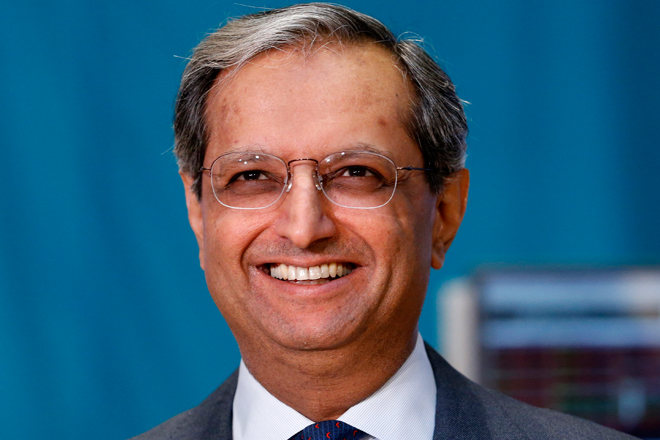
Citigroup CEO's millionsVikram Pandit (Credit: Reuters/Brendan McDermid)

The news that Vikram Pandit is out as Citigroup’s CEO prompts a brief stroll back through the subprime mortgage crisis memory lane.

Pandit is often lumped in with the Wall Street CEOs who were responsible for the great financial crisis, but that’s not quite accurate. His initial appointment as CEO came in December 2007, a month after his predecessor, Chuck Prince, was ousted for financial losses associated with subprime mortgages gone bad. Pandit had no previous background in commercial banking — he was a hedge fund trader who’d cashed in by selling his fund to Citigroup. He wasn’t one of the Citi execs busily structuring synthetic collateralized debt obligations out of dodgy mortgages and then pawning them off to unwary clients. His job was to clean up the mess.

If we were inclined to be sympathetic, we might look at Pandit’s five-year tenure and acknowledge that steering the world’s most unwieldy financial services conglomerate through the global economic crash and its aftermath was no easy task. The implosion of the subprime mortgages that Citi bundled up into exotic securities touched off the worst economic crisis since the Great Depression. Citigroup barely survived — and only with the help of a massive bailout. When your company defines the concept “Too Big to Fail,” you are faced, right off the bat, with an insuperable marketing challenge.

But when the topic is Wall Street CEOs, we’re not inclined to be charitable. Because’s here’s the bottom line. Citigroup survived, and Pandit made a lot of money, while millions of Americans lost their homes and jobs for reasons directly tied to the games that Citigroup played with mortgages. For the five years of Pandit’s tenure, those Americans have struggled to find their footing — indeed, for the average American, median household income has actually fallen while Pandit has been CEO.

During that same period, however, the richest Americans rebounded quite nicely, and grabbed an even bigger share of the pie. And just as Citigroup defined the concept of “Too Big to Fail” so does Vikram Pandit define the 1 percent.

From Bloomberg:

If no alterations are made to Pandit’s compensation package, Citigroup will have paid him about $261 million in the five years since he became CEO, including his personal compensation and about $165 million for buying his Old Lane Partners LP hedge fund in 2007 in a deal that led to his becoming CEO.

$261 million. That’s probably adequate compensation for Pandit’s tough job.

Continue Reading Close
Andrew Leonard

Andrew Leonard is a staff writer at Salon. On Twitter, @koxinga21.

Next Article

Featured Slide Shows

What To Read Awards: Top 10 Books of 2012 slide show

close X
  • Share on Twitter
  • Share on Facebook
  • Thumbnails
  • Fullscreen
  • 1 of 10
  • 10. "The Guardians" by Sarah Manguso: "Though Sarah Manguso’s 'The Guardians' is specifically about losing a dear friend to suicide, she pries open her intelligent heart to describe our strange, sad modern lives. I think about the small resonating moments of Manguso’s narrative every day." -- M. Rebekah Otto, The Rumpus

  • 9. "Beautiful Ruins" by Jess Walter: "'Beautiful Ruins' leads my list because it's set on the coast of Italy in 1962 and Richard Burton makes an entirely convincing cameo appearance. What more could you want?" -- Maureen Corrigan, NPR's "Fresh Air"

  • 8. "Arcadia" by Lauren Groff: "'Arcadia' captures our painful nostalgia for an idyllic past we never really had." -- Ron Charles, Washington Post

  • 7. "Gone Girl" by Gillian Flynn: "When a young wife disappears on the morning of her fifth wedding anniversary, her husband becomes the automatic suspect in this compulsively readable thriller, which is as rich with sardonic humor and social satire as it is unexpected plot twists." -- Marjorie Kehe, Christian Science Monitor

  • 6. "How Should a Person Be" by Sheila Heti: "There was a reason this book was so talked about, and it’s because Heti has tapped into something great." -- Jason Diamond, Vol. 1 Brooklyn

  • 4. TIE "NW" by Zadie Smith and "Far From the Tree" by Andrew Solomon: "Zadie Smith’s 'NW' is going to enter the canon for the sheer audacity of the book’s project." -- Roxane Gay, New York Times "'Far From the Tree' by Andrew Solomon is, to my mind, a life-changing book, one that's capable of overturning long-standing ideas of identity, family and love." -- Laura Miller, Salon

  • 3. "Billy Lynn's Long Halftime Walk" by Ben Fountain: "'Billy Lynn's Long Halftime Walk' says a lot about where we are today," says Marjorie Kehe of the Christian Science Monitor. "Pretty much the whole point of that novel," adds Time's Lev Grossman.

  • 2. "Bring Up the Bodies" by Hilary Mantel: "Even more accomplished than the preceding novel in this sequence, 'Wolf Hall,' Mantel's new installment in the fictionalized life of Thomas Cromwell -- master secretary and chief fixer to Henry VIII -- is a high-wire act, a feat of novelistic derring-do." -- Laura Miller, Salon

  • 1. "Behind the Beautiful Forevers" by Katherine Boo: "Like the most remarkable literary nonfiction, it reads with the bite of a novel and opens up a corner of the world that most of us know absolutely nothing about. It stuck with me all year." -- Eric Banks, president of the National Book Critics Circle

  • Recent Slide Shows

  • Share on Twitter
  • Share on Facebook
  • Thumbnails
  • Fullscreen
  • 1 of 10

More Related Stories

Comments

21 Comments

Comment Preview

Your name will appear as username ( profile | log out )

You may use these HTML tags and attributes: <a href=""> <b> <em> <strong> <i> <blockquote>