

 As the US campaigns clash over what President Barack Obama did and didn’t know about the attack on a US consulate in Benghazi on Sept. 11, there is real news happening in Libya that could have a real impact on the country, the region and the world.
Here are a few things the media should be writing about instead.
THE BENGHAZI KILLERS ‘BROUGHT TO JUSTICE’?
In a raid in Cairo on Wednesday, Egyptian security forces killed a Libyan man they say was involved in September’s attack on the US consulate.
Egyptian officials said the raid targeted a group of militants suspected of having connections to Al Qaeda, but did not offer any explanation as to why they thought the man, identified as Karim Ahmed Essam el-Azizi, might have been involved in the Benghazi assault.
Meanwhile, US officials are questioning a Tunisian man stopped by Turkish officials last month as he tried to enter the country under a false passport. While two Tunisian men were stopped at the time, officials say only one is under investigation.
The man has been identified as Ali Ani al-Harzi, who is now in custody back in Tunisia.
A SECURITY VACUUM, REVENGE AND AL QAEDA
The security vacuum plaguing Libya since the fall of Muammar Gaddafi has allowed Al Qaeda sympathizers to set up shop.
It is an Al Qaeda-styled group known as Ansar al-Sharia that claimed responsibility for the attack on the US consulate. A Tunisian court on Wednesday sentenced its leader, Abu Ayub, to one year in prison for inciting the attack.
But until the Libyan government can re-build its own security forces, Al Qaeda sympathizers are likely to remain.
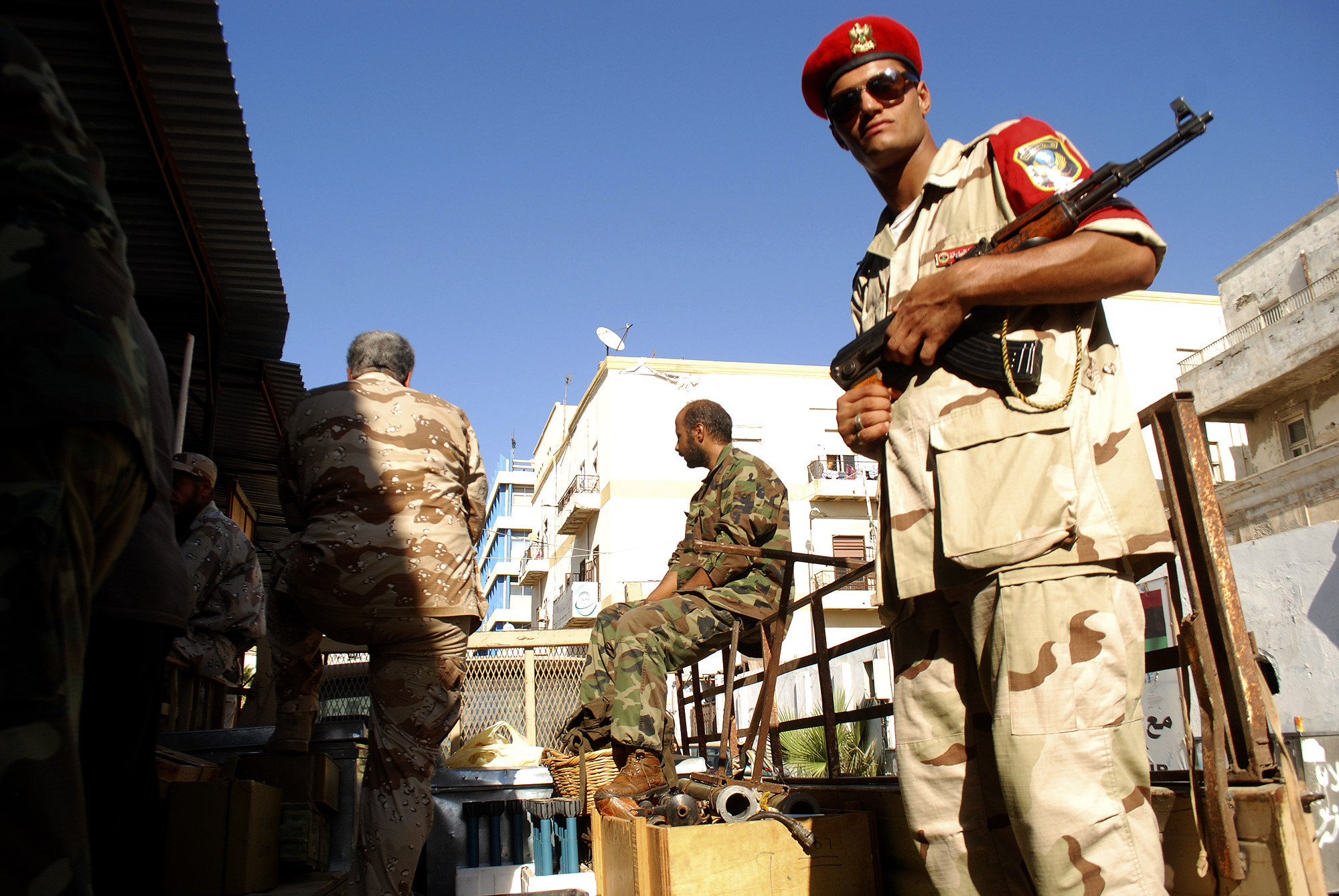
While the rebel militias that led the uprising and ultimately the toppling of Gaddafi have not disarmed and have largely taken over security operations for the country, they act with little oversight from the civilian government. The groups, many of them in competition with each other, often only add to the security chaos.
The Libyan militias launched an all out assault on Bani Walid, a former Gaddafi stronghold this week in what leaders there said amounted to a revenge attack. Militia leaders said the town was sheltering former Gaddafi officials. Lingering conflicts like this one are fueling divisions and making it more difficult for the civilian government to regain control.
LOOSE WEAPONS
The chaos and continuing conflict has made it difficult for the civilian government to control the flow of weapons. Many of those weapons are making their way out of the country and into conflicts elsewhere. Libyan arms are believed to be flooding Syria, Mali and Egypt’s Sinai Peninsula, to name a few.
Without more attention to the issue of loose weapons, human rights groups worry they could be used in conflicts far and wide for decades to come, including by terrorist groups fighting the United States and its allies.
TROUBLE IN TRIPOLI
Libya’s General National Congress dismissed the country’s first elected prime minister earlier this month. The Congress voted to remove Prime Minister Mustafa Abu Shagur after he failed to form a cabinet that met with its approval.
The decision to remove Shagur does not bode well for Libya’s future, which is trying to establish a central government that can assert control over a deeply factionalized population.
Shagur told the General National Congress that he was trying to compose a cabinet that didn’t reflect the country’s ethnic or geographic differences.
But officials from cities like Zawiya, Benghazi and Misrata — from which came some of the most successful rebel militias — have demanded a greater share of representation in the new government.
The General National Congress will now elect a new prime minister. It’s choice could have major implications for the region and the world.
