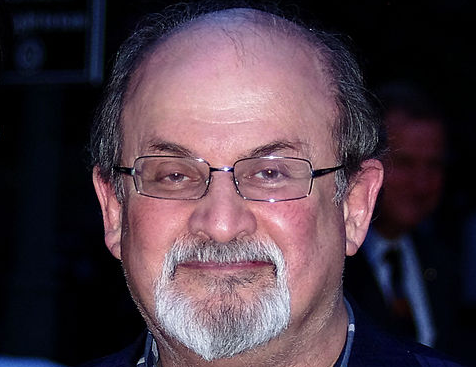

Salman Rushdie and John le Carré reconcile after 15-year feud

The British writers regret their verbal battle, which began in 1997

Topics: Britain, Writers, literature, Salman Rushdie, John Le Carre, Books, literary feuds, , ,

Salman Rushdie and John le Carré reconcile after 15-year feud (Credit: Wikimedia)

After more than a decade of what the Guardian has called ”one of the most gloriously vituperative literary feuds of recent times,” the writers John le Carré and Salman Rushdie have reconciled. The Guardian reports:

Last month, Rushdie told an audience at the Cheltenham literature festival that he “really” admired Le Carré as a writer. “I wish we hadn’t done it,” he said of the 15-year-old feud which played out in the letters pages of the Guardian in 1997.

…Now Le Carré has also extended an olive branch. ”I too regret the dispute,” he told the Times.

According to the Times, the two began arguing “about the merits of freedom of speech versus the limits of religious tolerance,” which began in 1997 when Rushdie penned a letter in the Guardian:

“John le Carré complains that he has been branded an anti-Semite as a result of a politically-correct witchhunt, and declares himself innocent of the charge (The Week, November 15). It would be easier to sympathise with him had he not been so ready to join in an earlier campaign of vilification against a fellow writer.

In 1989, during the worst days of the Islamic attack on The Satanic Verses, le Carré wrote an article…and rather pompously, joined forces with my assailants”

Drama unfolded on the Guardian’s pages as the two writers exchanged several heated, increasingly juvenile correspondences. Le Carré called Rushdie ”arrogant” and “self-serving,” and Rushdie responded:

After the final letter was published on Nov. 22, 1997, Rushdie told journalist (and mutual friend of le Carré’s) William Shawcross, ”If le Carré wants to get his friends to do a little proxy whinging, that’s his business. I’ve said what I have to say.”

Even the British media eventually grew tired of the literary mudslinging. Not long after the letters were published, Richard Ingrams, the former editor of satire publication Private Eye, said of the spat, ”As I have a low opinion of both of them and can’t bear to read either of their works, I must say I think they are both as bad as each other. Perhaps the solution is they should both sit down and write a book together.”

Although a joint venture doesn’t seem likely, at the Cheltenham literature festival, Rushdie admitted, “I think of ‘Tinker Tailor Soldier Spy’ as one of the great novels of postwar Britain.”

Continue Reading Close

Prachi Gupta is an Assistant News Editor for Salon, focusing on pop culture. Follow her on Twitter at @prachigu or email her at pgupta@salon.com.

Next Article

Featured Slide Shows

What To Read Awards: Top 10 Books of 2012 slide show

close X
  • Share on Twitter
  • Share on Facebook
  • Thumbnails
  • Fullscreen
  • 1 of 10
  • 10. "The Guardians" by Sarah Manguso: "Though Sarah Manguso’s 'The Guardians' is specifically about losing a dear friend to suicide, she pries open her intelligent heart to describe our strange, sad modern lives. I think about the small resonating moments of Manguso’s narrative every day." -- M. Rebekah Otto, The Rumpus

  • 9. "Beautiful Ruins" by Jess Walter: "'Beautiful Ruins' leads my list because it's set on the coast of Italy in 1962 and Richard Burton makes an entirely convincing cameo appearance. What more could you want?" -- Maureen Corrigan, NPR's "Fresh Air"

  • 8. "Arcadia" by Lauren Groff: "'Arcadia' captures our painful nostalgia for an idyllic past we never really had." -- Ron Charles, Washington Post

  • 7. "Gone Girl" by Gillian Flynn: "When a young wife disappears on the morning of her fifth wedding anniversary, her husband becomes the automatic suspect in this compulsively readable thriller, which is as rich with sardonic humor and social satire as it is unexpected plot twists." -- Marjorie Kehe, Christian Science Monitor

  • 6. "How Should a Person Be" by Sheila Heti: "There was a reason this book was so talked about, and it’s because Heti has tapped into something great." -- Jason Diamond, Vol. 1 Brooklyn

  • 4. TIE "NW" by Zadie Smith and "Far From the Tree" by Andrew Solomon: "Zadie Smith’s 'NW' is going to enter the canon for the sheer audacity of the book’s project." -- Roxane Gay, New York Times "'Far From the Tree' by Andrew Solomon is, to my mind, a life-changing book, one that's capable of overturning long-standing ideas of identity, family and love." -- Laura Miller, Salon

  • 3. "Billy Lynn's Long Halftime Walk" by Ben Fountain: "'Billy Lynn's Long Halftime Walk' says a lot about where we are today," says Marjorie Kehe of the Christian Science Monitor. "Pretty much the whole point of that novel," adds Time's Lev Grossman.

  • 2. "Bring Up the Bodies" by Hilary Mantel: "Even more accomplished than the preceding novel in this sequence, 'Wolf Hall,' Mantel's new installment in the fictionalized life of Thomas Cromwell -- master secretary and chief fixer to Henry VIII -- is a high-wire act, a feat of novelistic derring-do." -- Laura Miller, Salon

  • 1. "Behind the Beautiful Forevers" by Katherine Boo: "Like the most remarkable literary nonfiction, it reads with the bite of a novel and opens up a corner of the world that most of us know absolutely nothing about. It stuck with me all year." -- Eric Banks, president of the National Book Critics Circle

  • Recent Slide Shows

  • Share on Twitter
  • Share on Facebook
  • Thumbnails
  • Fullscreen
  • 1 of 10

More Related Stories

Comments

6 Comments

Comment Preview

Your name will appear as username ( profile | log out )

You may use these HTML tags and attributes: <a href=""> <b> <em> <strong> <i> <blockquote>