

 When Hurricane Sandy decimated the East Coast, laying waste to coastal towns, flooding main streets, and shutting down power for 8 million people, the U.S.’s 40-year inaction on climate change slapped us in the face. If there was ever a wake-up call, this is it. We can no longer afford to argue whether or not global climate change will affect us. It can, it will, and it already has.
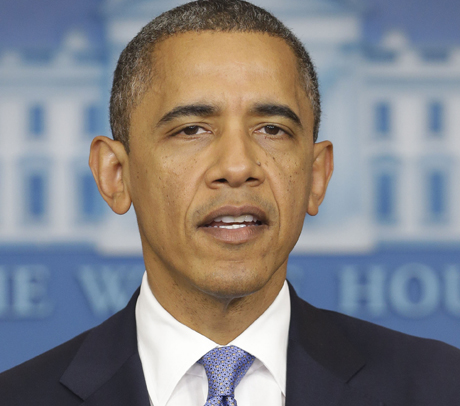
With our climate at a crossroads, I call upon newly re-elected President Obama to take necessary, bold action. We must prepare ourselves for the effects of the climate change we’ve already committed and, most importantly, we must revolutionize the way we operate. The Millennial generation will not accept the status quo, and we will not watch the newly re-elected Congress and president squander the viability of our future resources. We demand that our future not be short-changed for the political profits of today.
Our wealth as a nation blinded us to the destabilization already suffered by the majority of the world. We are no longer exempt—our tax base won’t stop the rising seas, our fortunes won’t halt the positive feedback cycles undermining our agricultural, aquacultural, and economic systems.
But our collective action can. We must, as a nation, commit to reinvesting our time, energy, and financial resources in building an economy that does not sacrifice the ecological stability of the planet. This means admitting that the dinosaur industries that currently dominate our economy aren’t sustainable economically, socially, or environmentally. This means that we must not fear the enormity of the task at hand—we need not only to overhaul our fossil fuel addiction, but also to challenge our Western perceptions of development.
This is not to say we are powerless. We remain the most innovative, well-funded, and resource-rich country in the world. We possess in our communities leaders who envision an equitable future and a private sector with all of the inventive thinking to construct efficient ways of delivering clean energy. We have bountiful prairies, mountains, watersheds, and coastal shores that, if protected and managed properly, could easily provide for the country.
Here are the first steps President Obama can take to a pragmatic, equitable future:
1) Dismantle inequitable subsidies: Oil, coal, and corn subsidies mean that market prices reflect a higher supply than is realistic. Subsidies also fuel colossally inefficient systems that waste precious natural resources and disconnect the consumer from the producer. Stripping subsidies away from large industries will provide incentives both in the private sector (in the research and development of cleaner, more reliable forms of energy and agriculture) and in the consumer households (by encouraging efficiency and empowering consumer choice). Taxpayer money, currently used for subsidizing these industries may be used to finance grid overhaul, public education programs, retrofitting efforts in older cities, off-shore wind farms, etc. President Obama’s administration should work with legislative allies to deconstruct antiquated subsidies in order to better invest in an economy of the future.
2) Reinvest in cities and public infrastructure: By reinvesting in efficient public transport and inner-city education programs, as well as restructuring tax and utility systems to reward high-density communities, cities could become beacons of sustainability. The strongest model of sustainability promotes environmental, social, and economic sustainability equally—we must be careful not to disenfranchise current communities for the sake of old models of environmentalism. Ground-up, neighborhood-based movements utilizing community strengths to tackle community weaknesses combat social and environmental inequities. Urban agriculture, watershed management, and diverse economies are proven steps in the movement toward sustainable cities. President Obama must support energy policies and infrastructure reform that would allow for state and local governments to exercise creativity and innovation.
3) Create jobs through sustainable energy systems: Climate change has been wrongly, and successfully, framed as a choice between the abstract “environment” and the concrete impact of the “economy.” But by reinvesting in long-term, renewable, clean energy (wind, geothermal, sun, cellulosic ethanol), the United States can create high-paying, steady employment while reducing the environmental health costs commonly associated with fossil fuel industries. Why remove a mountain for minimal amounts of coal at the high cost of community health when you can install wind turbines, protect the water, air, and land of the local community, and promote long-term job stability?
4) Ban the XL Keystone Pipeline: Allison Rich investigated the claims of the pipeline’s proponents and found that the proposed project makes no sense economically, socially, or environmentally. None of the profits would stay here. The construction jobs are menial and short-term, a band-aid economic solution to a country that needs economic surgery. We’d get all the pollution but not a drop of the profits.
5) Introduce cap and trade legislation to regulate greenhouse gases: A market of transferable pollution permits with expiration dates would distribute a limited amount of permits (potentially through lottery or auction). The number of permits would originally be determined not by current use, but by what the acceptable amount of pollution is that proves least disruptive. In our case, the number of permits would need to be radically low—I suggest a moderate amount at first, allowing approximately 60 percent of current amount of GHG pollution, with expiration dates. The private sector would be forced to invest in research and development of more efficient, less wasteful practices, and dinosaur industries (those that could not survive without cheap fossil fuels) would give way to more sustainable consumption patterns.
6) Assume responsibility: In order for any of these crucial steps to be taken, we must first recognize the following: The science is indisputable. Hurricane Sandy is only the beginning. As a resource-rich and wealthy country, we’ve been living in a falsely cushioned world. Per capita, we are the most impactful society on this planet. It is our responsibility to quit our selfish behavior. The president should make a public statement regarding not only our disproportionate role in catalyzing climate change, but also our determination to become a more environmentally equitable country.
We’ve waited long enough. We’ve elected you, Mr. President. Now let’s get to work.
