
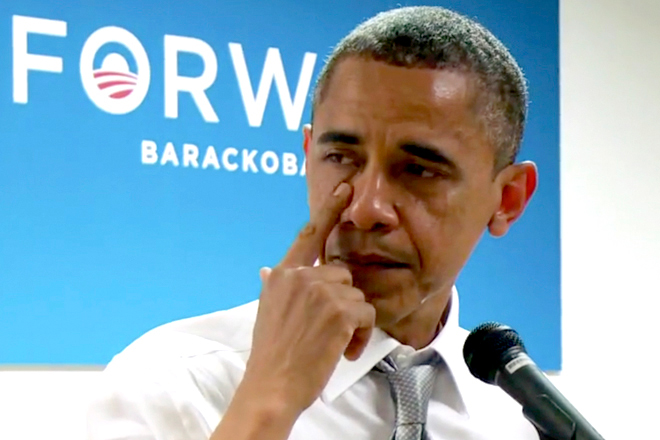

 Young voters surprised pundits and Republicans again this year as we turned out in record numbers to vote, joining key constituencies including African Americans, Hispanics, and women to reelect President Obama. Composing 19 percent of the electorate, up from 18 percent in 2008 and 12 percent in 2004, young Americans demonstrated their importance to a growing progressive coalition.
Many question, however, whether our diverse and unprecedented coalition will be able to build on this foundation and sustain the power of our ideas and values throughout our lifetimes. Or, like the Reagan coalition after 1990, are we fated to fracture as a political force by 2016? Some suggest that the strong generational power of today’s 18-30-year-olds will become inconsequential as the hype dies down and we grow up. Our next steps are critical.
Young progressives are a distinct and large population that favors pragmatic problem-solving, opportunity for all, justice and equality, and government’s promotion of such ideals. Identifying more strongly with values than with a political party, we are a significant portion of President Obama’s alliance. Yet given the diversity of the Obama coalition, someone must lead productive grassroots dialogue, finding a broader progressive voice. As members of the largest and most diverse generation in American history, young progressives are the best candidates for the job.
Rather than waiting 30 or 40 years to see how this pans out, let’s write the story ourselves today. Young people are powerful influencers of elections, and we’ve built a strong foundation on which to stand. But it’s up to us to define citizenship for our generation and maintain a unified commitment to progressive values to solidify the political shift.
One lacking aspect of Reagan’s group of committed, conservative supporters was a shared vision of active citizenship and a space within which to exercise it. When the candidate went away, they left. With our core values gaining increased momentum, civic engagement is more important today than ever.
The renaissance of bold millennial progressivism will not be realized in the federal offices of Washington, but on America’s sidewalks and street corners. Generations before us used Kiwanis and Rotary clubs, consciousness raising groups, and bowling leagues to facilitate civic infrastructure; today, we must take a critical look at how we support people and ideas to build a better America for all. Our model is still being formed, but we need to build an infrastructure that will make the progressive coalition last beyond the campaign cycle.
With this in mind, Roosevelt Institute | Pipeline is capitalizing on a unique moment in history to engage young people in activating progressive ideas across the nation. Obama for America led a national dialogue throughout the election on what values shape our nation, but constructive exchangement must continue in the context of community action. In order to do this, we need to create spaces to facilitate the exchange of ideas on the local level, engaging all demographics of the progressive coalition. By leading conversations on local issues in 15 cities, we are supporting and empowering individuals to be active citizens and translate the national dialogue to the community level.
The Pipeline chapter in New Orleans, LA is holding discussions among young progressives about public policy issues in its city. The members pick a new topic every few weeks, build a diverse group of people working in different fields, and engage in dialogue about potential solutions for problems facing their neighborhoods. The result is better informed, more engaged people, a community of progressives, and a platform for influence.
In San Francisco, CA, the Pipeline chapter convened tech start-up leaders to create a space to refine ideas for social entrepreneurship. By creating a local space to support young people enacting innovative ideas, members are building an infrastructure for progressives outside of politics. Moreover, they are engaging individuals from both the public and private sectors.
Creating progressive infrastructure will ultimately yield decisions that change our economy and society. For example, I was struck recently when a relative turned down a lucrative deal because the organization was enacting anti-gay policies in conducting business. In making this decision, he took a stand for what he believed in and created a ripple effect that will influence that business’s chances of success.
Hands-on opportunities to connect constituencies and build a progressive community are also sprouting up across the nation. Organizations such as the Future Project are creating innovative ways to connect young people with students and inspire brighter futures. At Groundswell, organizers are helping community members leverage their collective buying power to bolster the local clean energy sector. Like Pipeline, both of these organizations are leveraging the power of the diverse progressive coalition.
To borrow from Roosevelt Institute President Felicia Wong, who spoke to a group of us young progressives last weekend in Hyde Park, NY, “Great ideas and great people rise up together.” Before we begin the next campaign cycle, let’s think critically about how civic engagement translates progressive values into change. When dozens, hundreds, thousands of local actions take place and we create a shared space to support them, we catalyze progress. If the conversation on what ideas and values shape our nation stagnates, we risk losing the foundation progressives have built over the last five years.
