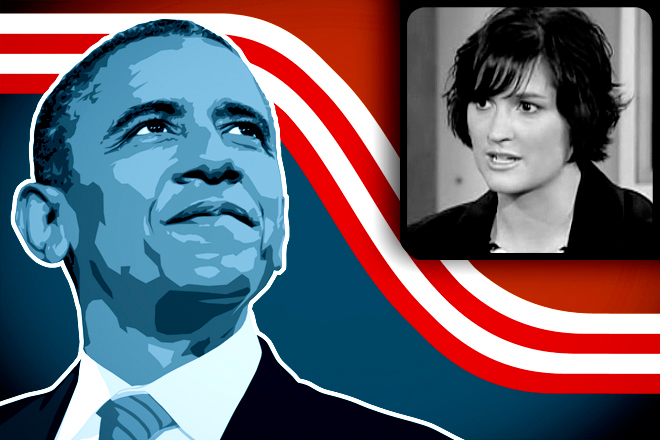

Dear Mr. President: “Fix that”

Twelve years after the 2000 Election crisis, dismal voting conditions continue. It's time for real reform

Topics: Barack Obama, Sandra Fluke, Voting Rights, election day voting, One request for President obama, campaign reform, election reform

Dear Mr. President: (Credit: AP/Carolyn Kaster/Salon/Benjamin Wheelock)

Those of us who were still awake late into election night 2012 heard President Obama say, “I want to thank every American who participated in this election, whether you voted for the very first time or waited in line for a very long time. By the way, we have to fix that.”  If I could ask President Obama to do just one thing over the next four years, I would ask him to use his leadership to “fix that.”

Twelve years after the startling disarray of the 2000 election, in too many states dismally bad election administration has become the expected course. Hours-long lines, malfunctioning voting machines, and hopelessly confusing ballots are the headlines potential voters see.  How can we expect that busy citizens will not be deterred from voting by the thought of such barriers? Every botched election and new barrier to voting causes even more citizens to completely disengage from their own governance.

This year, we saw thousands of our fellow citizens still wait in those endless lines, cast provisional ballots and file complaints when they were illegally denied the opportunity to vote.  American citizens are literally fighting for their right to vote.  Now it’s time that Congress and President Obama step to that fight.

This election season, the barriers to voting only grew worse as a multitude of states limited early voting and enacted voter ID laws designed to disenfranchise targeted communities of color, students and other groups.  Since election night, we’ve learned of yet another threat to voting rights.  The Supreme Court will hear a case challenging aspects of the Voting Rights Act, expected to result in a weakening of the Justice Department’s ability to protect voters from discriminatory election regulations.  The case likely would not have been heard if Congress had headed the court’s call to update election legislation several years ago.

The court’s call wasn’t the only one unheard by Congress.  Five years ago, the Brennan Center for Justice at NYU Law and the Lawyers’ Committee for Civil Rights Under Law set out an agenda for federal election reform, including improving voter registration, electronic voting, and election administration, as well as preventing disenfranchisement and granting voting rights to unfairly excluded citizens.  Five years later, we’ve accomplished little more than adding problems to the agenda to be addressed. Several members of Congress have already proposed legislation that begins to address these concerns, but a more comprehensive approach is needed, as is forward momentum. The president’s leadership can help on both of those points.

As all of us should, I plan on asking the president to do a lot more than just one thing in his next term, and I’m sure he will deliver.  I hope he makes progress on his policy agenda, but long-term substantive progress will be jeopardized if we don’t make procedural progress.  So while he attends to the immigration reform and economic protections our democracy voted for, I’m also asking that he and Congress prioritize repairing and protecting our democracy itself.  Consider the thousands who stayed in line for hours to vote to be a mandate for reform.

Continue Reading Close

Next Article

Featured Slide Shows

What To Read Awards: Top 10 Books of 2012 slide show

close X
  • Share on Twitter
  • Share on Facebook
  • Thumbnails
  • Fullscreen
  • 1 of 10
  • 10. "The Guardians" by Sarah Manguso: "Though Sarah Manguso’s 'The Guardians' is specifically about losing a dear friend to suicide, she pries open her intelligent heart to describe our strange, sad modern lives. I think about the small resonating moments of Manguso’s narrative every day." -- M. Rebekah Otto, The Rumpus

  • 9. "Beautiful Ruins" by Jess Walter: "'Beautiful Ruins' leads my list because it's set on the coast of Italy in 1962 and Richard Burton makes an entirely convincing cameo appearance. What more could you want?" -- Maureen Corrigan, NPR's "Fresh Air"

  • 8. "Arcadia" by Lauren Groff: "'Arcadia' captures our painful nostalgia for an idyllic past we never really had." -- Ron Charles, Washington Post

  • 7. "Gone Girl" by Gillian Flynn: "When a young wife disappears on the morning of her fifth wedding anniversary, her husband becomes the automatic suspect in this compulsively readable thriller, which is as rich with sardonic humor and social satire as it is unexpected plot twists." -- Marjorie Kehe, Christian Science Monitor

  • 6. "How Should a Person Be" by Sheila Heti: "There was a reason this book was so talked about, and it’s because Heti has tapped into something great." -- Jason Diamond, Vol. 1 Brooklyn

  • 4. TIE "NW" by Zadie Smith and "Far From the Tree" by Andrew Solomon: "Zadie Smith’s 'NW' is going to enter the canon for the sheer audacity of the book’s project." -- Roxane Gay, New York Times "'Far From the Tree' by Andrew Solomon is, to my mind, a life-changing book, one that's capable of overturning long-standing ideas of identity, family and love." -- Laura Miller, Salon

  • 3. "Billy Lynn's Long Halftime Walk" by Ben Fountain: "'Billy Lynn's Long Halftime Walk' says a lot about where we are today," says Marjorie Kehe of the Christian Science Monitor. "Pretty much the whole point of that novel," adds Time's Lev Grossman.

  • 2. "Bring Up the Bodies" by Hilary Mantel: "Even more accomplished than the preceding novel in this sequence, 'Wolf Hall,' Mantel's new installment in the fictionalized life of Thomas Cromwell -- master secretary and chief fixer to Henry VIII -- is a high-wire act, a feat of novelistic derring-do." -- Laura Miller, Salon

  • 1. "Behind the Beautiful Forevers" by Katherine Boo: "Like the most remarkable literary nonfiction, it reads with the bite of a novel and opens up a corner of the world that most of us know absolutely nothing about. It stuck with me all year." -- Eric Banks, president of the National Book Critics Circle

  • Recent Slide Shows

  • Share on Twitter
  • Share on Facebook
  • Thumbnails
  • Fullscreen
  • 1 of 10

More Related Stories

Comments

16 Comments

Comment Preview

Your name will appear as username ( profile | log out )

You may use these HTML tags and attributes: <a href=""> <b> <em> <strong> <i> <blockquote>