

The proliferation of drones in domestic law enforcement and beyond has been boosted on Capitol Hill by a 60-representative strong, bipartisan “drone caucus,” according to an investigative report by the Center for Responsive Politics and Hearst newspapers.
Pushing an agenda to hurry surveillance drones into the domestic market, even though many questions about the ethics and safety of their deployment remain unanswered, has earned members of the House Unmanned Systems Caucus $8 million in drone-related campaign contributions, the investigation revealed.
The report detailed how legislative efforts have ensured a speedy timeline for putting drones in the hands of local police departments as well as private corporations:
Domestic use of drones began with limited aerial patrols of the nation’s borders by Customs and Border Patrol authorities. But the industry and its allies pushed for more, leading to provisions in the FAA Modernization and Reform Act, signed into law on Feb. 14 of this year.
The law requires the FAA to fully integrate the unmanned aerial vehicles, or UAVs, into national airspace by September 2015. And it contains a series of interim deadlines leading up to that one: This month, the agency was supposed to produce a comprehensive plan for the integration, and in August it was required to have a plan for testing at six different sites in the U.S. Neither plan has been issued.
The CRP and Hearst report stressed that concerns about whether drones risked in-air collisions with other aircraft and, more crucially for civil liberties advocates, whether their use in surveillance activity would exacerbate privacy invasions have not been adequately addressed by lawmakers.
“Based on current trends, technology development, law enforcement interest, political and industry pressure, and the lack of legal safeguards – it is clear that drones pose a looming threat to Americans’ privacy,” said Jay Stanley, a senior policy analyst with the American Civil Liberties Union.
Criticism of drones, often owing to their association with U.S. shadow wars abroad, often fails to mention the benefits proponents of domestic drone use note. As the CRP report states, “Many potential uses for unmanned aircraft, which are cheaper to operate than piloted planes or helicopters, have been identified. Among them: monitoring pipelines and power lines, finding lost hikers, surveying crops, and assessing environmental threats and damage from natural disasters.”
As Sen. Joe Manchin, D-W.Va., co-chairman of the smaller, eight-member Senate drone caucus, said, the use of drones “carries great potential – and great risk.” It is an attitude less evident in the House drone caucus, with its push for speedy legislation.
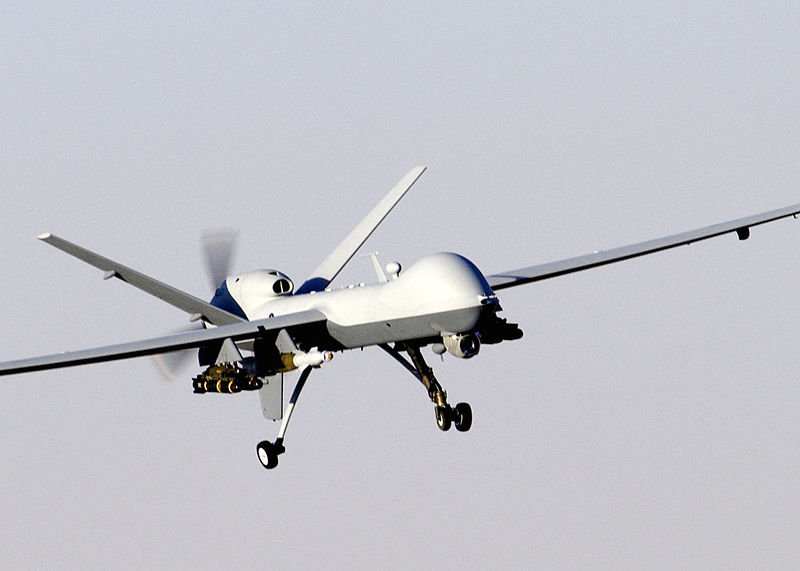
A recent story by California Watch reported that the Department of Homeland Security has signed a new $443 million deal with contractor giant General Atomics to purchase 14 additional Predator drones (which would bring their fleet of the aircraft best known for kill strikes in Pakistan to 24). It is further evidence that the introduction of drones into domestic law enforcement is already a reality, a done-deal in need of oversight and scrutiny.
As Salon has reported, civil liberties advocates and attorneys have opposed police forces acquiring drones at a local level. The ACLU of Northern California, for example, has promised to question and challenge the Alameda County sheriff’s plans to use drones. The latest report from CRP and Hearst makes clear that the debate about domestic drones must also be a national one.
