
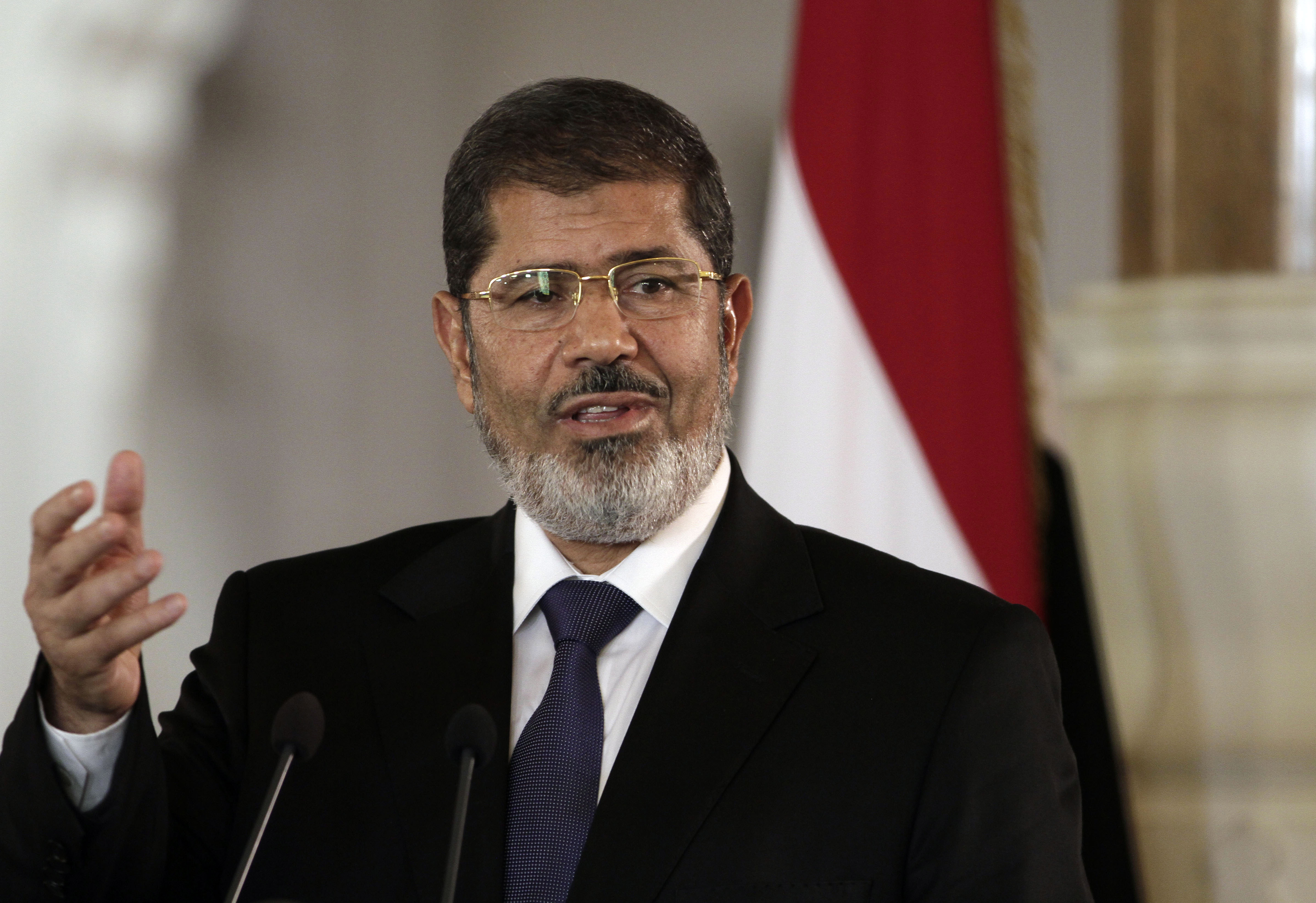

 CAIRO, Egypt — Tens of thousands of Egyptians poured into Cairo’s Tahrir Square Friday in the latest protests against newly-elected Muslim Brotherhood President Mohamed Morsi.
At one of the largest protests yet against Morsi’s five-month rule, demonstrators in the iconic plaza waved anti-Brotherhood signs and chanted against the leader, who they say is taking the country back toward dictatorship. Morsi made a presidential decree on Nov. 22 that gave him broad powers immune from judicial review.
In the same breath, anti-Morsi protesters also voiced opposition to the Brotherhood-dominated constitutional committee that last night rammed through a draft constitution that lacked the support of Egypt’s Coptic Church and many secular representatives.
In a marathon session that ended in the early hours of Friday morning, the members of the Morsi-allied constituent assembly voted in a new constitution that the New York-based Human Rights Watch says offers only mixed support of key social and political rights.
The document does curb executive power, including limiting the number of presidential terms to two, and Morsi had vowed to scrap his new authority once a new constitution was ratified. The charter still needs to be put to a national referendum.
But Tahrir Square protesters, many of whom fought in Egypt’s 18-day uprising nearly two years ago to remove the autocrat Hosni Mubarak, were unmoved by the provisions. Many said said they did not believe Morsi would concede power.
“Egypt is going down a very dangerous path and right now, and we have two choices: an Islamic dictatorship or freedom and democracy,” said 48-year-old financial manager Sayed Al Sherbine, in Tahrir.
Suspicion of the powerful Brotherhood organization that supported Morsi’s presidential campaign also ran deep.
“Islam is a religion of democracy and freedom — and the Muslim Brotherhood does not represent Islam,” Al Sherbine said. “They only represent themselves.”
The current impasse began on Nov. 22 when Morsi announced the edict that granted him sweeping authority. Many observers said the move was a bid to guard the pro-Islamist assembly from potential dissolution by an upcoming Supreme Constitutional Court ruling on the body’s legality. The ruling by the court, which critics say is dominated by Mubarak-era judges, could have again upended Egypt’s already rocky transition to democratic rule.
Earlier this year, the court dissolved a Brotherhood-led parliament as well as a previous constituent assembly that was stacked with Islamists.
Brotherhood officials say Morsi’s maneuvers were meant to head-off a greater battle with the judiciary.
Because Egypt’s elected parliament was dissolved in June, legislative authority is now vested in the president.
But the result has been growing, and there has been vocal opposition to what anti-Morsi demonstrators see as an attempt by the president and his Islamist allies to consolidate power, roll back rights and sideline minorities.
Many protesters in Tahrir admitted to not having read the new constitution but said they were more concerned with the conditions under which it was passed in the assembly.
Of the 85 assembly members that voted Thursday, none were Christians, only four were women and all were Islamists, according to the Associated Press. Rights groups say while the document contains strong provisions against human rights violations like torture and arbitrary detention, it fails to protect women’s rights.
“The main reason why the constituent assembly should have been dissolved by the court is that it is not politically or socially representative,” said Ziad Akl, a senior researcher at the Cairo-based Al Ahram Center for Political and Strategic Studies. “It simply means that the constitution is a continuation of the rule of the [Islamist] majority.”
In Tahrir, the epicenter of the popular revolt that ousted Mubarak, protesters called on Morsi to rescind his decree and form a new constituent assembly that represents broader sections of Egyptian society, including non-Islamists, women and religious minorities.
“We were against this assembly from the beginning,” said 32-year-old Abu Bakra Mahmoud, a teacher in Cairo. “The constitution was cooked,” he said, adding that he believed it was manufactured through a series of backroom deals among the Islamist parties.
“We will keep coming to Tahrir, and we will keep protesting.”
Beyond protesting, it remained unclear what both demonstrators and secular opposition groups planned to do to continue to pressure Morsi. Some vowed to stage a sit-in at the square, while other political parties said they were drawing up demands for the president.
“We are giving him a warning to leave power or we will make him leave by force,” said a 59-year-old male teacher who did not want to give his name. “He doesn’t represent us. It’s like the revolution never happened.”
