

Good news for people who are uneasy with New York Republican Rep. Peter King’s leadership of the House Homeland Security Committee: He’s stepping down thanks to term limits. But there’s some potential bad news: His replacement may not be a whole lot better.
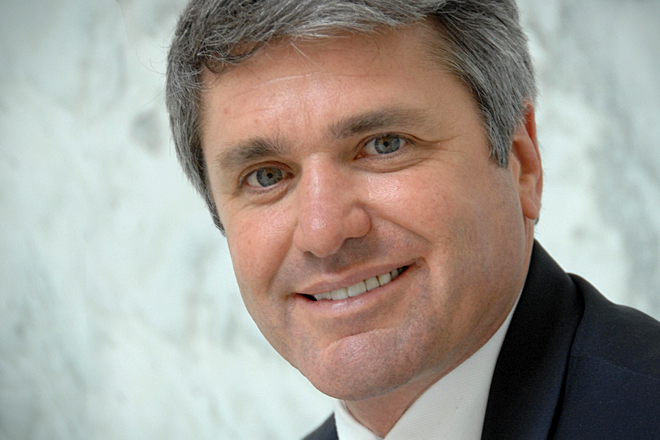
Texas Republican Rep. Mike McCaul edged out Michigan Rep. Candice Miller — who was the GOP’s best hope of getting a female major committee head — and Mike Rodgers in a close private vote this week. King’s tenure as chairman drew controversy for the series of hearings he held on the radicalization of Muslims in America. Critics didn’t discount the threat of homegrown terror but said King should have expanded the hearings to include all kinds of violent radicalism, including right-wing extremism.
But McCaul has been a big booster of those hearings. “I want to thank you for demonstrating the political courage to hold these hearings,” he said to King during one last year. “I must say, I am mystified by the controversy that has followed from this. It was said by one of the members that we are investigating Muslims. Nothing could be farther from the truth. We are investigating the radicalization of Muslim youth in the United States.”
McCaul is a former federal prosecutor who headed the counterterrorism division of the U.S. attorney’s office in Texas, so his resume lends him credibility on the subject. His rhetoric is generally more mild than King’s, but some advocates in the Muslim-American community are concerned.
“In the past two years, there have been 27 terror plots, and each of them involved extreme radicalization of the Muslim faith,” he said at radicalization hearing this year. What counts as a “terror plot” is obviously subject to semantic debate, but right-wing extremists account for a good portion, if not most, of domestic terrorism under most definitions of the term.
In another hearing, he defended himself when a witness criticized him for connecting Islam and terror. “I would argue that we have to look at the obvious — that there is a religious component to this,” he said. Though he’s always careful to add that terror “doesn’t reflect the vast majority of Muslims.”
McCaul’s district is just south of Fort Hood, and he joined other Republicans in their insistence in labeling as a terrorist Maj. Nidal Hasan, who killed 13 people on the base in 2009. Hasan had corresponded with Anwar Al-Awlaki and shouted “Allahu Akbar” before opening fire, which is enough to convince McCaul that it was a “planned terror attack.” He also introduced a bill to designate victims of the attack as combatants in a combat zone.
McCaul appeared once on the radio show hosted by Frank Gaffney, the controversial activist behind Rep. Michele Bachmann’s Muslim witch hunts. Gaffney said of the congressman: “He is, in a number of capacities, a go-to guy for the sorts of things we’re interested in here at Secure Freedom Radio.” On the show, McCaul discussed one of his hobby horses, the apparent threat of Hezbollah teaming up with Mexican drug cartels to infiltrate the U.S. via the southern border. McCaul has authored two reports on the subject, both titled, “A Line in the Sand: Countering Crime, Violence, and Terror at the Southwest Border.”
He has also sent a number of “dear colleague” letters to other members of Congress asking them to support his bills to crack down on foreign terror networks. One sent in September called attention to a news article alleging the Iran’s elite Quds Force was operating in Syria and asked colleagues to support a bill to designate the unit as a terrorist organization. Others would cut off aid to Egypt and Pakistan.
None of this is particularly unusual for a conservative Republican today, but it doesn’t bode well for those who hoped that King’s departure would turn a new leaf at the Homeland Security Committee.
