
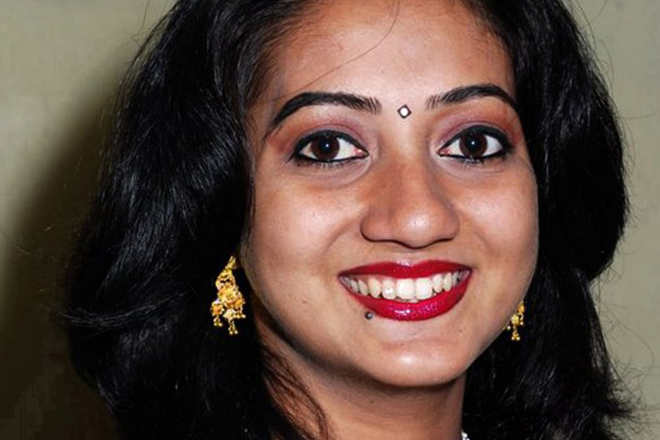

By now, many have heard the name of Savita Halappanavar, whose death in a Galway hospital this fall was a chilling reminder of how abortion bans can be deadly.
That case had the benefit of a vocal and angry person to speak on the dead woman’s behalf — her husband, Praveen. He has said she requested a termination that may have saved her life — but was told, “This is a Catholic country.” (An official inquiry by the hospital has yet to be released, and Praveen Halapannavar is appealing to the European Court of Human Rights.) But for every Savita, there are thousands of women whose names we don’t know, women who aren’t even counted.
The most commonly cited statistic suggests that complications from unsafe abortions led to approximately 13 percent of maternal deaths worldwide. That’s a World Health Organization figure first arrived at in 2000, which hasn’t been re-evaluated. Every year, when WHO says how many women have died from unsafe abortions, they’re simply taking the same percentage of the global maternal mortality figure — 56,000 in 2003, or 47,000 in 2008. But one epidemiologist, Caitlin Gerdts, wondered if that number wasn’t a potentially vast understatement.
A few years ago, Gerdts was planning to write her dissertation about maternal mortality at a hospital in Zanzibar, Tanzania. “From the data we were able to gather I was sure that we had missed a number of women who had died likely from unsafe abortion,” she told Salon. Even in the original WHO report, she said, the authors “talk about how unsure they are about that estimate, and how they have the aggregate data, and how the data that they did have from countries where abortion-related mortality is the highest were of the poorest quality. They say directly, this is the best number we can come up with — but we think it’s an under estimate.”
And a lot has changed since 2000, in both directions: Some countries, including in sub-Saharan Africa, have liberalized their laws; others, notably in Central America, have toughened their bans. Meanwhile, misoprostol, a pill which can induce a miscarriage identical to a spontaneous one, has become more widely distributed across the developing world. “There has been so much happening in the last decade,” said Gerdts, who is now affiliated with Advancing New Standards in Reproductive Health at University of California, San Francisco. “It’s impossible that the number has stayed the same.”
She eventually proposed a statistical model that would take into account what the researchers were getting at but not naming: Stigma. Specifically, women who were coming into hospitals seeking post-abortion care and would be reluctant to attribute the bleeding to a self-induced abortion because they feared social and criminal consequences. And, said Gerdts, “Doctors aren’t going to record it because they’re afraid of repercussions. Or maybe the woman hasn’t even told her family she was pregnant or that she had induced abortion.”
Gerdts and her colleagues canvassed 300 women treated for post-abortion or miscarriage care in that Tanzanian hospital, and found that only seven of them admitted they had induced abortion. But over 85 percent of these women said they were “unsure or unhappy” about their pregnancies, suggesting that not all of them had spontaneous miscarriages. And that’s not even counting women like Halappanavar, who may have been eligible for what life-saving exceptions sometimes do exist on the books but who died out of physician reluctance to test the boundaries of the law.
If these women hemorrhaged to death or died of sepsis because they couldn’t access a safe termination, few, if anyone, would have known that it was no ordinary miscarriage — or that it could have been prevented.
