
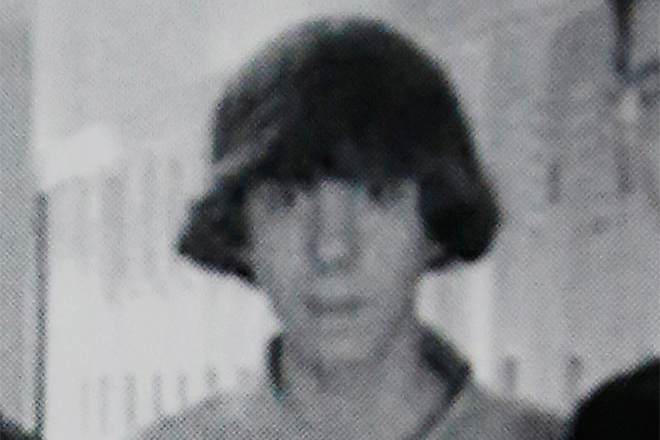

 Start here. Adam Lanza can’t be accused or convicted of “unconscionable evil,” not in the court of public opinion and not by the criteria of moral philosophy. He wasn’t making a moral choice when he shot his mother in the face with her own gun, and then killed 20 defenseless children. So individual responsibility and culpability aren’t at issue, as they have not been and cannot be since Columbine.
It follows that the NRA’s slogan, to the effect that “guns don’t kill people, people kill people,” is moot at best—the killers in every case were sentient beings, but not one was a person at the law or anywhere else in the landscape of possibility most of us can take for granted. Not one was an individual who came to the scene of the crime equipped with a conscience, thus able to make moral choices.
It also follows, logically at least, that better regulation of access to guns is actually consistent with the NRA’s stupid slogan: the man who slaughtered those 20 children was not an individual, a person able to distinguish between right and wrong. So let us hereafter make sure that the people who want to kill other people are persons who can make moral choices—screen them thoroughly when they buy guns, or send them to the State Department with fair warning to all concerned at home and abroad.
By all means, then, let us ban assault weapons, and make it a lot harder to buy 9 mm Glocks. And let us make sure that people suffering from mental illness can get treatment—that they’re not thrown back on the meager resources of their families. Expand Affordable Care, to begin with.
II
But still. Let us also ask the obvious question. Why do these young white male people whom we routinely characterize as crazy—as exceptions to the rules of civilized comportment and moral choice—always rehearse and recite the same script? If each killer is so deviant, so inexplicable, so exceptional, why does the apocalyptic ending never vary?
The answer is equally obvious. Because American culture makes this script—as against suicide, exile, incarceration, or oblivion—not just available but plausible, actionable, and pleasurable. Semiautomatic, you might say.
But mainly to young white male people who want to kill many other white people with sophisticated weapons. Their apocalyptic endings make their deeply private states of mental anguish and illness very public. These gunmen don’t understand their mission in these terms, but they do tell us that they represent something beyond their own lives and families when they take innocents with them rather than just killing themselves—when they behave like terrorists without a political cause. They’re mute symptoms in search of a social disease, a cultural diagnosis, and a political cure.
Adam Lanza dressed the part for his first and final shootout as a man without a calling: all black, all military. He wore a Kevlar vest, he taped extra magazines to his weapons, he moved and he killed systematically; he was ready for anything in his theater of war, an elementary school. He knew how he would die that day—he knew the SWAT team would arrive soon after he started shooting—but not exactly when. He was armed against his own fear, and he was desperate to make it known.
III
William James saw him coming in 1910. In a Protestant culture that had defined manhood and character as the result of real work—a calling—what would happen, he asked, when such work became elusive if not altogether unavailable? Would manhood survive? Or would war then become the principal means of rehabilitating the “masculine virtues”?
James correlated the impending demise of those virtues with “pacific cosmopolitan industrialism”—a stage of development in which an older “pain economy” organized by the emotional austerity of necessary labor was giving way to a “pleasure economy” animated by the emotional surplus of consumer culture. This new economy, according to James, was a world without producers, “a world of clerks and teachers, of co-educators and zoophily, of ‘consumer’s leagues’ and ‘associated charities,’ of industrialism unlimited and feminism unabashed.”
From the standpoint of that correlation, the decline of necessary labor or productive callings, and the consequent confusion of male and female spheres—“feminism unabashed”—became the elements of an identity crisis for every man; for they threatened to dissolve the ego boundaries hitherto determined by the sanctions of scarcity, both economic and emotional.
Here’s how James put it: “The transition to a ‘pleasure economy’ may be fatal to a being wielding no powers of defence against its disintegrative influences. If we speak of the fear of emancipation from the fear regime, we put the whole situation into a single phrase: fear regarding ourselves now taking place of the ancient fear of the enemy.”
He worried that this fear of emancipation from the older “pain economy” would take a regressively masculine form; he knew the manly virtues could be reinstated by the violent means of war, by militarism unabashed, and he designed his moral equivalent—real work with a social purpose—with that possibility in mind.
IV
The diary of a superfluous man doesn’t get written by a nobody. Adam Lanza couldn’t have told us what made him unimportant as a person, or a man. He lived forward without understanding backward, so he needed a template, a blueprint, a script he didn’t author. He found it in the insane militarism of American political culture—that’s why he dressed up like a commando and stormed an elementary school as if it were a fortified bunker. He played his part.
The unabashed hyper-masculine militarism he performed was, as William James suggested, a hysterical reaction formation against the “pleasure economy” we have created but denied—as if we could still locate the source of manhood in the demands of necessary labor, in the rigors of military discipline, in the sacrifice of war.
So this reaction formation is a social disease, and Adam Lanza is both symptom and attempted cure of it. Manhood need not be a function of extreme necessity, denial, and sacrifice, as enacted on a field of battle. War is a drug only where the meaning of masculinity is reduced to mere survival, and when power derives from the barrel of a gun.
But that where and when is already here and now. End there.
