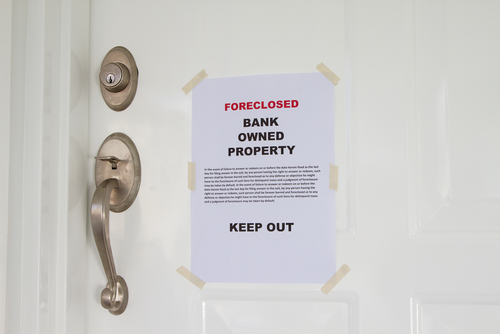

Major settlements better for banks than homeowners

Ten big banks including Bank of America and Wells Fargo agreed to billions in payouts but still get off lightly

Topics: Foreclosure, Mortgage Crisis, Fannie Mae, Bank of America, Wells Fargo, settlement, Federal Reserve, Banking, ,

Major settlements better for banks than homeowners (Credit: Shutterstock/Ragma Images)

Two major settlements between 10 big banks and the government Monday totaling over $20 billion aimed to clear up allegations of widespread malpractice relating to the mortgage crisis. But what at first looks like great news for the 4 million Americans forced into foreclosure between 2009 and 2010, may be a greater boon to banks than burned homeowners.

In one settlement, Bank of America agreed to pay $10 billion to mortgage guarantor Fannie Mae to settle claims that Bank of America sold Fannie Mae bad loans for 10 years. As part of the agreement, Bank of America will also buy back $6.75 billion of bad mortgage loans. All of this settlement money will go directly to the U.S. Treasury (neither Fannie Mae nor Freddie Mac is permitted to keep profits). But as the Guardian’s Heidi Moore pointed out, “the deal between Bank of America and Fannie Mae contains no mechanism by which the money would reach the homeowners who signed bad loans.”

The second settlement reached Monday, in which 10 major banks, including BofA, Wells Fargo and JPMorgan Chase, will pay out $3.3 billion in cash to 3.8 million mortgage borrowers who were foreclosed upon in 2009 or 2010, looks more promising in terms of compensating mortgage crisis victims. Thousands of homeowners who lost their homes due to shoddy or lost paperwork, bad loan modifications or “robo-signed” foreclosure decisions, which were not even reviewed by human eyes, could receive up to $125,000. Via the Wall Street Journal:

Under the settlement, borrowers are expected to be contacted by March 31 with details of their payments. They will vary from several hundred dollars for minor violations to $125,000 for violations of a law that bans military foreclosures or a foreclosure on a borrower who didn’t miss any payments. The 495,000 borrowers who have already submitted claims through this process are expected to get larger payouts, regulators said.

“A couple hundred dollars will be nothing,” said Geralyn Burrell, a 56-year-old Henderson, Nev., paralegal who nearly lost her Las Vegas home to foreclosure three separate times and was among the borrowers who submitted claims.

Consumer advocates said the deal was not as meaningful as regulators said. “It’s chump change,” said Diane Thompson, a lawyer with the National Consumer Law Center. “It’s another example of the banks getting off easy.”


Meanwhile others have criticized plans for distributing the settlement money. The Office of the Comptroller of the Currency and the Federal Reserve Board (the two government bodies that agreed on the settlement with the 10 banks) had ordered independent reviews of foreclosure fraud cases to determine which homeowners were to be compensated. However, the use of independent consultants for this process was determined to be too costly and time-consuming. “The regulators, essentially admitting that the reviews were too difficult to conduct, and that assigning appropriate compensation to those most harmed by the banks was no longer a priority, said the mortgage companies themselves will determine how to distribute $3.3 billion,” wrote HuffPo’s Eleazar David Melendez and Ben Hallman.

“It is just incomprehensible to me that they could not find a third party that has the wherewithal and independence to fairly determine what the damage is to homeowners,” John Taylor, president of the National Community Reinvestment Coalition, a Washington-based housing nonprofit, told HuffPo. Other commentators are skeptical that much compensation will reach hurt homeowners; as the Guardian’s Moore noted, “if recent history is any indication … it will be hard for [homeowners] to see much of that money.”

Although both Fannie Mae and the Comptroller of the Currency/Fed settlements will see big banks making major payouts, it’s a small price for them to put an end to the dark chapter of the housing bust –  a luxury many still-suffering homeowners cannot afford.


Natasha Lennard

Natasha Lennard is an assistant news editor at Salon, covering non-electoral politics, general news and rabble-rousing. Follow her on Twitter @natashalennard, email nlennard@salon.com.

Featured Slide Shows

7 motorist-friendly camping sites

close X
  • Share on Twitter
  • Share on Facebook
  • Thumbnails
  • Fullscreen
  • 1 of 9

Sponsored Post

  • White River National Forest via Lower Crystal Lake, Colorado
    For those OK with the mainstream, White River Forest welcomes more than 10 million visitors a year, making it the most-visited recreation forest in the nation. But don’t hate it for being beautiful; it’s got substance, too. The forest boasts 8 wilderness areas, 2,500 miles of trail, 1,900 miles of winding service system roads, and 12 ski resorts (should your snow shredders fit the trunk space). If ice isn’t your thing: take the tire-friendly Flat Tops Trail Scenic Byway — 82 miles connecting the towns of Meeker and Yampa, half of which is unpaved for you road rebels.
    fs.usda.gov/whiteriveryou


    Image credit: Getty

  • Chattahoochee-Oconee National Forest via Noontootla Creek, Georgia
    Boasting 10 wildernesses, 430 miles of trail and 1,367 miles of trout-filled stream, this Georgia forest is hailed as a camper’s paradise. Try driving the Ridge and Valley Scenic Byway, which saw Civil War battles fought. If the tall peaks make your engine tremble, opt for the relatively flat Oconee National Forest, which offers smaller hills and an easy trail to the ghost town of Scull Shoals. Scaredy-cats can opt for John’s Mountain Overlook, which leads to twin waterfalls for the sensitive sightseer in you.
    fs.usda.gov/conf


    Image credit: flickr/chattoconeenf

  • Nordhouse Dunes Wilderness Area via Green Road, Michigan
    The only national forest in Lower Michigan, the Huron-Mainstee spans nearly 1 million acres of public land. Outside the requisite lush habitat for fish and wildlife on display, the Nordhouse Dunes Wilderness Area is among the biggest hooks for visitors: offering beach camping with shores pounded by big, cerulean surf. Splash in some rum and you just might think you were in the Caribbean.
    fs.usda.gov/hmnf


    Image credit: umich.edu

  • Canaan Mountain via Backcountry Canaan Loop Road, West Virginia
    A favorite hailed by outdoorsman and author Johnny Molloy as some of the best high-country car camping sites anywhere in the country, you don’t have to go far to get away. Travel 20 miles west of Dolly Sods (among the busiest in the East) to find the Canaan Backcountry (for more quiet and peace). Those willing to leave the car for a bit and foot it would be remiss to neglect day-hiking the White Rim Rocks, Table Rock Overlook, or the rim at Blackwater River Gorge.
    fs.usda.gov/mnf


    Image credit: Getty

  • Mt. Rogers NRA via Hurricane Creek Road, North Carolina
    Most know it as the highest country they’ll see from North Carolina to New Hampshire. What they may not know? Car campers can get the same grand experience for less hassle. Drop the 50-pound backpacks and take the highway to the high country by stopping anywhere on the twisting (hence the name) Hurricane Road for access to a 15-mile loop that boasts the best of the grassy balds. It’s the road less travelled, and the high one, at that.
    fs.usda.gov/gwj


    Image credit: wikipedia.org

  • Long Key State Park via the Overseas Highway, Florida
    Hiking can get old; sometimes you’d rather paddle. For a weekend getaway of the coastal variety and quieter version of the Florida Keys that’s no less luxe, stick your head in the sand (and ocean, if snorkeling’s your thing) at any of Long Key’s 60 sites. Canoes and kayaks are aplenty, as are the hot showers and electric power source amenities. Think of it as the getaway from the typical getaway.
    floridastateparks.org/longkey/default.cfm


    Image credit: floridastateparks.org

  • Grand Canyon National Park via Crazy Jug Point, Arizona
    You didn’t think we’d neglect one of the world’s most famous national parks, did you? Nor would we dare lead you astray with one of the busiest parts of the park. With the Colorado River still within view of this cliff-edge site, Crazy Jug is a carside camper’s refuge from the troops of tourists. Find easy access to the Bill Hall Trail less than a mile from camp, and descend to get a peek at the volcanic Mt. Trumbull. (Fear not: It’s about as active as your typical lazy Sunday in front of the tube, if not more peaceful.)
    fs.usda.gov/kaibab


    Image credit: flickr/Irish Typepad

  • As the go-to (weekend) getaway car for fiscally conscious field trips with friends, the 2013 MINI Convertible is your campground racer of choice, allowing you and up to three of your co-pilots to take in all the beauty of nature high and low. And with a fuel efficiency that won’t leave you in the latter, you won’t have to worry about being left stranded (or awkwardly asking to go halfsies on gas expenses).


    Image credit: miniusa.com

  • Recent Slide Shows

  • Share on Twitter
  • Share on Facebook
  • Thumbnails
  • Fullscreen
  • 1 of 9

Comments

2 Comments

Comment Preview

Your name will appear as username ( settings | log out )

You may use these HTML tags and attributes: <a href=""> <b> <em> <strong> <i> <blockquote>