

While it’s difficult to fathom why anyone would deny the deaths of 26 children and teachers at Sandy Hook Elementary last month, the conspiracy theories surrounding the massacre actually follow a fairly common pattern, experts who study them say, and may be more understandable than they first appear.
“This whole thing is bringing a variety of conspiracy theories from American history together,” explained Robert Goldberg, a historian at the University of Utah who has written a book and lectured extensively about American conspiracy theories.
While there are many flavors of conspiracy theories surrounding the shooting, one thread that unites many of them is the notion that this was a government hoax aimed at taking away people’s guns. “Whether it’s the Oklahoma City bombing, or the Waco incident, or Ruby Ridge, or 9/11, or Sandy Hook, the idea is that these are modern Reichstags (the event that occurred in Germany in 1933), which is an excuse that the government is going to use to declare an emergency to take the guns away from the patriots, and then confine the patriots,” Goldberg said.
Indeed, similar theories were floated after the shooting in Aurora, Colo., and even Gun Owners of American head Larry Pratt flirted with the notion. But the theories quickly sputtered away when Aurora didn’t lead to any meaningful action on gun control. Sandy Hook is different. The Obama administration seems likely to force some action, perhaps even by executive order, as Obama announced today.
Conspiracy theories are not unique to America — Hitler built an entire genocidal regime by convincing his people to believe anti-Jewish conspiracy theories — but the prevalence and potency of anti-government paranoia is particular to the U.S., and it’s a product of our history.
America’s paranoid style
In fact, you could argue that the United States was founded on a conspiracy theory. “The conviction that the English colonial policies of the 1760s and 1770s constituted a conspiracy to enslave America played a major role in the outbreak of the American Revolution,” scholar Peter Knight writes in his comprehensive encyclopedia of American conspiracy theories. In the Declaration of Independence, the Founders wrote that King George was executing a secret plot with the “direct object the establishment of an absolute Tyranny over these States.”
And after the Revolution, we established a centralized government while Europe’s capitals remained hamstrung by a series of quarreling gentry and competing religious authorities. Soon Washington replaced London as the object of concern for conspiracists on the fringes of both the right and left. This dynamic helped created a culture where fearing the government is not only accepted, but patriotic. Richard Hofstadter famously explored this in his seminal 1964 essay on the “paranoid style in American politics.” “You heard it with Barry Goldwater, you heard it with Ronald Reagan, and you hear it today, particularly in regards to the gun rights people,” Goldberg said.
Add to that the American sense of mission and exceptionalism, and people begin to fear that outsiders are trying to destroy our specialness. (“They hate us for our freedoms,” as was often said of terrorists in the past decade.) And when that’s combined with the country’s diversity, some people now fear the enemy is already inside the gates. This helps explain the paranoia about Shariah law, or even the Birther movement, which essentially assumes that President Obama is a Manchurian candidate planted to destroy America. When that perceived enemy takes the reins of the already suspicious federal government, as Obama did, you have a volatile conspiracy brew.
But anti-government paranoia alone doesn’t get you to thinking the Sandy Hook shooting was a hoax. For that, we need to take a look at the psychology at play here.
Many different psychologies are at play here, from hardcore anti-government paranoids who are likely to see a false-flag operation in everything from Waco to Sandy Hook, to others who are trying to make sense of a nonsensical tragedy. Conspiracy theories often seem entirely irrational or even insane; they may actually be far more logical than they appear. At their core, conspiracy theories are like folk tales, a search for an explanation for the unexplainable, a way of making sense of a world. There’s no logic or meaning to what happened at Sandy Hook — a mentally unbalanced lone gunman targeted defenseless children for no particular reason — and that is deeply disturbing. So some people would rather invent an explanation to apply some kind of (even if twisted) logic to the event and to add meaning to the death of innocent children or deny their death entirely and thus absolve the emotional trauma a bit.
“This narrative is just one way people make sense of disturbing events, though they are making sense of it in a way that’s central to their own worldview,” explained Ilan Shrira, social psychologist at Loyola University in Chicago who has written about 9/11 conspiracy theories for Psychology Today. So if your worldview is anti-government, then you make sense of it by blaming the government.
That’s why there’s such an obsession with trying to find multiple gunmen at Sandy Hook. This is perhaps the chief objective of amateur investigators online, and what Ohio TV reporter Ben Swann drilled in on while “asking questions” about this and other shootings. Finding other shooters is critical: “Without more than one shooter, you don’t have a conspiracy,” Goldberg said. By definition, you need co-conspirators. The same was true, of course, with the assassination of President Kennedy, perhaps the most theorized about event in American history. “If it’s just one nut, the purpose and meaning in the tragedy is gone, it’s stripped away. There’s no meaning, there’s no purpose to the deaths of these kids,” Goldberg added.
Conspiracy theories are everywhere
Shrira also pointed to the psychological importance of narrative when it comes to conspiracy theories: “Another reason for their potency is that they are alluring narratives; they garner widespread attention, even from an audience who may not fully accept them.”
Indeed, all you have to do is watch the Jason Bourne movies to understand the allure of a conspiracy theory. You don’t need to accept any of the truthers’ arguments as anything other than delusional fantasy to fall for the intellectual thrill of fitting together a great puzzle. We’re almost conditioned to think in conspiracy theories.
“From the first blockbuster ‘Birth of a Nation’ all the way the ‘Lord of the Rings’ trilogy, what Hollywood sells is conspiracy theories,” said Goldberg. Just look at “Homeland,” the smart person’s favorite TV show, which depicts a series of intertwined conspiracies. Or the “X-Files,” or Tom Clancy and Dan Brown novels, or pretty much any movie about spies, not to mention the pseudo-documentaries on the History Channel about Roswell or the moon landing. “We are fed a steady diet of conspiracy theories and the possibility of conspiracy and told it can be real,” Goldberg added.
Once the seed of belief is planted, it’s very hard to change people’s minds, thanks to a few powerful and related psychological forces: cognitive dissonance, motivated reasoning and confirmation bias. Put simply, these forces — present in everyone but critical to conspiracists’ worldview — make believers disregard any evidence that contradicts their preexisting belief, and seek out only evidence that confirms it. Anything else is explained away — or the source is discredited as bought off or part of the conspiracy.
That can turn a conspiracy theory into a closed loop. After the government released all its documents on the Roswell incident, one conspiracist Goldberg interviewed was convinced there remained “one filing cabinet” that hadn’t been released. He had nothing to support the suspicion, and it’s unlikely that a single filing cabinet could possibly contain all the various paper records a bureaucracy the size of the U.S. government would produce to cover up something as large as a UFO landing, but the man was so invested in his belief and wanted it to be true so badly that he convinced himself it had to be true.
But while conspiracy theories can be alluring, what’s often missed by theorists and skeptics alike is that blaming the government or the Jews or whomever for a tragedy like Sandy Hook means absolving the actual perpetrator of any guilt.
Conspiracies are big bucks
Lurking behind any conspiracy theory is what Goldberg calls “conspiracy entrepreneurs.”
“These people live and die on the sale of tapes, on books, on speaking engagements, that’s how people make their bread and butter,” Goldberg said. And there’s a constant need to invent new theories, because eventually the public will tire of existing ones. So any time something like Sandy Hook comes along, these people jump on it for their next round of theories.
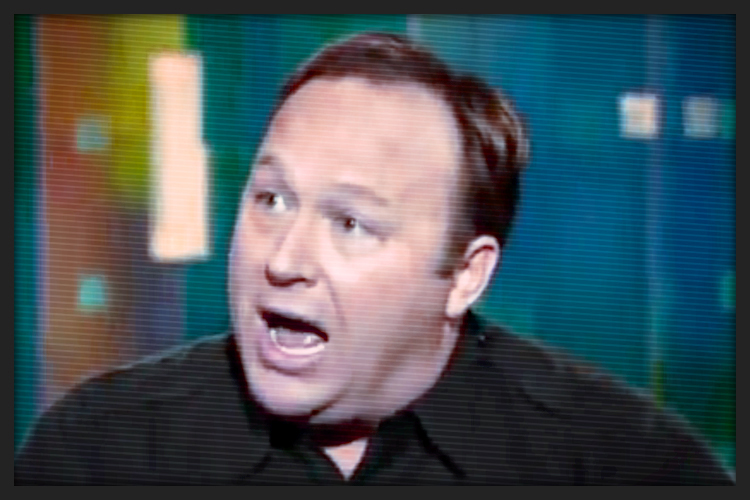
The biggest and most obvious conspiracy entrepreneur today is Alex Jones, who has built an empire peddling every conspiracy theory imaginable since 9/11. His two websites combined get an astonishing 11.5 million visitors per month, and over 28 million page views, according to his advertising kit, making InfoWars.com the 390th most popular website in the United States. Thus you can see the economics of inventing theories about Sandy Hook, simply because it is there. Indeed, Jones’ traffic has shot up since the shooting, according to the analytics company Alexa.
But he is merely the most successful of many, and the latest in a long lineage of conspiracy entrepreneurs going back to the Kennedy assassination. One popular Sandy Hook truther video already has 8.5 million views on YouTube. With the platform’s ad revenue-sharing model, it’s possible the creators are making real money off this.
That audience is there, in part, due to declining faith in American institutions, and not just the federal government. According to Gallup, Americans have less trust in almost every basic American institution today than they did 30 or 40 years ago, from the courts, to universities, to the medical profession, to corporations, to labor unions, to churches — and especially the media. This contributes the sense of paranoia, and leads some people to distrust everything, pushing them deeper into the echo chamber and disregarding anything from the outside world.
Interestingly, while different conspiracy theories have different believers, Shrira said, there is a “core group of people who are prone to believe in conspiracies of all kind.” A British psychology study published last year found that this core group will even believe in contradictory theories. For instance, the same person who believes that Princess Diana was assassinated is more likely to also believe that she faked her own death. Or the same person who believes that Osama bin Laden is still alive, may also believe that was he dead long before the Navy SEAL raid in 2011. It sells as long as it contradicts the “official narrative.”
This helps explain the appeal of sites like Reddit’s conspiracies section or AboveTopSecret, which provide a forum for sharing theories on everything from Sandy Hook to the Loch Ness Monster. The core believers who regularly use these sites may be the first people to latch onto and promote a new theory, like the ones surrounding Sandy Hook.
Finally, add to the mix a federal government that has hardly done a good job tamping down wild conspiracy theories, thanks to the fact that it has engaged in a few itself. From Watergate, to the MK Ultra experiments, to the Vietnam War and the bombing of Cambodia and the second Gulf of Tonkin Incident, there’s enough out there to confirm anyone’s conspiracy theory about the government who’s looking for an excuse to believe it.
“Of course, those all had evidence,” Goldberg noted, pointing out the gulf that divides the baseless theories from the real ones. Not to mention conspiracy theories proposed by the federal government itself, such as those used to mobilize against Communists or student radicals or civil rights leaders.
“So you have these three different bodies — Hollywood, conspiracy theorists and the government — that are essentially teaching Americans to think conspiratorially,” Goldberg said. “So am I surprised that any time something major happens, there’s a plethora of conspiracy theories? Absolutely not.”
