
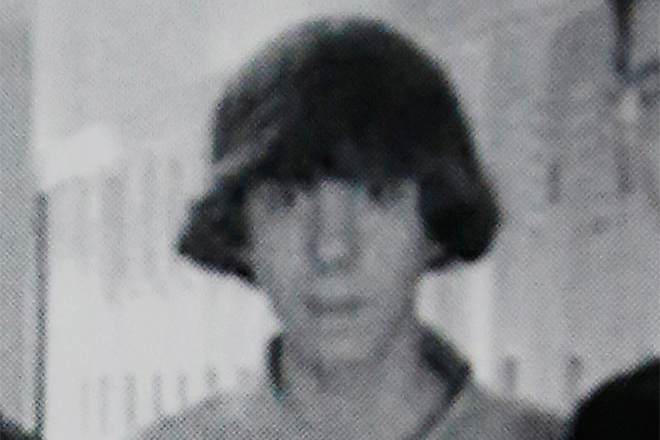

In an ongoing bid to understand the unintelligible, news outlets have been digging deeper and deeper into the details of Sandy Hook shooter Adam Lanza’s life. PBS Frontline and the Hartford Courant Tuesday published an extensive investigation into the young man and his sheltered life with the mother he ultimately murdered before gunning down 20 children at his local elementary school.
The piece details the severe learning disabilities that seemed to haunt Lanza’s education and alienate him from his peers. At age 6 he was “diagnosed with a condition that made it difficult for him to manage and respond to sights, touch and smell” and in middle school was diagnosed with Asperger’s syndrome. Based on interviews with “family members and friends on both Nancy Lanza’s and Peter Lanza’s side [Adam’s divorced mother and father],” the Courant and PBS pieced together a narrative of a life before the massacre:
Adam would attend public school, take lessons at home, try private school for a couple of months, return to public school and attend Newtown High School, although he left after his sophomore year. He went to college at 16 and earned A’s and B’s — but it didn’t last. He was out in a year. He then went to a community college, and dropped out in the first semester.
A series of significant life changes followed for Adam as the number of people with whom he had contact began to shrink.
His parents divorced. He abruptly cut off contact with his father, Peter, in 2010, and grew estranged from his older brother. He spent more time alone at home. His mother, who loved to travel, told friends she was grooming him to be independent someday. There were even plans to leave New England — their lifelong home — so Adam could study history and possibly earn a college degree.
But mother and son never left. Adam, now 20, had a plan of his own. He returned to Sandy Hook Elementary School on Dec. 14, 2012.
The report notes that Lanza had found it difficult to relate to other children:
In kindergarten back in Kingston, he had been “coded,” or identified, as needing an “individual education plan” and extra attention, both in the classroom and at home, [a friend of Nancy Lanza, Marvin] LaFontaine said.
“There was a shyness and a learning thing and they were trying to unravel it,” he said of Adam, whom Nancy Lanza would bring along to Ryan’s Cub Scout meetings.
“Adam was a quiet kid. He never said a word,” LaFontaine said. “There was a weirdness about him and Nancy warned me once at one of the Scout meetings … ‘Don’t touch Adam.’ She said he just can’t stand that. … He’d become teary-eyed and I think he would run to his mother.”
Lanza’s difficulties escalated throughout his school career. He reportedly “flew under the radar” as a “painfully shy” student at Newtown High School. Richard Novia, a former corporate security director and licensed private investigator who served as security chief for Newtown schools who oversaw the high school tech club, noted Lanza’s shyness and difficulties and made attempts to help the teen:
Novia tagged the skinny, withdrawn Adam right away as someone who could be bullied, and immediately reached out to Adam’s mother.
“I interacted with his parent early on to find out as much as I could,” Novia said. “As a staff member, and certainly a person who’s going to be overseeing your child, I need to know what I’m dealing with … so my interaction with Nancy Lanza was really, ‘Tell me about Adam. Tell me what, how you deal with Adam.'”
… But [Adam] also had serious difficulties. An image has emerged in the media of a scared child, hugging the wall and clinging to his briefcase in the din of the hallways between class bells.
But it went beyond that. A change in routine or unwanted excitement, such as his friends suddenly queuing up for a game of capture the flag, could lead to what Novia described as a complete shutdown.
Nancy Lanza removed her son from the high school after sophomore year. Novia, himself a gun owner, told the Courant that he believed Nancy Lanza’s decision to expose her son to to firearms was a “serious mistake” given his mental condition. The report also notes the presence of violent video games found in Lanza’s home following his rampage:
During a search of the Lanza home after the deadly school shootings, police found thousands of dollars worth of graphically violent video games.
And detectives working the scene of the massacre are exploring whether Adam Lanza might have been emulating the shooting range or a video-game scenario as he moved from room to room at Sandy Hook, spewing bullets, law enforcement sources have told The Courant.
Before he killed his mother and set off for Sandy Hook Elementary, Adam Lanza destroyed the hard drive on his computer, which probably kept some of the records of the games he played and who he played with. He also may have destroyed any chance to see if he had a manifesto or had written down anything indicating that he planned the shootings, or why he chose the elementary school.
At the time of the Sandy Hook shooting, the Courant notes, Nancy Lanza was making plans to move to Washington state or North Carolina “so Adam could once again attend college and pursue a degree in history” (he had dropped out of college in Newtown). Reportedly, Nancy told a friend, “I’m gonna be moving for Adam, I’m gonna be moving.”
On Monday, adding to speculation on the man behind the massacre, CBS News reported that, according to unnamed sources in law enforcement, “[Lanza] saw himself in direct competition with Anders Behring Breivik, who killed 77 people in a bombing and shooting attack in Norway on July 22, 2011.” However, a Connecticut state police spokesman has dismissed the report as inaccurate speculation.
Watch this clip from PBS Frontline, including an interview with Nancy Lanza’s friend Marvin LaFontaine. The full documentary airs Tuesday night:
