
Death of a Reader

Google's decision to shutter its blog aggregator reminds us that the new, new thing gets old real fast

Topics: Google Reader, blogging, blog readers, rss, personal computers, ,

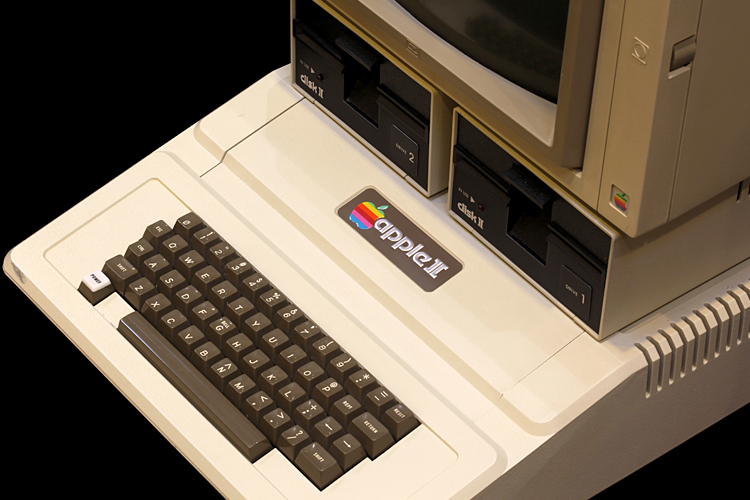
Death of a Reader (Credit: Wikimedia Commons/Rama)

By around noon Eastern time on Friday, more than 100,000 people had signed a Change.org petition begging Google not to close Google Reader, its Web-based RSS feed aggregator — aka “blog reader.”

I understand their pain. I’ve been using Google Reader to organize my favorite blogs and other news sources ever since the demise of Bloglines, my previous fave. I’m annoyed that I will have to find something new and learn how to make it serve my purpose. But something about this petition reminds me of a plea to bring back the horse-and-buggy. If there’s one thing we’ve learned about our digital, constantly disruptive era, it’s that yesterday’s technologies are just a new set of bowling pins about to be knocked down by tomorrow’s newest arrival.

In his dark yet inspiring “closing rant” at South by Southwest Interactive, novelist and “futurist” Bruce Sterling delivered exactly such a message. One of the high points of his remarks came when he observed that he was likely to witness both the birth and death of the personal computer in his lifetime. Stuff that he helped dream up as a science fiction visionary is already almost gone.

(Let’s not get bogged down by semantics. Sure, laptops, tablets and even smartphones can all still be classified as “personal computers” when you get right down to it, but what Sterling was referring to was the classic desktop workstation, in all its gloriously ungainly bulk. How quickly they have become museum pieces!)

Sterling also observed, with his trademark withering scorn, that this year’s SXSW had included no panels on blogging, or calls for blogger meetups. The action has moved elsewhere. I know that I personally get far more of my news and tips to good, interesting reads from Twitter and Facebook than I do from the blogs that I still try to (sporadically) follow.

And that makes me a little uneasy. Farhad Manjoo warns us that the death of Google Reader should alert us all to the dangers of depending on free, in-the-cloud software. When it’s gone, it’s really gone. But I see a different challenge.


The attraction of an RSS aggregator like Google Reader was it allowed me to organize all the stuff that I was interested in. If I kept up with my links, I wouldn’t miss anything I’d deemed important. But to be honest: The dust had already long settled on many of the painstakingly constructed folders I tended in my Google Reader. For the last couple of months, it’s been as quiet in there as in the papyrus section of the British Museum.

Today, my interface with the world of news seems much more happenstance and random. Whatever is frothing on Twitter is what grabs my attention; whatever a few friends of mine share on Facebook is what rises to the surface. We’ve seen this unpredictability play out in journalism, where, in the immortal words of Alexis Madrigal, if you want to get somebody to read your stories, there’s not much you “can do aside from stick a story on the homepage, tweet/Facebook/tumble/Reddit/LinkedIn it and then pray.” Things go viral not because we’re carefully tending our blog readers, but because they strike a nerve in the chaos of social media.

Who imagined that as our incredible online information distribution mechanism matured, our consumption of content would become more ad hoc, more viral Grumpy Cat and less personally enlightening? As the disrupters become the disrupted the ride is getting bumpier and the earthquakes more common.

When I saw the news that Google Reader would soon be no more, I mourned for a nanosecond. But I’m not signing that petition. There’s no going back. Instead I started wondering; what am I going to have to figure out next? My son, after all, gets a lot of his news from YouTube channels.

Andrew Leonard

Andrew Leonard is a staff writer at Salon. On Twitter, @koxinga21.

Featured Slide Shows

7 motorist-friendly camping sites

close X
  • Share on Twitter
  • Share on Facebook
  • Thumbnails
  • Fullscreen
  • 1 of 9

Sponsored Post

  • White River National Forest via Lower Crystal Lake, Colorado
    For those OK with the mainstream, White River Forest welcomes more than 10 million visitors a year, making it the most-visited recreation forest in the nation. But don’t hate it for being beautiful; it’s got substance, too. The forest boasts 8 wilderness areas, 2,500 miles of trail, 1,900 miles of winding service system roads, and 12 ski resorts (should your snow shredders fit the trunk space). If ice isn’t your thing: take the tire-friendly Flat Tops Trail Scenic Byway — 82 miles connecting the towns of Meeker and Yampa, half of which is unpaved for you road rebels.
    fs.usda.gov/whiteriveryou


    Image credit: Getty

  • Chattahoochee-Oconee National Forest via Noontootla Creek, Georgia
    Boasting 10 wildernesses, 430 miles of trail and 1,367 miles of trout-filled stream, this Georgia forest is hailed as a camper’s paradise. Try driving the Ridge and Valley Scenic Byway, which saw Civil War battles fought. If the tall peaks make your engine tremble, opt for the relatively flat Oconee National Forest, which offers smaller hills and an easy trail to the ghost town of Scull Shoals. Scaredy-cats can opt for John’s Mountain Overlook, which leads to twin waterfalls for the sensitive sightseer in you.
    fs.usda.gov/conf


    Image credit: flickr/chattoconeenf

  • Nordhouse Dunes Wilderness Area via Green Road, Michigan
    The only national forest in Lower Michigan, the Huron-Mainstee spans nearly 1 million acres of public land. Outside the requisite lush habitat for fish and wildlife on display, the Nordhouse Dunes Wilderness Area is among the biggest hooks for visitors: offering beach camping with shores pounded by big, cerulean surf. Splash in some rum and you just might think you were in the Caribbean.
    fs.usda.gov/hmnf


    Image credit: umich.edu

  • Canaan Mountain via Backcountry Canaan Loop Road, West Virginia
    A favorite hailed by outdoorsman and author Johnny Molloy as some of the best high-country car camping sites anywhere in the country, you don’t have to go far to get away. Travel 20 miles west of Dolly Sods (among the busiest in the East) to find the Canaan Backcountry (for more quiet and peace). Those willing to leave the car for a bit and foot it would be remiss to neglect day-hiking the White Rim Rocks, Table Rock Overlook, or the rim at Blackwater River Gorge.
    fs.usda.gov/mnf


    Image credit: Getty

  • Mt. Rogers NRA via Hurricane Creek Road, North Carolina
    Most know it as the highest country they’ll see from North Carolina to New Hampshire. What they may not know? Car campers can get the same grand experience for less hassle. Drop the 50-pound backpacks and take the highway to the high country by stopping anywhere on the twisting (hence the name) Hurricane Road for access to a 15-mile loop that boasts the best of the grassy balds. It’s the road less travelled, and the high one, at that.
    fs.usda.gov/gwj


    Image credit: wikipedia.org

  • Long Key State Park via the Overseas Highway, Florida
    Hiking can get old; sometimes you’d rather paddle. For a weekend getaway of the coastal variety and quieter version of the Florida Keys that’s no less luxe, stick your head in the sand (and ocean, if snorkeling’s your thing) at any of Long Key’s 60 sites. Canoes and kayaks are aplenty, as are the hot showers and electric power source amenities. Think of it as the getaway from the typical getaway.
    floridastateparks.org/longkey/default.cfm


    Image credit: floridastateparks.org

  • Grand Canyon National Park via Crazy Jug Point, Arizona
    You didn’t think we’d neglect one of the world’s most famous national parks, did you? Nor would we dare lead you astray with one of the busiest parts of the park. With the Colorado River still within view of this cliff-edge site, Crazy Jug is a carside camper’s refuge from the troops of tourists. Find easy access to the Bill Hall Trail less than a mile from camp, and descend to get a peek at the volcanic Mt. Trumbull. (Fear not: It’s about as active as your typical lazy Sunday in front of the tube, if not more peaceful.)
    fs.usda.gov/kaibab


    Image credit: flickr/Irish Typepad

  • As the go-to (weekend) getaway car for fiscally conscious field trips with friends, the 2013 MINI Convertible is your campground racer of choice, allowing you and up to three of your co-pilots to take in all the beauty of nature high and low. And with a fuel efficiency that won’t leave you in the latter, you won’t have to worry about being left stranded (or awkwardly asking to go halfsies on gas expenses).


    Image credit: miniusa.com

  • Recent Slide Shows

  • Share on Twitter
  • Share on Facebook
  • Thumbnails
  • Fullscreen
  • 1 of 9

Comments

8 Comments

Comment Preview

Your name will appear as username ( settings | log out )

You may use these HTML tags and attributes: <a href=""> <b> <em> <strong> <i> <blockquote>