

WASHINGTON — Privacy laws urgently need to be updated to protect the public from information-gathering by the thousands of civilian drones expected to be flying in U.S. skies in the next decade or so, legal experts told a Senate panel Wednesday.
A budding commercial drone industry is poised to put mostly small, unmanned aircraft to countless uses, from monitoring crops to acting as lookouts for police SWAT teams, but federal and state privacy laws have been outpaced by advances in drone technology, experts said at a Senate hearing.
Current privacy protections from aerial surveillance are based on court decisions from the 1980s, the Judiciary Committee was told, before the widespread drone use was anticipated. In general, manned helicopters and planes already have the potential to do the same kinds of surveillance and intrusive information gathering as drones, but drones can be flown more cheaply, for longer periods of time and at less risk to human life. That makes it likely that surveillance and information-gathering will become much more widespread, legal experts said.
The Federal Aviation Administration recently predicted about 7,500 civilian drones will be in use within five years after the agency grants them greater access to U.S. skies. Congress has directed the FAA to provide drones with widespread access to domestic airspace by 2015, but the agency is behind in its development of safety regulations and isn’t expected to meet that deadline.
If Americans’ privacy concerns aren’t addressed first, the benefits of potentially “transformative” drone technology may not be realized, Ryan Calo, a University of Washington law professor, told the Judiciary Committee.
It’s in “everyone’s interest to update the law even if only to provide the industry with the kind of bright lines its need to develop this technology,” said Amie Stepanovich of the Electronic Privacy Information Center, a privacy advocacy group.
But Calo and Stepanovich were divided on whether Congress should update federal privacy laws to set a national standard, or whether the responsibility should be left to state lawmakers to craft their own solutions. Several bills have been introduced in Congress that would, among other things, require warrants before drones could be used for surveillance.
Calo said he is concerned that some of the congressional legislation isn’t written broadly enough to cover other types of technology, like robots that can walk up walls.
There is also virtue in allowing states to experiment with their own laws, he said. A variety of drone-related bills have been introduced this year in more than 30 state legislatures.
But Stepanovich urged Congress to pass legislation requiring police to obtain warrants for drone surveillance, with exceptions for emergency situations or when necessary to protect human life.
There is already limited civilian drone use. The FAA has granted more than two hundred permits to state and local governments, police departments, universities and others to experiment with using small drones.
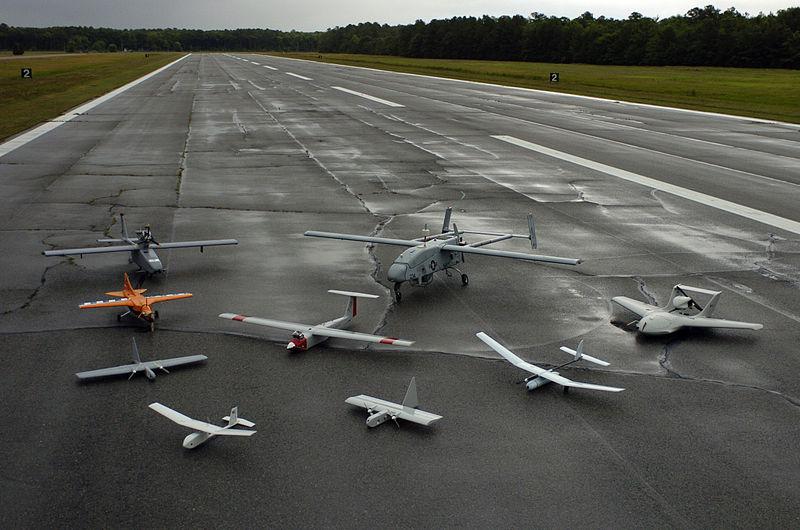
Initially, most civilian drones are expected to be around the size of backpack or smaller, weighing less than 55 pounds and unable to fly higher than most birds. The U.S. military, on the other hand, uses everything from unarmed, hand-launched drones like the 2.9-pound Wasp to systems like the MQ-9 Reaper that flies at an altitude up to 50,000 feet, has a 66-foot wingspan, weighs up to 10,500 pounds and can fire Hellfire missiles and guided bombs.
“I am convinced that the domestic use of drones to conduct surveillance and collect other information will have a broad and significant impact on the everyday lives of millions of Americans going forward,” said the committee’s chairman, Sen. Patrick Leahy, D-Vt.
“Small, quiet unmanned aircraft can easily be built or purchased online for only a few hundred dollars and equipped with high-definition video cameras while flying in areas impossible for manned aircraft to operate without being detected,” Leahy said. “It is not hard to imagine the serious privacy problems that this type of technology could cause.”
Earlier this year, the FAA solicited proposals to create six drone test sites around the country. With a nod to privacy concerns, the FAA said test site applicants will be required to follow federal and state privacy laws and to make a privacy policy publicly available.
The test sites are supposed to evaluate what requirements are needed to ensure the drones don’t collide with planes or endanger people or property on the ground. Remotely controlled drones don’t have a pilot who can see other aircraft the way an onboard plane or helicopter pilot can.
The agency has received 50 applications to create test sites in 37 states. Eventually, every state may have a test site, said Michael Toscano, president and CEO of the Association for Unmanned Vehicle Systems International, a trade association for the domestic drone industry.
