
There isn’t a “right time” to strike down DOMA

By arguing that the public may not be ready for a sweeping ruling, SCOTUS could be setting a dangerous precedent

Topics: SCOTUS, DoMA, Defense of Marriage Act, Sonia Sotomayor, Proposition 8, Gay Marriage,

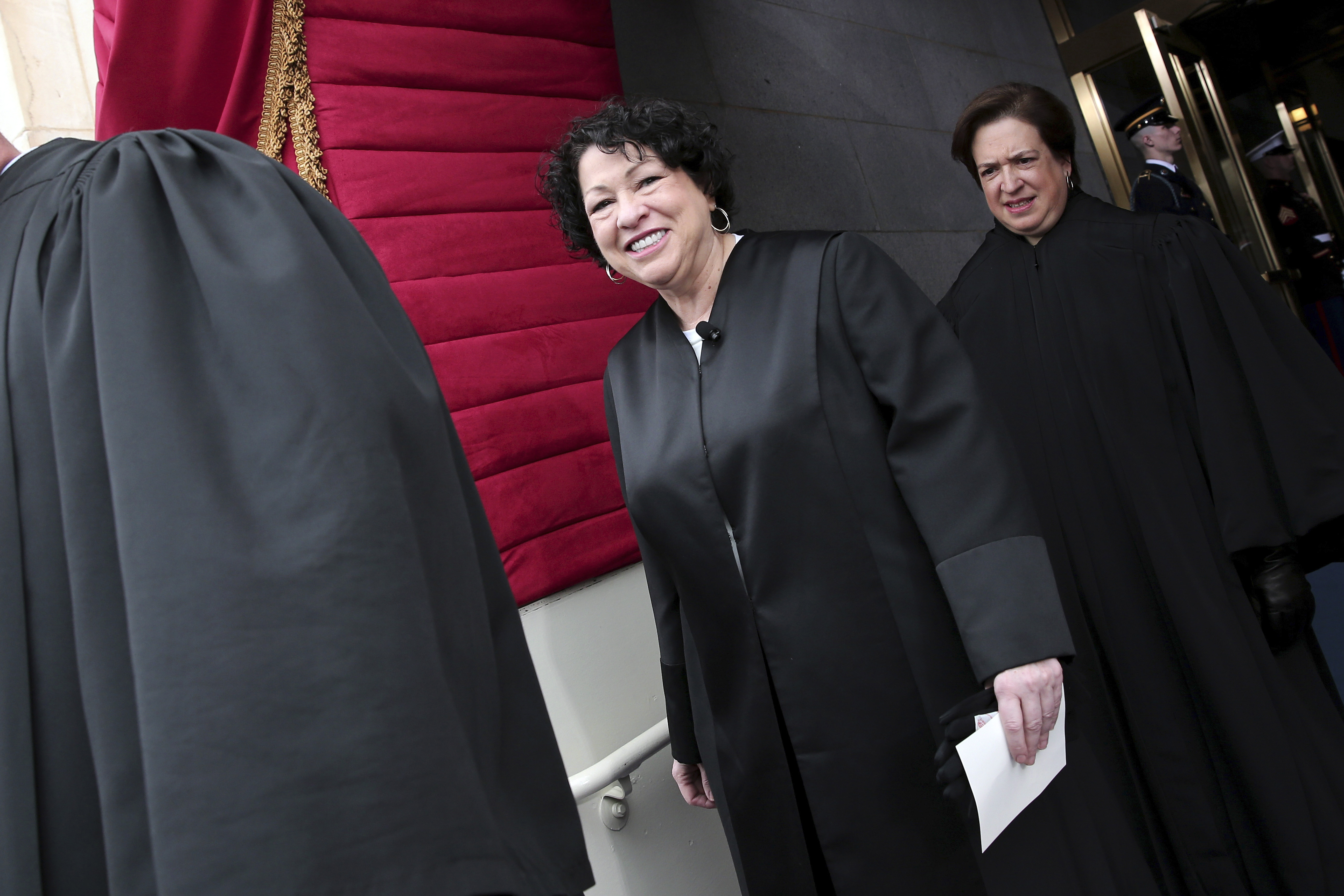
There isn't a Supreme Court Justice Sonia Sotomayor (Credit: AP/Win McNamee)

Out of all the newsworthy comments during this week’s Supreme Court debate over the legality of same-sex marriage bans, none was more revealing — or troubling — than that which came from Justice Sonya Sotomayor.

Before pointing out that “we let issues perk, and so we let racial segregation perk for 50 years from 1898 to 1954,” she asked: “If the issue is letting the states experiment (with same-sex marriage bans) and letting the society have more time to figure out its direction, why is taking a case now the answer?” The question embodied much of the sentiment of other justices, leading the New York Times to summarize the hearing with the headline: “Justices Say Time May Be Wrong for Gay Marriage Case.”

Three theories are at work in this line of reasoning: 1) The judiciary has an obligation to make sure its rulings reflect public opinion, 2) judges should always avoid rulings that conflict with public opinion, and 3) the Supreme Court should not immediately strike down laws violating the Constitution’s equal protection precepts because state fights over those statutes allegedly help the public reach consensus on those underlying issues.

Though Sotomayor’s logic appears reasonable at first glance, it isn’t. First and foremost, it is wrong for anybody to refer to a half-century of uninterrupted segregation as anything but awful, regardless of whether the struggle against such bigotry ultimately moved public opinion in the right direction. Additionally, the deeper jurisprudential principle being forwarded is distasteful. It radically reimagines the American judiciary as a mere validator of majority public opinion.

That, of course, is not what the judiciary is supposed to be. Elected legislators are charged with representing the public will in matters of legislation. But in the words of Alexander Hamilton, judges are appointed – and not elected — to a separate branch of government in order to ensure that their rulings do not represent the fleeting whims of public opinion and instead represent nothing “but the Constitution and the laws.”

This is particularly important when it comes to civil rights fights over atrocities like same-sex marriage bans — that is, bans denying the same legal protections for LGBT couples that are granted to heterosexual couples.


In adjudicating such cases, judges are supposed to prevent a tyranny of the majority from trampling the constitutional rights of minorities. As they did in the Loving v. Virginia case overturning bans on interracial marriage, justices are supposed to uphold the Constitution even if public opinion doesn’t support them doing so. That can only happen if judges are ruling exclusively on the constitutionality of discrimination – and not on whether such discrimination happens to be supported by the majority of citizens.

Sotomayor and her fellow justices seem to be saying the opposite; they seem to be making the radical claim that the public might not be ready for a sweeping ruling on same-sex marriage bans. That is a radical notion because those judges are insinuating that constitutional questions about equal protection should be less important than subjective questions about the current public mood.

But that’s the thing: While politics and the public shift, the right to equal protection under the law is supposed to be immutable. That right is either being protected or being violated. Indeed, the whole genius of the Founders’ creation of an independent judiciary is the recognition of that fundamental truth, and the corollary recognition that there is never a “right time” or a “wrong time” to uphold the Constitution.

Should this Supreme Court declare otherwise by refusing to strike down same sex marriage bans, it will set a dangerous precedent that constitutionality is now a matter of how the court perceives popular opinion rather than whether America is respecting all of its citizens’ inalienable rights.

David Sirota

David Sirota is a nationally syndicated newspaper columnist, magazine journalist and the best-selling author of the books "Hostile Takeover," "The Uprising" and "Back to Our Future." E-mail him at ds@davidsirota.com, follow him on Twitter @davidsirota or visit his website at www.davidsirota.com.

Featured Slide Shows

7 motorist-friendly camping sites

close X
  • Share on Twitter
  • Share on Facebook
  • Thumbnails
  • Fullscreen
  • 1 of 9

Sponsored Post

  • White River National Forest via Lower Crystal Lake, Colorado
    For those OK with the mainstream, White River Forest welcomes more than 10 million visitors a year, making it the most-visited recreation forest in the nation. But don’t hate it for being beautiful; it’s got substance, too. The forest boasts 8 wilderness areas, 2,500 miles of trail, 1,900 miles of winding service system roads, and 12 ski resorts (should your snow shredders fit the trunk space). If ice isn’t your thing: take the tire-friendly Flat Tops Trail Scenic Byway — 82 miles connecting the towns of Meeker and Yampa, half of which is unpaved for you road rebels.
    fs.usda.gov/whiteriveryou


    Image credit: Getty

  • Chattahoochee-Oconee National Forest via Noontootla Creek, Georgia
    Boasting 10 wildernesses, 430 miles of trail and 1,367 miles of trout-filled stream, this Georgia forest is hailed as a camper’s paradise. Try driving the Ridge and Valley Scenic Byway, which saw Civil War battles fought. If the tall peaks make your engine tremble, opt for the relatively flat Oconee National Forest, which offers smaller hills and an easy trail to the ghost town of Scull Shoals. Scaredy-cats can opt for John’s Mountain Overlook, which leads to twin waterfalls for the sensitive sightseer in you.
    fs.usda.gov/conf


    Image credit: flickr/chattoconeenf

  • Nordhouse Dunes Wilderness Area via Green Road, Michigan
    The only national forest in Lower Michigan, the Huron-Mainstee spans nearly 1 million acres of public land. Outside the requisite lush habitat for fish and wildlife on display, the Nordhouse Dunes Wilderness Area is among the biggest hooks for visitors: offering beach camping with shores pounded by big, cerulean surf. Splash in some rum and you just might think you were in the Caribbean.
    fs.usda.gov/hmnf


    Image credit: umich.edu

  • Canaan Mountain via Backcountry Canaan Loop Road, West Virginia
    A favorite hailed by outdoorsman and author Johnny Molloy as some of the best high-country car camping sites anywhere in the country, you don’t have to go far to get away. Travel 20 miles west of Dolly Sods (among the busiest in the East) to find the Canaan Backcountry (for more quiet and peace). Those willing to leave the car for a bit and foot it would be remiss to neglect day-hiking the White Rim Rocks, Table Rock Overlook, or the rim at Blackwater River Gorge.
    fs.usda.gov/mnf


    Image credit: Getty

  • Mt. Rogers NRA via Hurricane Creek Road, North Carolina
    Most know it as the highest country they’ll see from North Carolina to New Hampshire. What they may not know? Car campers can get the same grand experience for less hassle. Drop the 50-pound backpacks and take the highway to the high country by stopping anywhere on the twisting (hence the name) Hurricane Road for access to a 15-mile loop that boasts the best of the grassy balds. It’s the road less travelled, and the high one, at that.
    fs.usda.gov/gwj


    Image credit: wikipedia.org

  • Long Key State Park via the Overseas Highway, Florida
    Hiking can get old; sometimes you’d rather paddle. For a weekend getaway of the coastal variety and quieter version of the Florida Keys that’s no less luxe, stick your head in the sand (and ocean, if snorkeling’s your thing) at any of Long Key’s 60 sites. Canoes and kayaks are aplenty, as are the hot showers and electric power source amenities. Think of it as the getaway from the typical getaway.
    floridastateparks.org/longkey/default.cfm


    Image credit: floridastateparks.org

  • Grand Canyon National Park via Crazy Jug Point, Arizona
    You didn’t think we’d neglect one of the world’s most famous national parks, did you? Nor would we dare lead you astray with one of the busiest parts of the park. With the Colorado River still within view of this cliff-edge site, Crazy Jug is a carside camper’s refuge from the troops of tourists. Find easy access to the Bill Hall Trail less than a mile from camp, and descend to get a peek at the volcanic Mt. Trumbull. (Fear not: It’s about as active as your typical lazy Sunday in front of the tube, if not more peaceful.)
    fs.usda.gov/kaibab


    Image credit: flickr/Irish Typepad

  • As the go-to (weekend) getaway car for fiscally conscious field trips with friends, the 2013 MINI Convertible is your campground racer of choice, allowing you and up to three of your co-pilots to take in all the beauty of nature high and low. And with a fuel efficiency that won’t leave you in the latter, you won’t have to worry about being left stranded (or awkwardly asking to go halfsies on gas expenses).


    Image credit: miniusa.com

  • Recent Slide Shows

  • Share on Twitter
  • Share on Facebook
  • Thumbnails
  • Fullscreen
  • 1 of 9

Comments

78 Comments

Comment Preview

Your name will appear as username ( settings | log out )

You may use these HTML tags and attributes: <a href=""> <b> <em> <strong> <i> <blockquote>