
Condoms shouldn’t be a crime

In New York, rubbers are used as evidence of prostitution -- which only discourages people from using them

Topics: Sex, Love and Sex, Prostitution, Sex Work, Condoms, AIDS, HIV,

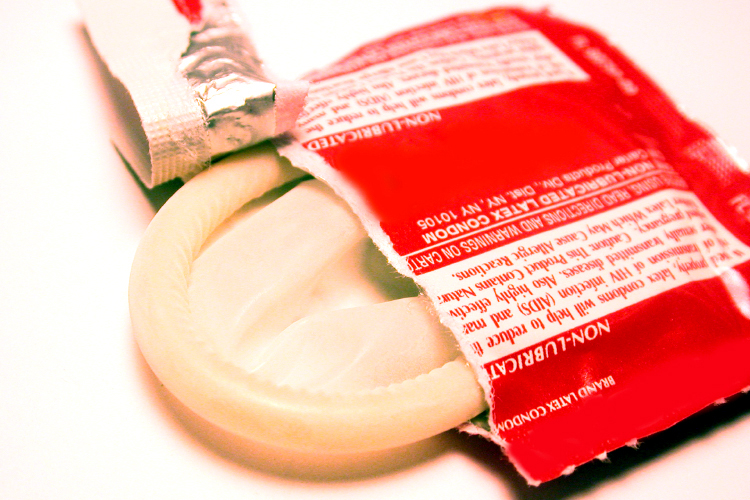
Condoms shouldn't be a crime (Credit: andipantz via iStock)

New York City loves condoms. The municipality has its very own brand of rubbers. Every month, the Department of Health hands out more than 3 million of them. But the NYPD considers those same city-issued condoms, along with your run-of-the-mill Trojan, to be evidence of a crime: prostitution. (Some have suggested that this is a blatant attempt by law enforcement to meet quotas.)

The health impact is clear: As Human Rights Watch reported,”Police use of condoms as evidence of prostitution has the same effect everywhere: despite millions of dollars spent on promoting and distributing condoms as an effective method of HIV prevention, groups most at risk of infection … are afraid to carry them and therefore engage in sex without protection as a result of police harassment.” What’s more, “Outreach workers and businesses are unable to distribute condoms freely and without fear of harassment as well.”

Who knew your tax dollars could be used to both encourage and discourage the use of condoms with such magnificent inefficiency! Today, activists are lobbying in Albany to change all that. Their goal is to pass S1379, which prohibits the “possession of contraceptive devices” from being used as evidence of prostitution in a criminal or civil proceeding. This, of course, is key to the health of sex workers and their clients. It’s perhaps especially poignant in cases of trafficking in which workers are presented with the “double whammy” of not only being forced into prostitution but are also prevented from using protection, says Audacia Ray, director of the sex worker rights organization Red Umbrella Project.

But this policy doesn’t just impact sex workers. “One of the crimes you can be arrested for in New York state is loitering for the purposes of prostitution,” says Ray. “That, of course, leads to profiling based on what they’re wearing, what part of the city they’re in, what their gender presentation is.” The LGBT community is particularly at risk for such profiling. A study last year found that 59 percent of transgender respondents, none of whom identified as sex workers, reported having been stopped by police under the assumption that they were selling sex.

While lobbying around a similar bill last year, Ray tells me that she found politicians would frequently say things like, “I think that this practice is ridiculous … but I can’t speak out about it because I don’t want to be perceived as supporting prostitution.” This year’s bill has firm backing from advocates for public health and LGBT rights, as well as sex workers. That broader human rights foundation certainly can’t hurt: For nearly 15 years, activists have attempted to get similar legislation passed, but year after year, it fails to pass committee. Ray recently suggested, as reported by Vice’s Kristen Bahler, that the key to success might be in shifting the focus away from sex worker safety, which she said, “hurts a little.”

Tracy Clark-Flory

Tracy Clark-Flory is a staff writer at Salon. Follow @tracyclarkflory on Twitter and Facebook.

Next Article

Related Stories

Featured Slide Shows

The week in 10 pics

close X
  • Share on Twitter
  • Share on Facebook
  • Thumbnails
  • Fullscreen
  • 1 of 11
  • This photo. President Barack Obama has a laugh during the unveiling of the George W. Bush Presidential Center in Dallas, Tx., Thursday. Former first lady Barbara Bush, who candidly admitted this week we've had enough Bushes in the White House, is unamused.
    Reuters/Jason Reed

  • Rescue workers converge Wednesday in Savar, Bangladesh, where the collapse of a garment building killed more than 300. Factory owners had ignored police orders to vacate the work site the day before.
    AP/A.M. Ahad

  • Police gather Wednesday at the Massachusetts Institute of Technology to honor campus officer Sean Collier, who was allegedly killed in a shootout with the Boston Marathon bombing suspects last week.
    AP/Elise Amendola

  • Police tape closes the site of a car bomb that targeted the French embassy in Libya Tuesday. The explosion wounded two French guards and caused extensive damage to Tripoli's upscale al-Andalus neighborhood.
    AP/Abdul Majeed Forjani

  • Protestors rage outside the residence of Indian Prime Minister Manmohan Singh Sunday following the rape of a 5-year-old girl in New Delhi. The girl was allegedly kidnapped and tortured before being abandoned in a locked room for two days.
    AP/Manish Swarup

  • Clarksville, Mo., residents sit in a life boat Monday after a Mississippi River flooding, the 13th worst on record.
    AP/Jeff Roberson

  • Workers pause Wednesday for a memorial service at the site of the West, Tx., fertilizer plant explosion, which killed 14 people and left a crater more than 90 feet wide.
    AP/The San Antonio Express-News, Tom Reel

  • Aerial footage of the devastation following a 7.0 magnitude earthquake in China's Sichuan province last Saturday. At least 180 people were killed and as many as 11,000 injured in the quake.
    AP/Liu Yinghua

  • On Wednesday, Hazmat-suited federal authorities search a martial arts studio in Tupelo, Miss., once operated by Everett Dutschke, the newest lead in the increasingly twisty ricin case. Last week, President Barack Obama, Sen. Roger Wicker, R.-Miss., and a Mississippi judge were each sent letters laced with the deadly poison.
    AP/Rogelio V. Solis

  • The lighting of Freedom Hall at the George W. Bush Presidential Center Thursday is celebrated with (what else but) red, white and blue fireworks.
    AP/David J. Phillip

  • Recent Slide Shows

  • Share on Twitter
  • Share on Facebook
  • Thumbnails
  • Fullscreen
  • 1 of 11

Comments

4 Comments

Comment Preview

Your name will appear as username ( profile | log out )

You may use these HTML tags and attributes: <a href=""> <b> <em> <strong> <i> <blockquote>