
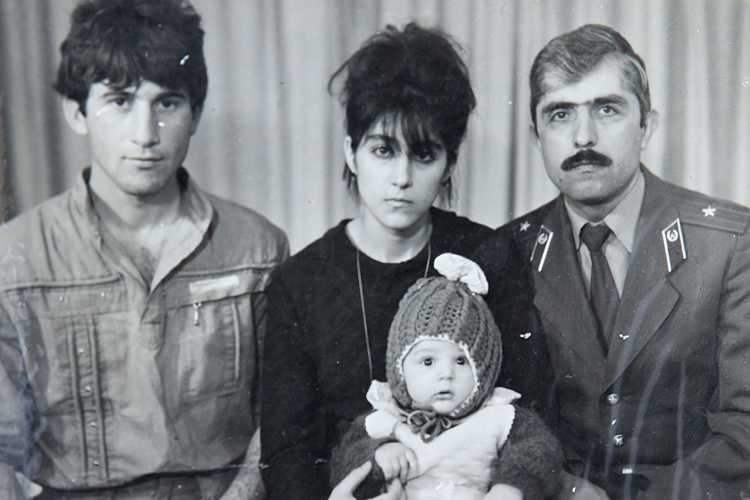

Why do we Americans find it so important to believe that terrorists and assassins in the U.S. can be dismissed as mere emotionally disturbed maniacs, rather than viewed as revolutionaries in the thrall of militant political or religious ideologies? Why are so we intent in removing the political from political violence?
These questions are timely, following Vice President Joe Biden’s dismissive description of the Boston Marathon bombers as “knockoff jihadis.” Mere amateurs, these brothers, who were capable of murdering several marathon participants, maiming scores more and shutting down a major city and even rail lines for hours or days. The real amateurism, it might be suggested, is that of the pundits and journalists trying to psychoanalyze the Tsarnaev brothers and their relations from a distance.
But there are already reports that Dzhokhar Tsarnaev, the surviving killer, has said that he and his brother acted in response to the U.S. wars in Iraq and Afghanistan — wars that they considered to be attacks on Islam. What if this really was the motive? What if these brothers really were sincere Islamist revolutionaries, like the thousands of others who have rallied to militant jihadism in the past several decades, whether they were connected to international Islamist networks or acting on their own? That doesn’t exonerate their brutal crimes in any way. But surely Islamist terrorists are best understood in terms of the common Islamist ideology they share, rather than personal or familial experiences that are unique to each.
There’s nothing new about stripping American terrorists and assassins of the ideologies that in fact motivated them. Consider the case of the martyred brothers John and Robert Kennedy.
Most Americans would be hard-pressed to identify the Marxist radical who assassinated a U.S. president in retaliation for America’s Cold War policies. But Lee Harvey Oswald called himself a militant Marxist, defected to the Soviet Union only to return, visited the Soviet and Cuban embassies in Mexico and organized a “Fair Play for Cuba” campaign at a time when the CIA, under Kennedy’s direction, was involved in plots to assassinate Fidel Castro and overthrow Cuba’s communist regime. To this day, there is no credible evidence that Oswald received support or encouragement from the Soviet Union or Cuba, whose governments regarded him with suspicion. But Oswald could have been a free agent and a lone gunman — and at the same time a genuine Marxist militant. A Marxist who murders the president of the United States, after earlier trying and failing to murder a right-wing general in Dallas, Gen. Edwin Walker, is about as militant as you can get.
At the time, fear of inflaming the McCarthyite right may have inspired the decision of the establishment media and political class never to refer to “Oswald the communist” or “Oswald the Marxist radical.” But the Cold War is over, and in 2013 there is no reason to pretend that the killing of President John F. Kennedy was anything other than an act of political terrorism, carried out by a pro-Castro Marxist in retaliation against Kennedy’s own attempts to overthrow communist rule in Cuba.
International politics also inspired the murder of John F. Kennedy’s brother Robert Kennedy, during the Democratic primary campaign in 1968. Most Americans today probably think that Robert Kennedy was gunned down on June 5, 1968, by the proverbial “lone nut” who was mentally or emotionally disturbed and whose stated motivation can therefore be ignored.
But here are the facts. Kennedy’s killer, Sirhan Sirhan, was a 24-year-old Palestinian Arab Christian, born in Jerusalem in 1944, who later went to the U.S. via Jordan. On being arrested, Sirhan said: “I can explain it. I did it for my country.” When Kennedy courted pro-Israel voters and donors by promising to send 50 fighter jets to Israel if he became president, Sirhan wrote in his diary on May 18, 1968: “My determination to eliminate R.F.K. is becoming more and more of an unshakable obsession … Kennedy must die before June 5th.
Why the symbolic date of June 5, 1968? That was the anniversary of the beginning of the Six Day War of 1967, in which the state of Israel defeated its Arab enemies.
I’ll bet your history teachers never told you that John F. Kennedy was a casualty of the Cold War between the American-led West and the Soviet-led communist bloc, or that Robert Kennedy was a casualty of the Arab-Israeli conflict. But both statements are true.
Indeed, successful presidential assassins in U.S. history have typically been motivated by political ideology. Charles Giteau, who murdered President James Garfield in 1881, fits the popular stereotype of the lone nutcase assassin. His own family had tried to have him committed to an insane asylum, and Giteau’s belief that Garfield owed him a job on the basis of his contribution to Garfield’s electoral success was delusional.
But Giteau is the exception to the rule. The assassins of Presidents McKinley and Lincoln were motivated by political ideology, like Oswald and Sirhan.
McKinley was assassinated on Sept. 6, 1901, by Leon Czolgosz, the American-born son of Polish immigrant parents. Czolgosz was a convert to the then-global ideology of revolutionary anarchism, whose militants murdered a number of rulers and high government officials in Europe and Russia. Although he acted alone, Czolgosz was inspired in part by the oratory of Emma Goldman, a radical leader who rushed into print with a defense of Czolgosz, praising his murder of McKinley as an act of tyrannicide. In “The Tragedy at Buffalo,” Goldman wrote:
“But his act was mad and cowardly,” says the ruling class. “It was foolish and impractical,” echo all petty reformers, Socialists, and even some Anarchists.
What absurdity! ….
It is, therefore, not cruelty, or a thirst for blood, or any other criminal tendency, that induces such a man to strike a blow at organized power. On the contrary, it is mostly because of a strong social instinct, because of an abundance of love and an overflow of sympathy with the pain and sorrow around us, a love which seeks refuge in the embrace of mankind, a love so strong that it shrinks before no consequence, a love so broad that it can never be wrapped up in one object, as long as thousands perish, a love so all-absorbing that it can neither calculate, reason, investigate, but only dare at all costs.
Earlier, in 1892, Goldman’s lover Alexander Berkman tried but failed to assassinate the industrialist Henry Clay Frick, and in 1917 the Russian-born anarchist was deported for opposing the U.S. draft.
The most famous presidential assassin of all is John Wilkes Booth, and there has never been any doubt as to why he killed Abraham Lincoln. Booth was a racist, pro-slavery supporter of the Confederate States of America. Like Oswald, Sirhan and Czolgosz, he saw himself as a revolutionary in a larger political cause: white supremacy, which was threatened by the triumph of Lincoln’s “Black Republicanism” over the Southern secessionists. Unlike the other assassins, Wilkes was part of a larger conspiracy, which included an attack that injured Secretary of State William Seward around the time that Lincoln was murdered.
The determination to dismiss ideology as a motive is illustrated by a long letter that the novelist Stephen King wrote to the New York Times in 2011, protesting a column in which Ross Douthat observed that Oswald’s Marxist beliefs led him to kill Kennedy:
Like many conservative writers who look at that day in Dallas, Mr. Douthat has concentrated on Oswald’s political actions and statements, and ignored the man’s severely damaged personality…. Lone gunmen like Oswald act for other reasons, no matter what they may say in an effort to look rational…. Oswald’s Communist beliefs were never more than skin-deep. His real interest was in being viewed as a rebel, an extraordinary fellow who could see the real truth when those all about him were blindfolded. The most important figure in his life was his domineering mother, Marguerite, in whose bed he slept until he was 11 and who alternately praised and belittled him.
When he read “Das Kapital” while on post with the Marines in the Pacific or tried to “organize” his fellow workers in various low-paying jobs, he was acting out the rebellion of which he was incapable with his mother. When he was handing out Fair Play for Cuba leaflets in New Orleans, he was also vacationing from his wife.
Oswald’s guiding star wasn’t Marxism or Communism but the true American cult: renown. …
By this kind of logic, Hitler wasn’t really a National Socialist. He didn’t really believe all that stuff about the Aryan master race and the Slavic Untermenschen and the Jewish world conspiracy. He just had issues with his mother, his suicidal niece Geli Raubal and Eva Braun, and dreamed of starring in a Movietone newsreel.
Other examples can be provided, but the point is clear: Political violence in the U.S. as in other countries frequently is inspired by political values, not by the personal pathologies beloved by our armchair Freudian psychoanalysts. Oswald believed that he was a heroic militant in the global communist revolution. Sirhan thought he was avenging the defeat of Palestinians and Arabs in general by Israel and its Western backers, including the U.S. Czolgosz sought to join the militants of the worldwide anarchist movement by assassinating a world leader. And Booth sought to avenge the defeat of the slave-holding South on behalf of the white race.
Why shouldn’t the Tsarnaev brothers fall into the same category? We may think that their Islamist ideology is as deluded and repugnant as other global, illiberal ideologies, including the Marxism-Leninism that inspired Oswald and the anarchism that inspired Czolgosz. We may reject their evident belief that massacring civilians at an American marathon or in their reportedly planned Times Square bombing is the moral equivalent of killings of Muslims by the U.S., Russia and other Western states in conflicts like Iraq, Afghanistan and the Chechen War. But we should take their ideas seriously. Because there are many others at home and abroad who share them.
