
The real reason not to intervene in Syria
Not only can outside interference in humanitarian emergencies not help -- it can actually make things worse
By Jordan SmithTopics: Syria, Libya, Middle East, Intervention, Rwanda, Democrats, Anne-Marie Slaughter, Foreign policy, U.S. foreign policy, State DEpartment, News, Politics News
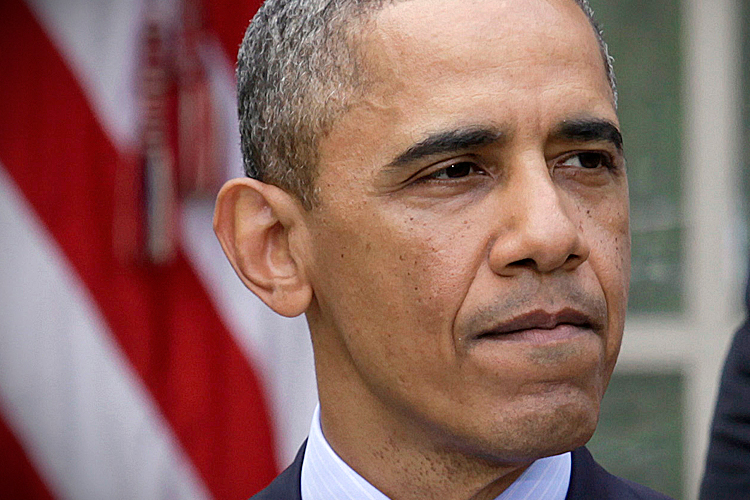
President Obama speaks in the Rose Garden of the White House in Washington April 17, 2013. (Credit: Reuters/Yuri Gripas)Demands by politicians and pundits for intervention in Syria have become so strong that they now seem to be influencing U.S. policy. But are they right? The most emotionally powerful arguments came from the State Department former policy planning head Anne-Marie Slaughter. The Obama administration is in danger of letting genocide akin to the one in Rwanda in the 1990s occur, she wrote, in the Washington Post. The case of Rwanda haunts Democrats. Former Secretary of State Madeleine Albright called not saving Rwandans her “greatest regret” from her time in office, “something that sits very heavy on all our souls.” U.N. ambassador Susan Rice has similarly expressed agony over U.S. failure to intervene in Rwanda.
It is important to recall, however, exactly what the United States could have done to avert the Rwandan genocide. According to Alan Kuperman, a professor at the University of Texas at Austin and author of “The Limits of Humanitarian Intervention: Genocide in Rwanda,” the answer is: not much. Little could have been accomplished by outsiders to spare civilians. Kuperman estimates that at best Western forces would have been unable to save 75 percent of those killed in Rwanda. Why? Because after the first month of violence, the United Nations authorized a military intervention, in May 1994 — but by the time international reinforcements arrived, in late June, the genocide was virtually over. Certainly saving 25 percent of a people being slaughtered is still a compelling rationale, but it’s a far cry from saying the entire genocide could have been averted or saved via intervention. Simply put, practical obstacles prevented any chance of timely intervention.
More generally, a significant body of international-relations scholarship suggests that not only can outside intervention in humanitarian emergencies in places like Rwanda not ameliorate the situation — it can actually make things worse. Even simply dispensing aid can prolong suffering, in what the former Doctors Without Borders leader Fiona Terry calls “the paradox of humanitarian action.”
Why are humanitarian interventions so difficult? Kuperman theorizes that when rebels are assisted by outside forces, they are unintentionally encouraged to become more reckless in fighting a regime or provoking it, resist negotiations, and expand their ambitions. Intervention can thereby produce a perverse situation of prolonging a conflict that results in more deaths. He calls this the “moral hazard of humanitarian intervention.” Even the expectation or the mistaken belief of outside support can encourage rebels to continue fighting or resist settlements.
“In practice, intervention does sometimes help rebels attain their goals, but usually it is too late or inadequate to avert retaliation against civilians,” writes Kuperman. An example of this would be when during and after the Gulf War the first Bush administration called on Iraqi citizens to overthrow Saddam Hussein. Once Iraqis attempted to do precisely that, the Bush administration realized it was unwilling to provide the rebels with the necessary support. Hussein then crushed the rebels, killing thousands of civilians who might otherwise have been spared had the Bush team not encouraged an uprising.
Right now, the U.S. public is overwhelmingly hostile to military intervention in Syria. Kuperman speculates that what had previously been a nonviolent uprising in Syria in early 2011 became an armed rebellion when Syrians saw that the U.S. supported Libyan rebels. “I think the Syrians were looking at this and saying, ‘Hey, we’ve been peaceful and getting nothing while the Libyans got outside help,’” he says. As a result of the Syrian opposition transforming their methods from nonviolent to an armed rebellion, the death toll has increased approximately 15 times per week, estimates Kuperman.
Of course, this does not necessarily mean all humanitarian interventions should be avoided. Kuperman believes that America should get involved in humanitarian operations when not rebels but masses of civilians are being deliberately targeted for death by a government. Intervening once an armed rebellion has already begun means intervening in a civil war, an act that frequently encourages both sides to escalate the conflict.
It should also be noted that these are purely discussions of humanitarian interventions, divorced from considerations about American interests. For the U.S. in the Middle East, there are no good options: Non-intervention spurs resentment at perceived American indifference to suffering; intervention spurs resentment at perceived American meddling. Encouraging negotiations means discouraging grand ambitions; supporting one side means alienating another. The toxic history of American and Western imperialism in the Middle East means that for a long time, the U.S. is simply going to be disliked in the Middle East. As George Washington University professor Marc Lynch puts it in the latest issue of Foreign Affairs, “In the Middle East, haters gonna hate.”
The humanitarian impulse is a noble one, spurred by good intentions. But good intentions, even if they don’t pave the road to hell, can sometimes take us a good way there. Those calling for intervention in Syria should seriously consider the possibility that outside interference may be counterproductive.
Jordan Michael Smith has written for the New York Times, the Boston Globe and The Atlantic. He wrote about the "liberal hawks" for Salon in 2010. More Jordan Smith.
You Might Also Like
More Related Stories
-
LeVar Burton explains how not to be killed by police
-
Meet the Wendy Davis truthers
-
Five states see new antiabortion laws go into effect
-
Egyptian protestors gather before military deadline
-
Gay and lesbian couples flock to California courts to wed
-
Justices Antonin Scalia and Elena Kagan hunt together
-
Edward Snowden has nowhere to go
-
Six amazing signs from the "Stand with Texas Women" rally
-
Edward Snowden releases statement from Moscow
-
X-ray vision, coming soon
-
Dark money group lies to IRS about being dark money group
-
Report: Computer user believed to be Adam Lanza discovered
-
Hey, GOP: Mexican immigrants aren't necessarily Democrats
-
Best of the worst: Right-wing tweets on the Texas abortion battle
-
Texas Senate meets, promptly votes to recess until July 9
-
Erick Erickson, Internet comedian, jokes about reproductive rights
-
Bodies of Arizona firefighters recovered
-
Report: Snowden asks for political asylum in Russia
-
Planned Parenthood gets the Tami Taylor seal of approval
-
Ohio governor signs budget laced with antiabortion provisions
-
Will Egypt's army stage another coup?
Featured Slide Shows
7 motorist-friendly camping sites
close X- Share on Twitter
- Share on Facebook
- Thumbnails
- Fullscreen
- 1 of 9
- Previous
- Next
Sponsored Post
-
White River National Forest via Lower Crystal Lake, Colorado For those OK with the mainstream, White River Forest welcomes more than 10 million visitors a year, making it the most-visited recreation forest in the nation. But don’t hate it for being beautiful; it’s got substance, too. The forest boasts 8 wilderness areas, 2,500 miles of trail, 1,900 miles of winding service system roads, and 12 ski resorts (should your snow shredders fit the trunk space). If ice isn’t your thing: take the tire-friendly Flat Tops Trail Scenic Byway — 82 miles connecting the towns of Meeker and Yampa, half of which is unpaved for you road rebels. fs.usda.gov/whiteriveryou
Image credit: Getty
-
Chattahoochee-Oconee National Forest via Noontootla Creek, GeorgiaBoasting 10 wildernesses, 430 miles of trail and 1,367 miles of trout-filled stream, this Georgia forest is hailed as a camper’s paradise. Try driving the Ridge and Valley Scenic Byway, which saw Civil War battles fought. If the tall peaks make your engine tremble, opt for the relatively flat Oconee National Forest, which offers smaller hills and an easy trail to the ghost town of Scull Shoals. Scaredy-cats can opt for John’s Mountain Overlook, which leads to twin waterfalls for the sensitive sightseer in you. fs.usda.gov/conf
Image credit: flickr/chattoconeenf
-
Nordhouse Dunes Wilderness Area via Green Road, Michigan The only national forest in Lower Michigan, the Huron-Mainstee spans nearly 1 million acres of public land. Outside the requisite lush habitat for fish and wildlife on display, the Nordhouse Dunes Wilderness Area is among the biggest hooks for visitors: offering beach camping with shores pounded by big, cerulean surf. Splash in some rum and you just might think you were in the Caribbean. fs.usda.gov/hmnf
Image credit: umich.edu
-
Canaan Mountain via Backcountry Canaan Loop Road, West Virginia A favorite hailed by outdoorsman and author Johnny Molloy as some of the best high-country car camping sites anywhere in the country, you don’t have to go far to get away. Travel 20 miles west of Dolly Sods (among the busiest in the East) to find the Canaan Backcountry (for more quiet and peace). Those willing to leave the car for a bit and foot it would be remiss to neglect day-hiking the White Rim Rocks, Table Rock Overlook, or the rim at Blackwater River Gorge. fs.usda.gov/mnf
Image credit: Getty
-
Mt. Rogers NRA via Hurricane Creek Road, North CarolinaMost know it as the highest country they’ll see from North Carolina to New Hampshire. What they may not know? Car campers can get the same grand experience for less hassle. Drop the 50-pound backpacks and take the highway to the high country by stopping anywhere on the twisting (hence the name) Hurricane Road for access to a 15-mile loop that boasts the best of the grassy balds. It’s the road less travelled, and the high one, at that. fs.usda.gov/gwj
Image credit: wikipedia.org
-
Long Key State Park via the Overseas Highway, Florida Hiking can get old; sometimes you’d rather paddle. For a weekend getaway of the coastal variety and quieter version of the Florida Keys that’s no less luxe, stick your head in the sand (and ocean, if snorkeling’s your thing) at any of Long Key’s 60 sites. Canoes and kayaks are aplenty, as are the hot showers and electric power source amenities. Think of it as the getaway from the typical getaway. floridastateparks.org/longkey/default.cfm
Image credit: floridastateparks.org
-
Grand Canyon National Park via Crazy Jug Point, Arizona You didn’t think we’d neglect one of the world’s most famous national parks, did you? Nor would we dare lead you astray with one of the busiest parts of the park. With the Colorado River still within view of this cliff-edge site, Crazy Jug is a carside camper’s refuge from the troops of tourists. Find easy access to the Bill Hall Trail less than a mile from camp, and descend to get a peek at the volcanic Mt. Trumbull. (Fear not: It’s about as active as your typical lazy Sunday in front of the tube, if not more peaceful.) fs.usda.gov/kaibab
Image credit: flickr/Irish Typepad
-
As the go-to (weekend) getaway car for fiscally conscious field trips with friends, the 2013 MINI Convertible is your campground racer of choice, allowing you and up to three of your co-pilots to take in all the beauty of nature high and low. And with a fuel efficiency that won’t leave you in the latter, you won’t have to worry about being left stranded (or awkwardly asking to go halfsies on gas expenses).
Image credit: miniusa.com
-
Recent Slide Shows
-
7 motorist-friendly camping sites
-
Gripping photos: The people of the Turkey protests (slideshow)
-
The week in 10 pics
-
Photos: Turmoil and tear gas in Instanbul's Gezi Park - Slideshow
-
- Share on Twitter
- Share on Facebook
- Thumbnails
- Fullscreen
- 1 of 9
- Previous
- Next
-
The week in 10 pics
-
10 summer food festivals worth the pit stop
-
The week in 10 pics
-
The week in 10 pics
-
9 amazing drive-in movie theaters still standing
-
The week in 10 pics
-
The week in 10 pics
-
The week in 10 pics
-
The week in 10 pics
-
The week in 10 pics
-
The week in 10 pics
-
Netflix's April Fools' Day categories
-
The week in 10 pics
-
The week in 10 pics
-
The week in 10 pics
Related Videos
Most Read
-
We must hate our children Joan Walsh
-
NSA reportedly has secret data collection agreement with several European countries Prachi Gupta
-
The best of Tumblr porn Tracy Clark-Flory
-
James Clapper is still lying to America David Sirota
-
Thanks for nothing, college! Tim Donovan
-
Before Edward Snowden: "Sexual deviates" and the NSA Rick Anderson
-
You are how you sneeze Ryan O'Hanlon, Pacific Standard
-
SCOTUS: No right to remain silent unless you speak up Christopher Zara, International Business Times
-
The smearing of Rachel Jeantel Mary Elizabeth Williams
-
Texas Senate meets, promptly votes to recess until July 9 Katie Mcdonough


Comments
31 Comments