
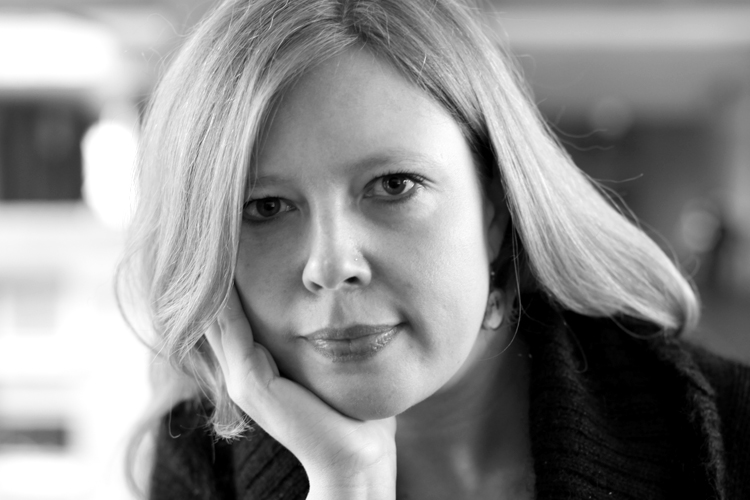

When as a teenager Katherine Angel felt herself suddenly overflowing with lust, she began to wonder: Where are the similarly hungry women? In “Unmastered: A Book on Desire, Most Difficult to Tell,” she says of her burgeoning erotic wanting, “The words I would have put this into, had I felt the urge — the words I still put this into — are these: I feel like a man.”
This is a book for every woman who has ever felt like a man for being sexual.
It is largely a sexual autobiography, but also self-conscious proof-positive that women are capable of being just as desirous as men. She writes poetically about having her partner ejaculate on her: “I love this. The sudden wet coolness on me. The smell: summer rain on cement. Fresh, open windows.” Of her lover’s swollen member, she says, “It is beautiful. It unnerves me, in its gorgeous attentiveness.” It would be a daringly personal work for any woman to write, but perhaps especially so for Angel, a Cambridge-educated academic and feminist who has researched female sexual dysfunction.
More than the personal risks, though, she explores the challenges and contradictions of being a sexual woman in a culture that — oh, you know — fears, suppresses and devalues female sexuality. Angel connects the way women are generally socialized to be “sympathetic, charming, unselfish” to the ways in which they take on male wanting as their own — or, as she puts it, the “porousness, in intuiting the other’s desire, and conflating it with one’s own.”
She beautifully details the Fun House mirror maze of desire. She writes of watching porn, “I imagine sex with her — or is it me? — through his eyes. I see myself as he might. I allow myself desire for her through my desire for him.” (That is an observation that completely jibes with sex research showing that female porn viewers spend a lot of time looking at the women’s bodies and the men’s faces responding to them.)
Not only does she find herself adopting her partner’s wants but also protecting him from his own masculine insecurity:
Yes, you are my big man, fucking me. Yes, you’re so big so hard. Yes, you are everything you feel under pressure to be. I am not disappointed! You know that deep well of fear that flickers in your eyes? I can see it, I can feel it, and I am telling you that it does not exist. I am pouring myself into that well; I block it up with my sympathy, my empathy, my acute feeling for your anxiety. I am proof of your masculinity, of your endless potency.
But this isn’t pure self-sacrifice, as she later admits in a characteristically complicating conclusion: “I lock him into his masculinity. I am anxious to protect it, for it pains me, it pains my femininity, to see it fragmented.” In Angel’s view, she’s as invested in her partner’s masculinity as he is in her femininity, and they limit each other because of it.
I spoke to Angel by phone about how feminism initially constrained her sexuality, what sexual empowerment truly means and why she decided to include the story of her abortion in a book about female desire.
It seems that writing this book comes with its risks, given the personal nature of it, the subject matter and your work in academia. Why did you feel compelled to take that risk?
At a very deep level there was a story I needed to tell as a writer, that was to do with understanding the way these very complicated questions about sexuality and feminism and power and gender kind of play themselves out in my life. There was a story I needed to articulate, and I needed to do so in a very particular voice. Part of that feeling was looking around and seeing how incredibly problematic we seem to find women, desire, women’s experience of their bodies, all those kinds of issues.
I struggled to not repeat a kind of endless gesture of judging and shaming, and also just a kind of very sort of polemical world of opinion where people close down very complex, difficult questions, and want to diagnose something, or make a kind of universal statement about how women should act or what they should feel or how they should think about whatever it is, whether it’s sex or pornography or abortion or whatever. I find that kind of language very polarizing, this conclusive language that wants to tie everything up very neatly and reach a conclusion. I find that doesn’t at all reflect my experience of what it means to be not just a woman or a sexually active woman or a feminist but just of being a person. It’s not how I experience my life.
One of the questions you wrestle with in the book is what sexual empowerment looks like for women. Do you have an answer for that?
I suppose I feel that in a way, that question is impossible to answer, because I think sexual empowerment or emancipation is so individual. What I need in order to feel emancipated and free and powerful is probably quite different from what you need, or what everyone else individually needs. I don’t feel the urge to answer that question in a general sense, except to say that I think one of the problems is the way we seem to require women to rationalize their desire. I think we demand slightly less of men, in that way. We’re always ready to interrogate a woman’s particular sexuality and her choices — whether it’s the level of what someone likes to do in bed, or how they dress or speak in public or how they behave.
Another problem is this view we have that women’s sexuality and desire is always the effect of something else, the effect of external forces acting on it from the outside. The desire of men, or the desires of an exploitative pornographic industry, or whatever. I feel that questions about the effect of very powerful social norms on how we experience being women is something we need to be thinking about all the time, but at the same time I feel it’s equally damaging to women for us to be sitting around with our arms folded going, “Why do you do what you do, and is it OK to want that, and is it OK to do that?” I think everyone is trying to — whether they’re aware of it or not — everyone is trying to grapple with formidable forces of sexism and misogyny and trying to work out or negotiate those complex forces of power in their own individual lives, and everybody manifests itself differently.
One of my favorite passages from the book touches on the seeming separation between brain and body, and how you can become physically turned on by “misogynistic, coercive, tacky” pornography that depicts, as you put it, “dead-eyed unions.” What do you make of that disconnect between what the mind thinks and the body feels?
I guess, in a sense, it’s not quite clear to me what the mind and the body are. It’s not clear to me where actually we draw that line. But I think in all these discussions about pornography and arousal and sexual desire in women, one of the things that tends to get a bit relegated in the discussion is the powerful role of shame in how we experience our sexuality, given that at the very earliest points in our lives we’re being told by the culture around us that there are things that aren’t the province of women. We’re not sexually desirous in the way that men are, or we’re not into pornography or visual in the same way, and what we want is emotional connection and somebody to raise our children. All those tropes are so powerful, and when we’re looking at questions of how women respond to pornography, I find it almost impossible to talk about in a way, because one’s experience of one’s own body and bodily responses isn’t just a physical experience, it’s an experience that’s filtered through your own person, through every single conversation you’ve had about sex and relationships. It’s filtered through the sex and relationships you’ve had, all the messages you see in the media at every moment in the day. So I think trying to isolate these components of sexual desire has been problematic.
You write, “What is it to define, or even to know, our desires — to identify which are our own, and which result from a kind of porousness?” I’d like to redirect that question to you now.
Well, that’s a pivotal moment, I think. That’s where I pose the question that frames the rest of the book, in a way. And what I find interesting in that question is that part of me has an urge to try and draw that boundary, to say, “What do I really want?” I think the book is about trying to find your own language, about trying to work out what you want not just from sex, but also from your life as a whole. One of the trajectories in the book is sort of individuating and trying to find out who you really are and what you want to, in my case, write. It’s partly a book about coming to find your voice in a larger sense. But I think that it’s such an important feminist question: What do we individually want as women regardless of what magazines are telling us we want, or advertisers are telling us we want, or men are telling us what we want, or whatever?
What I find worse is that there’s a tendency to view women as more porous than men, if you like. So we tend to see male sexuality as a kind of simple, mechanistic given and that women are constantly prey to these cultural and social norms. The fact is, I think we’re all shaped by these cultural and social norms. There’s no such thing as an authentic sexuality that then gets encroached upon by powerful forces from the outside. Sexuality and our desires are things we kind of develop over time in response to this bewildering array of biological, individual, social, cultural cues. The challenge, then, for us as individuals, is to kind of work out what to do with that and what we want to resist and what we want to claim. It’s a profoundly feminist question, but I think the way the debate tends to unfold is that we worry about women as these passive, empty vessels that receive the influence of culture, and I think that’s something we need to make more subtle in the conversation.
There is a lot in the book about protecting your partner’s masculinity, inflating it, even. You admit that this is in fact not just in service to him but also to yourself. How so?
Our sexual desires are so shaped by ideas about gender. Whether we like it or not, or whether we’re conscious of it or not, and I think regardless of our sexual orientation or identity, we’re always dealing with ideas about masculinity or femininity, because that is such a powerful structural concept of modern life. So I feel that first of all, as a whole, that’s partly what sex is about. It’s partly about grappling with gender and trying to assert it or undermine it or play with it or fragment it or resist it.
But it’s also, as I point out in the book, partly about my feelings that part of socialization and emergence of a woman or a girl is the deference to man — make sure the male ego is protected and safe. I can’t speak for anyone else, but I certainly know in my own life the ways that I do that — unconsciously, as a kind of habit — and I wanted to be honest about that. I suppose I also wanted to point out that it’s a mutual thing. In the book I touch on how it’s a mutually calibrating process. I think my experience of heterosexual sex is that partly what you’re doing is taking pleasure in that. You’re taking pleasure in taking roles and enacting them. Whatever we might think about that, it’s a powerful aspect of sexuality.
You write that “guilty — excited — lonely” you “fashioned a feminism that contained my desire.” Can you talk about that?
That’s the part of the book where I talk about growing up and feeling unsafe and harassed [as a young girl]. It made me feel that I had to be very, very careful in how I negotiated my own desire and how I manifested it and how I expressed it. What I’m trying to do in the book is look back at how my feminism and sexuality emerged in a very complex, symbiotic relationship, and I do think that the feminism I was adhering to reinforced this feeling that to use your sexuality or enjoy your sexuality or to display it, to voice your desire, is very problematic, because you could be potentially playing into the hands of the aggressive misogyny that was out there.
It took me some time to realize, “That is not the feminism I want.” I refuse to take a position which endorses any kind of silencing of women’s sexuality. One way to respond to misogyny and violence is to feel you have to adapt your sexuality to it, and I think that’s such a flawed road to go down, and a lot of people have gone down that road, feminists included, and I think it’s dangerous.
You include your story of getting an abortion. Why was that important to a book about female desire?
What I wanted to do with the book is paint a portrait of how sexuality can operate in a particular life. Just my life, obviously. It’s just my experience, but I wanted to show that a life can be full of intense pleasure and excitement and joy, but can also be full of pain and episodes of suffering. So I wanted to include the light and the dark, because I feel people tend to push away one side of that equation, in a way. I wanted the book to be kind of a complex, spacious object that could contain these different aspects, just because that has been my experience of sexuality.
Oftentimes with the specific issue of abortion, again I felt that women – around the controversial question of abortion, women are asked to take very stark positions about what the experience is. And I’m completely pro-choice. I will fight to the last about reproductive freedom and rights. But it’s a very complex physical experience to go through for most people. Not for everyone, some people go through it without difficulty, but for me I experienced it with a surprising amount of distress, and I wanted to reflect on why that was. It was partly that because I was pro-choice, I didn’t allow myself to feel that this could be an experience I would find distressing, and then denying that distress about it made me more distressed. But it was also that I felt I couldn’t be honest about how I felt about it, because if I was honest and said, “This was kind of a shitty experience for me,” that would be betraying my feminist roots, that I’d be playing into the hands of antiabortion rhetoric. This sense that you have to take a very simple line, that you’re asked to basically betray the truth of how complex reality is — what it is to have a body and have desires and be a person — basically, I feel like that kind of insistence is a form of violence toward women’s experience.
