
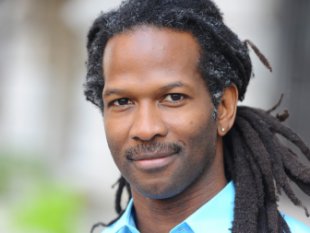


What many Americans, including many scientists, think they know about drugs is turning out to be totally wrong. For decades, drug war propaganda has brainwashed Americans into blaming drugs for problems ranging from crime to economic deprivation. In his new book High Price: A Neuroscientist’s Journey of Self-Discovery That Challenges Everything You Know About Drugs and Society, Carl Hart blows apart the most common myths about drugs and their impact on society, drawing in part on his personal experience growing up in an impoverished Miami neighborhood. Hart has used marijuana and cocaine, carried guns, sold drugs, and participated in other petty crime, like shoplifting. A combination of what he calls choice and chance brought him to the AIr Force and college, and finally made him the first black, tenured professor of sciences at Columbia University.
Intertwined with his story about the struggles of families and communities stressed by lack of capital and power over their surroundings is striking new research on substance use. Hart uses his life and work to reveal that drugs are not nearly as harmful as many think. For example, most people who use the most “addicting” drugs do not develop a problem. Rather, Hart says, drugs are scapegoated for problems related to poverty. The policies that result from this misconception are catastrophically misguided. AlterNet spoke with Hart about his life and research.
Kristen Gynne: What are some of the false conclusions about drugs you are challenging?
Carl Hart: There are multiple false conclusions. There is a belief, for example, that crack cocaine is so addictive it only took one hit to get hooked, and that it is impossible to use heroin without becoming addicted. There was another belief that methamphetamine users are cognitively impaired. All of these are myths that have have been perpetuated primarily by law enforcement, and law enforcement deals with a limited, select group of people—people who are, in many cases, behaving badly. But to generalize that to all drug users is not only shortsighted and naive, it’s also irresponsible. The impact of that irresponsible behavior has been borne primarily by black communities. Nobody really cares about black communities, and that’s why this irresponsible behavior has been allowed to continue.
It’s also true that we’ve missed critical opportunities to challenge our basic assumptions about drugs. If drugs really were as damaging as we are led to believe, a respectable society should do something to address that problem. But the thing is, the very assumptions driving our drug policy are wrong, and must be questioned.
KG: How does the lack of people of color in academia or research affect our understanding of drugs?
CH: I’d just like to be clear, I don’t say people of color, I say black people, because people of color can mean a number of other [races]. I’m talking about black people who, like me, when we go back to our communities and we ask about people who we grew up with, the response is, “Well, they got caught up with a drug charge, they’re upstate. They’re doing some time” or, “Oh, he’s doing better now that he got out of jail. He can’t really find a good job, but he’s doing his best.”
It would be nice if we had black scientists, more black people in science, to incorporate these kinds of experiences as they think about the questions they investigate. The problem is it’s so homogenous that critical questions about our community are ignored because they’re not seen as being important.
KG: And the result is that they don’t comprehend environment, or the other variables that are affecting someone’s decisions or behavior, and miss the mark?
CH: That’s exactly right. It’s that if you don’t contextualize what is happening with drugs in the country you might get the impression that drugs are so bad they’re causing all these people to go to jail: “Let’s find out how drugs are exerting these awful effects.” Now, you have just completely disregarded context in which all of these things occur, and that is what has happened in science. If you don’t fully appreciate the context, and you think that drug users are awful, then you don’t think about how a person takes care of their kid, takes care of their family, goes to work, but they also use drugs. If you don’t think about all of those contextual factors, you limit the picture and that’s what we’ve done.
It’s not that science lies. Science doesn’t lie. But when you look at your research with a limited view, you may erroneously draw conclusions about drugs, when in fact other variables you might not understand are what’s really at play.
KG: You talk about how people are always blaming problems on drugs, when those issues really spring from the stress of poverty. What are some examples?
CH: I think crack cocaine is the easiest example In the 1980s, as I was coming of age in my teens and my early 20s, people—black people, white folks, a number of people in the country—said crack was so awful it was causing women to give up their babies and neglect their children such that grandmothers had to raise another generation of children.
Now, if you look at the history in poor communities—my community, my family—long before crack ever hit the scene, that sort of thing happened in my house. We were raised by my grandmother. My mother went away because she and my father split up. She went away in search of better jobs and left the state, but it wasn’t just her. This sort of thing, this pathology that is attributed to drugs, happened to immigrant communities like the Eastern European Jews when they came to the Lower East SIde, but people simply blamed crack in the 1980s and the 1990s.
Another example is that, since the crack era, multiple studies have found that the effects of crack cocaine use during pregnancy do not create an epidemic of doomed black “crack babies.” Instead, crack-exposed children are growing up to lead normal lives, and studies have repeatedly found that the diferences between them and babies who were not exposed cannot be isolated from the health effects of growing up poor, without a stable, safe environment or access to healthcare.
KG: What about the idea that drugs can turn people into criminals?
CH: The pharmalogical effects of drugs rarely lead to crime, but the public conflates these issues regardless. If we were going to look at how pharmalogical drugs influence crime, we should probably look at alcohol. We know sometimes people get unruly when they drink, but the vast majority of people don’t. Certainly, we have given thousands of doses of crack cocaine and methamphetamine to people in our lab, and never had any problems with violence or anything like that. That tells you it’s not the pharmacology of the drug, but some interaction with the environment or environmental conditions, that would probably happen without the drug. Sure, new markets of illegal activity are often or sometimes associated with increased violence, or some other illegal activity, but it is not specific to drugs like people try to make it out to be.
Other than crime, you have myths that drugs cause cognitive impairment, make people unable to be productive members of society, or tear families apart. If the vast majority of people are using these drugs without problems—and a smaller proportion of users do have problems—what that tells you if you’re thinking critically is it can’t be only the drug, or mainly the drug. It tells you it is something about the individual situations, environmental conditions, a wide range of factors.
KG: What about addiction? Won’t some people who use drugs inevitably become dependent on drugs?
CH: Given the large percentage of people who are not addicted and try these drugs, it’s something other than the pharmacology of the drugs that’s causing addiction. We find that 85% of the people, for example, who use cocaine are not addicted, even though they use the same cosmetological substance as those who are. Somebody could say there may be something biologically predisposing people who get addicted, but there is no evidence to support that position. Certainly, that idea should be investigated, but there is far more evidence to support the view that there are other things going in the lives of people who are predisposed to addiction, that can predict their addiction as well as other problems.
KG: What kinds of environmental factors matter?
CH: Well, let’s think about drug use. Drug effects are predictable, and some drugs are really good at increasing euphoria and feelings of positive reinforcement. Now, if you don’t have anything competing with drugs for pleasure and happiness, all you have is deprivation. Why wouldn’t you get high?
If you have competing reinforcers or alternatives, like the ability to earn income, learn a skill, or receive some respect based on your performance in some sort of way, those things compete with potentially destructive behavior. And so as a psychologist, you just want to make sure people have a variety of potential reinforcers. If you don’t have that, you increase the likelihood of people engaging in behaviors that society does not condone.
Skills that are employable or marketable, education, having a stake or meaningful role in society, not being marginalized—all of those things are very important. Instead of ensuring that all of our members have these things, our society has blamed drugs, said drugs are the reasons that people don’t have a stake in society, and that’s simply not true.
KG: So if drugs aren’t the problem, why do we say they are?
CH: They’re just an easy scapegoat. You can imagine if so few people have engaged in an activity, you can make up some incredible stories about that activity, and be believed. And that’s what’s happened with drugs. Note that you can’t make up those incredible stories about marijuana today, but there was a time when we could: the 1930s. That has passed because more people have tried marijuana, but you can make up those incredible stories about methamphetamine because so few people have used methamphetamine.
Well, I should say so few people actually know that they use methamphetamine. All those people who use Adderall and those kinds of drugs, they are using methamphetamine, basically. It is the amphetamine, not the “D” [like Adderall] or “meth” in front of it, that creates the effects.
KG: What is actually responsible for problems often linked to drugs?
CH: Poverty. And there are policies that have played a role, too. Policies like placing a large percentage of our law enforcment resources in those communities, so that when people get charged with some petty crime, they have a blemish on their record that further decreases their ability to join mainstream, get a job that’s meaningful, and that sort of thing.
The policy decisions that we make play a far bigger role than the drugs themselves. When I turned 14, for example, there was a federal government program that, in order to keep kids like me out of the streets, gave us jobs. Under these federal government programs, we had money for the summer, for clothing—it was great. When we cut these types of programs and kids have nowhere to go what do you expect to happen? It doesn’t take rocket scientists to figure this out.
Now, I have an 18-year-old who, this summer, won’t have anything to do. I’m trying to find him some sort of work. Having a federal government program for underpriveleged children, that was great. That let kids know that the society might care about you. We teach them work skills, we teach them something about responsibility, we make sure they have money in their pockets. Now, you take away all of this, and you miss the chance to teach them about responsibility. You miss the opportunity to help them put food on the table, to put clothes on their backs.
KG: In your acknowledgements, you thank Aid to Families with Dependent Children, which you call “welfare as we once knew it.”
CH: All of my childhood, we were on welfare. My mom received aid for families with dependent children—welfare. Without that, we wouldn’t have had subsidized housing. Most of my childhood we had a two-bedroom apartment, but eventually we got into the projects, where we had four bedrooms. That was great.
We got food stamps that helped make sure we had something to eat, even though it was little. Without that program, I wouldn’t have developed physically. There would have been a lot more stress in the household.
Now, the interesting thing about it is that all of my sibling were all on that program because of my mom, and all of my siblings now have jobs and they’re responsible, taxpaying citizens. That’s the typical story on that program, but the conservatives, under Reagan, they began to perpetuate this narrative of the welfare queen, when in fact, we know who the biggest welfare kings are: the people on Wall Street. The federal government gives far money to them than to poor families, but welfare became so villified that we essentially got rid of it.
KG: How does institutional racism affect policy? In your book, you talk about how crack, which is pharmacologically almost identical to cocaine, is punished with an 18-1 (and once 100-1) sentencing disparity because of racially coded language linking the “crack scourge” to bad behavior in poor, black communities. There was also a recent ACLU report, which found that blacks are an average of four times more likely to be arrested for pot than whites.
CH: I often testify as an expert witness to help women who have used marijuana while pregnant to keep their children. Case after case is a black woman. Security in the court is all black; the judges are all white; and the lawyers are young and white, building careers. It’s just slavery all over again.
When you have a group that’s already identified as an “other,” or a villified group that is a minority, it’s easier to associate a behavior with them. But people don’t see black people as being fully human. That’s what happens in the US, although people won’t tell you that.
Because when we think about Trayvon Martin, when we think about Ramarley Graham, Sean Bell, these black kids who were killed at the hands of some security or law enforcement person—that almost never happens with white kids. If it did, it would be a national crises. But it’s not a national crises because we really don’t value black men and boys in the same way we value white boys and men. We don’t see them as being equal.
I look at how people behave, and it’s clear. As long as you view this group that way, you can continue to put large percentage of law enforcement resources in those communities, but not so much to make them better. If you want to make it better, you give people jobs. Instead, we put police in those communities to pretend that they care, to pretend that you’re doing something. But that’s not helping.
Whereas drug reactions are predictable, interactions with police are not and too often become deadly. As a parent of a black youth, I’d much rather my kids interact with drugs than law enforcement. White people don’t need to think about that. Police officers too often see young, black boys as less than human. It creates a mentality where black kids are supposed to “know your place,” and it affects your psyche. Indignities become part of who you are.
KG: How is meth changing this conversation?
CH: Meth is the new crack. It is the same thing as Adderall, but we are told it causes people’s faces and teeth to decay. There is no evidence to suggest meth alone, versus poor hygiene, makes people look ugly. At the same time, because most people who use or arrested for meth are white people—poor of course, people we don’t like—it creates an opportunity to say the drug war is not racist.
In Montana, they have invested in sentencing alternatives, like a maximum one-year sentence and treatment, for meth users. Could you imagine that happening with crack cocaine? Hell no. It’s interesting because, with meth, we are doing our job, trying to seek alternatives to help people. Still, in some places, like Oklahoma, they’re still locking white people up.
KG: In your book, it seems as though you feel some guilt for being successful, as if you have abandoned your community. How has your life changed?
CH: In terms of where I’m at now, I have money and I don’t have to worry about where my next meal is coming from, so that’s a really good thing. Whereas, when I was an adolescent, it was a good day if I ate two meals. Now, I expect to eat three meals, and that sort of thing. But, on the other hand, when I think about family, friends andthat sort of thing, it was a lot better where I was previously because you knew where everyone stood, you knew everyone had your back, you didn’t have to worry about people backstabbing you or trying to go after you for a variety of reasons. Mainly, you were just being who you are—that’s one of the things I bring with me from the past.
Whether I am there or here, I have this sense of community responsibility and I hope that will always be with with me. When it’s no longer with me, perhaps it’s time to die.
KG:How do you navigate two different cultures?
CH: That’s very difficult, because I deal in mainstream and my family, they don’t as much. Not only do I deal in mainstream society, I deal in mainstream as a fucking professor at Columbia. Now, when I take that mask off to go home, and it takes me a few days to acclimate, to be like OK, I’m no longer in the shark pit, I can relax, and relax my vernacular. And then I have to leave again.
So, my family might see this Columbia personality, and they may take it as a personal affront. I feel like a fraud, oftentimes, at home, but it has nothing to do with how I feel about my family. It’s just that I’m catching hell in the mainstream. In the mainstream, I’m suspect because I’m black, I have dreadlocks, I have a goatee. I mean, I’m just suspect. In my classroom and at Columbia, I’m not as suspect because it’s clear I know what I’m doing, but I am still suspect. And people are curious; they don’t know that I have the same dreams and aspirations as they do. They think that I may be different somehow.
This sort of issue would be a fascinating topic for research, particularly when we think about physical health or mental health, and how it manifests. But that will never be approved by National Institute of Health, because it’s not of interest to white researchers. These are just things that I have to live my life with.
KG:How does this book adress your experience in academia and black America?
CH: I speak the language of both. And as a result, I think it speaks to both. And I’m hoping in the process, maybe along the way, the people who are back home, whose stories I’m trying to share, will see themselves in my story. And the people in my mainstream—I’m trying to help them see themselves in my story.
At some point, I just hope that it merges, that they see we’re not that different. We have the same hopes and dreams and aspirations. The expression of those hopes and dreams may be slightly different but we are very similar. That’s what I’m hoping.
KG:What would policy that reflects reality look like, and how do we get there?
CH: That is complex, but quite simple to start. The first thing is we decriminalize all drugs. More than 80% of people arrested for drugs are arrested for simple possession. Wen you decriminalize, now you have that huge number of people—we’re talking 1.5 million people arrested every year—that no longer have that blemish on their record. That increases the likelihood that they can get jobs, participate in the mainstream.
Number two is dramatically increase realistic education about drugs—none of this “this is your brain on drugs” stuff, but real education, which looks like making sure people understand effects of drugs they’re using, particularly potentially medical affects. Don’t use heroin with another sedative because it increases the likelihood of respiratory depression. Realistic education, telling people what to do, how to prevent negative effects associated with drugs. We do it with alcohol—you shouldn’t binge drink, don’t drink on an empty stomach—and could do it with other drugs.
