
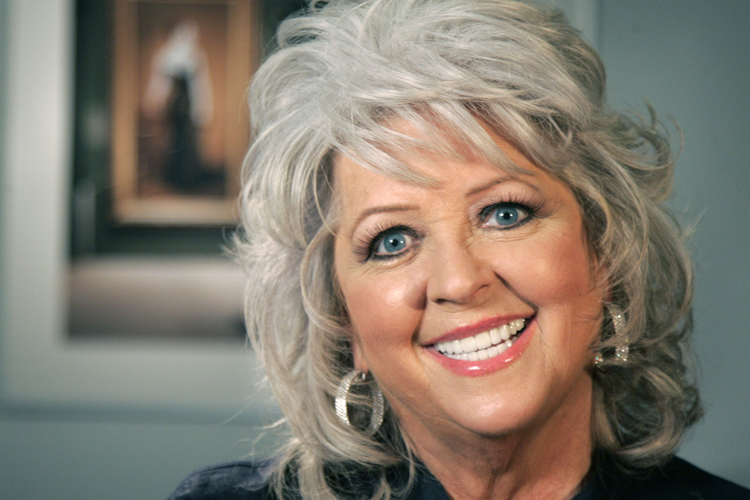

One of the most popular songs in the Tony Award-winning Broadway musical “Avenue Q” is “Everyone’s a Little Bit Racist.” The chorus goes, “Everyone’s a little bit racist sometimes. Doesn’t mean we go around committing hate crimes. Look around and you will find no one’s really color blind. Maybe it’s a fact we should face, everyone makes judgments based on race.” There’s a lot of truth to that song. Everyone holds certain judgments about others and those judgments are often informed by race. We’re human. We’re flawed. Most people are simply at the mercy of centuries of cultural conditioning. The better among us try, to varying degrees of success, to overcome that cultural conditioning — or, as recent revelations about popular, butter-loving Food Network host Paula Deen suggest, we don’t.
Paula Deen, who lives in Savannah, Ga., revels in Southern culture and her shows on the Food Network pay decadent and unapologetic homage to all manner of Southern cooking. She is a proud daughter of the South and, apparently, she carries the effects of the South’s complex and fraught racial history.
A former employee, Lisa Jackson, is currently suing Deen and her brother Earl “Bubba” Hiers for workplace harassment. A damning transcript of Deen’s deposition found its way online yesterday and in it, Deen revealed all manner of impolitic views on race. When asked if she used the N-word, Deen blithely replied, “Yes, of course,” as if it was a silly question, as if everyone uses the N-word. She’s probably right.
Deen went on to explain that she used the word to describe a man who put a gun to her head during a holdup at the bank where she worked, as if this should justify the epithet. As Deen noted, she wasn’t feeling “real favorable towards him.” That’s fair enough. No one would feel favorable toward a man holding a gun to their head. But one sin, however more grave, should not justify another.
She also discussed the racist, anti-Semitic and redneck jokes told in her kitchens and her husband’s regular use of the N-word. When asked what words she uses to describe a person’s race, she said, “I try to go with whatever the black race is wanting to call themselves at each given time. I try to go along with that and remember that.” The entire transcript is as revealing as it is fascinating; it’s a bit funny and a bit sad because Deen is so honest and her attitude is utterly unsurprising. I suppose I should be outraged, but I’m not. I’m actually baffled by how much play this story is getting in the news, where everyone seems shocked that an older white woman from the Deep South is racist and harbors a nostalgia for the antebellum era. Or perhaps my lack of surprise reveals my own biases. Though I know better, I have certain ideas about the South. Is this where I say, “I have Southern friends”?
The Internet responded vigorously, as it tends to do, when news broke of Deen’s racism (or, as I’ve come to think of it, Deen’s general outlook on life. The Twitter hashtag #paulasbestdishes instantly went viral and all the major news sites have breathlessly hashed and rehashed what little we actually know from the deposition transcript, some hearsay, and a whole lot of speculation.
The most interesting part of the deposition was the blitheness of Deen’s responses and her complete lack of shame. Her attitude was that of a person who is surrounded by like-minded individuals, a person who has been so thoroughly culturally conditioned that she doesn’t know any better and doesn’t even have enough of a sense of self-preservation to tell a few little white lies about her racial attitudes.
In truth, Deen does know better. She has, certainly, never said the N-word or made openly racist comments on the air or in any of the countless media interviews she has done over the years. In the deposition she even acknowledges that she, her children and her brother object to the N-word being used in “any cruel or mean behavior,” as if there’s a warm and friendly way for white people to use the word.
This entire debacle reveals that there are unspoken rules around racism. There is a complex matrix for when you can be racist and with whom. There are ways you behave in public, and ways you behave in private. There are things you can say among friends, things you wouldn’t dare say anywhere else, that you must keep to yourself in public.
In her deposition, for whatever reason, Deen decided to break these rules or ignore them. Maybe she knew she was rich and successful enough that the rules, frankly, no longer apply to her.
Writer Teju Cole succinctly identified why so many people are agog about the Deen revelations when he tweeted, “The real reason Paula Deen’s in the news is not because she’s racist, but because she broke the unwritten rules about how to be racist.” Most people are familiar with these rules. We suspect that everyone is, indeed, a little bit racist. It’s not a question of if someone will reveal their racism but, rather, when. Or maybe it’s people of color who are familiar with these rules and willing to acknowledge they exist. Maybe it is people of color who wait, without bated breath, for that when.
My downstairs neighbors recently moved out. They were Korean, college students. I never met them but they seemed nice enough. They played loud music but it was never enough of a nuisance to complain. Who doesn’t like to party? When I went to pay my rent at the beginning of the month, my landlord’s receptionist began detailing the extraordinary measures they were taking to air out the apartment because, “you just wouldn’t believe the smell.” I nodded because I truly had no idea what to say and then she leaned in to me and whispered, “You know how those people are.”
This was one of those rare moments where I got to see the rules of racism in action in a multiracial context. A white person felt comfortable confiding in me. In that moment, we were an us conspiring against a them. I couldn’t think of anything snappy so I simply said, “I have no idea what you mean,” and walked away. I wasn’t interested in playing that game where we bond as we each reveal our racist secret selves to each other. Later, I felt guilty that I hadn’t used that moment to educate this stranger about race-based generalizations. I wondered why she thought she could reveal that casual racism in mixed company. I wondered, as I often do about people, what she truly thinks about me.
